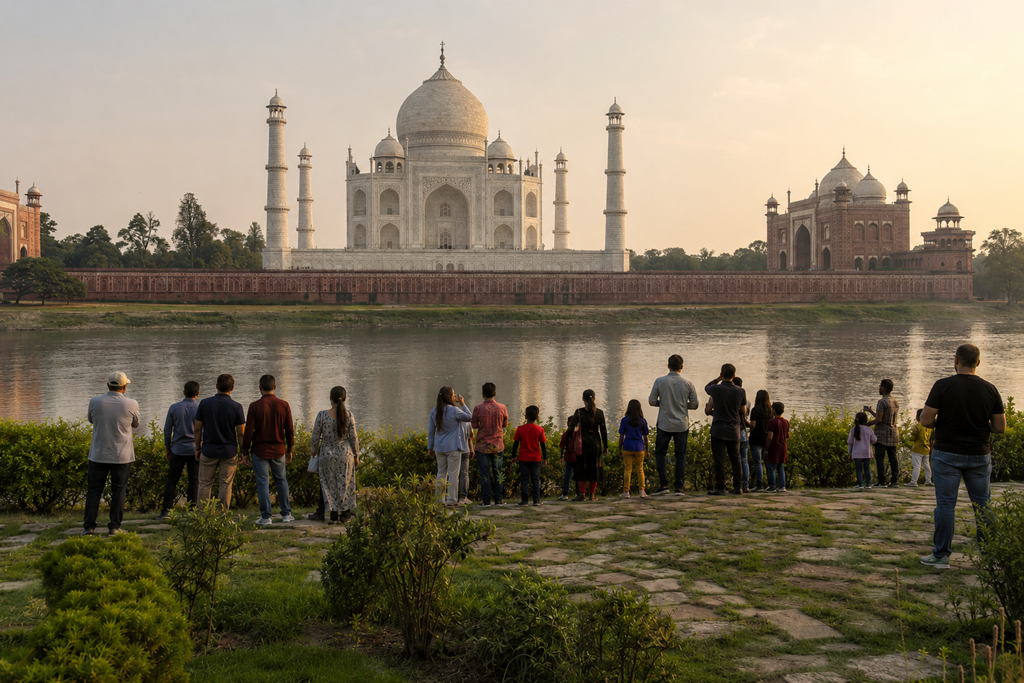
Agra is one of India’s most memorable travel destinations, but it can also feel overwhelming if you try to see everything at once. With two days, you have enough time to experience the Taj Mahal, explore Agra’s Mughal history, enjoy a few quieter viewpoints, and take a worthwhile half-day trip beyond the city.
This 2-day Agra itinerary is designed for first-time visitors who want a clear, realistic plan. It keeps the pace manageable, focuses on long-standing attractions, and leaves room for breaks, photos, meals, and unhurried travel between sights.
Agra is best known for the Taj Mahal, a white marble mausoleum built by Mughal emperor Shah Jahan in memory of Mumtaz Mahal and recognized by UNESCO as one of the world’s great heritage masterpieces. But the city is more than one monument. Agra Fort, Itmad-ud-Daulah, Mehtab Bagh, and Fatehpur Sikri all help tell a fuller story of Mughal architecture, power, gardens, craftsmanship, and everyday travel in northern India.
How To Use This 2-Day Agra Itinerary
This itinerary works best if you stay at least one night in Agra, ideally near the Taj Mahal area, the city center, or a convenient route to Agra Fort. The plan assumes you want to see the Taj Mahal early, visit major heritage sites without rushing, and include Fatehpur Sikri on the second day.
Check current opening hours, ticket rules, and any monument-specific requirements before you go. The official Taj Mahal website lists nearby attractions including Agra Fort, Itmad-ud-Daulah, Akbar’s Tomb, Fatehpur Sikri, and Mehtab Bagh, which are all useful anchors for planning a classic Agra visit.
Day 1: The Taj Mahal, Agra Fort, And A Riverside View
Your first day focuses on Agra’s most iconic sights. Start with the Taj Mahal, continue to Agra Fort, and end with a quieter view across the Yamuna River.
Morning: Start With The Taj Mahal
Begin your first day at the Taj Mahal. Arriving early is usually the most comfortable way to experience it, especially if you want softer light, more breathing room, and time to walk through the gardens before the day becomes busier.
The Taj Mahal sits on the right bank of the Yamuna River within a large Mughal garden, and UNESCO notes that the complex includes the marble tomb, mosque, guest house, main gateway, outer courtyard, and cloisters. Give yourself enough time to do more than take a few photos from the central reflecting pool. Walk slowly through the main approach, notice the symmetry, look at the marble inlay work, and step back often to appreciate how the building changes from different angles.
A good visit might include:
- The main gateway approach
- The central garden and reflecting pool
- The marble platform around the mausoleum
- Views toward the mosque and guest house
- A slow walk back through the gardens
This is the emotional and visual centerpiece of Agra, so avoid stacking too much immediately after it. Once you leave, take a break for breakfast or tea before moving on.
Late Morning: Visit Agra Fort
After the Taj Mahal, head to Agra Fort. It is one of the best places to understand Agra beyond the famous mausoleum.
Agra Fort is a UNESCO World Heritage Site and a major Mughal fortress built of red sandstone, with palaces, audience halls, mosques, courtyards, and views connected to the imperial history of the city. The fort feels different from the Taj Mahal: stronger, more layered, and more political. Instead of one central view, it unfolds through gates, walls, rooms, and open spaces.
Inside, focus on the major areas rather than trying to identify every detail. Look for the contrast between red sandstone and white marble, the use of arches and courtyards, and the way certain parts of the fort frame distant views of the Taj Mahal.
This is a good place to hire a reputable guide if you enjoy historical context. A guide can help connect the fort’s architecture with the Mughal rulers who shaped Agra.
Afternoon: Lunch And A Slower Break
After Agra Fort, pause for lunch. Agra sightseeing can be tiring because many attractions involve walking, sun exposure, security checks, traffic, and crowds. A slower lunch break makes the rest of the day more enjoyable.
For food, look for classic North Indian dishes, Mughlai-influenced meals, vegetarian thalis, breads from the tandoor, and local sweets. Agra is also known for petha, a translucent sweet often associated with the city. Choose restaurants based on current hygiene, location, and recent reviews rather than relying only on old rankings.
Late Afternoon: Explore Itmad-ud-Daulah
In the afternoon, visit Itmad-ud-Daulah, often nicknamed the “Baby Taj.” It is smaller than the Taj Mahal, but it is worth seeing because of its delicate marble work, garden setting, and quieter scale.
Uttar Pradesh Tourism describes Itmad-ud-Daulah as a marble tomb built by Nur Jahan in memory of her father, Mirza Ghias Beg, during the early 17th century. For travelers, it offers a more intimate look at Mughal craftsmanship. The details are easier to study up close, and the visit usually feels less intense than the Taj Mahal.
This stop is especially useful if you enjoy architecture, photography, gardens, or places that feel slightly less crowded than the headline monument.
Sunset: Finish At Mehtab Bagh
End your first day at Mehtab Bagh, a garden across the Yamuna River from the Taj Mahal. The view from this side gives you a different sense of the monument’s setting and symmetry.
Mehtab Bagh is not about rushing through another big attraction. It works best as a quiet final stop, especially if you want to watch the light soften around the Taj Mahal from across the river. Conditions can vary by weather, haze, and season, so think of this as a flexible scenic stop rather than a guaranteed postcard moment.
After sunset, keep dinner simple and close to your hotel. You will want an early start for Day 2.
Day 2: Fatehpur Sikri, Local Heritage, And A Flexible Final Evening
Your second day takes you outside central Agra to Fatehpur Sikri, then brings you back for one or two additional heritage stops depending on your energy.
Morning: Take A Half-Day Trip To Fatehpur Sikri
Start early for Fatehpur Sikri, a historic Mughal city located outside Agra. It is one of the most rewarding day trips from the city and makes sense on a two-day itinerary because it adds scale and context to Agra’s Mughal story.
Fatehpur Sikri is a UNESCO World Heritage Site in Agra District, inscribed in 1986. It was planned as an imperial city and is known for its red sandstone architecture, courtyards, palaces, gates, and religious structures.
Give yourself enough time to explore the main complex without rushing. Key areas often include:
- Buland Darwaza
- Jama Masjid
- Diwan-i-Khas
- Panch Mahal
- Palace courtyards and administrative spaces
The appeal of Fatehpur Sikri is not just one building. It is the feeling of walking through a planned Mughal city and seeing how political, religious, residential, and ceremonial spaces were arranged.
Because Fatehpur Sikri is outside Agra, transportation planning matters. A private car with a driver is often the simplest option for many visitors, especially if you want to return to Agra for more sightseeing. You can also ask your hotel about reliable transport options. Confirm pickup times, waiting time, and return arrangements before leaving.
Afternoon: Return To Agra For Lunch And A Rest
After Fatehpur Sikri, return to Agra and take a proper break. A two-day Agra itinerary can become tiring if every hour is packed, especially in warm weather.
Use this part of the day to eat, rest, and decide how much more sightseeing you want. If you are leaving Agra that evening, keep the afternoon light. If you have another night, you can add one more stop without making the day feel overloaded.
Option 1: Visit Akbar’s Tomb In Sikandra
If you want another major Mughal site, consider Akbar’s Tomb in Sikandra. It is a good fit for travelers interested in Mughal history and architecture beyond the Taj Mahal and Agra Fort.
The official Taj Mahal tourism site lists Akbar’s Tomb among Agra’s nearby attractions, making it a natural add-on for visitors who want a broader heritage route. The site usually feels more spacious than some central Agra monuments, and the setting gives you another perspective on Mughal funerary architecture.
Choose this option if you still have energy and want a meaningful final heritage stop.
Option 2: Return To The Taj Mahal Area For A Slower Walk
If you prefer a gentler finish, return to the Taj Mahal area for a slower walk, a café break, or a simple meal. You do not need to re-enter the monument to enjoy the atmosphere around it.
This option is best if you started very early, traveled to Fatehpur Sikri, and want your final evening in Agra to feel relaxed rather than packed. It also works well if you are catching a train or driving onward.
Evening: Keep Your Final Night Simple
For your final evening, choose a convenient dinner and avoid crossing the city unnecessarily. Traffic and travel time can make short distances feel longer than expected, so it is wise to stay near your hotel, station, or next-day departure route.
If you are leaving Agra by train, plan extra time to reach the station. If you are traveling by car to Jaipur, Delhi, or another destination, confirm your departure time and route the day before.
Where To Stay In Agra For A 2-Day Trip
For a short stay, convenience matters more than chasing the “perfect” neighborhood. Most first-time visitors do well in one of these areas:
Near The Taj Mahal
This is the most convenient area if your main goal is an early Taj Mahal visit. Staying nearby can reduce morning travel stress and make it easier to return to your hotel after sightseeing.
Near Agra Fort Or The City Center
This can work well if you want access to markets, restaurants, transport, and multiple heritage sites. It may be less atmospheric than staying near the Taj Mahal, but it can be practical.
Near A Major Road Out Of Agra
If you are visiting Fatehpur Sikri or continuing toward Jaipur or Delhi, staying near a convenient road connection can simplify logistics. This is especially useful if you are traveling with a driver.
Getting Around Agra
Agra’s main sights are spread out enough that you will likely use a mix of transportation. Auto-rickshaws, taxis, app-based rides where available, private drivers, and hotel-arranged transport can all be useful.
For a two-day itinerary, the simplest approach is:
- Use a short ride or hotel-arranged transport for the Taj Mahal early morning.
- Use a driver, taxi, or auto-rickshaw between Agra Fort, Itmad-ud-Daulah, and Mehtab Bagh.
- Use a private car or arranged transport for Fatehpur Sikri.
Always agree on pricing, pickup points, and waiting time before starting a ride if you are not using a metered or app-based option.
Practical Tips For Visiting Agra
Start Early When It Matters
The Taj Mahal and Fatehpur Sikri are both better when you are not rushing. Early starts help with light, comfort, and pacing.
Check Rules Before Visiting Major Monuments
Security rules, bag restrictions, photography rules, ticketing processes, and entry policies can change. Check current official information before you go, especially for the Taj Mahal.
Dress For Walking And Weather
Wear comfortable shoes, breathable clothing, and sun protection. Many Agra sights involve open courtyards, stone pathways, and time outdoors.
Do Not Overload The Itinerary
Agra is more enjoyable when you leave space between major monuments. Two or three strong experiences in a day are better than racing through six.
Consider A Guide For Historical Sites
A good guide can make Agra Fort and Fatehpur Sikri much more meaningful. Use licensed or well-reviewed guides, and agree on the cost and scope before starting.
Be Patient Around Popular Viewpoints
The Taj Mahal attracts visitors from around the world. Expect crowds in classic photo areas, and take your time finding quieter angles.
Best Time To Visit Agra
The most comfortable months for many travelers are generally during the cooler part of the year, when walking around monuments feels easier. Warmer months can still be manageable with early starts, breaks, and slower pacing.
Weather, haze, holidays, and school vacation periods can all affect the experience. Book ahead during busy travel seasons and check current conditions before your trip.
Is 2 Days Enough For Agra?
Two days is enough for a strong first visit to Agra. You can see the Taj Mahal, Agra Fort, Itmad-ud-Daulah, Mehtab Bagh, and Fatehpur Sikri without turning the trip into a checklist.
You will not see everything, and that is fine. Agra is best approached with focus. Let the Taj Mahal be the centerpiece, use Agra Fort and Fatehpur Sikri for historical depth, and add smaller sites for atmosphere and perspective.
A Simple 2-Day Agra Itinerary At A Glance
Day 1
Morning: Taj Mahal
Late morning: Agra Fort
Afternoon: Lunch and rest
Late afternoon: Itmad-ud-Daulah
Sunset: Mehtab Bagh
Day 2
Morning: Fatehpur Sikri
Afternoon: Return to Agra for lunch and rest
Late afternoon: Akbar’s Tomb or a slower Taj Mahal area walk
Evening: Simple dinner and departure preparation
Final Thoughts On Visiting Agra
Agra is often treated as a quick stop for the Taj Mahal, but it rewards travelers who give it a little more time. With two days, you can experience the famous monument properly, understand more of the Mughal history around it, and still leave space for quieter views and practical breaks.
The best Agra itinerary is not the one that includes the most stops. It is the one that lets you remember what you saw.
Download Our Free E-book!