Carmel-by-the-Sea is one of the easiest coastal towns in California to enjoy slowly. The village is compact, walkable, and full of small pleasures: ocean views, cypress trees, art galleries, courtyards, storybook cottages, and a wide white-sand beach at the edge of town. The official Carmel visitor site describes the village as roughly one square mile, with restaurants, shops, galleries, wine tasting, inns, and the beach all close together.
This 2-day Carmel itinerary is designed for a relaxed coastal getaway, not a rushed checklist. It gives you enough structure to make the most of your time, while leaving room for wandering, beach walks, scenic drives, and unhurried meals.
How To Use This 2-Day Carmel Itinerary
This itinerary works best if you stay in or near Carmel-by-the-Sea, especially if you want to walk to restaurants, shops, galleries, and Carmel Beach. A car is helpful for nearby coastal sights like Point Lobos State Natural Reserve, Carmel Mission, and 17-Mile Drive.
The pacing assumes two full days, but it can also work for a weekend if you arrive Friday evening and leave Sunday afternoon.
Before you go, check current hours, parking rules, trail conditions, and reservation requirements for any attraction or restaurant you plan to visit. Carmel is popular year-round, and weekends can feel busier than weekdays.
Day 1: Carmel Village, Carmel Beach, And Scenic Coastal Views
Your first day is about settling into Carmel’s rhythm: walkable streets, local shops, ocean air, and a sunset by the beach.
Morning: Start In Carmel-by-the-Sea Village
Begin your trip in the heart of Carmel-by-the-Sea. The village is small enough to explore on foot, and that is part of the experience. Instead of treating it like a sightseeing race, give yourself time to wander.
Spend the morning walking around Ocean Avenue and the surrounding side streets. You will find boutiques, cafés, art galleries, courtyards, tasting rooms, and distinctive cottages tucked into quiet corners. Carmel’s charm comes from its details, so the best way to enjoy it is to slow down and look around.
A simple first-morning plan:
- Start with coffee or breakfast near the village center
- Walk Ocean Avenue toward the beach
- Browse a few galleries or shops
- Detour into small courtyards and side lanes
- Keep the morning flexible instead of over-scheduled
This is also a good time to get oriented. Notice where your hotel, dinner options, and beach access points are located so the rest of the trip feels easier.
Late Morning: Walk Down To Carmel Beach
From the village, make your way toward Carmel Beach. The walk down Ocean Avenue is one of the classic Carmel experiences, with the street gradually leading you toward the Pacific.
Carmel Beach is best enjoyed simply. Walk along the sand, sit for a while, watch the waves, or continue toward the scenic coastline. The beach is wide, open, and especially beautiful when the light is soft in the morning or late afternoon.
Bring a light layer even on sunny days. Carmel’s coastal weather can shift quickly, and the breeze near the water often feels cooler than the village streets.
Lunch: Keep It Easy In Town
For lunch, return to the village and choose something relaxed. Carmel has plenty of sit-down restaurants, cafés, and casual spots, but this itinerary does not depend on any single venue. Pick based on what fits your mood that day.
For an easy first lunch, look for:
- A café with outdoor seating
- A casual seafood or California-style restaurant
- A bakery or deli option if you want to picnic later
- A wine bar or courtyard setting if you prefer a slower meal
If you are visiting during a busy weekend or holiday period, consider making dinner reservations in advance, especially if you have a specific restaurant in mind.
Afternoon: Explore Carmel’s Art Galleries And Courtyards
After lunch, spend more time with Carmel’s village atmosphere. Carmel has long been associated with artists, writers, and creative communities, and that history still shows up in its galleries and small independent shops.
You do not need a strict route. Choose a few blocks and move slowly. The best discoveries often come from turning down a quiet passageway, stepping into a courtyard, or noticing a small gallery that was not on your original list.
This is also a good window for wine tasting if that appeals to you. Keep it light and flexible, especially if you plan to walk more later in the day.
Late Afternoon: Take A Scenic Drive Or Walk Along The Coast
In the late afternoon, enjoy one of Carmel’s most scenic stretches. If you prefer to stay close to town, walk or drive along Scenic Road, where you can take in ocean views, beach cottages, cypress trees, and glimpses of the rugged coastline.
For a longer drive, consider 17-Mile Drive through Pebble Beach. It is one of the Monterey Peninsula’s classic scenic routes, known for coastal views, the Lone Cypress, beaches, wildlife, golf courses, and dramatic shoreline scenery.
Because access details and fees can change, check current information before you go. Pebble Beach notes that the route is generally open from sunrise to sunset, but it is still wise to verify current rules before planning your day around it.
Evening: Sunset At Carmel Beach
End your first day back at Carmel Beach. Sunset is one of the most memorable times to be here, but it does not need to be elaborate. Bring a jacket, find a comfortable place to sit, and let the day wind down naturally.
After sunset, walk back into the village for dinner. Choose a place that feels comfortable rather than trying to chase the “best” restaurant. Carmel is well suited to a relaxed evening meal, whether that means a cozy dining room, a casual bistro, or something simple after a day outside.
Day 2: Point Lobos, Carmel Mission, And A Slower Final Afternoon
Your second day adds more coastal nature and local history while still keeping the itinerary manageable.
Morning: Visit Point Lobos State Natural Reserve
Start the day at Point Lobos State Natural Reserve, one of the most beautiful coastal areas near Carmel. California State Parks notes that the reserve is located about three miles south of Carmel on Highway 1, making it an easy morning trip by car.
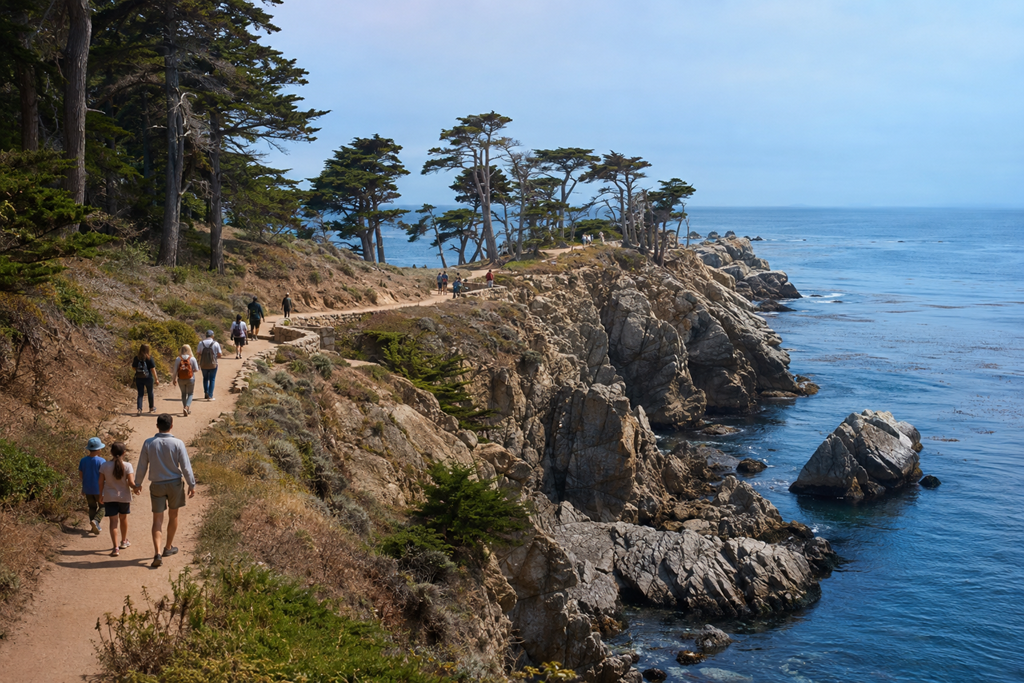
Point Lobos is known for rocky coves, coastal trails, cypress trees, marine life, and wide Pacific views. You do not need to hike every trail to appreciate it. Choose one or two shorter routes and give yourself time to stop often.
Good ways to approach Point Lobos:
- Arrive earlier in the day for easier parking and softer light
- Choose shorter trails if you want a relaxed visit
- Bring layers, water, and comfortable walking shoes
- Stay on marked trails to protect the landscape
- Check current park information before visiting
The Cypress Grove Trail is a classic option for a shorter walk. The Point Lobos Foundation describes it as a 0.8-mile trail through coastal scrub and cypress forest with dramatic ocean views.
If you want a fuller visit, pair Cypress Grove with another nearby coastal viewpoint or trail. If you prefer a lighter morning, simply choose one trail and spend more time looking out over the coves.
Lunch: Return Toward Carmel
After Point Lobos, return toward Carmel for lunch. You can eat in the village, stop somewhere casual, or pick up food for a low-key picnic if conditions are comfortable.
Try not to overfill this part of the day. Point Lobos is best when you are not rushing, and Carmel is better when you have room for small pauses.
Early Afternoon: Visit Carmel Mission
In the early afternoon, visit Carmel Mission, officially Mission San Carlos Borromeo de Carmelo. It is one of the major historic sites in the area and adds cultural depth to a trip that might otherwise focus only on scenery.
The Mission is still an active parish, so visitor access can be affected by services, weddings, or special events. The Mission’s own visitor information advises checking ahead and being respectful of the prayerful environment.
During your visit, take time to see the architecture, gardens, museum areas, and courtyards. This does not need to be a long stop, but it is worth approaching thoughtfully rather than treating it as a quick photo opportunity.
Mid-Afternoon: Choose Your Final Carmel Experience
After the Mission, shape the rest of the day around your travel style. Carmel is small, but it offers several good ways to spend a final afternoon.
Option A: More Beach Time
Return to Carmel Beach for another walk or a quiet sit by the water. This is the best choice if the weather is pleasant and you want the trip to feel restorative.
Option B: More Village Wandering
Head back into the village for galleries, shops, coffee, or a glass of wine. This is ideal if you enjoyed the first day’s slower pace and want more time in Carmel’s courtyards and side streets.
Option C: Carmel River State Beach
For a slightly different coastal setting, consider Carmel River State Beach. It is close to town and offers another scenic place to enjoy the shoreline. As with any beach visit, check local conditions and respect posted signs.
Option D: A Short Drive Toward Big Sur
If you have extra time and the weather is clear, you can drive a short stretch south on Highway 1 for coastal views. Keep this flexible and do not try to turn it into a full Big Sur itinerary unless you have more time. The goal is to enjoy the scenery without making the day feel crowded.
Evening: A Simple Final Dinner
For your final evening, keep dinner easy and close to where you are staying. After two days of walking, coastal air, and scenic stops, a relaxed dinner in the village is usually enough.
If you are traveling as a couple, this is a good night for a more intimate meal. If you are traveling solo, Carmel is still easy to enjoy at your own pace with a book, a quiet table, or a final walk through the village after dinner.
Where To Stay In Carmel For This Itinerary
For a 2-day trip, staying in Carmel-by-the-Sea is the most convenient choice. You will be able to walk to the beach, dinner, shops, galleries, and many cafés without constantly moving your car.
Consider staying:
- Near Ocean Avenue if you want the easiest access to the village
- Closer to the beach if ocean walks are your priority
- Slightly outside the village if you prefer quieter lodging or easier parking
- In nearby Monterey or Pacific Grove if Carmel lodging is full or above your budget
If your main goal is a relaxing coastal getaway, convenience matters. A slightly higher lodging cost in a walkable location may be worth it if it reduces driving and parking stress.
Getting Around Carmel
Carmel-by-the-Sea itself is best explored on foot. The village is compact, and walking helps you notice the details that make it special.
A car is useful for:
- Point Lobos State Natural Reserve
- Carmel Mission
- 17-Mile Drive
- Carmel River State Beach
- Nearby Monterey, Pacific Grove, or Big Sur
Parking can be limited during busy periods, so build in extra time and avoid planning your days too tightly.
Best Time To Visit Carmel
Carmel can be enjoyable in every season, but the experience changes with the weather and crowds.
Spring often brings fresh greenery and pleasant walking conditions. Summer is popular but can include foggy coastal mornings. Fall is often a favorite for clearer weather and comfortable temperatures. Winter can be quieter, with the possibility of rain and cooler coastal conditions.
No matter when you visit, pack layers. Carmel’s weather can feel different from one hour to the next, especially near the beach.
What To Pack For A 2-Day Carmel Getaway
For a short Carmel trip, focus on comfort and layers rather than overpacking.
Helpful items include:
- Comfortable walking shoes
- A light jacket or sweater
- Sunglasses and sun protection
- A reusable water bottle
- Casual dinner clothing
- A small day bag for Point Lobos
- A camera or phone with space for photos
If you plan to spend time on trails, bring shoes with good traction. If you plan to sit on the beach, bring an extra layer so the wind does not cut your visit short.
A Few Practical Carmel Travel Notes
Carmel is a place where less planning can sometimes lead to a better trip, but a few practical choices help.
Book lodging early for weekends and popular travel periods. Make dinner reservations if there are specific restaurants you care about. Check current access details for Point Lobos, Carmel Mission, and 17-Mile Drive before building your day around them.
Most importantly, leave open space in the itinerary. Carmel’s appeal is not only in its named attractions. It is in the beach walk you did not rush, the courtyard you almost missed, the view you stopped for, and the quiet evening after the day-trippers leave.
Final Thoughts On This 2-Day Carmel Itinerary
A good Carmel itinerary should feel scenic, easy, and unforced. In two days, you can enjoy the village, walk along Carmel Beach, explore Point Lobos, visit Carmel Mission, and still have time for slow meals and unplanned wandering.
Use this itinerary as a flexible guide rather than a strict schedule. Carmel is small, beautiful, and best experienced with enough room to notice where you are.
Download Our Free E-book!