Copenhagen is one of the best European cities for a short, well-paced getaway. It is compact enough to explore over two days, but layered enough to feel rewarding without trying to do everything.
This 2-day Copenhagen itinerary is designed for first-time visitors who want a practical mix of classic sights, scenic walks, local neighborhoods, food experiences, and a few slower moments along the way. You will see many of the city’s most recognizable places, including Nyhavn, Amalienborg, Rosenborg Castle, Christiansborg Palace, Tivoli Gardens, and the harborfront, while still leaving space to enjoy Copenhagen at a comfortable pace.
Because opening hours, ticket policies, and timed-entry rules can change, check current details before visiting any paid attraction or museum.
How To Use This 2-Day Copenhagen Itinerary
This itinerary works best if you stay in or near central Copenhagen, especially around Indre By, Nyhavn, Vesterbro, Nørreport, Kongens Nytorv, or Christianshavn. These areas make it easy to walk, use the metro, or take short public transit rides between neighborhoods.
Copenhagen is very walkable, but you will still cover a fair amount of ground. Comfortable shoes are important, and a flexible mindset helps. Some travelers will want to go inside every palace and museum, while others may prefer more outdoor time, café breaks, and neighborhood wandering.
For a quick trip, the goal is not to see everything. The goal is to experience Copenhagen’s historic center, waterfront, design-minded atmosphere, food culture, and everyday rhythm in a way that feels complete.
Day 1: Classic Copenhagen, Palaces, Nyhavn, And Tivoli
Your first day focuses on the historic heart of Copenhagen. You will move through royal squares, colorful harbor views, city-center landmarks, and one of Denmark’s most famous cultural attractions.
Start With A Walk Through The Historic Center
Begin your morning around Kongens Nytorv or Nørreport. From here, it is easy to walk into Copenhagen’s old center, where streets are lined with shops, cafés, churches, squares, and historic buildings.
A relaxed morning walk gives you a good first feel for the city. Copenhagen’s center is polished but not overwhelming. You can wander through pedestrian streets, look into courtyards, stop for coffee, and gradually make your way toward some of the city’s major landmarks.
Strøget, Copenhagen’s central pedestrian shopping street, is one of the city’s classic walking areas and connects easily with many major sights. VisitDenmark describes it as the central pedestrian street in Copenhagen’s main shopping area, with shops, cafés, restaurants, and side streets nearby.
Even if shopping is not your focus, the area is useful for orientation. It helps you understand how compact central Copenhagen is.
Visit Rosenborg Castle And The King’s Garden
From the old center, head toward Rosenborg Castle. This is one of Copenhagen’s most worthwhile royal sites, especially for visitors interested in Danish history, architecture, and historic interiors.
Rosenborg Castle was built by Christian IV in the early 1600s and houses major Danish cultural treasures, including the crown jewels and royal crowns.
The castle itself is compact enough to fit into a short visit, but it still feels meaningful. You do not need to be a royal history expert to enjoy it. The rooms, objects, and setting offer a clear sense of Denmark’s royal past.
Afterward, spend a little time in the King’s Garden beside the castle. This is a good place to slow down, especially if the weather is pleasant. On a short trip, small pauses like this help the itinerary feel less rushed.
Pause For Lunch Near The City Center
For lunch, stay central. Copenhagen is known for both traditional Danish food and modern Nordic dining, but you do not need to chase a famous restaurant to have a good meal.
For a classic daytime choice, look for smørrebrød, the Danish open-faced sandwich. It is practical, local, and well-suited to a sightseeing day. If you prefer something lighter, Copenhagen also has plenty of bakeries, cafés, casual restaurants, and food halls.
Keep lunch simple on Day 1. You still have several major sights ahead, and staying central saves time.
Walk To Amalienborg And Frederik’s Church
After lunch, make your way toward Amalienborg Palace, the royal palace complex arranged around a large open square. This is one of the most elegant areas in Copenhagen and a natural stop between the historic center and the harbor.
Amalienborg consists of four rococo palaces around a square, and parts of the complex are open to the public as museum spaces.
Even if you do not go inside, the square is worth visiting for its architecture and sense of space. Nearby Frederik’s Church, often called the Marble Church, adds to the area’s visual appeal with its large dome and stately presence.
This part of the itinerary is best enjoyed slowly. Stand in the square, look toward the waterfront, and let the city’s royal and maritime sides connect.
Continue To Nyhavn
From Amalienborg, walk to Nyhavn, Copenhagen’s famous harbor lined with colorful facades, restaurants, old ships, and canal views.
Nyhavn is one of Copenhagen’s classic sights. VisitDenmark notes that the area was historically connected to merchant harbor life and is now one of the city’s most recognizable stops.
It can be busy, especially during popular travel periods, but it is still worth seeing. The key is to approach it as a scenic walk rather than a place you need to linger for hours. Take in the colorful buildings, watch the boats, and enjoy the harbor atmosphere.
If you want a slower option, consider a canal tour from this area or nearby. Canal tours are a practical way to see Copenhagen from the water, passing sights such as the Opera House, the Black Diamond library, Christianshavn’s canals, and harborfront architecture.
End The Day At Tivoli Gardens
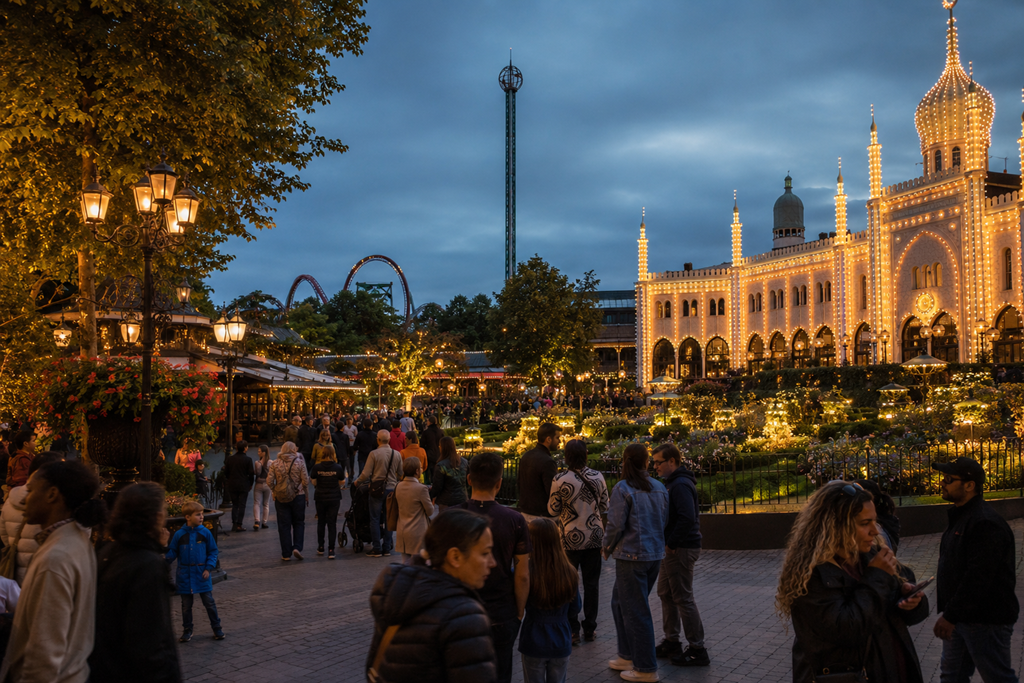
For your first evening, head toward Tivoli Gardens. Tivoli is one of Copenhagen’s signature attractions and works well at the end of a sightseeing day because it combines gardens, lights, rides, restaurants, and atmosphere.
Tivoli is listed by VisitDenmark as one of Copenhagen’s must-see attractions, known for its rides, restaurants, concerts, and seasonal atmosphere.
You do not need to be especially interested in amusement rides to enjoy Tivoli. Many visitors go simply to walk through the gardens, have dinner, enjoy the design, and experience the setting after dark.
Because schedules and seasonal openings can vary, check current opening days and hours before planning your evening around it.
Day 2: Christiansborg, Canals, Neighborhoods, And Local Flavor
Your second day balances history with neighborhood atmosphere. You will visit a major palace site, cross toward Christianshavn, explore Copenhagen’s waterside character, and finish with a relaxed food or design-focused evening.
Begin At Christiansborg Palace
Start Day 2 at Christiansborg Palace, located on Slotsholmen in the center of Copenhagen. This is one of the city’s most important historic and political sites.
Christiansborg is commonly included among Copenhagen’s major attractions, along with places such as Tivoli, Rosenborg Castle, Nyhavn, the National Museum, and the Round Tower.
Depending on your interests, you can focus on the palace rooms, ruins, royal spaces, or simply explore the surrounding area. For a 2-day itinerary, choose the parts that interest you most rather than trying to see every possible section.
This is also a good area for understanding Copenhagen’s layered history. The palace sits close to museums, canals, government buildings, and old streets, so it naturally connects the city’s royal, civic, and cultural sides.
Add The National Museum Or The Round Tower
After Christiansborg, choose one nearby cultural stop based on your travel style.
If you want a deeper overview of Danish history and culture, visit the National Museum of Denmark. It is often recommended for travelers interested in Danish history, artifacts, and cultural collections.
If you prefer a shorter visit with a city view, head to the Round Tower. The Round Tower was built as a 17th-century observatory and is known for its spiral ramp and panoramic views over Copenhagen.
For a quick getaway, the Round Tower is usually the easier fit. It gives you a memorable view without taking up too much of the day. The National Museum is better if you enjoy slower museum visits and want more historical context.
Cross Toward Christianshavn
From the historic center, make your way toward Christianshavn. This neighborhood gives Copenhagen a different feel, with canals, houseboats, waterside paths, cafés, and a slightly quieter rhythm than the main tourist core.
Christianshavn is especially good for walking. You can follow the canals, cross small bridges, and notice how much of Copenhagen’s identity is connected to water.
If you took a canal tour on Day 1, this walk will feel familiar from another angle. If you skipped the boat ride, Christianshavn still gives you a strong sense of the city’s harbor culture.
Visit Church Of Our Saviour Or Enjoy The Canal Streets
One of Christianshavn’s best-known landmarks is the Church of Our Saviour, famous for its striking tower. If you are comfortable with heights and the tower is open, it can be a memorable experience. Because access can depend on conditions and schedules, check current details before building your plans around it.
If you would rather keep things easy, simply walk the canal streets and enjoy the neighborhood. Not every worthwhile Copenhagen moment needs to be a ticketed attraction. On a short trip, some of the best experiences come from noticing bikes, boats, windows, courtyards, and the everyday flow of the city.
Have Lunch Or A Snack Break
For lunch on Day 2, choose based on where you are and how much time you want to spend. Christianshavn and the nearby harbor areas have casual places to eat, and it is easy to return toward the city center if you prefer more options.
This is also a good time to try a Danish bakery item if you have not already. Copenhagen’s bakery culture is one of the easiest pleasures to fit into a short itinerary. A pastry and coffee break can be just as memorable as a formal restaurant meal.
Spend The Afternoon Along The Waterfront
In the afternoon, give yourself time by the water. Copenhagen’s harborfront has become a major part of the city’s modern appeal, with walking areas, bridges, cultural buildings, and public spaces.
Depending on your energy level, you can walk toward the Royal Danish Opera, the Black Diamond library, or simply follow the harbor edge and see where the route takes you. The goal is not to rush from landmark to landmark. It is to experience the city’s blend of old architecture, modern design, and everyday waterfront life.
If the weather is poor, this is a good time to swap in another museum, café, or design-focused stop instead.
Finish With Dinner In Vesterbro, Indre By, Or Nørrebro
For your final evening, choose a neighborhood that matches your mood.
Vesterbro is a good choice if you want a lively but still accessible dinner area. Indre By is practical if you want to stay close to the historic center. Nørrebro is a strong option if you want a more neighborhood-based evening with a mix of casual food, cafés, bars, and local energy.
Avoid overcomplicating dinner. Copenhagen has excellent food, but on a 2-day trip, the best meal is often the one that fits naturally into your route and leaves you with enough energy to enjoy the evening.
Where To Stay For A 2-Day Copenhagen Trip
For a short Copenhagen getaway, location matters more than hotel extras. Staying central reduces transit time and makes it easier to return to your room during the day if needed.
Indre By
Indre By is the historic center and one of the most convenient areas for first-time visitors. You will be close to major sights, shopping streets, museums, Nyhavn, and transit.
This is the easiest choice if you want to walk as much as possible.
Nyhavn And Kongens Nytorv
This area is scenic and central, with quick access to the harbor, Amalienborg, canal tours, and the metro. It can be busy, but it is very convenient for a short stay.
Choose this area if you want classic Copenhagen views nearby.
Vesterbro
Vesterbro is useful if you want to be near Copenhagen Central Station, Tivoli, restaurants, and nightlife. It works well for travelers arriving by train or those who prefer a slightly less polished neighborhood feel while still staying close to the center.
Nørrebro
Nørrebro is a good fit if you want a more local-feeling stay with independent shops, casual food, and neighborhood energy. It is not quite as central for first-time sightseeing, but it is still manageable with public transit or biking.
Getting Around Copenhagen
Copenhagen is easy to navigate for a short visit. Many of the major sights are walkable from the city center, and the metro is useful for longer hops, airport connections, and reaching neighborhoods efficiently.
Biking is a major part of local life, but visitors should only rent bikes if they are comfortable riding in a busy urban cycling environment. Copenhagen’s bike infrastructure is excellent, but local cyclists move with purpose. If you are unsure, walking and public transit are simpler.
For two days, you can rely on a mix of walking, metro rides, and occasional buses or harbor transport. Keep your plan flexible and group sights by geography to avoid unnecessary backtracking.
Best Time To Visit Copenhagen For A Short Getaway
Copenhagen can work well in different seasons, but the feel of the trip changes.
Spring and summer are best for long walks, harbor views, outdoor dining, parks, and extended daylight. These are also popular times to visit, so book lodging ahead and expect busier conditions at major attractions.
Autumn can be a lovely time for museums, cafés, design shops, and quieter streets. The weather may be mixed, but the city’s atmosphere suits cooler days well.
Winter can be atmospheric, especially if you enjoy cozy interiors, lights, museums, and slower travel. Outdoor sightseeing may require more layers and flexibility.
For any season, pack for changeable weather. A light rain layer and comfortable shoes are useful in Copenhagen almost year-round.
Practical Tips For A Better 2-Day Copenhagen Visit
Keep The Itinerary Flexible
Two days is enough for a strong first visit, but not enough for everything. Choose your must-sees in advance, then let the rest of the plan breathe.
If you try to fit in every museum, palace, tower, harbor walk, market, and neighborhood, the trip may start to feel rushed. Pick a few anchors each day and allow space between them.
Check Opening Hours Before You Go
Museums, palaces, towers, and gardens can have changing hours, seasonal schedules, or timed-entry requirements. Always check current details before visiting, especially if an attraction is central to your plan.
Book Ahead During Busy Travel Periods
If you are visiting during holidays, summer, or popular weekends, book key experiences and accommodations ahead. This is especially useful for major attractions, special dining plans, and centrally located hotels.
Do Not Underestimate Walking Distances
Copenhagen is compact, but a sightseeing day can still add up. Plan café breaks, garden stops, and slower walks so the trip stays enjoyable.
Leave Time For Everyday Copenhagen
Some of Copenhagen’s appeal is not tied to a single landmark. It is in the bikes, bakeries, courtyards, waterfront paths, design shops, and quiet side streets. Give yourself permission to wander a little.
A Simple 2-Day Copenhagen Itinerary At A Glance
Day 1
Start in the historic center, walk through Strøget and nearby streets, visit Rosenborg Castle and the King’s Garden, pause for lunch, continue to Amalienborg and Frederik’s Church, enjoy Nyhavn, and end the evening at Tivoli Gardens.
Day 2
Begin at Christiansborg Palace, choose either the National Museum or the Round Tower, cross toward Christianshavn, walk the canals, visit Church of Our Saviour if it fits, spend the afternoon along the waterfront, and finish with dinner in Vesterbro, Indre By, or Nørrebro.
Final Thoughts On Spending 2 Days In Copenhagen
Two days in Copenhagen gives you enough time to experience the city’s essentials without turning the trip into a checklist. You can see royal landmarks, colorful harbor views, historic streets, modern waterfront spaces, and neighborhood life in one compact visit.
The best version of this itinerary is the one that leaves room for small, ordinary moments: a bakery stop, a quiet garden bench, a canal-side walk, or an unplanned turn down a beautiful street. Copenhagen rewards that kind of travel.
With a thoughtful route and realistic pacing, a quick getaway can still feel complete.
Download Our Free E-book!