Dublin is one of the easiest European capitals to enjoy in a short visit. The historic center is compact, many major sights are close together, and the city has a natural mix of museums, literary landmarks, parks, pubs, riverside walks, and Georgian streets.
This 2-day Dublin itinerary is designed for first-time visitors who want a clear, realistic plan without rushing from one attraction to the next. It focuses on classic, long-lasting Dublin experiences: Trinity College, the Book of Kells, Dublin Castle, St Patrick’s Cathedral, Temple Bar, the River Liffey, the Guinness Storehouse, Kilmainham Gaol, Phoenix Park, and a few quieter areas that help the city feel more personal.
Dublin is very walkable, but comfortable shoes matter. Visit Dublin, the city’s official tourism site, also notes that first-time visitors should expect to do plenty of walking, even though public transport can help connect longer distances.
Before You Go: How To Use This Dublin Itinerary
This itinerary assumes you have two full days in Dublin. If you arrive late on the first day or leave early on the second, choose the stops that matter most to you and leave extra space for wandering.
For attractions like the Book of Kells, Guinness Storehouse, and Kilmainham Gaol, check current opening hours and reservation requirements before you go. Some popular Dublin attractions use timed-entry systems, and availability can vary during busy travel periods.
Dublin’s public transport network includes buses, Luas trams, DART rail, and commuter trains. A TFI Leap Card can be a convenient way to pay across the public transport network, and the TFI Journey Planner app helps with routes and timing.
Day 1: Classic Dublin, Historic Streets, And The River Liffey
Your first day focuses on Dublin’s historic core. The route works best on foot, with short breaks built in so the day feels full but not exhausting.
Morning: Trinity College And The Book Of Kells
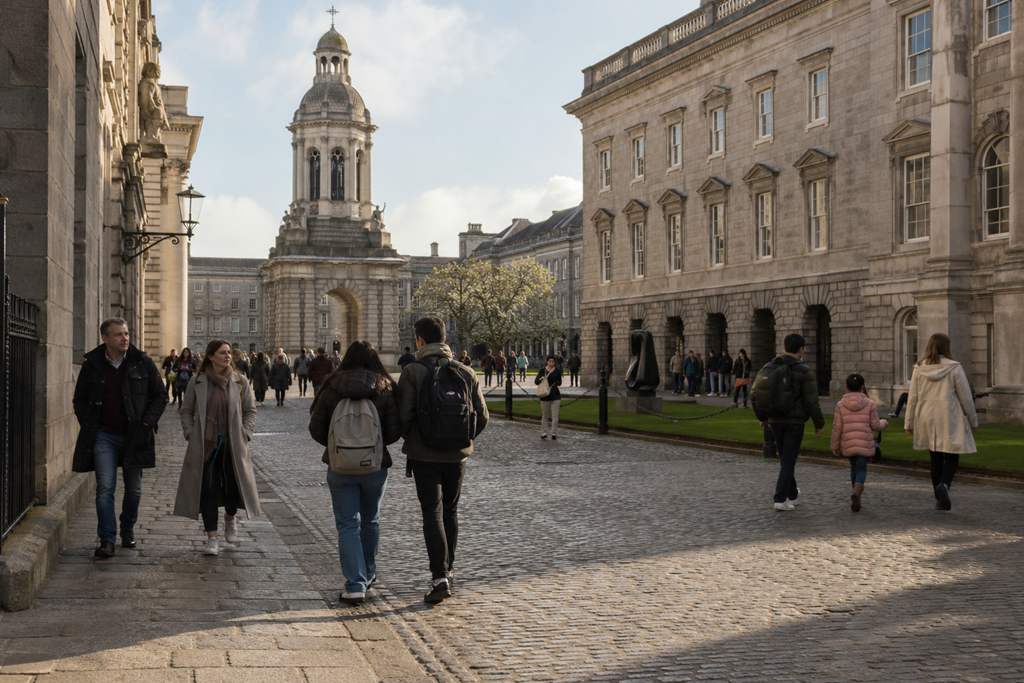
Start at Trinity College, one of Dublin’s most recognizable places. The campus gives you an immediate sense of the city’s academic, literary, and architectural character.
The main reason many first-time visitors come here is the Book of Kells Experience. It is one of Dublin’s most iconic cultural attractions and is listed by Visit Dublin among the city’s essential sights.
After your visit, take a few minutes to walk around the campus rather than rushing straight out. Trinity sits close to several central areas, so it makes a natural starting point for the day.
Planning note: Book ahead when possible, especially during busy travel seasons. Timed-entry attractions can sell out or have limited availability.
Late Morning: Grafton Street And St Stephen’s Green
From Trinity College, walk toward Grafton Street. This is one of Dublin’s main pedestrian shopping streets and a useful connector between the college, St Stephen’s Green, and the south side of the city center.
Even if you are not shopping, it is a good place to get a feel for everyday Dublin: buskers, cafés, side streets, and steady foot traffic.
Continue to St Stephen’s Green, a leafy public park that works well as a reset between indoor attractions. It is especially useful on a 2-day itinerary because it gives you a quieter moment without taking you far from the center.
Lunch: Choose A Simple Central Stop
For lunch, keep it easy. Look around Grafton Street, South William Street, George’s Street, or nearby lanes for cafés, casual restaurants, or pubs serving daytime meals.
Dublin has a strong food and pub culture, but this itinerary avoids relying on one specific restaurant. Businesses change, and the better evergreen advice is to choose a convenient place near your route rather than crossing the city for a single meal.
Afternoon: Dublin Castle And The Medieval Quarter
After lunch, walk toward Dublin Castle. This area helps connect Dublin’s medieval history with its later role as a political and administrative center.
Visit Dublin describes Dublin’s history as stretching back to the Viking Age and highlights Dublin Castle, Georgian squares, monuments, and heritage sites as part of the city’s historic landscape.
You can tour the castle if time and interest allow, or simply explore the surrounding courtyards and nearby streets. From here, you are also close to City Hall, Christ Church Cathedral, and the older streets that lead toward the Liberties.
If you prefer museums, consider adding a nearby cultural stop instead of touring every historic building. The goal is not to see every site, but to understand the layers of the city.
Mid-Afternoon: St Patrick’s Cathedral Or Christ Church Cathedral
Dublin has two major cathedrals that often interest first-time visitors: St Patrick’s Cathedral and Christ Church Cathedral. If you only want to visit one, choose based on your route and interests.
St Patrick’s Cathedral is one of Dublin’s best-known religious and historic sites and is also listed by Visit Dublin among the city’s iconic attractions.
Christ Church Cathedral is closer to Dublin Castle and the medieval core. St Patrick’s Cathedral is a short walk farther south and pairs well with a wander through the Liberties.
Late Afternoon: Temple Bar, But Keep It In Perspective
Walk toward Temple Bar in the late afternoon. This area is famous for pubs, cobblestone streets, cultural venues, and nightlife, but it can also be crowded and tourist-heavy.
It is still worth seeing on a first trip because it is part of Dublin’s visitor experience. Walk through, take in the atmosphere, and decide whether you want to stay for a drink or move somewhere quieter.
Temple Bar has more than pubs. Visit Dublin highlights vintage shops, cultural stops, food markets, film, music, and galleries as part of the neighborhood’s appeal.
Evening: River Liffey Walk And A Pub Dinner
End your first day with a walk along the River Liffey. The river helps orient the city, dividing north and south Dublin while connecting many central sights.
Walk across one or two bridges, look back toward the quays, and choose a relaxed dinner nearby. A traditional pub meal can work well for a first evening, especially if you want a low-effort way to enjoy Dublin’s social atmosphere.
If you want live traditional music, look for a session, but avoid planning the whole night around one specific venue unless you have checked current listings. Music schedules change, and a flexible approach usually works better.
Day 2: Guinness, Kilmainham Gaol, Phoenix Park, And Local Dublin
Your second day moves slightly west of the main city center. It includes two of Dublin’s most memorable visitor experiences, followed by green space and a slower return toward the center.
Morning: Guinness Storehouse
Start with the Guinness Storehouse if it is high on your list. Even for travelers who are not major beer drinkers, it is one of Dublin’s signature visitor attractions because it connects brewing, branding, industrial history, and city views.
Visit Dublin lists the Guinness Storehouse among Dublin’s essential and iconic sites, which makes it a strong fit for a first-time itinerary.
Book ahead when possible and choose a morning or early slot if you want to keep the rest of the day open. The surrounding Liberties area is also worth noticing; it has older streets, local businesses, and a different texture than the Georgian and commercial center.
Late Morning Or Early Afternoon: Kilmainham Gaol
From the Guinness Storehouse area, continue west toward Kilmainham Gaol. This historic prison is one of Dublin’s most powerful places to learn about Irish history, especially the struggle for independence.
Because it is a guided, capacity-limited attraction, it is important to check current ticket availability before building your day around it. If you cannot get a slot, use the time for the Irish Museum of Modern Art nearby, the gardens around the Royal Hospital Kilmainham, or a slower walk through the Liberties.
Lunch: The Liberties, Kilmainham, Or City Center
Keep lunch practical based on your timing. If you are between Guinness and Kilmainham, look for something casual nearby. If your attraction times are spread apart, you may prefer to return closer to the center.
This is a good day to avoid overplanning food. Dublin has plenty of cafés, pubs, and casual restaurants, and a simple lunch keeps the itinerary flexible.
Afternoon: Phoenix Park
After Kilmainham, head toward Phoenix Park if you want open space and a break from museums and historic interiors. It is one of Dublin’s major green spaces and a good way to experience the city beyond its compact center.
You do not need to see the entire park. For a 2-day itinerary, the best use of Phoenix Park is a walk, a rest, and a bit of breathing room before returning to busier streets.
If the weather is poor or you prefer indoor stops, replace this section with a museum or gallery closer to the city center.
Late Afternoon: Northside Dublin And O’Connell Street
Return toward the city center and spend a little time on the north side of the River Liffey. O’Connell Street is one of Dublin’s main thoroughfares and gives you a different perspective from the Grafton Street and Trinity College area.
You can also walk nearby side streets, cross back over the river, or continue toward the General Post Office area if Irish history interests you.
Visit Dublin’s first-time visitor guidance emphasizes that Dublin is a walkable city, and this north-south movement helps you understand the city’s layout rather than only seeing isolated attractions.
Evening: A Final Dublin Dinner And A Slower Walk
For your final evening, choose one area and stay there rather than bouncing around. Good options include the Creative Quarter, South William Street, the area around Dame Street, or a quieter pub away from the busiest parts of Temple Bar.
After dinner, take one last walk along the river or through the Georgian streets near Merrion Square and St Stephen’s Green. Dublin is especially enjoyable when you leave space for small discoveries: a quiet lane, a bookshop window, a pub exterior, or a street musician you did not plan to find.
Where To Stay For Two Days In Dublin
For a short first visit, stay central if your budget allows. You will save time and make the itinerary easier.
Good general areas include:
Trinity College And Grafton Street Area
This is convenient for first-time sightseeing, restaurants, shopping streets, and walks to many major attractions. It is a strong choice if you want to minimize transport.
Temple Bar And Dame Street Area
This area is central and lively, but it can be noisy. It works best for travelers who want nightlife nearby and do not mind a busy atmosphere.
St Stephen’s Green And Merrion Square Area
This is a slightly more polished and spacious part of central Dublin, with access to parks, museums, Georgian architecture, and restaurants.
North Of The Liffey Near O’Connell Street
This can be practical for transport and central access. As with any city, check the exact location and recent guest reviews before booking.
Getting Around Dublin In Two Days
For this itinerary, walking will cover much of your sightseeing. Use public transport or taxis for longer hops, bad weather, or when your timed-entry bookings are tight.
The Luas tram, Dublin Bus, DART rail, and commuter trains can all be useful depending on where you stay and where you plan to go. The TFI Leap Card is designed for convenient payment across the TFI network, and the TFI Journey Planner can help combine routes.
If you plan to visit coastal areas like Howth or Dún Laoghaire, you may want an extra day. For a 2-day first visit, it is usually better to focus on the city itself.
What To Eat And Drink In Dublin
Dublin’s food scene includes traditional pubs, bakeries, cafés, modern Irish restaurants, casual international food, and markets. For a short trip, do not feel pressured to chase a long list of “must-eat” places.
Look for:
- A relaxed pub meal
- Irish breakfast or a lighter café breakfast
- Fresh seafood if you add a coastal stop
- Tea, coffee, and pastries during sightseeing breaks
- A pint in a traditional pub, if that interests you
Food markets can also be a good way to sample different options in a casual setting. Visit Dublin notes that the city has a growing mix of markets and stalls, reflecting Dublin’s increasingly multicultural food scene.
Practical Dublin Travel Tips For First-Time Visitors
Book Key Attractions Ahead
For the Book of Kells, Guinness Storehouse, and Kilmainham Gaol, check current availability before you go. Booking ahead can make a short trip much smoother.
Leave Room For Weather
Dublin weather can shift quickly. Bring layers, a light rain jacket, and shoes that can handle wet pavement.
Do Not Overload The Itinerary
Two days is enough for a strong first impression, not everything. Choose a few anchor experiences and let the rest of the day breathe.
Use Pubs Thoughtfully
Pubs are part of Dublin’s culture, but they vary widely. Some are tourist-heavy, some are music-focused, some are better for food, and some are neighborhood locals. Step inside, read the room, and move on if it does not feel like the experience you want.
Balance Famous Sights With Ordinary Streets
Dublin’s charm is not only in ticketed attractions. Some of the best moments come from walking between places: Georgian doors, bridges, bookshops, churches, quiet parks, and casual conversations.
A Simple 2-Day Dublin Itinerary At A Glance
Day 1
Morning: Trinity College and the Book of Kells
Late morning: Grafton Street and St Stephen’s Green
Lunch: Central café, pub, or casual restaurant
Afternoon: Dublin Castle and the medieval quarter
Mid-afternoon: St Patrick’s Cathedral or Christ Church Cathedral
Late afternoon: Temple Bar walk
Evening: River Liffey walk and pub dinner
Day 2
Morning: Guinness Storehouse
Late morning or early afternoon: Kilmainham Gaol
Lunch: The Liberties, Kilmainham, or city center
Afternoon: Phoenix Park
Late afternoon: O’Connell Street and northside Dublin
Evening: Final dinner and slow central walk
The Best Way To Spend Two Days In Dublin
The best 2-day Dublin itinerary gives you a mix of history, culture, streets, parks, pubs, and time to wander. Start with the classic sights, but do not treat the city like a checklist.
Visit Trinity College, walk the central streets, explore Dublin Castle, spend time around the cathedrals, see Temple Bar without making it your whole trip, and use your second day for Guinness, Kilmainham, Phoenix Park, and the north side of the Liffey.
With a simple route and a little flexibility, two days in Dublin can feel complete without feeling rushed. This article was created from the supplied LifeStylenaire travel-article prompt and follows its evergreen itinerary requirements.
Download Our Free E-book!