Oslo is one of Europe’s easiest capitals to enjoy in a short visit because the city blends waterfront architecture, museums, historic landmarks, neighborhoods, parks, and nature access without feeling too spread out. In two days, you can see the city’s modern side, explore its cultural highlights, and still make time for fjord views, sculpture gardens, and peaceful green spaces.
This 2-day Oslo itinerary is designed for first-time visitors who want a practical, balanced plan. It keeps the pace realistic, avoids overloading each day, and focuses on classic Oslo experiences that are likely to remain useful for years: the Opera House, Akershus Fortress, MUNCH, Vigeland Sculpture Park, Bygdøy, the harborfront, and easy nature-focused stops.
Oslo’s public transportation system includes buses, trams, metro, local trains, and some ferries under one ticketing system, which makes it relatively simple to move around the city without renting a car. The Bygdøy ferry is a seasonal option and is handled separately, while bus connections to Bygdøy run year-round.
Before You Start: How To Think About 2 Days In Oslo
Two days is enough time to get a strong feel for Oslo, but it helps to organize your visit by geography.
For a short trip, it is usually best to spend your first day around the city center and waterfront, where many major sights are close together. Then use the second day for the west side of the city, Bygdøy, Frogner, and outdoor spaces.
Oslo is walkable in many central areas, but you will still save time by using public transportation between farther-apart neighborhoods. The official Oslo tourism site highlights a wide mix of museums, parks, notable sights, and cultural attractions, so this itinerary narrows the choices into a realistic two-day route instead of trying to include everything.
Day 1: Waterfront Oslo, Art, History, And City Views
Day 1 focuses on the central waterfront, where Oslo’s old and new sides sit close together. You will move from modern architecture to medieval history, then continue into art, harbor views, and a relaxed evening area.
Morning: Start At The Oslo Opera House
Begin at the Oslo Opera House, one of the city’s most recognizable modern landmarks. Its sloping roof is part of the experience, letting visitors walk up for views over the harbor, the city center, and surrounding architecture.
This is a good first stop because it immediately shows what makes Oslo different from many older European capitals. The city is historic, but it also feels clean-lined, open, and closely connected to the water.
Give yourself time to walk around the building, step onto the roof if conditions are safe, and take in the harbor. You do not need a long visit here unless you are attending a performance or taking a guided tour.
Late Morning: Walk The Waterfront Toward MUNCH
From the Opera House, continue along the waterfront toward MUNCH. This area is useful for first-time visitors because it combines architecture, public spaces, water views, and easy walking.
MUNCH is one of Oslo’s major cultural attractions and is dedicated to Edvard Munch, one of Norway’s most important artists. If you enjoy art, design, or cultural history, this is a strong museum choice for a short trip. The official Oslo tourism site includes MUNCH among the city’s notable museum and attraction options.
A full museum visit can take a few hours, so decide how deeply you want to explore. If you prefer a lighter itinerary, see a focused section of the museum and save time for the rest of the waterfront. Check current opening hours and ticket requirements before you go.
Lunch: Stay Near The Harbor Or City Center
For lunch, stay near the waterfront, Bjørvika, or the city center. This keeps the day efficient and avoids unnecessary backtracking.
Oslo has a mix of modern food halls, casual cafés, bakeries, seafood spots, and international options. For an evergreen itinerary, it is better to choose based on location and your energy level rather than chasing one specific restaurant. Look for something within walking distance of your next stop so the day stays smooth.
Afternoon: Explore Akershus Fortress
After lunch, walk or take a short ride toward Akershus Fortress. This historic fortress gives the itinerary a helpful contrast after the modern Opera House and waterfront.
Akershus is one of Oslo’s most important historic sites and a good place to understand the city’s older layers. You can walk the grounds, look out over the harbor, and enjoy the stone walls and open views without needing to commit to a long museum visit.
This is also a good mid-afternoon stop because much of the experience is outdoors. Wear comfortable shoes, since the grounds include uneven surfaces and slopes.
Late Afternoon: Continue To Aker Brygge And Tjuvholmen
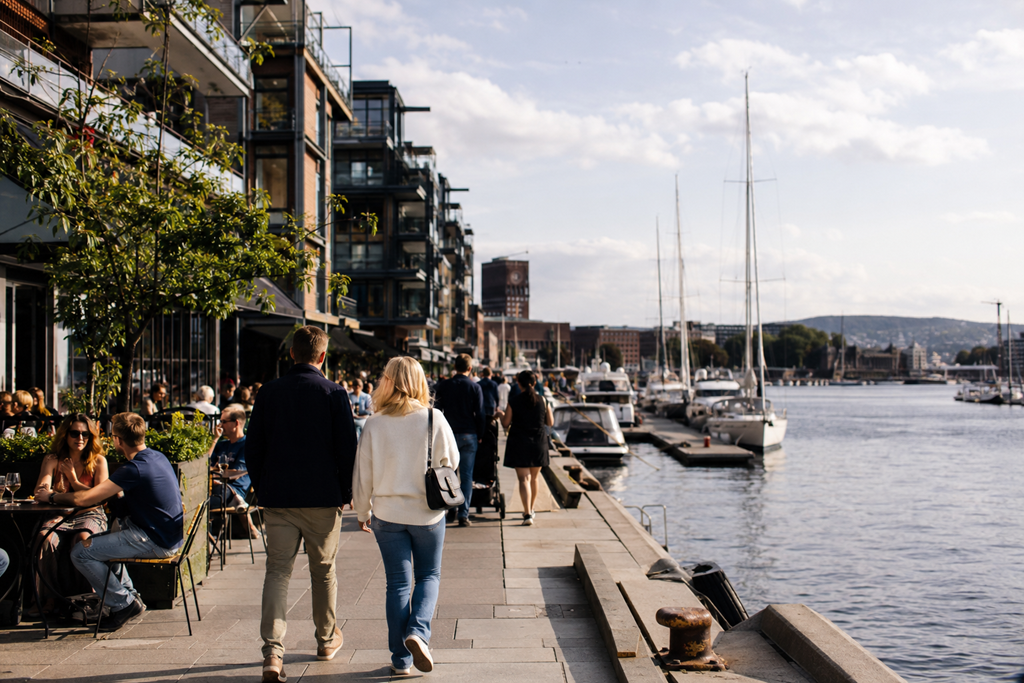
From Akershus Fortress, continue toward Aker Brygge and Tjuvholmen. This part of Oslo is polished and waterfront-focused, with promenades, restaurants, galleries, public art, and views across the fjord.
It is a good area for slowing down after a museum-and-landmark-heavy day. Walk the harborfront, sit by the water, or continue toward the Astrup Fearnley area if contemporary art interests you.
This is also a useful place to be in the late afternoon because you can easily turn the walk into dinner without needing to cross the city again.
Evening: Dinner Near The Waterfront Or Grünerløkka
For dinner, you have two good options.
If you want the simplest evening, stay around Aker Brygge, Tjuvholmen, or the harborfront. This works well if you are tired, traveling with family, or visiting in colder weather.
If you want a more neighborhood-focused evening, head to Grünerløkka. This area is known for cafés, casual restaurants, independent shops, bars, and a more local urban feel. It is a good contrast to the waterfront’s polished atmosphere.
Keep the evening easy. Oslo is a city where a relaxed walk after dinner can be just as memorable as another scheduled attraction.
Day 2: Bygdøy, Vigeland Sculpture Park, And Oslo’s Green Side
Day 2 shifts the focus toward museums, parks, and nature. You will visit Bygdøy, one of Oslo’s most useful areas for travelers because it combines museums, trails, beaches, and waterfront scenery in one compact peninsula. VisitOSLO describes Bygdøy as a peninsula near the city center with some of Oslo’s most popular museums, hiking trails, and beaches.
Morning: Head To Bygdøy
Start your second day by going to Bygdøy. In summer, the ferry from the city center can be a scenic way to arrive, while bus 30 runs year-round and stops near the main museums. VisitOSLO notes that the summer ferry takes roughly 15–20 minutes and that the bus from the city center takes about 15 minutes, though travelers should always check current routes and schedules before going.
Bygdøy is best approached with a choice-based mindset. There are several major museums here, and trying to visit all of them in one morning can make the day feel rushed. Pick one or two based on your interests.
Good options include:
The Fram Museum if you are interested in polar exploration and Norwegian expedition history.
The Norwegian Folk Museum if you want open-air cultural history, traditional buildings, and a broader feel for Norwegian life.
The Kon-Tiki Museum if you enjoy exploration stories and maritime history.
The Norwegian Maritime Museum if ships, coastlines, and seafaring culture are especially interesting to you.
Before visiting, check current opening hours, renovation updates, and ticket policies, since museum details can change.
Late Morning: Add A Bygdøy Walk
After your museum visit, make time for a walk on Bygdøy rather than treating it only as a museum stop. This is where Oslo’s city-and-nature balance becomes clearer.
Depending on the season and weather, you can walk toward the waterfront, explore wooded paths, or simply enjoy the quieter residential and coastal feel of the peninsula. Bygdøy is especially useful for travelers who want nature without needing a long day trip outside the city.
If the weather is poor, you can keep this portion short and spend more time in museums. If the weather is clear, let the walk become one of the highlights of the day.
Lunch: Eat Before Leaving Bygdøy Or Return To The City
For lunch, either eat near the museums if convenient or return toward the center and choose a casual café or bakery. Your best choice depends on how much time you spent on Bygdøy and whether you want to keep the afternoon more flexible.
If you are visiting during a busy travel period, avoid building the day around one specific lunch place. Instead, choose something simple near your route so you can keep moving without feeling rushed.
Afternoon: Visit Vigeland Sculpture Park
After Bygdøy, head to Vigeland Sculpture Park in Frogner Park. This is one of Oslo’s most memorable outdoor experiences and a strong fit for a short itinerary because it is free to wander, visually distinctive, and easy to enjoy at your own pace.
The park is known for its large collection of sculptures by Gustav Vigeland, set along broad paths, bridges, lawns, and formal park spaces. It works well for art lovers, families, photographers, and anyone who needs a slower outdoor stop after a museum-heavy morning.
Give yourself enough time to walk through the main sculpture axis without rushing. Even if you are not usually drawn to sculpture parks, the scale and setting make this one worth including.
Late Afternoon: Choose A Nature Or Neighborhood Add-On
After Vigeland Sculpture Park, choose one final add-on based on your energy level and the weather.
Option A: Holmenkollen For Views And Outdoor Atmosphere
If you want a stronger nature-and-viewpoint finish, consider heading toward Holmenkollen. The area is associated with Oslo’s ski culture and offers a more elevated view of the city and surrounding landscape.
This option is best if you are comfortable with extra transit and still have energy. It can be especially rewarding on clear days.
Option B: Grünerløkka For Cafés, Shops, And Local Streets
If you skipped Grünerløkka on Day 1, use late afternoon on Day 2 to explore it. Walk along neighborhood streets, browse small shops, stop for coffee, or look for a casual dinner.
This is the better choice if you want less transit and more of Oslo’s everyday city feel.
Option C: Return To The Harbor For One Last Fjord Walk
If you prefer a simple finish, return to the waterfront for an easy final walk. This works well if you are leaving early the next morning or want a low-effort evening.
Oslo’s harborfront is one of the city’s best repeat experiences. Seeing it at a different time of day can feel worthwhile, especially if the light is good.
Evening: Keep The Final Night Simple
For your last evening, choose dinner near wherever you finish the day. Oslo rewards a practical approach: good food, a short walk, and a comfortable end to the trip.
If you are staying near the city center, a final stroll near the harbor, Karl Johans gate, or the area around your hotel can be enough. If you are staying farther out, use public transit and avoid adding unnecessary complexity to the evening.
Where To Stay For A 2-Day Oslo Itinerary
For a short visit, location matters more than having the most scenic hotel.
The city center is the most convenient area for first-time visitors because it keeps you close to Oslo Central Station, the Opera House, the waterfront, museums, restaurants, and transit connections.
Aker Brygge and Tjuvholmen are good if you want a polished waterfront feel and easy evening walks.
Grünerløkka is a strong choice if you prefer cafés, neighborhood streets, and a more local atmosphere.
Majorstuen or Frogner can work well if you want a quieter base with good access to Vigeland Sculpture Park and public transit.
For only two days, avoid staying too far from transit unless you have a specific reason. You will enjoy the trip more if your hotel makes the itinerary easy.
Getting Around Oslo
Oslo is manageable without a car. Public transportation is usually the best way to connect the city center, Bygdøy, Frogner, Grünerløkka, and farther-out areas.
VisitOSLO notes that public transport in Oslo and surrounding boroughs is included in one ticketing system, covering city and regional buses, trams, underground, local trains, and ferries, though the Bygdøy ferries are not included in that system.
The City of Oslo also points travelers to Ruter for tickets and schedules across trams, subways, ferries, local trains, and buses.
For most visitors, the simplest approach is:
Use walking for the central waterfront and compact neighborhoods.
Use trams, buses, or metro for longer city connections.
Use the Bygdøy ferry only when it fits the season and your route.
Check current schedules before museum days, early departures, or evening plans.
Best Time To Visit Oslo For This Itinerary
This itinerary can work year-round, but the experience changes by season.
Late spring through early autumn is the easiest period for walking, waterfront time, ferry rides, parks, and outdoor viewpoints. Long daylight hours can also make a two-day trip feel more generous.
Winter can still be worthwhile, especially if you enjoy museums, cozy cafés, winter scenery, and Nordic atmosphere. Just expect colder weather, shorter days, and a stronger need to plan indoor breaks.
Shoulder seasons can be a good middle ground, with fewer crowds than peak summer and enough daylight for comfortable sightseeing. Pack layers regardless of season, since Oslo’s weather can shift during the day.
What To Skip With Only 2 Days
A good short itinerary depends as much on what you leave out as what you include.
With only two days, you probably do not need to visit every museum on Bygdøy. Choose one or two.
You also do not need to force a long fjord excursion unless that is your top priority. A short ferry ride, harbor walk, or waterfront viewpoint may give you enough of the fjord feeling on a first visit.
Avoid planning your days around far-apart restaurants or overly specific timed stops. Oslo is easy to enjoy when you let the geography guide the plan.
Simple 2-Day Oslo Itinerary Summary
Day 1: City Center And Waterfront
Start at the Oslo Opera House.
Walk the waterfront toward MUNCH.
Have lunch near Bjørvika or the city center.
Visit Akershus Fortress.
Walk through Aker Brygge and Tjuvholmen.
Have dinner near the waterfront or in Grünerløkka.
Day 2: Bygdøy And Green Oslo
Spend the morning on Bygdøy.
Choose one or two museums.
Add a short Bygdøy walk.
Have lunch nearby or back in the city.
Visit Vigeland Sculpture Park.
Choose Holmenkollen, Grünerløkka, or a final harbor walk.
Keep the evening relaxed and close to your route.
Final Thoughts On Spending 2 Days In Oslo
Two days in Oslo gives you enough time to understand why the city feels different from many other European capitals. It is modern but historic, urban but close to nature, compact but full of worthwhile museums, parks, and waterfront spaces.
The best approach is not to rush from attraction to attraction. Use the first day to experience the city’s waterfront, architecture, art, and history. Use the second day to slow down into Bygdøy, sculpture gardens, and green spaces. With that balance, a short Oslo trip can feel complete without feeling crowded.
Download Our Free E-book!