Stockholm is one of Europe’s easiest capital cities to enjoy at a thoughtful pace. Built across islands, connected by bridges, ferries, and walkable waterfronts, it offers a memorable mix of historic streets, museums, design, food, and open water.
This 2-day Stockholm itinerary is designed for first-time visitors who want to see the city’s classic highlights without rushing from place to place. You’ll spend time in Gamla Stan, visit one of Stockholm’s most important museums, explore the island of Djurgården, enjoy scenic viewpoints, and leave room for fika, neighborhood wandering, and flexible choices.
The plan is built around durable, well-established Stockholm experiences rather than temporary events or trend-driven stops. As always, check current opening hours, ticket requirements, and transit details before you go, especially during busy travel periods.
How To Use This 2-Day Stockholm Itinerary
Two days is enough time to get a strong first impression of Stockholm, but it helps to group your sightseeing by area. This itinerary keeps each day geographically logical so you spend less time backtracking and more time enjoying the city.
Day 1 focuses on Stockholm’s historic core, waterfront views, and central landmarks. Day 2 takes you to Djurgården, one of the city’s most visitor-friendly areas for museums, parks, and harbor scenery.
Stockholm is a city where walking is part of the experience, so comfortable shoes are helpful. Public transportation, ferries, and trams can fill in the gaps when distances feel long or the weather changes.
Day 1: Gamla Stan, City Hall, Waterfront Views, And Södermalm
Morning: Start In Gamla Stan
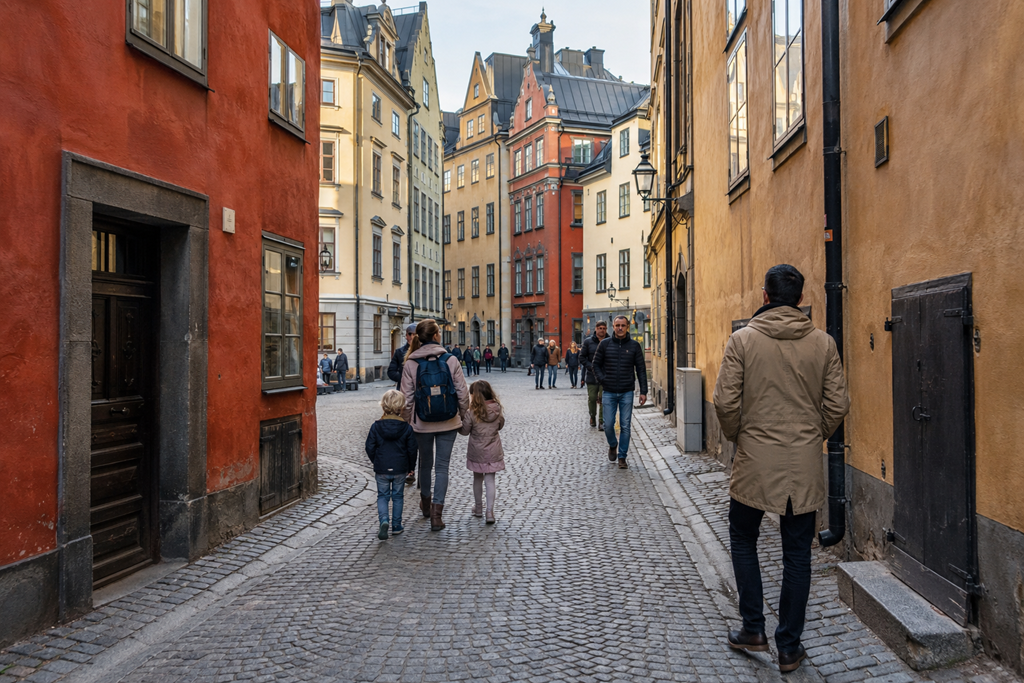
Begin your first morning in Gamla Stan, Stockholm’s Old Town. This is the city’s historic heart, with narrow cobblestone lanes, colorful facades, small squares, churches, shops, and cafés.
Start near Stortorget, the old main square, then wander slowly through the surrounding streets. Gamla Stan is compact, but it rewards unhurried exploration. Rather than trying to see every corner, give yourself time to notice the details: painted buildings, old doorways, small courtyards, and glimpses of the water between streets.
Key places to consider in or near Gamla Stan include:
- Stortorget, the historic central square
- Stockholm Cathedral
- The Royal Palace exterior and surrounding courtyards
- Västerlånggatan and nearby side streets
- Quiet back lanes away from the busiest walking routes
The Royal Palace is one of Stockholm’s major landmarks, but for a short 2-day visit, you do not need to tour every interior unless it strongly interests you. Many first-time visitors will be satisfied walking around the palace area, seeing the courtyards, and enjoying the broader atmosphere of Gamla Stan.
Late Morning: Pause For Fika
After walking through Gamla Stan, take a fika break. Fika is the Swedish habit of pausing for coffee and something sweet, often with a pastry such as a cinnamon bun or cardamom bun.
You do not need to chase a specific café for this to be worthwhile. Choose a place that feels inviting, sit for a while, and let the city slow down around you. In a short itinerary, this kind of pause keeps the day from becoming too museum-heavy or checklist-driven.
Midday: Walk Toward Stockholm City Hall
From Gamla Stan, make your way toward Stockholm City Hall, one of the city’s most recognizable buildings. The official City Hall site describes it as one of Stockholm’s iconic buildings and highlights its ceremonial rooms, tower views, and waterfront park.
Even if you do not take a guided visit inside, the exterior and waterfront setting are worth seeing. The views across the water toward the Old Town are especially helpful for understanding Stockholm’s island layout.
If you want a deeper look, check current tour options before you go. If you prefer to keep the day flexible, simply walk around the building, enjoy the water, and continue toward your next stop.
Afternoon: Explore Norrmalm Or Return To The Waterfront
After City Hall, you have two good options depending on your energy level.
If you want a practical central-city experience, walk into Norrmalm, Stockholm’s modern commercial center. This area is useful for shopping, transit connections, and seeing the everyday rhythm of the city beyond the postcard streets.
If you prefer scenery, stay closer to the water. Stockholm’s waterfront paths are one of the easiest ways to enjoy the city without needing a formal attraction. Walk at a relaxed pace, take photos, and let the route unfold naturally.
This is also a good time for lunch. Look for a simple Swedish meal, a market-style food hall, or a casual café. For an evergreen trip plan, it is better to choose based on location and convenience than to build the day around a single trendy restaurant.
Late Afternoon: Head To Södermalm For Views
In the late afternoon, head toward Södermalm, the island south of Gamla Stan. Södermalm has a more residential and creative feel, with cafés, shops, local streets, and some of the city’s best viewpoints.
A classic first-time visitor route is to walk toward Monteliusvägen, a scenic path with views over Lake Mälaren, the Old Town, and City Hall. It is a simple, memorable Stockholm experience and fits well near the end of your first day.
Take your time here. The view is especially lovely in softer light, but it is worthwhile at many times of day.
Evening: Dinner In Södermalm Or Gamla Stan
For your first evening, keep dinner simple and convenient. Södermalm works well if you want a neighborhood feel, while Gamla Stan is better if you prefer to stay close to the historic center.
Avoid overloading the evening with another major attraction. Stockholm is best enjoyed when you leave space for wandering, waterfront views, and a slower meal.
Day 2: Djurgården, The Vasa Museum, Parks, And Harbor Scenery
Morning: Take Your Time On Djurgården
Start your second day on Djurgården, one of Stockholm’s most rewarding areas for first-time visitors. Djurgården combines museums, parkland, walking paths, waterfront views, and family-friendly attractions in one manageable area.
Depending on where you are staying, you can reach Djurgården by tram, bus, ferry, or on foot from central Stockholm. A ferry ride can be especially enjoyable because it gives you another perspective on the city’s waterways.
Visit Stockholm emphasizes the city’s natural access and archipelago setting, noting that Stockholm is closely tied to forests, green areas, and thousands of islands. Djurgården captures that feeling within easy reach of the center.
Late Morning: Visit The Vasa Museum
Make the Vasa Museum your main museum stop of the day. It is one of Stockholm’s most distinctive attractions and a strong choice for first-time visitors because it is both historically important and visually impressive.
The museum is built around the Vasa, a 17th-century warship that sank in 1628 and was later recovered. The official Vasa Museum describes it as the world’s best-preserved 17th-century ship, and Visit Stockholm notes that more than 98 percent of the ship is original.
This is not just a museum for maritime history enthusiasts. The scale of the ship, the story of its sinking, and the craftsmanship of the preserved carvings make it accessible even if you usually prefer outdoor sightseeing.
Allow enough time to move slowly through the exhibits. Check current ticketing and opening details before visiting, especially in peak travel seasons.
Midday: Lunch Or Fika On Djurgården
After the Vasa Museum, stay on Djurgården for lunch or fika. This keeps the day easy and avoids unnecessary backtracking.
If the weather is pleasant, consider taking a walk before or after eating. Djurgården’s paths and waterfront areas are part of the appeal, and the island gives you a softer, greener break from central sightseeing.
Afternoon: Choose A Second Djurgården Experience
For the afternoon, choose one additional experience based on your interests rather than trying to fit in everything.
If you enjoy open-air history and cultural settings, consider Skansen. It is especially useful for travelers who want a broader sense of Swedish traditions, buildings, and everyday life.
If you are interested in pop culture, ABBA The Museum is nearby and can be a fun contrast to the historic weight of the Vasa Museum.
If you prefer a lighter day, skip the second museum and walk more of Djurgården instead. This is often the better choice for travelers who want the itinerary to feel spacious rather than packed.
A good rule for a 2-day Stockholm trip: choose one major museum and one lighter activity per day. That gives the city room to breathe.
Late Afternoon: Return By Ferry Or Walk Along The Harbor
When you are ready to leave Djurgården, consider returning by ferry if the route is convenient. Stockholm is a city best understood from the water, and even a short ferry ride can feel like part of the sightseeing.
If you prefer walking, follow the waterfront back toward central Stockholm. This is a good time to enjoy views, take photos, and appreciate how naturally the city blends urban life with water and green space.
Evening: A Final Stockholm Walk
For your final evening, keep the plan flexible. You could return to Gamla Stan for one last walk, spend more time in Södermalm, or enjoy a quiet dinner near your hotel.
If the weather is good, prioritize being outside. A simple evening walk along the water may be more memorable than squeezing in one more attraction.
Where To Stay For A First Stockholm Visit
For a short 2-day Stockholm itinerary, location matters. Staying central helps you reduce transit time and makes it easier to return to your hotel between activities if needed.
Good areas for first-time visitors include:
Gamla Stan
Gamla Stan is atmospheric and central, with easy access to the Old Town, Royal Palace area, ferries, and surrounding islands. It can feel busy during the day, but it is convenient for a short sightseeing-focused visit.
Norrmalm
Norrmalm is practical, central, and well-connected by public transportation. It is a strong choice if you value convenience, train access, shopping, and easy movement around the city.
Östermalm
Östermalm is polished, elegant, and close to waterfront areas, museums, and shopping streets. It can work well for travelers who want a refined central base.
Södermalm
Södermalm is a good option if you prefer a neighborhood feel with cafés, restaurants, viewpoints, and a slightly more local atmosphere. It is still close enough to the historic center for a 2-day visit.
Getting Around Stockholm
Stockholm is very walkable in the central areas, but the city’s island layout means public transportation is useful. Trams, buses, metro lines, and ferries can help you move between neighborhoods without wearing yourself out.
For this itinerary, you can walk much of Day 1 and use transit or ferry connections for Djurgården on Day 2. Check current routes and ticket options before your trip, since schedules and systems can change.
The metro can also be useful if you are staying outside the historic center. Stockholm’s public transportation is generally straightforward once you understand your nearest station or stop.
What To Eat And Drink In Stockholm
For a short first visit, focus on a few classic food experiences rather than trying to build the trip around specific restaurants.
Consider trying:
- Fika with coffee and a cinnamon or cardamom bun
- Swedish meatballs or a traditional home-style dish
- Fresh seafood or herring if you enjoy fish
- A simple lunch in a market hall or casual café
- Seasonal pastries or baked goods
Stockholm has a strong café culture, so even a simple coffee break can become one of the most enjoyable parts of the trip.
Best Time To Visit Stockholm
Stockholm changes noticeably with the seasons, so the best time depends on the kind of trip you want.
Late spring through early autumn is ideal for long walks, outdoor dining, ferries, parks, and waterfront time. Summer brings long daylight hours and the easiest conditions for first-time sightseeing.
Winter is colder and darker, but it can still be rewarding if you enjoy museums, cozy cafés, seasonal atmosphere, and quieter streets. If visiting in winter, plan shorter outdoor walks and give yourself more indoor options.
Shoulder seasons can be a good balance, with fewer crowds and enough daylight for comfortable exploring. Regardless of season, bring layers and be ready for changing weather.
Practical Planning Notes For Two Days In Stockholm
A successful 2-day Stockholm trip does not require seeing everything. It works best when you choose a few strong anchors and leave space between them.
Book ahead for major attractions during busy periods, especially if timed entry is required. Check current opening hours before you go, since museum schedules may vary by season or day of the week.
Keep your itinerary flexible around weather. If it rains, move more museum time into that day. If the weather is beautiful, prioritize waterfront walks, viewpoints, ferries, and parks.
Most importantly, resist the urge to treat Stockholm like a checklist. The city’s appeal is not only in its landmarks, but in the way old streets, everyday design, water, cafés, and green spaces fit together.
A Simple 2-Day Stockholm Itinerary At A Glance
Day 1
Morning: Gamla Stan
Late morning: Fika
Midday: Stockholm City Hall and waterfront views
Afternoon: Norrmalm or more waterfront walking
Late afternoon: Södermalm viewpoints
Evening: Dinner in Södermalm or Gamla Stan
Day 2
Morning: Djurgården
Late morning: Vasa Museum
Midday: Lunch or fika on Djurgården
Afternoon: Skansen, ABBA The Museum, or a longer Djurgården walk
Late afternoon: Ferry or harbor walk
Evening: Final relaxed dinner and walk
Final Thoughts For A First Stockholm Trip
Two days in Stockholm gives you enough time to experience the city’s historic core, waterfront beauty, museum culture, and neighborhood atmosphere without feeling like you have to rush.
Start with Gamla Stan, give yourself time near the water, make the Vasa Museum your main cultural stop, and leave room for fika and scenic walking. That combination offers a strong first visit and a clear reason to return for more of the archipelago, neighborhoods, museums, and day trips later.
Download Our Free E-book!