Berlin is one of Europe’s most layered cities: historic, creative, reflective, and constantly changing without losing sight of its past. For first-time visitors, the challenge is not finding things to do. It is deciding how to organize your time without turning the trip into a rushed checklist.
This 3-day Berlin itinerary is designed to give you a clear, realistic plan. It focuses on the city’s essential landmarks, major historical sites, museum culture, memorable neighborhoods, green spaces, and everyday food experiences. You will see classic places like the Brandenburg Gate, the Reichstag, Museum Island, and the East Side Gallery, all of which are widely recognized among Berlin’s major visitor sights.
The pace is intentionally manageable. Berlin is large, so this itinerary groups each day by geography and theme instead of sending you across the city every few hours.
Before You Start: How To Use This Berlin Itinerary
Berlin is spread out, but it is well connected by public transportation. Most visitors rely on a mix of U-Bahn, S-Bahn, trams, buses, and walking. The official Berlin WelcomeCard is one option that includes public transport access and visitor discounts, but you can also use regular public transport tickets depending on your plans.
For a first trip, staying in or near Mitte is convenient because many major sights are nearby. If you prefer a more local-feeling stay, areas such as Prenzlauer Berg, Kreuzberg, or Friedrichshain can work well, especially if you do not mind using transit more often. Berlin’s official tourism site highlights the city’s many distinct neighborhoods, each with its own character and history.
A few helpful planning notes:
Check current opening hours before you visit museums, memorials, or government buildings.
Book ahead for popular attractions that use timed entry.
Wear comfortable shoes. Berlin rewards slow walking.
Leave room for unplanned pauses. Some of the city’s best moments come from cafés, courtyards, parks, and quiet side streets.
Day 1: Classic Berlin, Major Landmarks, And Modern History
Your first day focuses on Berlin’s historic center. This is the best introduction to the city because it connects many of the places people most associate with Berlin: the Brandenburg Gate, the Reichstag, Unter den Linden, Museum Island, and memorial sites tied to Germany’s 20th-century history.
Morning: Brandenburg Gate, Reichstag, And Tiergarten
Start at the Brandenburg Gate, one of Berlin’s most recognizable landmarks. It is a strong first stop because it places you immediately in the heart of the city’s historic and symbolic landscape.
From there, walk toward the Reichstag, the home of Germany’s parliament. Even if you only view it from the outside, the building is worth seeing for its combination of history, restoration, and modern democratic symbolism. If you want to visit the dome, check the current reservation requirements before your trip.
After seeing the Reichstag, take a gentle walk along the edge of Tiergarten. This large central park gives you a break from the city streets and helps balance the historical weight of the morning. You do not need to explore the entire park. A short walk is enough to reset before continuing.
Late Morning: Memorial To The Murdered Jews Of Europe
Walk from the Brandenburg Gate area to the Memorial to the Murdered Jews of Europe. The memorial’s field of concrete stelae is simple, serious, and intentionally open to personal reflection.
Give yourself time here. It is not a place to rush through between photo stops. Visit respectfully, avoid climbing on the stones, and consider spending time in the information center if it is open during your visit.
This part of Berlin is compact, but emotionally significant. The value of the morning is not just that you see major landmarks. It is that you begin to understand how Berlin places memory directly into its everyday urban landscape.
Afternoon: Unter Den Linden And Museum Island
From the memorial area, continue toward Unter den Linden, Berlin’s grand historic boulevard. This walk naturally leads you toward Museum Island, one of the city’s most important cultural areas.
Museum Island is a UNESCO-listed museum complex and a major anchor of Berlin’s art, archaeology, and cultural history scene. For a 3-day trip, choose one museum rather than trying to see everything. Trying to visit multiple major museums in one afternoon can make the experience feel thin and tiring.
Good approaches include:
Choose the Pergamon-related collections or archaeological exhibits if available during your visit.
Choose the Neues Museum if you are especially interested in ancient history.
Choose the Alte Nationalgalerie if you prefer art.
If museums are not your main interest, you can still enjoy the area from the outside. Walk around the island, view the architecture, and spend time near the river.
Evening: Dinner In Mitte Or Prenzlauer Berg
For your first evening, keep dinner easy. Mitte has plenty of options near the major sights, but Prenzlauer Berg can be a pleasant choice if you want a neighborhood atmosphere with relaxed restaurants, cafés, and tree-lined streets.
Berlin’s food scene is varied. You can find German classics, Turkish food, Vietnamese restaurants, bakeries, casual cafés, and modern international dining. For an evergreen first-night dinner, do not worry about chasing the newest restaurant. Look for a place near where you are staying or near the end of your sightseeing route.
End the night with a short walk rather than adding another major attraction. Berlin is best when you let the day settle.
Day 2: Museum Culture, Cold War History, And The Berlin Wall
Day 2 goes deeper into Berlin’s historical layers. You will spend time with museums, Cold War landmarks, and the Berlin Wall. This day can feel intense, so the itinerary includes space for breaks.
Morning: Choose A Museum Or Historical Site
Begin with one focused museum or historical site. Berlin has many strong options, and the right choice depends on your interests.
If you want broader German history, look for a major history museum.
If you want to understand life in divided Berlin, choose a museum or exhibition focused on the GDR or Cold War period.
If you prefer art and culture, return to Museum Island or choose a gallery that fits your taste.
The key is to pick one place and give it enough time. Berlin’s museums and historical exhibitions are often detailed. A rushed visit can become overwhelming quickly.
Late Morning: Checkpoint Charlie And Nearby Context
After your museum visit, head toward Checkpoint Charlie. This former crossing point between East and West Berlin is one of the city’s most famous Cold War sites.
The area around Checkpoint Charlie can feel more touristy than reflective, but it is still useful as a geographic marker of the divided city. Rather than treating it as a standalone highlight, use it as a starting point for thinking about how the Berlin Wall shaped daily life.
Take a short walk in the surrounding area and look for outdoor information displays or nearby historical markers. Berlin often tells its history through plaques, pavement lines, preserved fragments, and open-air exhibits.
Afternoon: Berlin Wall Memorial
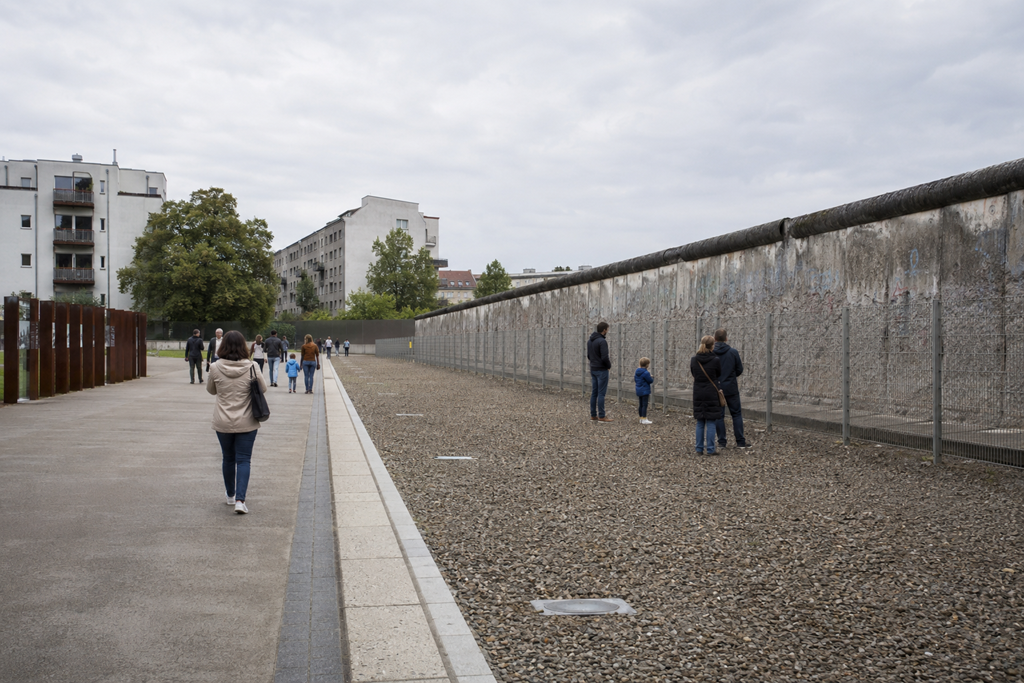
In the afternoon, visit the Berlin Wall Memorial on Bernauer Strasse. This is one of the most meaningful places to understand the Wall because it presents the division of the city in a more grounded and human way.
You can see preserved sections, open-air exhibits, and the former border strip. The site helps visitors understand that the Wall was not just a concrete barrier. It cut through neighborhoods, streets, families, churches, and ordinary routines.
Give yourself time to walk slowly. This is one of the most important stops on the itinerary, especially if you want Berlin’s history to feel real rather than abstract.
Late Afternoon: Coffee Break Or Quiet Neighborhood Walk
After the Berlin Wall Memorial, take a break. This part of the day benefits from a slower pace.
You can stay nearby for coffee or continue toward Prenzlauer Berg for a more residential neighborhood walk. Prenzlauer Berg is known for leafy streets, cafés, restored old buildings, and a lived-in local rhythm. It offers a softer contrast after a history-heavy morning and afternoon.
This is a good time to pause without feeling like you are “missing” something. In Berlin, neighborhood wandering is part of the experience.
Evening: Kreuzberg For Food And Local Energy
For the evening, head to Kreuzberg. This neighborhood has long been associated with multicultural Berlin, alternative culture, casual dining, and nightlife.
You do not need a complicated plan here. Walk, choose dinner, and let the area’s street life set the tone. Kreuzberg is especially good if you want something casual and flavorful rather than formal.
Depending on where you are, you might explore near the canal, around lively restaurant streets, or toward areas with Turkish and Middle Eastern food traditions. As always, check recent reviews and opening details before choosing a specific restaurant.
Day 3: East Side Gallery, Neighborhood Life, And A Softer Finish
Your final day shifts east and gives you a mix of Berlin Wall history, street art, river views, markets or neighborhood wandering, and a more flexible final afternoon.
Morning: East Side Gallery
Start at the East Side Gallery, a long preserved section of the Berlin Wall covered in murals. It is one of Berlin’s most visited open-air landmarks and a powerful example of how the city has transformed a symbol of division into a public artwork.
Go earlier in the day if you prefer a quieter experience. Walk the length at an unhurried pace. Some murals are famous, but the full experience comes from seeing the wall as a continuous public canvas.
Because the East Side Gallery is outdoors, it is easy to fit into the itinerary without worrying too much about timed entry. Still, weather can affect how enjoyable the visit feels, so dress accordingly.
Late Morning: Oberbaum Bridge And The Spree
From the East Side Gallery, walk toward Oberbaum Bridge. The bridge connects Friedrichshain and Kreuzberg and offers a memorable view of the River Spree.
This is a good moment to slow down, take photos, and appreciate Berlin’s mix of old infrastructure, post-industrial edges, water, street art, and modern development. The area feels different from the grand historic center you visited on Day 1, which is exactly why it belongs in a 3-day itinerary.
Afternoon: Friedrichshain Or Kreuzberg
Spend the afternoon in Friedrichshain or return to Kreuzberg, depending on your mood.
Friedrichshain works well if you want casual cafés, independent shops, neighborhood streets, and a younger creative feel. Kreuzberg works well if you want more food options, canal walks, and a lively but still everyday Berlin atmosphere.
If you enjoy markets, check whether a regular neighborhood market fits your timing. Avoid building your whole day around a specific market unless you have verified current days and hours. For evergreen planning, treat markets as a bonus rather than the foundation of the itinerary.
Alternative Afternoon: Charlottenburg And West Berlin
If you would rather see a different side of the city, spend your final afternoon in Charlottenburg. This western district gives you a more elegant, classic Berlin feel, with broad avenues, shopping streets, cultural institutions, and access to Charlottenburg Palace.
Charlottenburg Palace is a good option if you want royal history and gardens instead of more Wall history or street art. It also balances the itinerary by showing that Berlin is not only a city of modern conflict and creative reinvention. It has older Prussian layers, formal architecture, and quieter corners too.
Evening: A Simple Final Dinner And City Walk
For your final evening, resist the urge to add too much. Choose a neighborhood you liked and return for dinner.
Good final-night options include:
Mitte if you want an easy finish near classic landmarks.
Prenzlauer Berg if you want a relaxed residential evening.
Kreuzberg if you want a more energetic food scene.
Charlottenburg if you prefer a polished, quieter atmosphere.
After dinner, take one last walk. Berlin often leaves its strongest impression not through a single viewpoint, but through contrasts: memorials beside government buildings, art beside old walls, quiet courtyards near busy streets, and neighborhoods that each tell a different version of the city.
Where To Stay For This 3-Day Berlin Itinerary
For a first visit, Mitte is the most practical base. You will be close to many major sights, and the public transportation connections are strong. This is especially helpful if you want to reduce planning friction.
Prenzlauer Berg is a good choice if you want a more neighborhood-focused stay with cafés, local streets, and a slightly slower evening feel.
Kreuzberg and Friedrichshain are better if you want restaurants, nightlife, street art, and a more energetic side of the city.
Charlottenburg works well for travelers who prefer a more classic, polished area with good shopping, cultural sites, and a quieter pace.
There is no single perfect neighborhood for everyone. Choose based on how you want your evenings to feel, not only based on daytime sightseeing.
How To Get Around Berlin
Berlin is too large to explore only on foot, but many individual areas are very walkable once you arrive. Plan to use public transportation between neighborhoods, then walk within each area.
The U-Bahn and S-Bahn are especially useful for visitors, while trams are helpful in parts of the former East Berlin. Buses can be useful too, especially for connecting areas not directly served by rail.
Before you buy any visitor pass, compare it with your actual plans. A transport pass can be convenient if you expect to move around often, while regular tickets may be enough if you plan slower days with fewer rides.
For airport transfers, late-night travel, accessibility needs, and service changes, always check current transportation information before you go.
What To Eat In Berlin
Berlin’s food culture reflects the city’s history and diversity. You can eat very well without making every meal a major production.
Classic and easy food experiences include currywurst, döner kebab, German breads and pastries, casual beer gardens, Turkish food, Vietnamese restaurants, and relaxed café breakfasts.
For a 3-day trip, aim for variety:
One casual Berlin street-food meal.
One neighborhood restaurant dinner.
One slower café breakfast or coffee break.
One meal that reflects the city’s international food culture.
Rather than chasing a fixed list of “best” restaurants, choose places that fit your route, budget, and energy level. Berlin is a city where simple meals can be just as memorable as planned dining.
Best Time To Visit Berlin
Berlin can work well in every season, but the experience changes throughout the year.
Spring and early autumn are especially comfortable for walking, parks, outdoor cafés, and neighborhood exploring.
Summer brings long days and outdoor energy, though popular areas can be busier.
Winter is colder and darker, but museums, cafés, history sites, and indoor cultural experiences still make the city worthwhile.
Pack for variable weather and plan a mix of indoor and outdoor activities. This itinerary is flexible enough to adjust: use museum time during rain, save parks and longer walks for better weather, and avoid overloading your schedule in extreme cold or heat.
Practical Berlin Travel Notes
Berlin is generally straightforward for visitors, but a few habits make the trip smoother.
Carry a payment backup. Cards are widely used, but some smaller places may prefer cash.
Validate or activate public transport tickets when required.
Give yourself extra time when crossing the city.
Book timed-entry attractions ahead when needed.
Be respectful at memorials and historical sites.
Do not try to see every museum in one trip.
Let neighborhoods be part of the itinerary, not just gaps between attractions.
Berlin is best understood in layers. Three days will not show you everything, but it is enough time to experience the city’s essential history, cultural depth, neighborhood texture, and everyday rhythm.
Download Our Free E-book!