Hong Kong is one of the easiest cities in Asia to enjoy in a short amount of time, especially if you like walkable neighborhoods, skyline views, ferries, markets, food streets, and scenic waterfronts. With only three days, the key is not trying to see everything. Hong Kong rewards travelers who group their days by area, leave room for wandering, and balance big sights with simple local experiences.
This 3-day Hong Kong itinerary is designed for first-time visitors who want a practical mix of city energy, harbor views, cultural landmarks, local food, and a few quieter moments. It keeps the pacing realistic, avoids unnecessary backtracking, and focuses on experiences that are likely to remain worthwhile over time.
How To Use This 3-Day Hong Kong Itinerary
Hong Kong is compact, but it is layered. Hong Kong Island, Kowloon, and the surrounding islands each have their own rhythm. For a first visit, three days is enough time to experience the city’s famous skyline, explore historic neighborhoods, ride the Star Ferry, visit Victoria Peak, walk through busy markets, and enjoy a taste of Hong Kong’s food culture.
This itinerary assumes you want full days without making the trip feel rushed. You can follow it closely or use it as a flexible framework depending on your hotel location, weather, and energy level.
A Simple Area Breakdown
Hong Kong Island is where you will find Central, Sheung Wan, Victoria Peak, and many hillside streets with trams, temples, cafés, and dramatic views.
Kowloon sits across Victoria Harbour and is home to Tsim Sha Tsui, Mong Kok, markets, museums, and some of the best skyline views looking back toward Hong Kong Island.
Lantau Island is where many travelers visit the Big Buddha and Po Lin Monastery, while other islands and coastal areas offer a slower side of Hong Kong.
Day 1: Hong Kong Island, Victoria Peak, And The Harbor
Start your trip on Hong Kong Island, where historic streets, modern towers, hillside neighborhoods, and skyline views come together quickly. This first day gives you a strong sense of the city without requiring too much complicated transportation.
Morning: Explore Central And Sheung Wan
Begin in Central, Hong Kong’s financial core and one of the best places to feel the contrast between old and new. Glass towers, elevated walkways, narrow lanes, traditional shops, and steep streets sit close together.
From Central, walk toward Sheung Wan, one of the most enjoyable neighborhoods for a first-day wander. This area has a mix of dried seafood shops, incense-filled temples, antique stores, cafés, murals, and quiet side streets. It is a good place to slow down and notice the everyday texture of the city.
A few worthwhile stops in this area include Man Mo Temple, Hollywood Road, Upper Lascar Row, and the streets around Tai Ping Shan. Man Mo Temple is especially useful for adding cultural depth to the day because it offers a peaceful contrast to the surrounding city.
Keep the morning flexible. Rather than rushing from one landmark to another, give yourself time to walk, browse, and stop for tea, coffee, or a simple local breakfast.
Midday: Ride The Mid-Levels Escalator And Have Lunch Nearby
From Central or Sheung Wan, make your way toward the Central–Mid-Levels Escalator. It is not a traditional attraction in the grand sense, but it is a very Hong Kong experience. The long outdoor escalator system moves through hillside neighborhoods, passing restaurants, apartment buildings, shops, and side streets.
Use it as a gentle way to move uphill while getting a feel for the city’s vertical layout. You can step off around SoHo or nearby streets for lunch. This area has many options, from casual noodles and dim sum to international cafés and relaxed sit-down meals.
For a more local approach, choose a simple cha chaan teng-style meal, wonton noodles, roast meat rice, or dim sum. Hong Kong’s food culture is one of the best parts of visiting, and you do not need a famous restaurant to enjoy it.
Afternoon: Visit Victoria Peak
In the afternoon, head toward Victoria Peak, one of Hong Kong’s classic viewpoints. The Peak is popular for good reason: it gives you a wide view of the city, Victoria Harbour, Kowloon, and the surrounding hills.
You can reach the area by Peak Tram, bus, taxi, or a combination depending on timing and crowds. The Peak Tram is iconic, but it can be busy during popular travel periods, so check current details and consider alternatives if lines are long.
Once at the top, take your time. The view can change depending on weather, haze, and light, so it is worth lingering rather than treating it as a quick photo stop. If you enjoy walking, consider part of the Peak Circle Walk for a quieter perspective away from the busiest viewing areas.
Evening: Take In The Skyline From The Waterfront
For your first evening, return toward the harbor and enjoy the skyline from either side. If you are staying on Hong Kong Island, you can walk along the Central or Wan Chai waterfront. If you want the most classic skyline view, take the Star Ferry to Tsim Sha Tsui in Kowloon.
The Star Ferry is simple, scenic, and memorable. It gives you a short harbor crossing with some of the city’s best views, especially around late afternoon or evening.
Once in Tsim Sha Tsui, walk along the waterfront promenade and Avenue of Stars area. This is one of the best places to see Hong Kong Island’s skyline across the water. Keep dinner nearby, or head deeper into Kowloon if you want a more local food experience.
Day 2: Kowloon, Markets, Museums, And Local Food
Spend your second day across the harbor in Kowloon. Compared with Central and Hong Kong Island’s hillside neighborhoods, Kowloon feels denser, more street-level, and often more local in atmosphere. This is a good day for markets, museums, harbor views, and casual food.
Morning: Start In Tsim Sha Tsui
Begin in Tsim Sha Tsui, one of Kowloon’s most convenient areas for visitors. It has harbor views, shopping streets, cultural attractions, and easy access to public transportation.
If you enjoy museums, consider visiting the Hong Kong Museum of History, Hong Kong Science Museum, Hong Kong Museum of Art, or M+ in the West Kowloon Cultural District depending on your interests. Exhibits and opening details can change, so check current information before you go.
If you prefer to stay outdoors, spend the morning walking the promenade, exploring nearby streets, or making your way toward the West Kowloon waterfront. The views back toward Hong Kong Island are especially worthwhile when the weather is clear.
Midday: Eat Your Way Through Kowloon
Kowloon is an excellent area for casual food. This is a good time to try dishes such as wonton noodles, congee, roast goose or roast duck, dim sum, egg tarts, pineapple buns, or milk tea.
Instead of building your day around one “must-visit” restaurant, choose a neighborhood and let the meal fit your route. Tsim Sha Tsui, Jordan, Yau Ma Tei, and Mong Kok all offer plenty of options.
For travelers who like practical food experiences, this is one of the best parts of Hong Kong: you can eat well without making every meal formal. Small shops, bakeries, noodle houses, and tea restaurants are part of the everyday travel experience.
Afternoon: Visit Yau Ma Tei And Mong Kok
After lunch, move north toward Yau Ma Tei and Mong Kok. These neighborhoods are dense, lively, and full of signs, shops, markets, and street-level energy.
In Yau Ma Tei, you can visit Tin Hau Temple and explore nearby streets. The area gives a sense of older Kowloon and works well as a slower transition between Tsim Sha Tsui and Mong Kok.
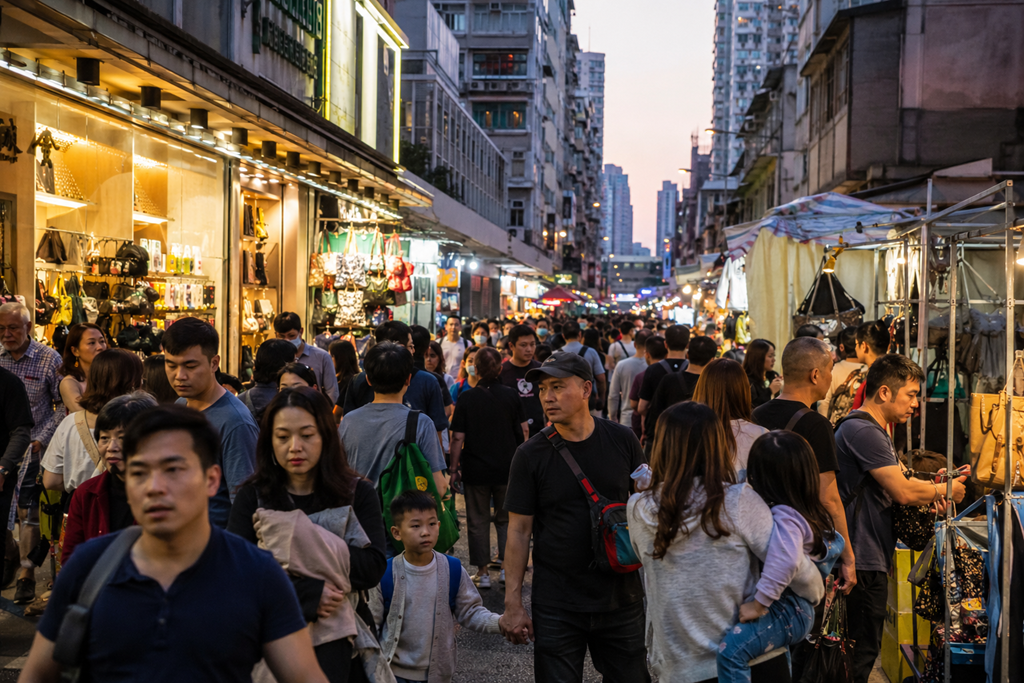
Continue toward Mong Kok, one of the busiest districts in Hong Kong. It can feel intense, but it is also one of the most memorable places to walk. Markets and shopping streets in the area may include flower stalls, sneakers, electronics, household goods, snacks, and small local shops.
The Ladies’ Market is one of the best-known market streets, but the broader experience is really about walking through the neighborhood and taking in the density. Keep your expectations realistic: some market areas are touristy, but the surrounding street life is still part of the appeal.
Evening: Temple Street And A Casual Dinner
For the evening, head toward Temple Street Night Market in Jordan and Yau Ma Tei. Like many long-running market areas, the exact mix of stalls can change over time, but the neighborhood remains a classic Kowloon evening stop.
This is a good place to walk, browse, and have a simple dinner nearby. Look for casual Cantonese food, claypot rice when available, noodles, seafood, or small local restaurants. Keep the evening unhurried. Kowloon is best experienced by walking, pausing, and letting the street atmosphere unfold naturally.
If you still have energy afterward, return to the Tsim Sha Tsui waterfront for another skyline view. Hong Kong’s harbor looks different from morning to night, and it is worth seeing more than once.
Day 3: Lantau Island, Big Buddha, Or A Slower Local Day
For your third day, you have two good options. If you want a classic scenic and cultural outing, visit Lantau Island, the Big Buddha, and Po Lin Monastery. If you prefer to stay in the city, use the day for a slower mix of neighborhoods, parks, food, and harbor views.
Option A: Visit Lantau Island And The Big Buddha
For many first-time visitors, Lantau Island is a worthwhile final-day experience. The Tian Tan Buddha, often called the Big Buddha, sits near Po Lin Monastery and offers a different side of Hong Kong from the dense urban neighborhoods.
The journey usually involves taking the MTR toward Tung Chung and then continuing by cable car or bus, depending on your preference and current operations. The cable car is scenic, but weather and maintenance can affect service, so check current details before planning your day around it.
Once you arrive, visit the Big Buddha, walk around Po Lin Monastery, and take time to enjoy the mountain setting. The area can be busy, but the scale of the landscape helps the experience feel open and different from the city.
This option works best if you are comfortable devoting a large part of the day to one outing. It is not difficult, but it does require more transit time than staying in Central or Kowloon.
Option B: Stay In The City For A Slower Final Day
If you prefer not to spend your last day traveling farther out, stay closer to the city and explore at a gentler pace.
You might begin with Hong Kong Park or the Zoological and Botanical Gardens, both of which offer greenery close to Central. Then spend time in Wan Chai, Causeway Bay, or North Point depending on your interests. These areas offer street markets, local restaurants, tram rides, shopping streets, and everyday neighborhood scenes.
A ride on the Hong Kong tram is a simple and memorable way to experience Hong Kong Island. It is slower than the MTR, but that is part of the appeal. Sitting upstairs and watching the city pass by is one of the easiest low-effort experiences to add to your itinerary.
For lunch, choose something simple and local. A final bowl of noodles, dim sum, roast meat rice, or bakery stop can be just as satisfying as a formal meal.
Afternoon: Add One More Viewpoint Or Waterfront Walk
Use your final afternoon for one more view or walk. Good options include the Central and Western District Promenade, the Wan Chai waterfront, the Tsim Sha Tsui promenade, or West Kowloon.
If you skipped Victoria Peak on Day 1 due to weather, this is your backup opportunity. Views in Hong Kong depend heavily on conditions, so keeping some flexibility helps.
If you want something quieter, consider a walk in a park, a neighborhood café break, or a return to Sheung Wan for browsing and food. A good final day does not need to be packed. Hong Kong can be intense, and leaving space often makes the trip more enjoyable.
Evening: End With A Harbor Crossing
For your final evening, take one more Star Ferry ride if it fits your route. It is simple, inexpensive, scenic, and one of the most timeless Hong Kong travel experiences.
Have dinner on whichever side of the harbor is easiest for your hotel or onward plans. For a low-stress final meal, choose a neighborhood with several options rather than chasing a specific restaurant. Tsim Sha Tsui, Central, Sheung Wan, Wan Chai, Jordan, and Mong Kok all work well depending on where you are staying.
End with a short waterfront walk if the weather is comfortable. The skyline is one of Hong Kong’s defining experiences, and it is a fitting way to close a 3-day visit.
Where To Stay For 3 Days In Hong Kong
For a short trip, location matters. Staying near an MTR station will save time and make the itinerary easier to follow.
Tsim Sha Tsui
Tsim Sha Tsui is one of the best areas for first-time visitors who want easy access to harbor views, museums, shopping, restaurants, and the Star Ferry. It is especially convenient if you want to spend time in Kowloon while still crossing easily to Hong Kong Island.
Central Or Sheung Wan
Central and Sheung Wan work well if you want hillside streets, easy access to Victoria Peak, restaurants, cafés, temples, and ferry connections. This area is practical for travelers who like walkable neighborhoods and do not mind some steep streets.
Wan Chai Or Causeway Bay
Wan Chai and Causeway Bay are good choices for travelers who want a mix of local food, shopping, transportation, and Hong Kong Island access. Wan Chai has a more layered neighborhood feel, while Causeway Bay is busier and more shopping-focused.
Mong Kok Or Jordan
Mong Kok and Jordan can be good for travelers who want dense local energy, street food, markets, and a more Kowloon-centered stay. These areas may feel busier, but they are convenient and full of everyday Hong Kong atmosphere.
Getting Around Hong Kong
Hong Kong is generally easy to navigate with public transportation. The MTR is efficient for longer distances, while walking, ferries, buses, trams, and taxis fill in the gaps.
MTR
The MTR is the easiest way to move between major neighborhoods. It is especially useful for getting between Hong Kong Island, Kowloon, and Lantau Island.
Star Ferry
The Star Ferry is both transportation and experience. Use it between Central or Wan Chai and Tsim Sha Tsui when it fits your route.
Trams
Hong Kong Island’s double-decker trams are slower but scenic. They are best when you are not in a hurry and want to see the city at street level.
Walking
Hong Kong is walkable in many areas, but streets can be steep, crowded, and layered with overpasses, stairs, and indoor passageways. Comfortable shoes make a big difference.
Taxis And Ride Options
Taxis can be useful for short hops, late evenings, or when you are tired. They are especially helpful if your destination is uphill or not directly near an MTR station.
What To Eat During 3 Days In Hong Kong
Hong Kong’s food scene is one of the main reasons to visit. You do not need a complicated dining plan. A few classic experiences can make the trip feel complete.
Try dim sum if you enjoy shared plates and tea. Look for wonton noodles or beef brisket noodles for a simple, satisfying meal. Roast goose, roast duck, or barbecue pork over rice are classic casual options. For breakfast or a snack, try pineapple buns, egg tarts, milk tea, congee, or a bakery stop.
For a 3-day trip, balance planned meals with spontaneous stops. Some of the best food moments come from choosing a busy-looking noodle shop, tea restaurant, bakery, or casual local spot near where you already are.
Practical Tips For A First Hong Kong Trip
Give Yourself Weather Flexibility
Hong Kong views are weather-dependent. If the sky is clear, prioritize Victoria Peak or a harbor viewpoint. If it is hazy or rainy, move museums, markets, food, and neighborhood walks earlier in your schedule.
Do Not Overload Each Day
Hong Kong is compact, but it can be tiring because of crowds, stairs, humidity, and constant movement. A good itinerary should leave space for breaks.
Keep Some Cash Available
Many places accept cards or mobile payments, but smaller shops, markets, taxis, and casual eateries may be easier with cash. It is useful to keep some local currency on hand.
Check Current Details Before Visiting
For attractions, museums, cable cars, and transport routes, check current hours, closures, and reservation requirements before you go. This is especially important during holidays, maintenance periods, and busy travel seasons.
Use The Harbor As Your Anchor
When the city feels overwhelming, return to the water. The harbor, ferry rides, and waterfront promenades help make Hong Kong feel easier to understand.
Is 3 Days Enough For Hong Kong?
Three days is enough for a strong first visit to Hong Kong. You can see Victoria Peak, ride the Star Ferry, explore Central and Sheung Wan, experience Kowloon markets, enjoy harbor views, and add either Lantau Island or a slower local day.
You will not see everything, and that is fine. Hong Kong is better when you allow it to feel layered rather than trying to turn every hour into a checklist. With a clear route, a few classic experiences, and room for food and wandering, three days can feel both full and manageable.
Download Our Free E-book!