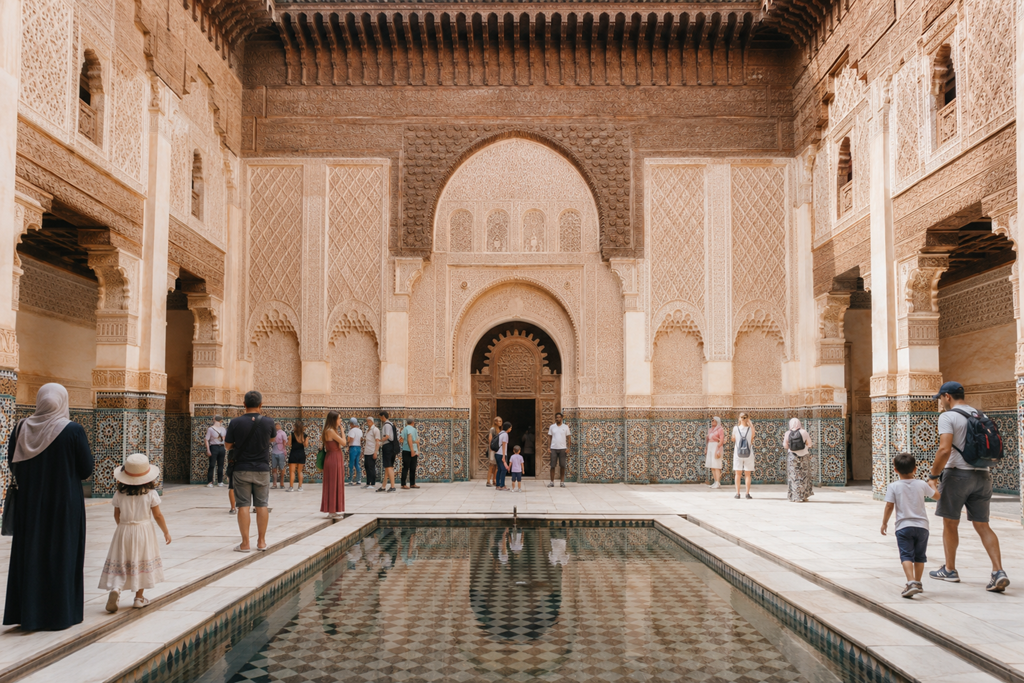
Marrakech is one of Morocco’s most memorable cities for first-time visitors: a place of historic palaces, garden courtyards, lively souks, rooftop views, and everyday street life. The old medina is recognized by UNESCO, with landmarks such as the ramparts, Koutoubia Mosque, Saadian Tombs, Badi Palace, and Menara pavilion contributing to its historic value.
This 3-day Marrakech itinerary is designed to help you experience the city without overloading each day. It balances the medina’s energy with quieter gardens, cultural sites, and practical breathing room so you can enjoy the city at a realistic pace.
How To Use This 3-Day Marrakech Itinerary
This itinerary works best if you are staying in or near the medina, Gueliz, Hivernage, or a riad within walking distance of the main historic areas. Marrakech is walkable in parts, especially inside the medina, but taxis are useful when moving between the old city, Majorelle Garden, Gueliz, and farther-out areas.
A few helpful notes before you start:
- Wear comfortable shoes for uneven streets and long walking days.
- Check current opening hours before visiting palaces, tombs, museums, and gardens.
- Consider a licensed local guide for the medina and souks, especially on your first day.
- Keep the schedule flexible, since Marrakech is best experienced slowly.
- Save your most relaxed clothes and sun protection for garden and outdoor time.
Day 1: The Medina, Koutoubia Mosque, Souks, And Jemaa El-Fnaa
Your first day focuses on the heart of Marrakech. This is the day to get oriented, walk through the old city, see the famous square, and begin understanding how the medina fits together.
Morning: Start Around Koutoubia Mosque
Begin near Koutoubia Mosque, one of Marrakech’s most recognizable landmarks. Its minaret is a major visual reference point in the city and can help you get your bearings as you move around the medina. Non-Muslim visitors generally admire the mosque from outside, but the surrounding gardens and open spaces make it a good first stop.
Take your time here. This is not a place you need to rush through. Walk the nearby paths, notice the architecture, and use the area as a gentle starting point before entering the busier parts of the old city.
Late Morning: Explore The Medina With A Light Plan
From Koutoubia, walk toward the medina lanes and souks. The medina can feel confusing at first, but that is part of its character. Instead of trying to “cover everything,” choose a few simple goals:
- Walk through the main souk areas.
- Notice leather goods, lamps, spices, textiles, ceramics, and metalwork.
- Step into quieter side streets when they feel comfortable and safe.
- Pause at a café or rooftop when the pace becomes too much.
Morocco’s official tourism site highlights medinas, traditional craftsmanship, gastronomy, shopping, and cultural heritage as core parts of the country’s travel experience, all of which are central to Marrakech.
If you want a smoother first day, hire a licensed guide for a half-day medina walk. A good guide can help you understand the layout, explain local crafts, and reduce the stress of navigating narrow lanes.
Lunch: Choose A Rooftop Or Courtyard Restaurant
For lunch, look for a rooftop or courtyard restaurant in or near the medina. Marrakech is a good place to try Moroccan staples such as tagine, couscous, zaalouk, harira, grilled meats, olives, mint tea, and fresh bread.
Avoid building your day around one specific restaurant. Instead, choose based on location, comfort, and recent reviews. In the medina, convenience matters because doubling back through the lanes can take longer than expected.
Afternoon: Visit The Souks More Intentionally
After lunch, return to the souks with a little more focus. This is a good time to browse rather than buy immediately. If you plan to shop, compare quality and prices before committing.
A few practical shopping notes:
- Bargaining is common in many market settings, but keep it friendly.
- Do not feel pressured to buy something just because you stopped to look.
- Carry smaller bills when possible.
- Ask before photographing people or shop interiors.
- If you are buying rugs, leather, or larger goods, take your time.
The souks are not just shopping streets. They are also a window into Marrakech’s craft traditions, trade routes, and everyday rhythm.
Evening: Experience Jemaa El-Fnaa
As the day cools, head toward Jemaa El-Fnaa, the famous central square. The atmosphere changes throughout the day, but evening is when many visitors find it most memorable, with food stalls, performers, juice stands, musicians, and crowds moving through the open space.
This is a place to observe carefully and enjoy at your own pace. Keep your belongings secure, agree on prices before accepting services, and step back when something feels too intense. A rooftop café overlooking the square can be a useful way to experience the scene from a little distance.
Day 2: Palaces, Tombs, The Mellah, And Moroccan Architecture
Day 2 focuses on Marrakech’s historic architecture and cultural depth. You will visit some of the city’s most important monuments, with time to slow down between stops.
Morning: Bahia Palace
Start with Bahia Palace, a 19th-century palace known for its courtyards, carved wood, tilework, painted ceilings, and garden spaces. It is one of the best places in Marrakech to appreciate Moroccan decorative arts in a setting that feels both grand and intimate.
Go early if you prefer fewer crowds. Move slowly through the rooms and courtyards, since many of the details are above eye level or tucked into doorways, ceilings, and shaded corners.
Late Morning: The Mellah And Nearby Streets
After Bahia Palace, spend some time in the Mellah, Marrakech’s historic Jewish quarter. This area has its own layout and history, and it pairs naturally with the nearby palace district.
Depending on your interests, you may want to visit a synagogue, cemetery, spice market, or simply walk the streets and notice how this part of the city differs from the main souk lanes. As always, check current access details before planning around a specific site.
Lunch: Keep It Close To The Palace District
For lunch, stay near the palace district or return toward the medina. This keeps the day efficient and avoids unnecessary taxi rides. Choose a place where you can sit for a while, drink water, and rest before the afternoon’s historic stops.
Afternoon: Saadian Tombs And El Badi Palace
Spend the afternoon visiting two major historic sites: Saadian Tombs and El Badi Palace.
The Saadian Tombs are known for their decorative craftsmanship and connection to the Saadian dynasty. The site is compact, so it does not require a full afternoon, but it rewards close attention to detail.
Nearby, El Badi Palace offers a very different experience. Rather than polished interiors, you will find open ruins, large courtyards, walls, and a sense of scale. It is a good contrast to Bahia Palace because it shows another side of Marrakech’s royal history.
UNESCO specifically notes the Saadian Tombs and Badi Palace ruins among the monuments that reflect the medina’s historic value.
Late Afternoon: Pause Before Dinner
After a full day of palaces and historic sites, give yourself a break. Return to your riad or hotel, or choose a terrace café for mint tea. Marrakech can be stimulating, and the trip will feel better if you build in quiet time instead of filling every hour.
Evening: Dinner In The Medina Or Gueliz
For dinner, you can stay in the medina for a traditional riad-style meal or head to Gueliz, the newer part of the city, for a different atmosphere. Gueliz has wider streets, modern cafés, galleries, and restaurants, making it a useful contrast to the old city.
Do not worry about finding the “best” restaurant. For an evergreen trip plan, it is more helpful to choose a place that fits your location, budget, and energy level that evening.
Day 3: Majorelle Garden, Ben Youssef Madrasa, Museums, And A Slower Final Evening
Your final day gives you a mix of garden time, architecture, culture, and a more relaxed farewell to Marrakech.
Morning: Majorelle Garden
Begin at Jardin Majorelle, one of Marrakech’s most famous garden spaces. The garden was purchased by Yves Saint Laurent and Pierre Bergé in 1980, helping save it from redevelopment.
This is a good morning stop because the light is often pleasant, and the experience feels different from the medina. Expect bold blue architecture, paths, palms, cacti, fountains, and shaded corners. Book ahead when required, and check current visitor rules before going.
If you are interested in fashion, design, or Berber culture, you may also want to allow time for the nearby museums. Keep the plan flexible so the day does not become too packed.
Late Morning: Gueliz Or A Café Break
After Majorelle Garden, spend a little time in Gueliz. This area gives you a modern view of Marrakech, with cafés, shops, galleries, and wider boulevards.
This is a good moment to slow down. Have coffee or tea, revisit your photos, and decide how much you want to do in the afternoon. By Day 3, many travelers appreciate a gentler pace.
Afternoon: Ben Youssef Madrasa
Return to the medina to visit Ben Youssef Madrasa, one of the city’s most beautiful historic learning institutions. The official site notes that the medersa was constructed by Sultan Abdullah Al-Ghaleb Assaadi between 1564 and 1565 and served for centuries as a center for scholars.
The architecture is the reason to come: carved cedar, stucco, tilework, courtyards, and small student rooms arranged around the central space. It is one of the best places in Marrakech to slow down and appreciate craftsmanship.
Optional Add-On: A Small Museum Or Artisan Stop
If you still have energy, add one small cultural stop nearby. Good options include a photography museum, a heritage museum, a craft-focused shop, or a quiet gallery. Keep this optional. Marrakech rewards curiosity, but it can become tiring if you try to fit in every attraction.
A good rule for the final afternoon: choose one meaningful extra stop rather than three rushed ones.
Evening: A Simple Final Walk And Dinner
For your last evening, return to the area you enjoyed most. That might be Jemaa El-Fnaa, a quieter medina lane, a rooftop near Koutoubia, or a restaurant in Gueliz.
Use this final night to enjoy Marrakech without a checklist. Take a short walk, have a relaxed dinner, and leave room for the small details: the sound of street vendors, lanterns glowing in shopfronts, mint tea on a terrace, or the call to prayer moving across the city.
Where To Stay In Marrakech For A 3-Day Trip
For a short visit, location matters. These are the most practical areas to consider:
Medina
The medina is best if you want atmosphere, riads, historic lanes, souks, and easy access to major sights. It can be busy and confusing, so choose accommodation with clear arrival instructions.
Gueliz
Gueliz is best if you prefer wider streets, modern cafés, easier taxi access, and a less intense base. You will likely take taxis to the medina, but the area can feel easier at the end of long days.
Hivernage
Hivernage is a good option for travelers who want larger hotels, a quieter feel, and more space. It is less atmospheric than the medina but convenient for some visitors.
Near Majorelle Garden
This can work well if you want a balance between garden access, Gueliz, and the medina. It is especially useful for travelers who want a slightly calmer base while still staying close to key sights.
Practical Marrakech Travel Tips
Give Yourself Time To Adjust
Marrakech is beautiful, but it can feel intense at first. The medina has narrow lanes, motorbikes, shopkeepers, crowds, and changing sounds. Plan your first day with space to pause.
Use Landmarks To Navigate
Inside the medina, maps can be imperfect. Use major landmarks, gates, mosques, squares, and your accommodation’s directions. Ask your riad or hotel for the best walking route before heading out.
Dress Comfortably And Respectfully
Light, breathable clothing works well. Many travelers feel most comfortable with shoulders and knees covered, especially when visiting cultural or religious areas.
Be Thoughtful With Photography
Marrakech is photogenic, but not every moment should be photographed. Ask before taking close photos of people, artisans, shops, or performers.
Verify Details Before You Go
Opening hours, ticket systems, restoration work, and reservation rules can change. For palaces, gardens, tombs, museums, and medersas, check current details before you build your day around them.
Is 3 Days Enough For Marrakech?
Three days is enough for a strong first visit to Marrakech. You can see the medina, Jemaa El-Fnaa, Koutoubia Mosque, Bahia Palace, Saadian Tombs, El Badi Palace, Majorelle Garden, Ben Youssef Madrasa, and a few quieter neighborhoods or cafés without rushing too much.
If you have more time, consider adding a slower fourth day for a hammam, cooking class, artisan workshop, desert-edge excursion, or day trip toward the Atlas Mountains. For a first trip, though, three well-paced days can feel complete and satisfying.
A Simple 3-Day Marrakech Itinerary At A Glance
Day 1: Medina And Markets
- Koutoubia Mosque exterior
- Medina orientation walk
- Souks
- Rooftop or courtyard lunch
- Jemaa El-Fnaa in the evening
Day 2: Palaces And Historic Sites
- Bahia Palace
- Mellah
- Saadian Tombs
- El Badi Palace
- Dinner in the medina or Gueliz
Day 3: Gardens And Culture
- Majorelle Garden
- Gueliz café break
- Ben Youssef Madrasa
- Optional museum or artisan stop
- Final relaxed dinner
Final Thoughts On Planning 3 Days In Marrakech
The best Marrakech itinerary is not the one that fits in the most stops. It is the one that gives you enough structure to feel oriented and enough space to absorb the city.
Use these three days to experience the contrast that makes Marrakech so memorable: busy souks and quiet courtyards, historic palaces and modern cafés, garden paths and crowded squares, detailed craftsmanship and everyday street life. With a thoughtful pace, Marrakech becomes easier to understand and much more enjoyable to explore.
Download Our Free E-book!