Monterey is one of California’s easiest coastal destinations to enjoy without rushing. In just three days, you can walk historic waterfront streets, visit one of the country’s best-known aquariums, spend time along dramatic ocean cliffs, and explore nearby Pacific Grove, Carmel, and Point Lobos.
This itinerary is designed for first-time visitors who want a balanced trip: enough structure to feel clear, but enough flexibility to linger when the ocean views, wildlife, or small-town streets invite you to slow down. It focuses on classic Monterey Peninsula experiences that remain worthwhile year after year, with practical notes to help you adjust the plan based on weather, energy, and travel style.
How To Use This 3-Day Monterey Itinerary
This itinerary works best if you stay in Monterey, Pacific Grove, or nearby Carmel-by-the-Sea. Monterey and Pacific Grove are convenient for Cannery Row, the aquarium, coastal walking paths, and the waterfront. Carmel is a little farther south but works well if you want a more village-like stay close to beaches, galleries, and Point Lobos.
A car is helpful for this trip, especially for 17-Mile Drive, Carmel, and Point Lobos. However, parts of Day 1 can be done mostly on foot if you stay near downtown Monterey, Cannery Row, or the waterfront.
Before your trip, check current opening hours, parking details, road conditions, and reservation requirements for major attractions. The Monterey Bay Aquarium is located on historic Cannery Row and is one of the area’s signature first-time visitor experiences. Point Lobos State Natural Reserve is managed by California State Parks and is known for sightseeing, photography, nature study, coastal scenery, and rich marine habitat.
Day 1: Cannery Row, The Aquarium, And Monterey’s Waterfront
Your first day is best spent getting oriented along Monterey’s waterfront. This keeps the day simple, walkable, and full of the coastal atmosphere that makes Monterey memorable.
Morning: Start Around Cannery Row
Begin your trip on Cannery Row, Monterey’s historic waterfront district. Once tied to the sardine canning industry and made famous through John Steinbeck’s writing, Cannery Row is now a visitor-friendly area with hotels, restaurants, shops, ocean views, and easy access to the Monterey Bay Aquarium.
Give yourself time to walk slowly rather than treating Cannery Row as just a pass-through. Look for old industrial details, glimpses of the bay between buildings, and places where the area’s working waterfront history still feels present beneath the modern visitor scene.
This is also a practical place to start because it gives you access to coffee, breakfast, parking options, restrooms, and the aquarium all in one compact area.
Late Morning And Early Afternoon: Visit The Monterey Bay Aquarium
The Monterey Bay Aquarium is the anchor of many first-time Monterey trips, and it deserves a generous part of your day. Located at the ocean’s edge on Cannery Row, the aquarium focuses on marine life, ocean conservation, and ecosystems connected to Monterey Bay.
Plan to spend several hours here if you enjoy marine life, photography, or traveling with children. Popular exhibits often include sea otters, kelp forest displays, jellies, open-ocean habitats, and other Pacific marine environments. Instead of trying to see everything quickly, move through the galleries at a steady pace and take breaks near the large viewing windows.
Because the aquarium is one of Monterey’s most popular attractions, it is wise to check current ticketing details and reserve ahead during busy travel periods.
Afternoon: Walk The Monterey Bay Coastal Recreation Trail
After the aquarium, spend part of the afternoon outside on the Monterey Bay Coastal Recreation Trail. This paved waterfront route is one of the easiest ways to enjoy Monterey without needing a complicated plan.
Walk in whichever direction feels best based on where you are staying. Near Cannery Row and Lovers Point, you’ll find ocean views, rocky shoreline, seabirds, kayakers, and occasional marine life sightings from shore. The trail is especially useful because it lets you enjoy the coast without committing to a long hike.
If you prefer a lighter day, keep the walk short and return to Cannery Row for a relaxed meal. If you have more energy, continue toward Pacific Grove for a preview of Day 2’s quieter coastal feel.
Evening: Old Fisherman’s Wharf And Downtown Monterey
In the evening, head toward Old Fisherman’s Wharf and downtown Monterey. Old Fisherman’s Wharf is a classic waterfront stop with restaurants, seafood, shops, whale-watching operators, fishing, sailing, and bay views.
This area can feel touristy, but it is still worth visiting on a first trip because it gives you a different side of Monterey’s waterfront. Walk the wharf, look back toward the bay, and choose dinner based on what feels relaxed rather than chasing the “best” restaurant.
If you want a quieter evening, spend less time on the wharf and more time in downtown Monterey, where you can find historic buildings, local restaurants, and a slightly less waterfront-focused atmosphere.
Day 2: Pacific Grove, 17-Mile Drive, And Carmel-By-The-Sea
Day 2 expands your trip beyond central Monterey. The route is geographically natural: Pacific Grove first, then 17-Mile Drive, then Carmel-by-the-Sea.
Morning: Explore Pacific Grove And Lovers Point
Start the morning in Pacific Grove, Monterey’s quieter neighbor. Pacific Grove has a slower village feel, with Victorian homes, rocky shoreline, small businesses, and beautiful coastal walking areas.
Lovers Point Park is a good first stop. It offers wide bay views, easy walking paths, benches, and access to the shoreline. This is a great place for a simple morning walk, especially if you want scenic views without a demanding hike.
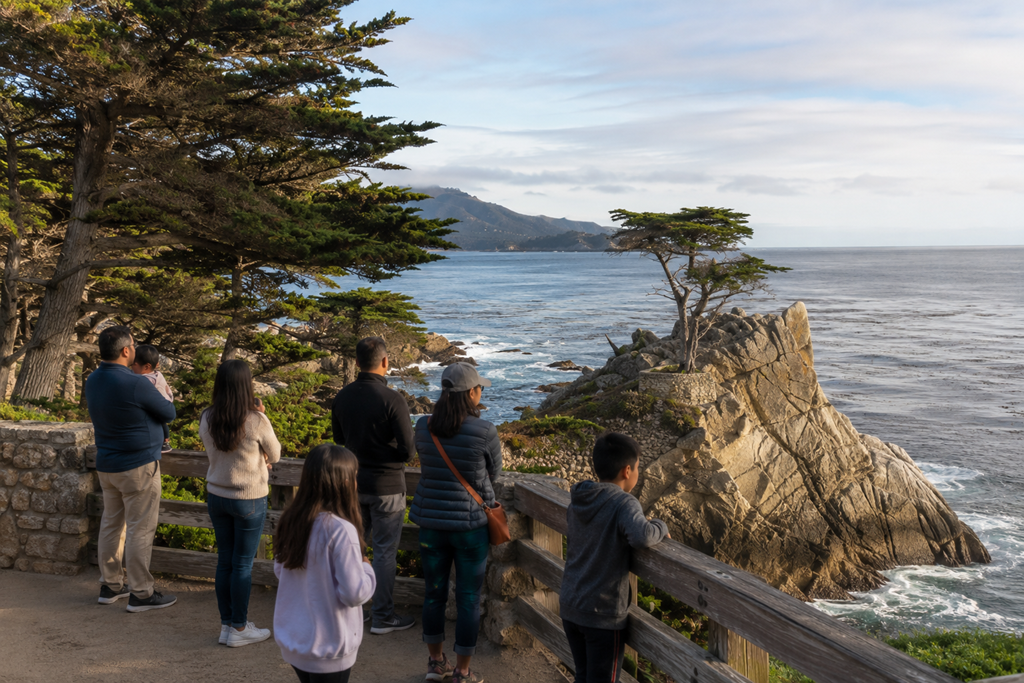
From there, continue along Ocean View Boulevard or nearby coastal paths. The scenery changes constantly: rocky coves, tide pools, cypress trees, seabirds, and open water. Keep your plans flexible here. This part of the peninsula rewards lingering.
Late Morning: Drive Part Of The Pacific Grove Coastline
After walking near Lovers Point, use your car to follow the coastline farther west through Pacific Grove. This drive gives you a beautiful transition from town to open coastal scenery.
You may want to stop near scenic pullouts, coastal viewpoints, or areas close to the Pacific Grove Marine Gardens Park area. Conditions can change with fog, wind, and surf, so treat this as a flexible sightseeing drive rather than a strict checklist.
If you enjoy photography, this part of the day can be one of the most rewarding sections of the itinerary. Morning light, coastal mist, and textured rocks often create a more natural Monterey image than the busier postcard spots.
Midday And Afternoon: Take 17-Mile Drive
Next, continue toward 17-Mile Drive, one of the Monterey Peninsula’s most famous scenic routes. The drive passes through coastal forest, golf course landscapes, dramatic shoreline, and well-known viewpoints around Pebble Beach.
The best way to enjoy 17-Mile Drive is not to rush from stop to stop. Choose a few viewpoints rather than trying to maximize every pullout. Common highlights include coastal overlooks, wind-shaped cypress trees, rocky beaches, and views of the Pacific.
Bring layers, even if the day starts warm. Coastal wind and fog can make the route feel cooler than nearby inland areas.
Because access details and fees can change, check current visitor information before you go. Also allow extra time if you are visiting during weekends, holidays, or peak travel periods.
Late Afternoon: Spend Time In Carmel-By-The-Sea
After 17-Mile Drive, continue into Carmel-by-the-Sea. Carmel is compact, walkable, and known for its cottage-like architecture, galleries, courtyards, local shops, restaurants, and beach access.
Start with a relaxed walk through the village streets. Carmel is best experienced without an overly specific route. Wander down side streets, peek into courtyards, and enjoy the small-scale architecture that gives the town its character.
If the weather is pleasant, finish at Carmel Beach. The wide sand, cypress trees, and ocean views make it one of the area’s most satisfying late-day stops. Sunset can be beautiful here, but it can also be chilly, so bring a jacket.
Evening: Dinner In Carmel Or Return To Monterey
For dinner, you can stay in Carmel or return to Monterey, depending on where you are based. Carmel works well if you want a more intimate village evening. Monterey is easier if you prefer to be closer to your hotel and avoid driving after dark.
Either way, keep the evening simple. Day 2 includes a lot of visual variety, and a relaxed dinner is usually better than trying to add another major stop.
Day 3: Point Lobos, Coastal Views, And A Flexible Final Afternoon
Day 3 takes you south toward one of the most beautiful natural areas on the Central Coast. Build the day around Point Lobos, then leave the afternoon flexible so the trip ends without feeling overloaded.
Morning: Visit Point Lobos State Natural Reserve
Point Lobos State Natural Reserve is one of the best day-three experiences from Monterey. It offers rocky headlands, coves, coastal trails, wildlife viewing, photography opportunities, and views into one of California’s rich marine environments. California State Parks describes Point Lobos as outstanding for sightseeing, photography, nature study, picnicking, jogging, and more, with offshore waters connected to the Monterey Bay National Marine Sanctuary.
Arrive earlier in the day if possible, especially during busier travel periods. Parking can be limited, and an early start gives you more flexibility.
You do not need to hike every trail to enjoy Point Lobos. A few shorter walks can still provide a strong experience. Look for routes that include ocean views, cypress trees, coves, and rocky shoreline. Popular general areas often include coastal overlooks and trails near dramatic headlands.
Wear comfortable shoes and bring layers. Even on sunny days, parts of the reserve can be windy or cool.
Midday: Picnic Or Lunch Near Carmel
After Point Lobos, keep lunch easy. You can bring a picnic if you prefer to stay outdoors, or head back toward Carmel for a sit-down meal.
If you packed food, make sure to follow all posted rules, protect wildlife, and leave no trash behind. If you return to Carmel, use lunch as a reset before deciding how active you want the rest of the day to be.
Afternoon Option 1: Return To A Favorite Coastal Spot
One of the best ways to end a Monterey trip is to revisit the place you liked most. That might mean another walk in Pacific Grove, more time near Carmel Beach, a second pass along the Monterey waterfront, or a quiet viewpoint you noticed earlier.
This option works especially well because Monterey’s scenery changes with light, fog, tides, and weather. A place you saw in the morning can feel completely different in late afternoon.
Afternoon Option 2: Explore More Of Historic Monterey
If you want a more town-focused afternoon, spend time in historic Monterey. Look for older adobe buildings, small museums, plazas, and streets connected to California’s early history.
This is a good choice if the weather turns windy or foggy, or if you want a lighter final day after Point Lobos. It also helps round out the trip by adding more context beyond the coast.
Afternoon Option 3: Take A Bay Or Wildlife Tour
Monterey Bay is known for marine life, and many visitors choose to take a boat tour, whale-watching trip, sailing outing, or bay cruise. Old Fisherman’s Wharf is one of the main areas where visitors find these kinds of waterfront activities.
Because wildlife sightings, ocean conditions, and tour schedules vary, treat this as an optional add-on rather than the foundation of the day. Check current conditions and choose a reputable operator if you decide to go.
Evening: A Simple Final Dinner
For your final evening, choose a dinner location that fits the tone of your trip. If you want one last waterfront walk, eat near Monterey or Cannery Row. If you want a quieter ending, choose Pacific Grove or Carmel.
Avoid overplanning the final night. A three-day Monterey itinerary works best when the last evening leaves space for an unhurried walk, a familiar view, or a final look at the bay.
Where To Stay For This Itinerary
Monterey
Monterey is the most practical base for first-time visitors. It puts you close to Cannery Row, the aquarium, Old Fisherman’s Wharf, downtown Monterey, and the coastal trail. It is a good fit if you want convenience and easy access to the main attractions.
Pacific Grove
Pacific Grove is a strong choice if you want a quieter stay near the coast. It works well for travelers who enjoy morning walks, neighborhood atmosphere, and scenic shoreline without being directly in the busiest visitor zones.
Carmel-By-The-Sea
Carmel is ideal if you want a more romantic or village-like setting. It is slightly less convenient for Day 1 in Monterey, but very convenient for Carmel Beach, 17-Mile Drive, and Point Lobos.
Getting Around Monterey
A car is the easiest way to follow this full itinerary. You can walk between many Day 1 sights if you stay near the waterfront, but Day 2 and Day 3 are much easier with a vehicle.
Parking varies by area, season, and time of day. Build in extra time around Cannery Row, the aquarium, Carmel, and Point Lobos. For scenic drives and natural areas, arrive earlier when possible and check current access information before setting out.
If you prefer not to drive much, focus your stay around Monterey or Pacific Grove and use walking paths, local transit, rideshare, or guided tours for select outings.
Best Time To Visit Monterey
Monterey can be visited year-round, but each season has a slightly different feel.
Spring often brings green hills, wildflowers in some coastal areas, and mild conditions. Summer is popular but can bring fog, especially near the coast. Fall is often a favorite for clearer weather and pleasant temperatures. Winter can be quieter, with cooler weather and occasional rain.
No matter when you visit, pack layers. Monterey Peninsula weather can shift quickly between sun, fog, wind, and cool coastal air.
Practical Tips For A Better First Trip
Plan Around Geography
Group nearby places together. Cannery Row, the aquarium, the coastal trail, and Old Fisherman’s Wharf pair well. Pacific Grove, 17-Mile Drive, and Carmel pair well. Point Lobos and Carmel pair well.
This keeps the itinerary efficient without making the trip feel rushed.
Leave Space For Weather
Fog, wind, and changing light are part of the Monterey experience. If a viewpoint is fogged in, enjoy the atmosphere or come back later. Some of the best moments on the peninsula happen when the weather creates mood rather than perfect visibility.
Book Ahead For Major Attractions
For the aquarium, tours, and popular lodging, check current availability before your trip. This is especially important during weekends, school breaks, holidays, and peak travel periods.
Respect Wildlife
Monterey Bay and the surrounding coastline are home to seals, sea lions, sea otters, seabirds, and other wildlife. Watch from a respectful distance, follow posted signs, and never feed or approach animals.
Do Less Than You Think
Monterey is not a destination where you need to fill every hour. The best first trip usually includes a mix of classic attractions, coastal walks, scenic drives, and simple meals with time left open for the views.
A Simple 3-Day Monterey Itinerary At A Glance
Day 1
Start on Cannery Row, visit the Monterey Bay Aquarium, walk the coastal recreation trail, and spend the evening around Old Fisherman’s Wharf or downtown Monterey.
Day 2
Explore Pacific Grove and Lovers Point, drive the coast, experience 17-Mile Drive, and spend the late afternoon and evening in Carmel-by-the-Sea.
Day 3
Visit Point Lobos State Natural Reserve, have lunch near Carmel, then choose a flexible final afternoon: revisit the coast, explore historic Monterey, or take a bay or wildlife tour.
Final Thoughts For Your First Monterey Trip
Three days in Monterey gives you enough time to experience the area’s essential mix of marine life, coastal scenery, small towns, and scenic drives. The key is to avoid treating the peninsula like a checklist.
Start with the classic sights, keep the route geographically simple, and leave room for the moments that make Monterey memorable: fog moving over the water, sea otters floating offshore, cypress trees shaped by wind, and quiet walks along the edge of the Pacific.
Download Our Free E-book!