San Francisco is one of the easiest cities to recognize and one of the hardest to plan well. The sights are famous, but the city’s hills, microclimates, neighborhoods, waterfront areas, and scattered viewpoints can make a short trip feel confusing if you try to do too much at once.
This 3-day San Francisco itinerary is designed for first-time visitors who want a practical, well-paced introduction to the city. It includes classic landmarks, scenic walks, historic neighborhoods, food experiences, parks, and bay views, while leaving enough breathing room for fog, hills, transit, and spontaneous stops.
The plan focuses on durable San Francisco experiences: the Golden Gate Bridge, Alcatraz, Fisherman’s Wharf, Chinatown, North Beach, Golden Gate Park, the Mission, and neighborhood wandering. San Francisco Travel highlights the Golden Gate Bridge, Alcatraz, cable cars, Fisherman’s Wharf, Lombard Street, Coit Tower, and the Painted Ladies among the city’s iconic visitor experiences.
Before You Go: How To Use This San Francisco Itinerary
This itinerary works best if you treat each day as a flexible route rather than a strict schedule. San Francisco rewards wandering, but it also punishes overplanning. Distances can look short on a map while still involving steep climbs, wind, fog, or slow transit connections.
A few simple planning notes will help:
Choose one main area per half-day when possible. Bring layers, even in warmer months. Book Alcatraz ahead if it is a priority, since the National Park Service recommends advance ferry reservations and notes that Alcatraz access is by ferry. Check current opening hours, ferry schedules, and reservation requirements before you go.
You do not need a rental car for this itinerary unless you are combining San Francisco with a broader Bay Area road trip. For most first-time visitors, walking, public transit, rideshare, and occasional taxis are simpler than parking.
Where To Stay For A First Visit
For a short first trip, stay somewhere central enough to reduce backtracking. Union Square, Nob Hill, Embarcadero, North Beach, Fisherman’s Wharf, and the area around Market Street can all work depending on your budget and travel style.
Union Square and downtown areas are convenient for transit and classic sightseeing, though the atmosphere varies by block. Fisherman’s Wharf is touristy but practical for families and bay activities. North Beach and Nob Hill can feel more atmospheric if you want restaurants, hills, and classic San Francisco character nearby.
If you prefer a quieter base, consider areas near the Embarcadero, the Marina, or Pacific Heights, understanding that you may spend more time moving around.
Day 1: The Waterfront, Alcatraz, North Beach, And Chinatown
Your first day introduces San Francisco through the bay. This is the best way to understand the city’s shape, history, and relationship to the water.
Morning: Start Along The Embarcadero
Begin your trip along the Embarcadero, the waterfront road and promenade that runs along the eastern edge of the city. This is a good first walk because it is mostly flat, scenic, and easy to navigate.
Start near the Ferry Building if you enjoy food halls, coffee, browsing, or bay views. From there, walk north along the waterfront toward the piers. You will see ferries, bridges, historic pier buildings, and the working-bay side of San Francisco.
The Ferry Building area is especially useful on a first morning because it gives you a low-effort place to get oriented. You can grab breakfast or coffee, look out across the bay, and ease into the day before moving toward the more crowded waterfront attractions.
Late Morning Or Early Afternoon: Visit Alcatraz
If Alcatraz is high on your list, plan it for Day 1. The island is one of San Francisco’s most memorable experiences, and visiting early in the trip helps avoid last-minute schedule stress.
The National Park Service recommends allowing at least two to three hours to fully visit Alcatraz, and the cellhouse audio tour is included with the ferry ticket. That makes it a substantial half-day activity, not a quick stop.
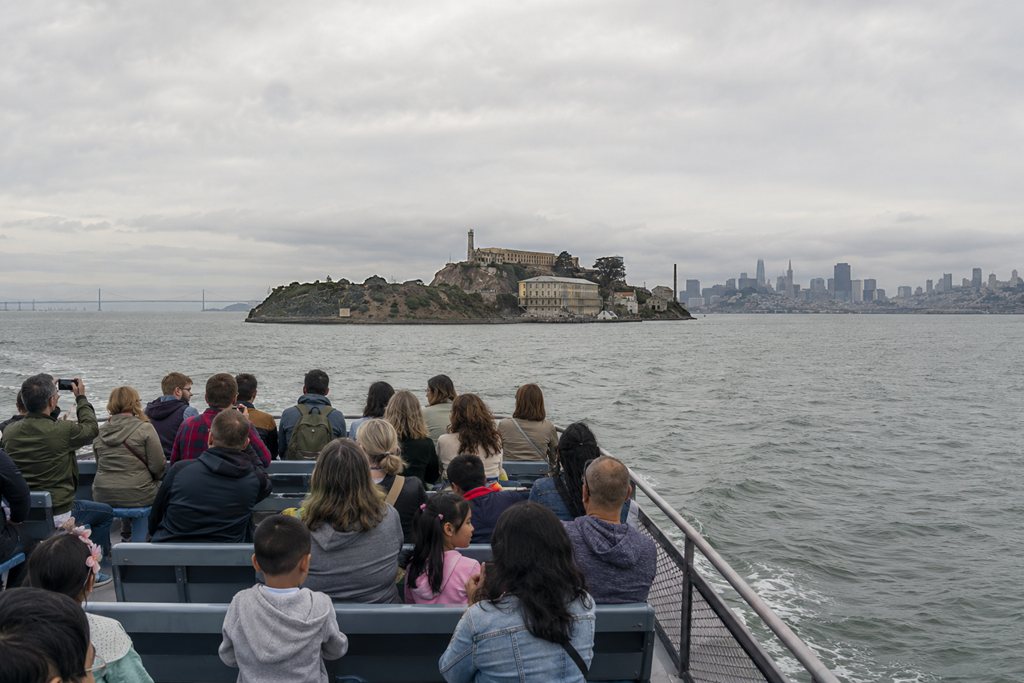
Alcatraz is worth visiting because it combines bay scenery, prison history, Native American occupation history, military history, and unusual views back toward the city. The ferry ride itself adds to the experience, especially on clear days when you can see the skyline, the Bay Bridge, and the Golden Gate Bridge in the distance.
Bring a jacket. Weather on and around the island can change quickly, and wind off the bay can feel much cooler than the city streets.
If you are not visiting Alcatraz, use this time for a bay cruise, the Exploratorium, or a longer waterfront walk.
Afternoon: Fisherman’s Wharf Without Overdoing It
After Alcatraz, spend a little time around Fisherman’s Wharf. This area is busy and tourist-oriented, but it still has value for first-time visitors if you approach it selectively.
Walk the waterfront, look toward the bay, stop by the sea lion viewing area near Pier 39 if it interests you, and consider a simple seafood lunch or snack. You do not need to spend your whole afternoon here. Fisherman’s Wharf works best as a short, classic San Francisco stop rather than the center of the trip.
If you prefer maritime history, consider the historic ships and waterfront exhibits nearby. If you are traveling with kids, the area’s easy layout and quick attractions can be useful.
Late Afternoon: Walk To North Beach
From Fisherman’s Wharf, walk toward North Beach, San Francisco’s historic Italian neighborhood. The transition is one of the pleasures of the day: the waterfront crowds fade into cafés, bakeries, bookstores, and hillside streets.
North Beach is a good place to slow down. Browse a bookstore, stop for espresso, sit in Washington Square, or simply wander. If you have the energy, you can continue uphill toward Coit Tower for city and bay views. The walk is steep, so treat it as optional rather than mandatory.
This is also a good neighborhood for dinner, especially if you want a relaxed first-night meal without crossing the city again.
Evening: Explore Chinatown
Chinatown sits right next to North Beach, making it easy to pair the two neighborhoods. Walk through in the early evening to see lanterns, markets, shops, restaurants, and dense street life.
For a first visit, focus less on checking off individual stops and more on experiencing the neighborhood on foot. Grant Avenue is the most visitor-facing route, while Stockton Street feels more local and everyday. Together, they give you a better sense of the neighborhood.
Have dinner in Chinatown or return to North Beach depending on what you are craving. Keep the evening simple. You have two full days ahead.
Day 2: Golden Gate Bridge, The Presidio, Palace Of Fine Arts, And Classic Views
Day 2 is built around the Golden Gate Bridge and northwest San Francisco. This is the day for views, walking, parks, and the city’s most famous landmark.
Morning: Visit The Golden Gate Bridge From The Presidio
Start at the Golden Gate Bridge Welcome Center or nearby bridge viewpoints in the Presidio. The Presidio notes that most visits to the bridge begin at the south end, where visitors can walk or bike across the 1.7-mile span or enjoy views from nearby overlooks.
You do not have to walk the entire bridge to have a good experience. For many first-time visitors, walking partway onto the bridge and returning to the south side is enough. You will still feel the scale of the structure, the wind, the traffic, the bay, and the sweep of the landscape.
Afterward, spend time at nearby viewpoints. Golden Gate Overlook, Battery East Vista, Crissy Field, and Fort Point all offer different perspectives. The Presidio lists several notable bridge viewpoints, including Battery East Vista, Golden Gate Overlook, Pacific Overlook, Baker Beach, Torpedo Wharf, and Fort Point.
Late Morning: Walk Or Relax Around Crissy Field
From the bridge area, make your way down toward Crissy Field if the weather is comfortable. This waterfront area gives you a flatter, more spacious view of the bridge, the bay, and the Marin Headlands.
Crissy Field is especially good if you want a break from dense city streets. You can walk, sit near the water, take photos, or simply enjoy the open space. It is also a useful reset after the wind and crowds near the bridge.
If the fog is heavy, do not treat it as a failure. Fog is part of the San Francisco experience. Sometimes the bridge appears and disappears throughout the morning, which can be more memorable than a perfectly clear view.
Early Afternoon: Palace Of Fine Arts And The Marina
Next, continue toward the Palace of Fine Arts. This is one of the city’s most photogenic landmarks, with a lagoon, classical-style architecture, and walking paths.
It is a short, easy stop, but it fits naturally after the bridge and Crissy Field. Take a slow walk around the lagoon, then continue into the Marina District if you want lunch or coffee.
The Marina is polished and residential, with shops, restaurants, and wide streets. It offers a different side of San Francisco from North Beach and Chinatown: less historic density, more neighborhood ease.
Mid-Afternoon: Choose A Scenic Add-On
For the rest of the afternoon, choose one add-on based on your energy and weather.
If you want more nature, go to Baker Beach or Lands End. Baker Beach offers a wide Pacific-facing view and a dramatic angle of the Golden Gate Bridge. Lands End has coastal trails, cypress trees, rugged cliffs, and views toward the bridge and ocean.
If you want classic architecture, visit the Painted Ladies near Alamo Square. This is a short stop, best paired with a walk through nearby residential streets.
If you want a museum or indoor option, consider the de Young Museum or California Academy of Sciences in Golden Gate Park, especially if the weather turns windy or gray.
Evening: Dinner In Hayes Valley, Japantown, Or The Mission
For dinner, choose a neighborhood rather than chasing a “must-eat” spot. Hayes Valley works well for a central, walkable evening with restaurants and shops. Japantown is a good choice for ramen, Japanese sweets, and a compact neighborhood experience. The Mission offers taquerias, murals, bakeries, and a livelier evening atmosphere.
The best choice depends on where you are staying and how much energy you have left. San Francisco evenings are better when you are not forcing yourself across town just to complete a checklist.
Day 3: Golden Gate Park, The Mission, Painted Ladies, And A Flexible Final Evening
Your final day balances parks, neighborhoods, food, and flexible sightseeing. It is designed to feel complete without being rushed.
Morning: Spend Time In Golden Gate Park
Start in Golden Gate Park, one of San Francisco’s great urban green spaces. The park is large, so choose a focused route rather than trying to see everything.
Good first-visit options include the Japanese Tea Garden, the de Young Museum area, the California Academy of Sciences, the Conservatory of Flowers, Stow Lake, or a simple walk through gardens and paths. Pick one or two main stops and leave room for wandering.
If you enjoy museums, this could become a full morning. If you prefer being outside, keep it simple with gardens, paths, and a coffee or snack nearby.
Golden Gate Park pairs well with a later visit to Haight-Ashbury, the Inner Sunset, or the Richmond District, depending on your interests.
Late Morning: Haight-Ashbury Or Inner Sunset
After Golden Gate Park, choose between Haight-Ashbury and the Inner Sunset.
Haight-Ashbury is best if you are interested in music history, vintage shops, colorful buildings, and counterculture associations. It can feel touristy in parts, but it remains a distinctive San Francisco neighborhood.
The Inner Sunset is better if you want a more low-key food and neighborhood stop after the park. It is practical, relaxed, and less focused on sightseeing.
Either choice works. The main goal is to experience a neighborhood connected to the park rather than immediately rushing across the city.
Afternoon: The Mission District
Spend the afternoon in the Mission District. This neighborhood gives you a different view of San Francisco: murals, taquerias, bakeries, independent shops, warm microclimate, and a strong cultural identity.
Start with a walk along Valencia Street or Mission Street, then make time for murals around Balmy Alley or Clarion Alley if public art interests you. Stop for a burrito, tacos, pastries, or coffee. The Mission is one of the best neighborhoods in the city for a casual food-focused break.
Dolores Park is a good place to pause if the weather is nice. From the upper parts of the park, you can often see the skyline framed by neighborhood rooftops and palm trees.
As always, use normal city awareness. San Francisco neighborhoods can change from block to block, so keep valuables secure and pay attention to your surroundings without letting worry shape the whole day.
Late Afternoon: Painted Ladies And Alamo Square
From the Mission, head toward Alamo Square to see the Painted Ladies. These Victorian homes are one of San Francisco’s classic postcard views, especially with the skyline behind them.
This does not need to be a long stop. Walk through the park, take in the view, rest for a few minutes, and then decide how you want to spend your final evening.
If you already visited the Painted Ladies on Day 2, use this time for Japantown, the Castro, the Ferry Building, or a return to your favorite neighborhood from earlier in the trip.
Evening: End With A View Or A Neighborhood Dinner
For your final evening, choose a simple ending.
If you want a view, consider Twin Peaks, Bernal Heights Park, or a waterfront walk along the Embarcadero. Twin Peaks gives one of the broadest views of the city, though it can be windy and foggy. Bernal Heights feels more neighborhood-based and less formal. The Embarcadero is easy if you want something flat and scenic.
If you want a food-focused ending, return to North Beach, the Mission, Hayes Valley, Japantown, or Chinatown. A familiar neighborhood can be more enjoyable on the last night than trying to squeeze in one more distant attraction.
A Simple 3-Day San Francisco Itinerary At A Glance
Day 1: Bay And Historic Neighborhoods
Start at the Ferry Building and the Embarcadero. Visit Alcatraz if it is a priority. Spend a short amount of time around Fisherman’s Wharf, then walk to North Beach and Chinatown for the afternoon and evening.
Day 2: Golden Gate Views And Northwest San Francisco
Visit the Golden Gate Bridge from the Presidio. Walk part of the bridge or explore nearby viewpoints. Continue to Crissy Field, the Palace of Fine Arts, and the Marina. Add Baker Beach, Lands End, the Painted Ladies, or a museum depending on weather and energy.
Day 3: Parks, Murals, Food, And Final Views
Spend the morning in Golden Gate Park. Visit Haight-Ashbury or the Inner Sunset. Explore the Mission District in the afternoon, then stop by Alamo Square and the Painted Ladies. End with a viewpoint, waterfront walk, or neighborhood dinner.
Practical Tips For A First San Francisco Trip
Pack For Changing Weather
San Francisco weather can shift quickly. A sunny morning can turn windy by the water, and a warm neighborhood can feel cool a few blocks later. Bring layers, including a light jacket, even if the forecast looks mild.
Do Not Underestimate The Hills
San Francisco is walkable, but not always easy. Short distances may involve steep climbs. Use transit or rideshare when a route looks simple on a map but crosses major hills.
Book Alcatraz In Advance
If Alcatraz matters to you, reserve early and check current ferry details before your trip. The National Park Service notes that ferry tickets are required and that ferry schedules vary by season.
Group Your Days By Geography
This itinerary works because it avoids unnecessary zigzagging. Keep waterfront sights together, Golden Gate sights together, and park/neighborhood sights together.
Leave Room For Fog
Fog may block a view, soften a photo, or change your plans. Build flexibility into your itinerary rather than expecting every viewpoint to be clear at a specific time.
Use Public Transit Strategically
Muni buses, light rail, streetcars, and cable cars can help you move around, but routes and wait times vary. Use real-time maps, and consider rideshare when a transfer-heavy route would drain too much time.
Be Thoughtful About Safety
San Francisco is a major city, so use normal urban awareness. Do not leave bags visible in parked cars. Keep your phone and wallet secure in crowded areas. Pay attention around transit stops, tourist-heavy zones, and quiet blocks at night.
How To Adjust This Itinerary
If You Have More Time
Add a fourth day for a slower Golden Gate Park visit, Lands End, the Castro, Japantown, Ocean Beach, the Exploratorium, or a day trip to Muir Woods, Sausalito, Berkeley, or wine country.
If You Have Less Time
For two days, combine Day 1 and the best of Day 2: waterfront, Alcatraz, North Beach, Chinatown, Golden Gate Bridge, Crissy Field, and the Palace of Fine Arts. Save Golden Gate Park and the Mission for a future trip.
If You Are Traveling With Kids
Keep Alcatraz optional depending on age and interest. Prioritize the Exploratorium, Golden Gate Park, sea lions near Pier 39, the cable cars, Crissy Field, and easy food stops.
If You Prefer Museums
Build more time around the de Young Museum, California Academy of Sciences, SFMOMA, the Asian Art Museum, the Exploratorium, or smaller neighborhood museums. Replace longer outdoor walks when the weather is not cooperating.
A Thoughtful First Visit To San Francisco
Three days is enough time to understand why San Francisco stays with people. You can see the Golden Gate Bridge, ride along the waterfront, visit Alcatraz, walk through Chinatown and North Beach, explore Golden Gate Park, eat in the Mission, and still leave with places you want to return to.
The key is not to treat the city like a checklist. San Francisco is best experienced through a mix of landmarks, hills, neighborhoods, viewpoints, food, fog, and unplanned pauses. Follow the structure, stay flexible, and let each day have one or two moments that feel unhurried.
Download Our Free E-book!