Singapore is one of the easiest major cities in Asia to enjoy on a first visit, but it can still feel like a lot to organize. The city blends sleek waterfront architecture, historic neighborhoods, hawker food, tropical gardens, museums, shopping streets, and island-style experiences into a compact, highly connected destination.
This 3-day Singapore itinerary is designed for first-time visitors who want a clear, realistic plan without trying to do everything. It focuses on classic sights, walkable areas, and practical pacing so you can experience the city’s highlights while still leaving room to slow down.
How to Use This 3-Day Singapore Itinerary
This itinerary works well for travelers staying in central areas such as Marina Bay, City Hall, Orchard, Chinatown, Bugis, or Clarke Quay. Singapore’s MRT and bus network is extensive, making it relatively easy to move between major neighborhoods without renting a car.
The plan is organized by geography where possible. Day 1 focuses on Marina Bay and the waterfront. Day 2 explores cultural neighborhoods and food. Day 3 gives you a choice between nature, Sentosa, or a more relaxed city day.
A few practical notes before you start:
Check current opening hours before you go, especially for museums, gardens, and ticketed attractions. Book ahead during busy travel periods if there is a specific experience you do not want to miss. Singapore is warm and humid year-round, so plan outdoor walks earlier or later in the day when possible.
Day 1: Marina Bay, Gardens, and Singapore’s Modern Skyline
Your first day is built around Singapore’s most recognizable waterfront sights. This is a good way to get oriented because many major landmarks sit close together around Marina Bay.
Morning: Start Around Merlion Park and Marina Bay
Begin your trip at Merlion Park, one of Singapore’s classic photo stops. From here, you can see Marina Bay Sands, the waterfront skyline, and the bay itself. It is a simple but useful starting point because it gives you a visual sense of how central Singapore is laid out.
After taking in the view, walk along the waterfront promenade toward the Esplanade area. This stretch is pleasant for first-time visitors because it connects major sights without requiring much navigation. You can pause for coffee, step into a mall or shaded area if the weather feels intense, and continue at your own pace.
Late Morning: Visit the Civic District
From Marina Bay, make your way toward the Civic District. This area includes some of Singapore’s most important cultural and historic buildings, along with museums, performance venues, and colonial-era architecture.
Depending on your interests, consider visiting one museum rather than trying to fit in several. The National Gallery Singapore is a strong choice for art, architecture, and regional context. If you prefer a shorter stop, you can simply walk through the area and enjoy the contrast between older civic buildings and the modern skyline nearby.
Lunch: Eat at a Hawker Centre
For lunch, choose a hawker centre near the city center. Hawker centres are one of the best ways to experience Singapore’s food culture without making the day complicated. Look for dishes such as chicken rice, laksa, char kway teow, satay, nasi lemak, or vegetarian options depending on your preferences.
A good first-time approach is to walk around once before choosing. Notice which stalls have steady local traffic, then pick one or two dishes to share if you are traveling with someone else.
Afternoon: Explore Gardens by the Bay
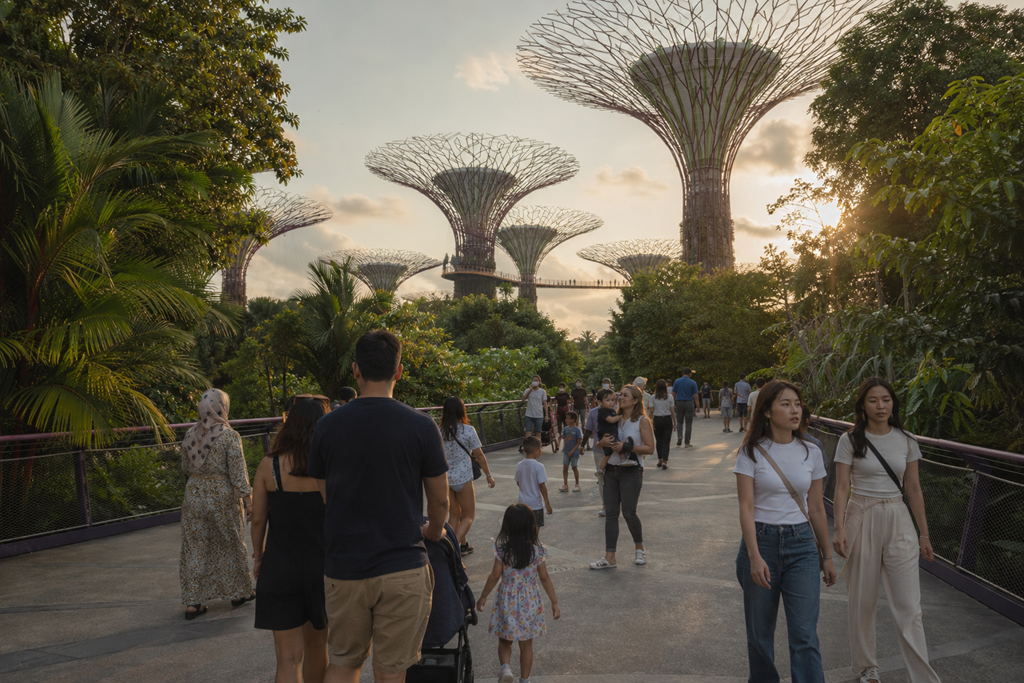
Spend the afternoon at Gardens by the Bay, one of Singapore’s signature attractions. The gardens sit in the Marina Bay area and include outdoor gardens, the Supertree Grove, and ticketed conservatories such as the Flower Dome and Cloud Forest. Gardens by the Bay describes itself as a major horticultural destination with plant collections from around the world.
You do not need to see every section to enjoy it. If you want a lighter visit, walk through the outdoor gardens and Supertree Grove. If you enjoy plants, climate-controlled spaces, and dramatic indoor landscapes, choose one or both conservatories.
Because Singapore can be hot and humid, the indoor conservatories can also be a welcome break from the weather.
Evening: Return to Marina Bay for Skyline Views
End your first day back around Marina Bay. The skyline is especially attractive in the evening, and the waterfront paths are easier to enjoy once the day cools down.
You can keep the evening simple with dinner nearby, a slow walk along the promenade, or a viewpoint experience if that fits your budget and interests. This is not a night to overplan. The setting itself is the main experience.
Day 2: Chinatown, Kampong Gelam, Little India, and Local Food
Day 2 focuses on Singapore’s cultural neighborhoods. These areas are close enough to visit in one day, but each has its own rhythm, architecture, food, and history.
Morning: Explore Chinatown
Start in Chinatown, where temples, shophouses, markets, and food streets sit within a compact neighborhood. This is a good place to walk slowly rather than rush from stop to stop.
Consider visiting the Buddha Tooth Relic Temple area, browsing nearby streets, and noticing the mix of restored shophouses, small shops, and food stalls. If you enjoy museums or cultural context, add a short heritage-focused stop rather than overloading the morning.
Chinatown is also a good place to try local breakfast or an early lunch. If you are not sure what to order, choose something simple and classic, then leave room for more food later in the day.
Midday: Visit Kampong Gelam
Next, head to Kampong Gelam, one of Singapore’s most distinctive historic neighborhoods. The area is known for its Malay-Muslim heritage, the Sultan Mosque, traditional shops, restaurants, textiles, and streets such as Arab Street and Haji Lane. Visit Singapore describes Kampong Gelam as a neighborhood where old-school character and newer boutiques sit side by side.
This is a good place to walk without a strict checklist. See the mosque exterior respectfully, browse the surrounding streets, and stop for lunch or tea if something catches your attention.
If you enjoy photography, Kampong Gelam offers colorful architecture and street scenes, but try to keep the experience natural and respectful, especially near religious sites.
Afternoon: Spend Time in Little India
In the afternoon, make your way to Little India. The neighborhood feels different from both Chinatown and Kampong Gelam, with colorful buildings, flower garlands, spice shops, restaurants, temples, and busy shopping streets.
Take your time walking through the area. You might visit a temple, browse small shops, or stop for a snack or meal. Little India is especially rewarding if you enjoy sensory travel experiences: colors, aromas, music, food, and street-level detail.
As with any active neighborhood, be aware of your surroundings, keep your belongings secure, and move at a respectful pace.
Evening: Choose a Food-Focused Dinner
For dinner, keep the focus on local and regional food. You could return to a hawker centre, eat in Little India, try Malay or Middle Eastern food around Kampong Gelam, or go back toward Chinatown for another casual meal.
This is also a good night to avoid complicated reservations unless there is a particular restaurant you care about. Singapore’s everyday food culture is one of the main reasons to visit, and some of the best memories come from simple meals.
Day 3: Nature, Sentosa, or a Slower City Day
For your final day, choose the version of Singapore that best fits your travel style. First-time visitors often try to squeeze in too much on the last day, but Singapore is more enjoyable when you leave space for weather, transit, meals, and rest.
Option 1: Singapore Botanic Gardens and Orchard Road
If you want a greener, more relaxed final day, start at the Singapore Botanic Gardens. The gardens are Singapore’s first UNESCO World Heritage Site, inscribed in 2015, and remain one of the city’s most important green spaces.
Walk through the gardens at an easy pace and consider visiting the National Orchid Garden if you are interested in flowers and landscaped displays. This is a strong option for travelers who want a break from dense urban sightseeing.
Afterward, head toward Orchard Road if you want shopping, air-conditioning, cafés, or a convenient lunch. Even if you are not planning to shop heavily, Orchard can be useful for a comfortable final afternoon.
Option 2: Sentosa for Beaches and Attractions
If you want a more resort-style day, spend part of Day 3 on Sentosa. The island has beaches, family attractions, walking areas, and leisure experiences. It is especially useful for families, couples who want a lighter day, or travelers who want a contrast to the city center.
Avoid trying to do every attraction on Sentosa in one visit. Choose one main activity, add beach or walking time, and keep the rest flexible. If you are traveling with children, this may be the easiest version of Day 3.
Option 3: A Slower City Day With Museums, Cafés, and River Walks
If your first two days were full, use Day 3 to slow down. Return to a neighborhood you liked, visit one museum, spend time around the Singapore River, or enjoy a relaxed café and shopping day.
Clarke Quay, Boat Quay, Robertson Quay, City Hall, and Tiong Bahru can all work depending on your interests. This version is best for travelers who prefer atmosphere over attraction-hopping.
A slower final day can also make departure easier, especially if you have an evening flight.
Where to Stay for a First Trip to Singapore
For a short first visit, location matters more than finding the most unique neighborhood. Staying near an MRT station will make the itinerary easier.
Marina Bay or City Hall
This is convenient for first-time sightseeing, waterfront walks, museums, and easy access to major landmarks. It can be more expensive, but it reduces transit time.
Chinatown
Chinatown is practical, central, and well connected. It works well for travelers who want easy access to food, transit, and cultural neighborhoods.
Bugis or Kampong Gelam
This area is good for travelers who want a mix of culture, food, shopping, and transit access. It also places you near Kampong Gelam and not far from Little India.
Orchard
Orchard is best for shopping, hotels, restaurants, and comfort. It is not the most atmospheric area for every traveler, but it is convenient and polished.
Getting Around Singapore
Singapore is one of the easier cities in Southeast Asia to navigate. The MRT is usually the most useful option for visitors because it connects many major districts and attractions. The public transport network also includes buses, and official transport tools can help with route planning.
For short distances, walking is often enjoyable, especially around Marina Bay, the Civic District, Chinatown, Kampong Gelam, and the riverfront. Still, the heat and humidity can make even modest walks feel tiring, so combine walking with MRT rides, taxis, or rideshare when needed.
A good rule for a 3-day visit: use public transport for cross-city movement, then explore individual neighborhoods on foot.
What to Eat During 3 Days in Singapore
Food is a major part of the Singapore experience, and you do not need an expensive plan to enjoy it.
Look for classic dishes such as chicken rice, laksa, kaya toast, roti prata, nasi lemak, satay, chili crab, fish soup, char kway teow, and fresh tropical fruit. Vegetarian travelers can also find good options, especially in Little India and many hawker centres.
For a first visit, try to include:
A hawker centre meal
A local breakfast or kopi stop
One meal in Chinatown, Little India, or Kampong Gelam
A relaxed dinner near the waterfront or river
Do not worry about finding a perfect “best” stall. Singapore’s food culture is broad enough that a simple, well-chosen meal can be just as memorable as a famous one.
Practical Planning Notes for First-Time Visitors
Singapore is generally straightforward for travelers, but a few simple choices can make your trip smoother.
Pack light, breathable clothing and comfortable walking shoes. Carry water, especially when spending time outdoors. Plan indoor breaks during the hottest or rainiest parts of the day. Many malls, museums, conservatories, and cafés can provide useful pauses between outdoor stops.
Be respectful at temples, mosques, and cultural sites. Dress modestly when appropriate, follow posted rules, and avoid treating active religious spaces like photo sets.
Singapore also has strict rules around littering, smoking areas, and public behavior compared with many destinations. When in doubt, follow signs and local norms.
A Realistic 3-Day Singapore Itinerary at a Glance
Day 1
Merlion Park
Marina Bay waterfront
Civic District or National Gallery Singapore
Hawker centre lunch
Gardens by the Bay
Evening skyline walk
Day 2
Chinatown
Kampong Gelam
Little India
Food-focused dinner
Day 3
Choose one:
Singapore Botanic Gardens and Orchard Road
Sentosa
Slower city day with museums, cafés, and river walks
Final Thoughts on Planning 3 Days in Singapore
Three days in Singapore is enough time to experience the city’s major highlights without turning the trip into a checklist. Focus on Marina Bay, a few cultural neighborhoods, local food, and one final-day experience that matches your travel style.
The best version of this itinerary is not the busiest one. It is the one that gives you enough structure to feel confident, while leaving room to enjoy Singapore’s details: shaded walkways, hawker meals, garden paths, waterfront views, and the easy movement between old and new.
Download Our Free E-book!