Bangkok can feel big at first, but a good itinerary makes it much easier to enjoy. This 4-day Bangkok itinerary is designed for first-time visitors who want a balanced mix of temples, river views, markets, neighborhoods, and street food without trying to do everything at once.
The plan focuses on classic Bangkok experiences that are likely to stay relevant over time: the Grand Palace, Wat Pho, Wat Arun, Chinatown, Chatuchak, the Chao Phraya River, and everyday neighborhood exploring. Bangkok’s major visitor attractions include many historic and religious sites, including Wat Phra Kaew, Wat Pho, Wat Arun, the Golden Mount, and Wat Traimit, which makes the city especially rewarding for travelers interested in culture and architecture.
Before You Start: How To Think About Bangkok
Bangkok is easier when you plan by area. Traffic can be heavy, distances can feel longer than they look on a map, and the heat can make rushed sightseeing less enjoyable. Instead of crossing the city several times in one day, group nearby temples, markets, river stops, and food areas together.
For this itinerary, the general rhythm is:
- Day 1: Historic Bangkok, major temples, and the river
- Day 2: Markets, parks, shopping areas, and Thai food
- Day 3: Chinatown, old streets, and street food
- Day 4: A flexible final day with local neighborhoods and slower exploration
Use BTS Skytrain, MRT, river boats, taxis, and walking in combination. Check current routes, opening hours, dress rules, and booking requirements before you go, especially for temples and major attractions.
Day 1: Grand Palace, Wat Pho, Wat Arun, And The Chao Phraya River
Start your trip with Bangkok’s most iconic historic area. This day brings together royal architecture, temple culture, river views, and a gentle introduction to the city’s old-town side.
Morning: Visit The Grand Palace And Wat Phra Kaew
Begin early at the Grand Palace complex, one of Bangkok’s most important cultural landmarks. Within the complex, Wat Phra Kaew, also known as the Temple of the Emerald Buddha, is one of Thailand’s most significant religious sites. Tourism Thailand highlights Wat Phra Kaew, Wat Pho, and Wat Arun among Bangkok’s major historic and religious attractions.
This is a place to move slowly. Notice the detailed murals, tiled surfaces, rooflines, guardian figures, and courtyards. It is usually one of the busiest stops in Bangkok, so arriving earlier in the day can help the visit feel more manageable.
Wear clothing that covers shoulders and knees, and be prepared for security checks or entry rules that may change over time. Check current visitor information before you go.
Late Morning: Walk To Wat Pho
From the Grand Palace area, continue to Wat Pho, one of Bangkok’s most rewarding temple visits. It is best known for the Reclining Buddha, but the wider temple grounds are also worth time. You will find courtyards, chedis, statues, quiet corners, and detailed tilework that reward slow looking.
Wat Pho works especially well after the Grand Palace because the two sites are close enough to pair naturally. Instead of treating the temple as a quick photo stop, give yourself time to walk through the grounds and appreciate the atmosphere.
Lunch: Eat Nearby Or Keep It Simple
For lunch, choose something easy near the historic district. This is not the day to chase a hard-to-reach restaurant across town. Look for a simple Thai meal, a shaded café, or a casual local spot near your route.
Good choices might include noodle soup, stir-fried rice dishes, curry with rice, or fresh fruit. Bangkok’s food scene is one of the highlights of the city, but the best strategy is often to eat well where you already are rather than over-plan every meal.
Afternoon: Cross The River To Wat Arun
After Wat Pho, cross the Chao Phraya River to Wat Arun. Its riverside location and tall central prang make it one of Bangkok’s most recognizable temple views. The temple is especially beautiful when seen from the water or from the opposite riverbank.
Wat Arun is a good reminder that Bangkok’s river is not just scenery. It is part of how the city moves, connects, and reveals itself. Keep this visit unhurried, and give yourself time to enjoy the river crossing as part of the experience.
Evening: Dinner By The River Or A Simple Night Market Meal
For your first evening, stay near the river or head back toward your hotel area for dinner. A riverside meal can be a nice way to settle into Bangkok, but it does not need to be fancy. What matters most is keeping the evening easy after a full temple day.
If you still have energy, take a short walk along the riverfront or visit a nearby market area. If you are tired, make it an early night. Bangkok rewards travelers who pace themselves.
Day 2: Chatuchak, Green Space, Siam, And Everyday Bangkok
Day 2 shifts from temples to markets, parks, shopping districts, and daily city life. It gives you a broader sense of Bangkok beyond the historic core.
Morning: Explore Chatuchak Weekend Market Or A Local Market Alternative
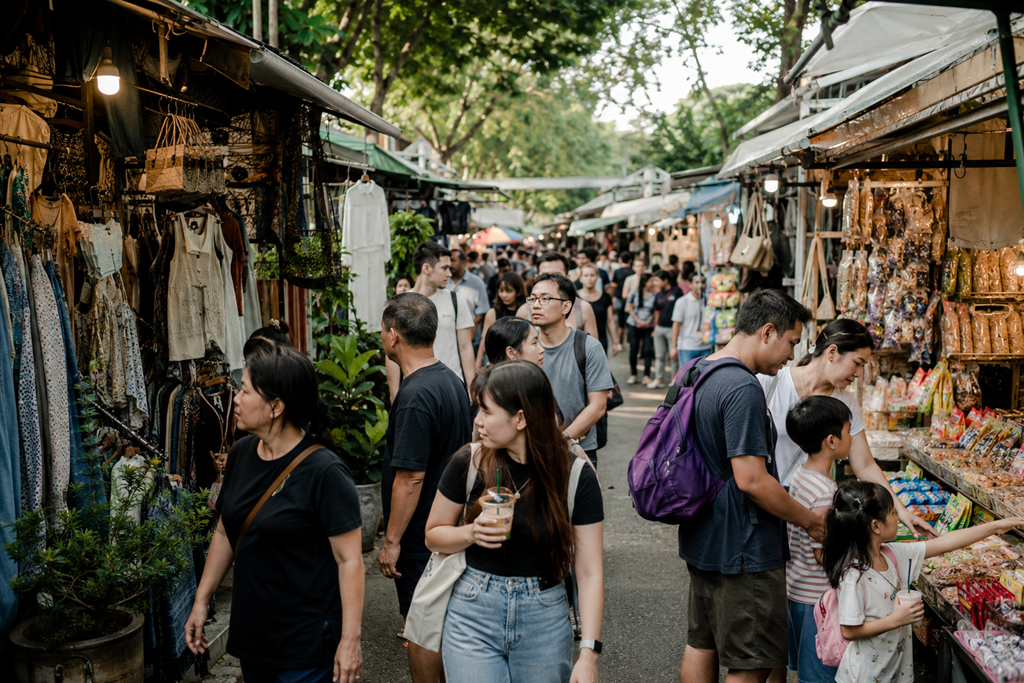
If your visit includes a weekend, spend the morning at Chatuchak Weekend Market. It is one of Bangkok’s best-known shopping experiences, with stalls selling clothing, home goods, souvenirs, art, plants, snacks, and more. Chatuchak is commonly paired with nearby green spaces, making it easier to balance shopping with a break outdoors.
Go early if you can, wear comfortable shoes, and do not try to see every section. The market is large, so it is better to browse with a loose plan: snacks, gifts, home goods, clothing, or just wandering.
If you are not in Bangkok on a weekend, use this morning for another durable local experience instead. Consider a neighborhood market, a food court with Thai dishes, or a slow walk through a local shopping district.
Late Morning: Take A Break In Chatuchak Park Or Nearby Green Space
After the market, slow down in Chatuchak Park or a nearby public park. Bangkok can be intense, so building in breaks helps the trip feel more enjoyable. A shaded walk, a cold drink, or time off your feet can make the rest of the day better.
This is also a good moment to reset before moving into busier commercial areas.
Afternoon: Visit Siam For Shopping, Cafés, And Modern Bangkok
In the afternoon, head toward Siam. This area gives you a different side of Bangkok: malls, cafés, skywalks, restaurants, and easy access by transit. It is not the same kind of cultural experience as the old city, but it is useful for first-time visitors because it shows how modern Bangkok works.
Siam is a practical place for lunch, cooling down indoors, shopping, or simply taking a break from outdoor sightseeing. It can also be a good area to try Thai desserts, casual restaurant meals, or regional Thai dishes in an accessible setting.
Evening: Try A Thai Food Court Or Casual Restaurant
For dinner, keep things flexible. Bangkok food courts in major malls can be surprisingly useful for travelers because they allow you to try multiple Thai dishes in one place, often with clear menus and comfortable seating.
Look for dishes such as pad kra pao, boat noodles, green curry, khao man gai, som tam, mango sticky rice, or Thai-style omelet over rice. You do not need every meal to be a famous street food mission. Sometimes the easiest meal is exactly what makes the day work.
Day 3: Chinatown, Wat Traimit, Old Streets, And Street Food
Day 3 focuses on Bangkok’s Chinatown, known as Yaowarat. This is one of the best areas for food, old streets, gold shops, temples, and an energetic evening atmosphere. National Geographic describes Bangkok as a city known for vibrant street life, royal palaces, and iconic Buddhist temples, which is exactly the combination this day brings together.
Morning: Start At Wat Traimit
Begin with Wat Traimit, home to the Golden Buddha. This temple sits near the Chinatown area, making it a logical starting point before exploring Yaowarat and nearby streets.
Take time to understand the area around the temple as well. Chinatown is not only a food destination; it is also a historic commercial district with layers of Thai-Chinese culture, temples, markets, shops, and family-run businesses.
Late Morning: Walk Through Chinatown’s Daytime Streets
Chinatown feels different by day than it does at night. During the day, you can see trading streets, shopfronts, gold shops, dried goods, herbs, tea, kitchen supplies, and small eateries serving regular customers.
Walk slowly and stay aware of traffic, narrow sidewalks, and delivery activity. This is not a polished sightseeing zone in the same way as a museum district. It is a living commercial neighborhood, which is part of what makes it interesting.
Lunch: Eat Simply In Chinatown
For lunch, choose a casual Chinatown meal. You might find noodle dishes, roasted meats over rice, dumplings, Thai-Chinese stir-fries, soups, or small snacks. Avoid getting too attached to one specific restaurant unless you have confirmed it is open and convenient. In Bangkok, a good nearby meal often beats a complicated detour.
Afternoon: Explore Talat Noi Or The Chao Phraya River Area
After lunch, continue toward Talat Noi if you enjoy old streets, small cafés, wall art, shrines, and historic shopfronts. This area pairs well with Chinatown because it keeps the day geographically focused while offering a quieter, more atmospheric walk.
Another option is to return toward the river and take a short boat ride. The Chao Phraya River helps connect several major Bangkok districts, and seeing the city from the water gives you a better sense of its scale and layout.
Evening: Experience Yaowarat Street Food
Return to Yaowarat in the evening for street food. This is one of Bangkok’s classic food experiences, with bright signs, busy sidewalks, grills, noodle stalls, seafood, desserts, and steady movement.
The best approach is to snack-hop rather than plan one huge meal. Share dishes if you are traveling with someone else, keep cash available, and choose stalls that look busy and fresh. Be flexible, because vendors, menus, and operating days can change.
Good things to look for include noodle soups, grilled seafood, Thai-Chinese desserts, crispy snacks, fruit, roasted chestnuts, stir-fried dishes, and sweet drinks. Keep expectations realistic: it can be crowded, loud, and hot, but it is also one of the most memorable ways to experience Bangkok’s food culture.
Day 4: Golden Mount, Local Neighborhoods, Massage, And A Flexible Final Evening
Your final day is intentionally more flexible. By now, you may know whether you want more temples, food, shopping, cafés, or rest. This day gives you structure without overloading your schedule.
Morning: Visit The Golden Mount
Start at Wat Saket, commonly known as the Golden Mount. It offers a different temple experience from Day 1 because the visit includes a gradual climb and views over the surrounding city. Tourism Thailand lists Wat Sra Ket and Phra Bor Banphot, often associated with the Golden Mount, among Bangkok’s notable religious and historic sites.
Go earlier in the day if possible, especially in warm weather. The climb is manageable for many visitors, but heat and humidity can make it feel more tiring.
Late Morning: Walk Through The Old City Or Toward A Nearby Canal Area
After the Golden Mount, take a gentle walk through the surrounding old-city area. Depending on your interests and energy, you might explore nearby streets, small temples, local cafés, or canal-side areas.
This is a good time to let Bangkok feel less like a checklist. The city’s smaller moments—monks walking past traffic, vendors preparing lunch, families stopping for drinks, a quiet temple courtyard—often become the details travelers remember.
Lunch: Try A Classic Thai Dish You Have Not Had Yet
Use lunch as a chance to try one more classic dish. If you have already had noodles and curries, consider something different: som tam, khao soi if available, tom yum, stir-fried morning glory, crab omelet, satay, or Thai-style grilled chicken.
Do not worry about finding the “best” version of everything. A strong Bangkok trip is built from many good, simple meals rather than one perfect meal.
Afternoon: Add A Thai Massage Or Slow Café Break
After several days of walking, a traditional Thai massage or foot massage can be a practical reset. Choose a reputable place, communicate your comfort level clearly, and do not schedule anything too ambitious immediately afterward.
If massage is not your preference, use the afternoon for a slow café break, a museum, shopping, or time at your hotel pool if you have one. This is also a smart window for packing, laundry, or rest before your final evening.
Final Evening: Choose Your Own Bangkok Ending
For your last night, choose the experience that best fits your trip.
If you want food, return to Chinatown or visit a market area.
If you want river views, spend the evening near the Chao Phraya.
If you want shopping and convenience, go back to Siam or another major mall area.
If you want a quieter ending, choose a local Thai dinner near your hotel.
The best final night in Bangkok does not need to be complicated. End with a meal, a walk, and enough time to get back without stress.
Where To Stay For This Itinerary
For a first Bangkok visit, choose your hotel based on convenience rather than chasing the cheapest option. Being near BTS, MRT, or the river can save time and energy.
Sukhumvit
Sukhumvit is practical for restaurants, nightlife, malls, cafés, and transit. It is a good choice if you want modern convenience and easy access to BTS.
Siam
Siam works well for shopping, food courts, transit connections, and central positioning. It is especially useful if you want an easy base with plenty of indoor options.
Riverside
The riverside is scenic and convenient for temples, boat rides, and a more relaxed atmosphere. It can be especially appealing for travelers who want Bangkok to feel less hectic.
Old City
The Old City puts you close to major temples and historic sites, but transit can be less straightforward depending on your exact location. It is best for travelers who want to prioritize cultural sightseeing.
Practical Bangkok Travel Tips
Dress Respectfully For Temples
For major temples, cover shoulders and knees. Lightweight, breathable clothing works best. Carrying a scarf or light layer can be useful, but do not rely on it for every site because rules may vary.
Plan Around Heat And Rain
Bangkok is warm year-round, and rain can affect your pace. Start outdoor sightseeing earlier, build in indoor breaks, and keep your plans flexible during wetter periods.
Use Transit When It Makes Sense
BTS and MRT are useful for many parts of the city, while river boats can be helpful for riverside attractions. Taxis and ride-hailing can work well too, but traffic can slow you down. Avoid planning days that require repeated long cross-city rides.
Keep Street Food Simple And Flexible
Street food is part of Bangkok’s identity, but vendors change locations, hours, and menus. Instead of relying on one exact stall, choose active areas with steady turnover and eat where food looks fresh.
Check Current Details Before You Go
Opening hours, entry rules, boat routes, temple guidelines, and market schedules can change. Before each day, verify key details so your plan stays smooth.
A Realistic 4-Day Bangkok Itinerary At A Glance
Day 1
Grand Palace and Wat Phra Kaew
Wat Pho
Wat Arun
Chao Phraya River
Easy riverside dinner or neighborhood meal
Day 2
Chatuchak Weekend Market or market alternative
Chatuchak Park or nearby green space
Siam shopping and cafés
Thai food court or casual dinner
Day 3
Wat Traimit
Chinatown by day
Talat Noi or river walk
Yaowarat street food at night
Day 4
Golden Mount
Old city walk
Classic Thai lunch
Massage, café, museum, or shopping
Flexible final dinner
Final Thoughts On Planning 4 Days In Bangkok
Four days in Bangkok is enough time to see major temples, enjoy street food, ride the river, explore markets, and still leave space for slower moments. The key is not to overload each day.
Start with the historic landmarks, balance temple visits with food and rest, and keep your evenings flexible. Bangkok is a city of details: tilework, river light, market sounds, noodle steam, gold shop signs, shaded courtyards, and small everyday scenes. A thoughtful itinerary helps you notice more of them.
Download Our Free E-book!