Dubai is one of the easiest cities in the world to overplan. Between futuristic landmarks, desert experiences, beach clubs, historic neighborhoods, shopping malls, rooftop views, and luxury hotels, it can feel like there is always one more thing to add.
This 4-day Dubai itinerary is designed to give you a balanced first visit. You will see the city’s famous modern side, spend time in Old Dubai, enjoy the desert, relax by the water, and leave space for meals, transportation, and slower moments. It is not meant to rush you from one attraction to the next. Instead, it gives you a clear structure you can adjust based on your travel style, budget, and energy level.
How To Use This 4-Day Dubai Itinerary
Dubai is spread out, and travel time matters. The best way to enjoy the city is to group your days by area instead of crossing back and forth unnecessarily.
This itinerary works well for first-time visitors who want a mix of:
Modern landmarks
Luxury shopping and architecture
Cultural neighborhoods
Desert adventure
Beach and waterfront time
Scenic viewpoints
Relaxed evenings
You can follow the days in order, or move them around depending on your hotel location, weather, and reservation times. For popular attractions, check current opening hours and book timed-entry experiences ahead during busy travel periods.
Day 1: Downtown Dubai, Burj Khalifa, And Dubai Mall
Start your trip with Dubai’s most recognizable modern district. Downtown Dubai is home to the Burj Khalifa, Dubai Mall, Dubai Fountain, and some of the city’s most polished urban scenery. It is a strong first-day choice because it gives you the classic Dubai introduction without requiring too much travel between stops.
Morning: Arrive Slowly And Explore Downtown Dubai
If you are arriving after a long flight, keep your first morning flexible. Check into your hotel if possible, freshen up, and ease into the city with a walk around Downtown Dubai.
The area around Burj Park and the Dubai Fountain promenade is a good place to begin. You can see the Burj Khalifa from different angles, walk along the water, and get a feel for the scale of the city. The setting is modern, highly developed, and easy to navigate, making it a practical first stop.
If you are staying outside Downtown Dubai, use this morning to travel in, settle, and avoid stacking too many activities too early.
Midday: Visit Dubai Mall Without Rushing
Dubai Mall is more than a shopping center. It is a major indoor attraction with restaurants, cafes, luxury stores, family-friendly entertainment, and access points to several Downtown Dubai highlights.
Even if you are not planning to shop heavily, it is worth spending time here because it connects naturally to the Burj Khalifa and Dubai Fountain. It is also useful during hot weather, when indoor breaks can make the day much more comfortable.
Keep your visit focused. Choose a few things you actually want to see instead of trying to walk every section. Dubai Mall is large enough that wandering without a plan can become tiring quickly.
Afternoon: Go Up The Burj Khalifa
The Burj Khalifa is one of Dubai’s defining landmarks, and seeing the city from above helps you understand just how much Dubai has grown across desert, coastline, and urban districts.
For the best experience, book a timed-entry ticket in advance, especially during peak travel periods. Late afternoon or early evening can be especially scenic, but it is also a popular time. If you prefer fewer crowds, consider visiting earlier in the day.
From the observation decks, look for Downtown Dubai, Sheikh Zayed Road, the coastline, and the desert beyond the city. It is a short experience compared with a museum or neighborhood walk, but it gives your first day a memorable centerpiece.
Evening: Watch The Dubai Fountain
After the Burj Khalifa, stay in the area for the Dubai Fountain. The fountain shows are one of the easiest classic Dubai experiences to include because they are close to Dubai Mall and the Burj Khalifa.
Find a viewing spot along the promenade, or consider a nearby restaurant with fountain views if you want to make the evening more relaxed. The area can get crowded, so arrive with patience and avoid trying to move through the busiest sections too quickly.
End the night with dinner in Downtown Dubai, or return to your hotel if jet lag is catching up with you.
Day 2: Old Dubai, Creekside Culture, And Souks
After seeing Dubai’s modern skyline, spend your second day exploring the older side of the city. Old Dubai offers a very different experience from Downtown: creek views, traditional architecture, markets, museums, narrow lanes, and a stronger sense of the city’s trading history.
This day is best approached slowly. It is less about checking off attractions and more about walking, observing, and understanding how Dubai developed before its modern high-rise era.
Morning: Explore Al Fahidi Historical Neighborhood
Begin in Al Fahidi Historical Neighborhood, one of the best areas for a more traditional look at Dubai. The district is known for restored buildings, shaded lanes, wind towers, small museums, galleries, cafes, and cultural spaces.
Take your time walking through the neighborhood. The architecture is the main attraction, and the experience is better when you are not rushing. This is also a good place to learn about Emirati heritage, trade history, and the city’s relationship with the creek.
Check current museum and cultural center hours before you go, as schedules can vary.
Midday: Cross Dubai Creek By Abra
From Al Fahidi or nearby areas, head toward Dubai Creek and take an abra across the water. The ride is simple, short, and one of the most memorable low-key experiences in the city.
The creek has been central to Dubai’s identity as a trading hub. Crossing by boat gives you a different perspective from the city’s malls and towers. You will see working boats, waterfront activity, and older commercial areas that still feel connected to daily life.
This is a good reminder that Dubai is not only a luxury destination. It is also a port city shaped by trade, movement, and migration.
Afternoon: Visit The Gold Souk And Spice Souk
Once across the creek, explore Deira’s souks. The Gold Souk is famous for its jewelry displays, while the Spice Souk offers a more sensory experience with spices, dried goods, fragrances, and traditional market stalls.
You do not need to buy anything to enjoy the area. Walk slowly, take in the details, and be prepared for shopkeepers to invite you inside. If you do plan to shop, compare prices, ask questions, and bargain respectfully where appropriate.
This is also a good area to pause for tea, a casual meal, or a snack before returning to your hotel.
Evening: Dinner With A Creek Or Old Dubai Focus
For dinner, stay near the creek or choose a restaurant that gives you a view of the older city. This keeps the day geographically simple and avoids a long evening transfer unless you specifically want to return to Downtown or the Marina.
If you enjoy cultural meals, look for restaurants serving Emirati or regional Gulf dishes. Dubai’s food scene is extremely international, but this is a good day to seek out flavors connected to the place itself.
Day 3: Desert Adventure And A Slower Morning
A desert experience is one of the most worthwhile additions to a Dubai itinerary, especially if you have never been in a desert landscape before. The contrast between the city and the dunes is part of what makes Dubai such an interesting destination.
Because most desert tours take place in the afternoon and evening, keep your morning light. This helps you avoid overloading the day.
Morning: Sleep In, Swim, Or Visit A Nearby Cafe
Use the morning to recover. Have a slower breakfast, spend time at your hotel pool, walk near your hotel, or visit a nearby cafe. Dubai’s pace can feel intense if every day starts early, so building in a quieter morning makes the rest of the trip more enjoyable.
If you are staying near the beach, this is also a good time for a short waterfront walk before the day warms up. If you are staying in Downtown, keep things simple and avoid traveling too far before your desert pickup.
Midday: Prepare For The Desert
Before your desert tour, dress comfortably and bring what you need for changing temperatures. Lightweight clothing, sunglasses, sunscreen, and comfortable shoes are usually helpful. Evenings in the desert can feel cooler than the city depending on the season, so a light layer may be useful.
Desert tours vary widely. Some focus on dune driving and adventure, while others emphasize scenery, dinner, cultural performances, camel rides, or conservation-focused experiences. Choose the style that fits you best rather than booking the most packed option.
For a more relaxed experience, look for tours with smaller groups, clear pickup details, and enough time to enjoy sunset without feeling rushed.
Afternoon And Evening: Experience The Dubai Desert
The desert is where Dubai’s adventure side comes through most clearly. Depending on your tour, you may ride through dunes, stop for sunset photos, visit a desert camp, enjoy dinner, or learn about traditional desert culture.
The best part of the experience is often the simplest: watching the light change across the dunes. Give yourself time to enjoy the scenery instead of focusing only on activities.
If dune bashing is not your style, choose a gentler desert experience. Many travelers enjoy the desert most when the emphasis is on sunset, open space, and atmosphere rather than speed.
Return to your hotel in the evening and keep the rest of the night open. Desert tours can be tiring, especially after a full afternoon outdoors.
Day 4: Dubai Marina, Palm Jumeirah, And Beach Time
Your final day brings together Dubai’s waterfront lifestyle, modern residential districts, beach scenery, and luxury architecture. This is a good day to enjoy the city at a slightly slower pace while still seeing some of its most famous coastal areas.
Morning: Walk Around Dubai Marina
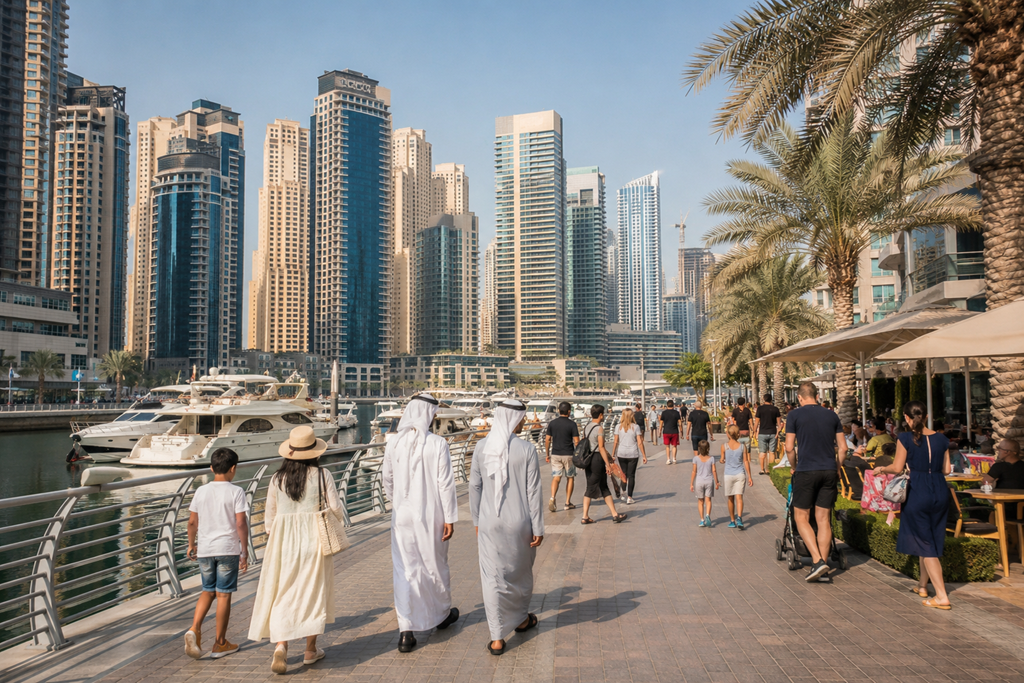
Start in Dubai Marina, one of the city’s most recognizable waterfront neighborhoods. The marina is lined with high-rise towers, restaurants, walking paths, and views of yachts and canals.
A morning walk along the Marina promenade is an easy way to see the area before it becomes busier. The district feels very different from Old Dubai and Downtown, showing another side of the city’s development.
You can stop for coffee or breakfast nearby, then continue toward Jumeirah Beach Residence if you want a beach-adjacent walk.
Midday: Relax At JBR Or The Beach
Jumeirah Beach Residence, often called JBR, is a practical place to combine beach time with restaurants, cafes, and waterfront walking. It is developed and popular, but it works well for travelers who want an easy beach experience without needing complicated transportation.
Spend a few hours by the water, walk along the beachfront, or have lunch nearby. If you prefer a more resort-style experience, you can use this part of the day for a hotel beach club or a quieter private beach option, depending on where you are staying.
The goal is not to overpack the final day. Dubai’s beach areas are best enjoyed with time to sit, walk, and take in the skyline-meets-coastline setting.
Afternoon: Visit Palm Jumeirah
In the afternoon, head toward Palm Jumeirah, one of Dubai’s most famous man-made landmarks. The Palm is home to hotels, restaurants, beach areas, and viewpoints.
You can keep this visit simple with a scenic drive, a stop at The Pointe area or Palm West Beach, or a reservation at a restaurant with views. If you want a more elevated perspective, consider a viewpoint experience on or near the Palm, but check current hours and booking requirements before planning around it.
Palm Jumeirah is also a good place to understand Dubai’s luxury travel identity. Even if you are not staying at a high-end resort, seeing the scale of the development is part of the experience.
Evening: End With A Waterfront Dinner
For your final evening, choose a waterfront dinner in Dubai Marina, JBR, Palm Jumeirah, or another coastal district. This gives your last night a relaxed finish and avoids ending the trip in a rushed mall or long car ride.
You do not need the most famous restaurant to have a good final meal. Look for a place with a setting you like, cuisine that fits your mood, and enough time to enjoy the view.
If you still have energy after dinner, take one last walk along the marina or beach before heading back to your hotel.
Where To Stay For This Itinerary
Dubai has several good base areas, and the best choice depends on what kind of trip you want.
Downtown Dubai
Downtown Dubai is ideal if you want to be close to the Burj Khalifa, Dubai Mall, and Dubai Fountain. It is convenient for a first visit and works especially well if your priority is modern landmarks.
The tradeoff is that beach areas and Old Dubai require a ride.
Dubai Marina And JBR
Dubai Marina and JBR are good choices if you want waterfront walks, beach access, restaurants, and a lively vacation feel. This area works well for travelers who want their evenings to be close to the water.
The tradeoff is that Downtown and Old Dubai are farther away.
Palm Jumeirah
Palm Jumeirah is best for a resort-focused stay. It is a strong choice if you want pools, beach time, luxury hotels, and a more contained vacation experience.
The tradeoff is that it can feel less central for sightseeing.
Old Dubai Or Deira
Old Dubai and Deira can be more practical for travelers who want markets, creekside culture, and access to traditional neighborhoods. These areas may also offer more budget-friendly hotel options.
The tradeoff is that some modern attractions and beach areas require longer transfers.
Getting Around Dubai
Dubai is generally easy to navigate, but distances can be longer than they look on a map. The city is spread out, and walking between major districts is often not realistic.
Metro
The Dubai Metro is useful for certain routes, especially along major corridors. It can help you reach Downtown Dubai, parts of Old Dubai, and some areas near the Marina. However, not every attraction is directly connected, so you may still need taxis or rideshares for the final stretch.
Taxis And Rideshares
Taxis and rideshares are common and often the most convenient way to move between districts. They are especially useful when traveling with luggage, visiting the desert pickup point, or moving between beach areas and Downtown.
Walking
Dubai has walkable pockets rather than being fully walkable as a city. Good walking areas include parts of Downtown Dubai, Dubai Marina, JBR, Al Fahidi, and some waterfront promenades. Plan to walk within districts, not across the entire city.
Practical Tips For A Better Dubai Trip
Book Key Experiences Ahead
For popular attractions like the Burj Khalifa, desert tours, and major viewpoints, book ahead during busy periods. Timed-entry reservations can help you avoid disappointment and give your day more structure.
Dress With The Setting In Mind
Dubai is modern and international, but it is still helpful to dress respectfully, especially in cultural areas, religious sites, traditional neighborhoods, and malls. Lightweight, breathable clothing is useful for the climate, and a light layer can help indoors where air conditioning is strong.
Plan Around Heat
Dubai can be very hot, especially during the warmer months. Use mornings and evenings for outdoor walks, and save indoor attractions, malls, museums, or hotel breaks for the hottest part of the day.
Do Not Overload Your Days
Dubai rewards pacing. One major attraction, one neighborhood or area, and one relaxed meal can make a better day than trying to cross the city repeatedly. Leave space for transportation, heat, rest, and spontaneous stops.
Choose Your Desert Tour Carefully
Not every desert experience is the same. Some are adventure-heavy, while others are more scenic or cultural. Read descriptions carefully and choose based on the experience you actually want.
A Balanced Way To Experience Dubai In 4 Days
Four days in Dubai gives you enough time to see the city’s highlights without turning the trip into a checklist. You can experience the modern skyline, explore the creek and souks, spend time in the desert, and enjoy the beachside districts that make Dubai feel like both a city break and a resort destination.
The best Dubai itinerary is not the one with the most stops. It is the one that helps you move through the city with enough time to appreciate its contrasts: old and new, desert and coastline, luxury and everyday life, fast development and long-standing trade culture.
Use this plan as a flexible framework, adjust it to your hotel location and travel pace, and give yourself permission to slow down when the city starts to feel big.
Download Our Free E-book!