Istanbul is one of the world’s most rewarding cities for travelers who enjoy history, architecture, food, neighborhoods, and everyday street life. It is a city shaped by empires, faith, trade, and geography, with the Bosphorus dividing Europe and Asia and connecting the Black Sea to the Sea of Marmara.
This 4-day Istanbul itinerary is designed for first-time visitors who want a clear, realistic plan without trying to see everything at once. It focuses on the city’s most enduring sights: the historic core of Sultanahmet, the Grand Bazaar, the Bosphorus, Galata, Karaköy, Kadıköy, Üsküdar, and a few atmospheric neighborhoods that help the city feel more human and less overwhelming.
Istanbul rewards slow looking, so this itinerary leaves room for walking, tea breaks, ferry rides, and unplanned discoveries.
Before You Go: How To Use This Istanbul Itinerary
Four days is enough time to see Istanbul’s major highlights while still enjoying the city’s rhythm. The best approach is to group your days by geography.
Spend your first day in Sultanahmet, where many of Istanbul’s most important historic landmarks sit close together. Use the second day for bazaars, mosques, and the Golden Horn. Save the third day for Galata, Karaköy, and the Bosphorus. On the fourth day, cross to the Asian side for Kadıköy and Üsküdar.
Istanbul has a broad public transportation network that includes metro, Marmaray, buses, trams, ferries, funiculars, and taxis, and the Istanbulkart can be used across many city transport modes. Ferries are especially useful because they are not just transportation; they are one of the best ways to experience the city from the water.
Check current opening hours before visiting major sights, especially mosques, museums, palaces, and cisterns. Some attractions may require timed-entry reservations, and access can change during prayer times, restoration work, or busy travel periods.
Where To Stay For 4 Days In Istanbul
For a first visit, the easiest areas to stay are Sultanahmet, Sirkeci, Karaköy, Galata, or Beyoğlu.
Sultanahmet
Sultanahmet is best if your top priority is walking to the Hagia Sophia, Blue Mosque, Topkapı Palace, Basilica Cistern, and other major historic sights. It is convenient and atmospheric, especially early in the morning and after day-trippers leave. The tradeoff is that it can feel quieter at night and more visitor-focused than other neighborhoods.
Sirkeci
Sirkeci is practical for first-time visitors because it sits between Sultanahmet, Eminönü, the tram, ferry piers, and the Grand Bazaar area. It is a good choice if you want easy transportation without being too far from the historic core.
Karaköy And Galata
Karaköy and Galata work well if you want a mix of history, food, cafés, waterfront walks, and access to both the old city and Beyoğlu. This area is especially useful for travelers who enjoy walking and want a livelier evening atmosphere.
Beyoğlu
Beyoğlu, including areas around İstiklal Avenue and Cihangir, gives you easier access to restaurants, nightlife, galleries, shops, and modern Istanbul. It is less convenient for early-morning sightseeing in Sultanahmet, but it offers a fuller sense of everyday city life.
Day 1: Sultanahmet, Hagia Sophia, Blue Mosque, And Topkapı Palace
Start your first day in Istanbul’s historic heart. This area contains some of the city’s most important landmarks and is part of the broader Historic Areas of Istanbul recognized by UNESCO. UNESCO notes that Istanbul has been associated with major political, religious, and artistic events for more than 2,000 years, with landmarks including the ancient Hippodrome, Hagia Sophia, and Süleymaniye Mosque.
Morning: Begin At Sultanahmet Square
Start early in Sultanahmet Square, where you can get oriented before the area becomes busier. This is the open historic space between the Hagia Sophia and the Blue Mosque, with ancient remnants of the Hippodrome nearby.
Give yourself time to simply stand in the square and take in the layers around you. Few places make Istanbul’s history feel as immediate: Byzantine monuments, Ottoman mosques, public fountains, domes, minarets, and visitors from around the world all share the same space.
Visit Hagia Sophia
Hagia Sophia is one of Istanbul’s defining landmarks. It has served different religious and civic roles over many centuries and remains a powerful symbol of the city’s layered identity. UNESCO describes Hagia Sophia as part of the Historic Areas of Istanbul and calls it an architectural masterpiece with deep significance in the interactions between Europe and Asia.
Because access rules can change, check current visitor information before you go. Dress respectfully, expect security lines, and be mindful that it remains an active mosque.
Visit The Blue Mosque
Across the square, the Sultan Ahmed Mosque, commonly known as the Blue Mosque, is another essential stop. Its domes, minarets, tilework, and courtyard make it one of the most memorable buildings in Istanbul.
As with all active mosques, visit respectfully. Avoid prayer times when sightseeing access may be restricted, dress modestly, and be prepared to remove your shoes before entering.
Midday: Lunch Near Sultanahmet Or Sirkeci
For lunch, step slightly away from the most crowded lanes around the major monuments if you want a quieter meal. Look for classic Turkish dishes such as lentil soup, grilled meats, pide, börek, stuffed vegetables, or simple meze plates.
This is a good moment to slow down. Istanbul sightseeing can be intense because so many major sights sit close together, and a relaxed lunch helps keep the day enjoyable.
Afternoon: Topkapı Palace
Spend the afternoon at Topkapı Palace, the former Ottoman imperial palace. This is not a quick stop. The palace grounds, courtyards, treasury areas, religious relic rooms, views, and tiled interiors all take time to absorb.
Do not rush through every room just to say you saw it. Focus on the courtyards, the palace’s relationship to the Bosphorus, and the sense of how Ottoman court life was arranged. If the Harem section is open and you are interested in architecture and palace life, it is worth considering as an added visit.
Late Afternoon: Gülhane Park
After Topkapı Palace, walk through Gülhane Park. It offers a softer end to the day after several major landmarks. The paths, trees, benches, and views make it a useful reset before dinner.
Evening: Dinner In Sirkeci Or Karaköy
For dinner, you can stay near Sirkeci for convenience or cross toward Karaköy for a livelier evening. Keep your first night simple. Choose a place that feels comfortable, order a few familiar Turkish dishes, and rest before another full day.
Day 2: Basilica Cistern, Grand Bazaar, Süleymaniye Mosque, And The Golden Horn
Day 2 stays mostly on the European side but shifts from imperial monuments to markets, mosque architecture, and historic neighborhoods.
Morning: Basilica Cistern
Begin at the Basilica Cistern, one of Istanbul’s most atmospheric historic sites. The underground columns, low lighting, and water create a completely different mood from the open squares and mosques above ground.
This is a good early stop because it is close to Sultanahmet and can become crowded. Check current ticketing and entry details before you go.
Late Morning: Grand Bazaar
From Sultanahmet, walk or take the tram toward the Grand Bazaar. The Grand Bazaar is not just a shopping stop; it is part of Istanbul’s long identity as a city of trade.
You do not need to buy anything to enjoy it. Walk slowly, look at ceramics, lamps, textiles, jewelry, leather goods, and carpets, and pay attention to the side lanes. The bazaar can feel overwhelming at first, so treat it as a place to wander rather than a place to complete a shopping mission.
If you do shop, compare prices, ask questions, and only bargain if you are genuinely interested.
Midday: Lunch Near The Bazaar Or Beyazıt
After the Grand Bazaar, find lunch nearby. This area is good for simple local meals, tea, sweets, and quick bites. Try dishes such as köfte, döner, lahmacun, or a comforting bowl of soup.
Afternoon: Süleymaniye Mosque
Walk toward Süleymaniye Mosque, one of Istanbul’s most graceful mosque complexes. Its hilltop location gives you a wider view of the city, and the architecture feels spacious and balanced.
This is also a good place to understand mosque complexes as more than prayer halls. Historically, many included educational, charitable, and social functions. Visit quietly, dress respectfully, and take your time in the courtyard and surrounding terraces.
Late Afternoon: Spice Bazaar And Eminönü
Continue downhill toward Eminönü and the Spice Bazaar. Compared with the Grand Bazaar, the Spice Bazaar is smaller and more focused on food, sweets, spices, teas, dried fruits, and Turkish delight.
The surrounding streets are just as interesting as the bazaar itself. This is a busy working area where locals and visitors mix around ferry piers, shops, snack stalls, and the waterfront.
Evening: Walk The Galata Bridge
End the day with a walk across the Galata Bridge. You will likely see fishermen along the railings, ferries crossing the Golden Horn, and the skyline shifting as the light changes.
From here, you can have dinner in Karaköy or return to your hotel. If you still have energy, walk uphill toward Galata Tower from the Karaköy side, but do not force it. You will spend more time in this area on Day 3.
Day 3: Galata, Karaköy, Beyoğlu, And The Bosphorus
Day 3 connects historic neighborhoods with the water. It is a good day for walking, cafés, views, and a Bosphorus experience.
Morning: Galata Tower Area
Start in Galata. The Galata Tower area is one of Istanbul’s most recognizable viewpoints and neighborhood landmarks. Whether or not you go up the tower, the surrounding streets are worth exploring.
Arrive earlier in the day if you want a quieter walk. The lanes around Galata include small shops, cafés, music stores, design boutiques, and glimpses of the Golden Horn.
Walk Down To Karaköy
From Galata, walk downhill toward Karaköy. This route gives you a strong sense of Istanbul’s vertical geography: steep streets, stairways, old buildings, and sudden views of the water.
Karaköy has become one of the city’s most useful neighborhoods for travelers because it connects ferries, food, museums, waterfront walks, and access to both the old city and Beyoğlu.
Midday: Lunch In Karaköy
Have lunch in Karaköy. This is a good area for a modern café meal, seafood, meze, or a simple Turkish lunch. Avoid building the day around one “must-visit” restaurant. Istanbul’s food culture is broader than any single venue, and flexibility makes the day easier.
Afternoon: İstiklal Avenue And Beyoğlu
Take the funicular or walk uphill toward Beyoğlu and İstiklal Avenue. This pedestrian avenue and its side streets show a different face of Istanbul: shops, churches, consulates, passages, cafés, bookstores, dessert spots, and historic apartment buildings.
The main avenue can be crowded, so the side streets often feel more rewarding. Consider exploring Çukurcuma or Cihangir if you enjoy antiques, cafés, quieter corners, and neighborhood wandering.
Late Afternoon Or Evening: Bosphorus Ferry Ride
A Bosphorus ferry ride is one of the best experiences in Istanbul because it lets you understand the city from the water. Ferries are also part of the city’s public transportation system, and local guidance notes that they are among the most pleasant ways to get around while enjoying the Bosphorus.
You can choose a short public ferry crossing, a longer Bosphorus route, or a dedicated cruise. For an evergreen, low-pressure experience, a public ferry ride around golden hour is often enough. You will see waterfront mansions, mosques, bridges, hills, and neighborhoods unfolding on both sides.
Evening: Dinner In Beyoğlu Or Karaköy
For dinner, stay in Beyoğlu if you want a livelier evening or return to Karaköy if you prefer to be closer to the waterfront. This is a good night for meze, grilled fish, kebabs, or a relaxed multi-dish meal.
Day 4: Kadıköy, Moda, Üsküdar, And A Softer Final Day
Your final day crosses to the Asian side. This gives the itinerary a fuller shape and helps Istanbul feel less like a checklist of monuments and more like a living city.
Morning: Ferry To Kadıköy
Start with a ferry to Kadıköy. The ride itself is part of the experience, with views back toward the historic peninsula and the European shoreline.
Kadıköy is one of the best areas for food markets, casual shopping, cafés, bookstores, bakeries, and everyday street life. It feels different from Sultanahmet and Beyoğlu, which is exactly why it belongs in a 4-day Istanbul itinerary.
Explore Kadıköy Market Streets
Spend the morning walking through Kadıköy’s market streets. Look for produce shops, fish stalls, spice sellers, bakeries, pickle shops, sweets, and casual eateries.
This is a good place to taste Istanbul without needing a formal food tour. Try small portions as you go: simit, baklava, Turkish coffee, fresh juice, stuffed mussels from a reputable vendor, or a simple lunch plate.
Midday: Walk To Moda
From central Kadıköy, walk toward Moda. This neighborhood offers a slower pace, leafy streets, seaside paths, cafés, and views across the water.
Moda is a good place to pause if the first three days have been busy. Sit with tea or coffee, walk the waterfront, and let the city feel less like a schedule.
Afternoon: Üsküdar
Later, travel to Üsküdar. You can reach it by public transportation or ferry depending on your route and timing. Üsküdar has a more traditional feel in many areas and offers some of the best views back toward the European side.
Walk along the waterfront and, if conditions are right, enjoy views near Maiden’s Tower from the shore. You do not need to build your plan around entering the tower; the shoreline view is satisfying on its own.
Sunset: Watch The Skyline From The Asian Side
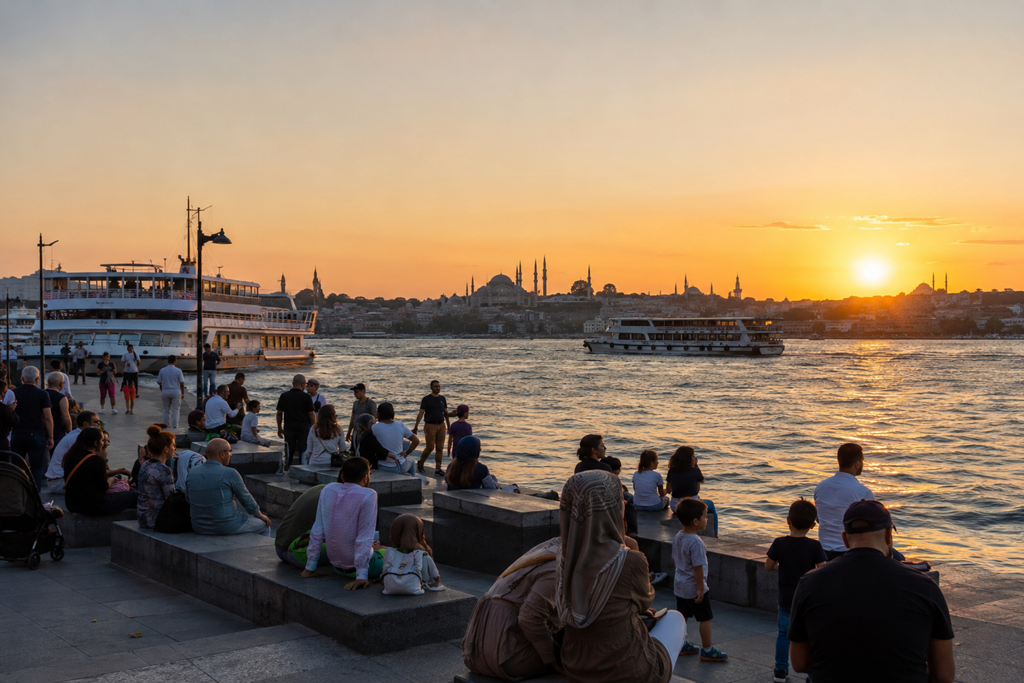
For your final evening, stay near the Üsküdar waterfront or another viewpoint on the Asian side and watch the light change over the historic peninsula. The domes, minarets, ferries, gulls, and water create one of Istanbul’s most memorable scenes.
This is a fitting end to the trip because it brings together what makes the city special: history, geography, daily life, and movement across continents.
What To Eat During 4 Days In Istanbul
Istanbul is an excellent food city, but you do not need a complicated dining plan. Focus on classic foods and everyday eating experiences.
Try a traditional Turkish breakfast if you enjoy a slower morning. Look for fresh bread, cheeses, olives, eggs, tomatoes, cucumbers, honey, jam, and tea. For simple meals, consider lentil soup, pide, lahmacun, köfte, döner, grilled fish, meze, stuffed vegetables, and rice dishes.
For snacks and sweets, try simit, baklava, Turkish delight, künefe, roasted chestnuts in season, Turkish coffee, and tea. Markets like Kadıköy and the Spice Bazaar are especially good for food browsing.
Practical Istanbul Travel Tips
Use Public Transportation Strategically
The tram is especially useful for Sultanahmet, Sirkeci, Eminönü, and nearby historic areas. Ferries are useful for crossing between Europe and Asia. The metro, Marmaray, funiculars, and buses can help with longer distances, but walking is often the best way to experience individual neighborhoods.
Dress Respectfully For Mosque Visits
Bring clothing that covers shoulders and knees, and carry a light scarf if needed. You will remove your shoes when entering mosque prayer areas. Even when a mosque is popular with visitors, it is still a place of worship.
Plan Around Hills And Crowds
Istanbul is not flat. Some neighborhoods, especially Galata, Beyoğlu, and parts of the old city, involve hills, uneven pavement, and stairs. Comfortable walking shoes matter.
Popular sights are busiest in the middle of the day. Starting early and grouping nearby attractions will make the trip feel smoother.
Keep Your Itinerary Flexible
Some sites may have changing hours, restoration areas, prayer-time closures, or timed-entry rules. Build your days around neighborhoods rather than exact minute-by-minute plans. That way, if one stop takes longer than expected, the day still works.
How To Adjust This Itinerary
If you have less time, focus on Day 1 and Day 2, then add either a Bosphorus ferry ride or Kadıköy depending on your interests.
If you have more time, add the Istanbul Archaeological Museums, Chora area if accessible, Balat and Fener, Dolmabahçe Palace, Ortaköy, a hammam experience, or a longer Bosphorus route.
If you prefer a slower trip, reduce each day to one major sight, one neighborhood walk, and one food experience. Istanbul does not need to be rushed to be memorable.
A Thoughtful 4-Day Istanbul Plan
A good Istanbul itinerary balances the city’s major landmarks with its everyday pleasures. Hagia Sophia, the Blue Mosque, Topkapı Palace, the bazaars, Süleymaniye Mosque, Galata, the Bosphorus, Kadıköy, and Üsküdar give you a strong first experience without making the trip feel overloaded.
The key is to move through Istanbul in layers. Start with the historic core, then follow the markets and mosques toward the water, cross into modern neighborhoods, and finally take the ferry to the Asian side. By the end of four days, you will have seen the famous sights, but you will also have felt the city’s rhythm: tea glasses, ferry horns, market streets, hilltop views, and the constant meeting of land, water, and history.
Download Our Free E-book!