Los Angeles can feel overwhelming at first because it is not one compact city center. It is a spread-out collection of beaches, neighborhoods, museums, viewpoints, shopping streets, food districts, and famous landmarks. A good Los Angeles itinerary works best when each day focuses on one general area instead of trying to cross the entire city several times.
This 4-day Los Angeles itinerary is designed for first-time visitors who want a balanced mix of classic attractions, beach time, scenic views, culture, and relaxed exploring. It includes Santa Monica, Venice, Hollywood, Griffith Observatory, Downtown Los Angeles, Beverly Hills, Malibu, and a few neighborhood experiences that help the city feel more manageable.
Use this as a flexible plan. Los Angeles traffic can affect timing, so it is better to build your days around nearby stops, leave room between activities, and check current opening hours or reservation requirements before you go.
Before You Start: How To Think About Los Angeles
Los Angeles rewards thoughtful planning. Distances on a map can look short, but travel time often depends on traffic, parking, and the time of day. For a 4-day trip, it helps to group attractions by geography:
- Westside and beaches: Santa Monica, Venice, Malibu
- Hollywood and Griffith Park: Hollywood Boulevard, Griffith Observatory, Los Feliz
- Central and museum areas: The Grove, LACMA, Miracle Mile
- Downtown Los Angeles: Grand Central Market, The Broad, Walt Disney Concert Hall, Arts District
- Beverly Hills and nearby areas: Rodeo Drive, Beverly Gardens Park, West Hollywood
You do not need to see everything. The goal is to experience the variety of Los Angeles without spending the entire trip in transit.
Where To Stay For This Itinerary
For this itinerary, the most convenient areas are generally:
Santa Monica
Santa Monica works well if beach time is a priority. It gives you easy access to the ocean, walkable areas, restaurants, and a relaxed base for exploring Venice and Malibu.
West Hollywood
West Hollywood is useful if you want nightlife, restaurants, shopping, and relatively central access to Hollywood, Beverly Hills, and museum areas.
Beverly Grove or Miracle Mile
These areas are practical if you want a balanced location near museums, shopping, and many central neighborhoods.
Downtown Los Angeles
Downtown can be a good fit if you are interested in architecture, museums, food halls, and arts districts, but it may feel less convenient if your main focus is beaches.
For a first-time visit, Santa Monica or West Hollywood often make the trip easier, depending on whether you prefer beach access or central nightlife and dining.
Day 1: Santa Monica, Venice, And A Classic Beach Sunset
Start your Los Angeles trip on the coast. Santa Monica and Venice are close enough to explore in one day, and they offer an easy introduction to the city’s beach culture.
Morning: Walk The Santa Monica Pier And Beachfront
Begin at the Santa Monica Pier, one of the most recognizable coastal landmarks in Los Angeles. The pier has ocean views, classic amusement park scenery, and a wide beach stretching in both directions.
You do not need to overplan this stop. Walk the pier, take in the views, and spend some time along the beachfront path. If you arrive earlier in the day, the area is usually easier to enjoy before it gets busier.
Late Morning: Explore Downtown Santa Monica
After the pier, walk toward Downtown Santa Monica and the Third Street Promenade area. This is a good place to grab coffee, browse shops, or ease into the day before heading south toward Venice.
If you want a slower start, you can spend extra time in Palisades Park, a scenic bluff-top park overlooking the Pacific Ocean. It is one of the simplest and most enjoyable places to appreciate Santa Monica’s coastal setting.
Afternoon: Walk Or Bike To Venice Beach
From Santa Monica, make your way toward Venice Beach. You can walk, bike, or use a rideshare depending on your pace. The beach path connects the two areas and gives you a classic Los Angeles coastal experience.
Venice Beach is busier, more colorful, and more eccentric than Santa Monica. Walk the Ocean Front Walk, see the skate park, and take in the mix of street performers, artists, vendors, and beachgoers. It can be lively and imperfect, but it is a memorable part of Los Angeles.
Late Afternoon: Visit The Venice Canals
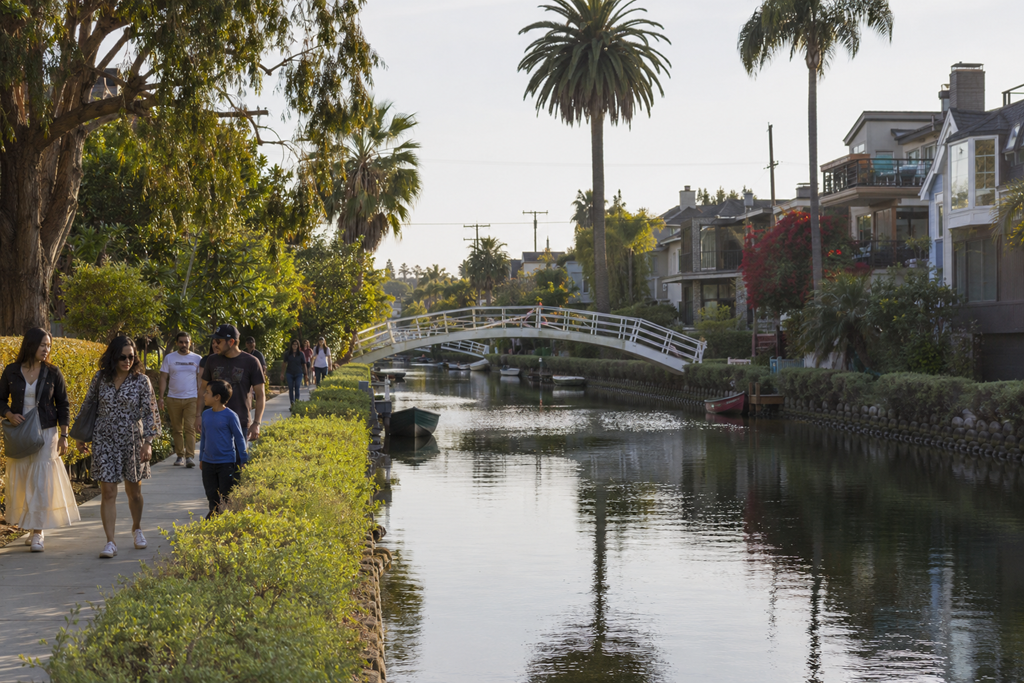
For a quieter contrast, walk inland to the Venice Canals. This residential area has footbridges, narrow waterways, and a slower atmosphere that feels very different from the boardwalk.
Be respectful while visiting, since this is a neighborhood where people live. A short walk through the canals is enough to appreciate the setting without rushing.
Evening: Sunset Near Santa Monica Or Venice
End your first day with sunset by the water. Santa Monica Beach, Venice Beach, and the area near the pier all work well. If you want a more polished dinner setting, return to Santa Monica. If you prefer something more casual, stay near Venice or nearby Abbot Kinney Boulevard.
Day 2: Hollywood, Griffith Observatory, And Los Feliz
Day 2 focuses on some of Los Angeles’ most famous sights, but with enough breathing room to avoid making the day feel like a checklist.
Morning: See Hollywood Boulevard Selectively
Hollywood Boulevard is famous, but it is best approached with realistic expectations. The Hollywood Walk of Fame, TCL Chinese Theatre, and surrounding landmarks are worth seeing if it is your first visit, but you probably do not need to spend half a day here.
Give yourself time to walk the main stretch, look for a few favorite names on the Walk of Fame, and see the historic theater exteriors. Keep your visit focused, then move on to more rewarding parts of the day.
Late Morning: Visit The Hollywood Bowl Overlook Or Lake Hollywood Park
For a view of the Hollywood Sign, consider stopping at a public viewpoint such as Lake Hollywood Park or another accessible overlook in the area. The sign is best enjoyed from a distance, and visitors should follow posted rules in residential neighborhoods.
A short viewpoint stop is usually enough unless you are planning a longer hike.
Afternoon: Explore Los Feliz
Los Feliz is a good neighborhood for lunch, coffee, bookstores, and a slower local feel. It sits near Griffith Park and makes a practical transition between Hollywood and the observatory.
Spend part of the afternoon walking the neighborhood, grabbing lunch, or relaxing before heading into Griffith Park.
Late Afternoon: Griffith Park
Griffith Park is one of the defining outdoor spaces in Los Angeles. It is large, hilly, and scenic, with trails, viewpoints, and major attractions. For a 4-day itinerary, keep your visit simple unless hiking is a major priority.
You can choose a short walk, a scenic drive, or a visit focused mainly on Griffith Observatory.
Evening: Griffith Observatory
Griffith Observatory is one of the best places in Los Angeles for city views. From the terraces, you can see the skyline, surrounding hills, and on clear days, a wide stretch of the basin.
The observatory itself adds science exhibits and architectural interest, but the view is the main reason many visitors come. Sunset and early evening are especially popular, so plan extra time for parking, shuttle options, or walking.
Afterward, have dinner in Los Feliz, Thai Town, Hollywood, or another nearby area rather than crossing the city late in the evening.
Day 3: Museums, Beverly Hills, And West Hollywood
Day 3 gives you a more polished city experience: museums, public art, shopping streets, and classic Los Angeles neighborhoods.
Morning: Visit LACMA And The La Brea Tar Pits Area
Start near Museum Row, where the Los Angeles County Museum of Art and La Brea Tar Pits sit close together. LACMA is a major cultural stop, and the outdoor public art installations are among the most photographed places in the city.
The La Brea Tar Pits add a different kind of experience: natural history, Ice Age fossils, and active tar pit areas. Even if you do not spend hours inside, the surrounding area is worth a visit.
Check current museum hours and reservation guidance before you go, especially during busy travel periods.
Late Morning Or Lunch: The Original Farmers Market And The Grove
From Museum Row, head to the Original Farmers Market and The Grove. The Farmers Market is a long-running food destination with casual stalls and a mix of cuisines. It is a practical lunch stop because everyone can choose what they want.
The Grove, next door, offers shopping, outdoor walkways, and an easy place to stroll. It is not the most local-feeling part of Los Angeles, but it is convenient, clean, and easy for visitors.
Afternoon: Beverly Hills And Rodeo Drive
Spend the afternoon in Beverly Hills. Walk Rodeo Drive, even if you are just window-shopping, then continue toward Beverly Gardens Park for the Beverly Hills sign and palm-lined scenery.
This area is best enjoyed as a short, scenic stop rather than a full-day destination. Give yourself time to walk, take photos, and appreciate the contrast between Beverly Hills and the beach neighborhoods from Day 1.
Late Afternoon: Sunset Strip Or West Hollywood
From Beverly Hills, head toward West Hollywood. The Sunset Strip has music history, hotels, restaurants, and nightlife, while nearby streets offer cafes, shops, and people-watching.
If nightlife matters to you, this is a good evening to stay out later. If you prefer a quieter trip, choose dinner in West Hollywood or Beverly Grove and keep the night simple.
Day 4: Downtown Los Angeles, Arts District, And A Scenic Finish
Your final day shifts toward architecture, food, museums, and historic city layers. Downtown Los Angeles is very different from the beach and Hollywood areas, which makes it a useful part of a first-time itinerary.
Morning: Walt Disney Concert Hall And Grand Avenue
Start around Grand Avenue. Walt Disney Concert Hall is one of the city’s most distinctive architectural landmarks, with sweeping metallic forms and strong visual impact from the outside.
Nearby cultural buildings and public spaces make this area a good place for a morning walk. Check current visitor guidance if you want to tour any interior spaces.
Late Morning: The Broad Or MOCA
If you want a museum stop, The Broad and the Museum of Contemporary Art are both in the area. The Broad is especially popular for contemporary art, while MOCA offers another strong cultural option nearby.
Some museums may require timed-entry reservations or have changing exhibition schedules, so verify details before your visit.
Lunch: Grand Central Market
Grand Central Market is a practical and flavorful lunch stop. It brings together a wide variety of food vendors in a historic Downtown setting. It can get busy, but the variety makes it useful for groups with different tastes.
Rather than chasing a specific vendor, treat it as a place to sample Los Angeles’ casual food culture.
Afternoon: Angels Flight, The Bradbury Building, And Historic Downtown
After lunch, explore nearby historic Downtown landmarks. Angels Flight is a small funicular railway that has become a classic Los Angeles photo stop. The Bradbury Building is known for its beautiful interior architecture, though visitor access may be limited to certain public areas.
This part of Downtown is best explored on foot during the day. Keep your route simple and pay attention to your surroundings, as you would in any major city.
Late Afternoon: Arts District Or Little Tokyo
Choose one final neighborhood based on your interests.
The Arts District offers murals, converted warehouses, cafes, galleries, and a creative urban feel. Little Tokyo offers Japanese food, shops, cultural sites, and a more compact walking experience.
Both are close enough to fit naturally after Downtown sightseeing. If you prefer food and easy strolling, Little Tokyo may be the better choice. If you like murals, design shops, and industrial architecture, choose the Arts District.
Evening: End With A View Or A Memorable Dinner
For your final evening, either stay Downtown for dinner or head back toward your hotel base. If you still have energy, you can choose a rooftop-style view, a scenic overlook, or a relaxed dinner in one of the neighborhoods you enjoyed most.
Avoid planning a long final-night drive unless you are comfortable with Los Angeles traffic. A satisfying last evening is often better than squeezing in one more distant attraction.
Optional Swap: Malibu Beach Day
If beaches are your top priority, consider swapping part of Day 3 or Day 4 for Malibu. Malibu offers a more scenic coastal experience than Santa Monica or Venice, with rugged cliffs, broad beaches, and Pacific Coast Highway views.
Good evergreen Malibu-style stops include:
- Zuma Beach for a wide, classic beach experience
- El Matador State Beach for dramatic rock formations and photography
- Malibu Pier for ocean views and a simple coastal walk
- Point Dume for cliffs, beach scenery, and viewpoints
Parking and access can vary, and some beaches involve stairs or limited facilities. Check current conditions before heading out, especially if you are visiting with kids, older travelers, or anyone who prefers easy access.
Optional Swap: Studio Tour Or Theme Park Day
Some visitors come to Los Angeles specifically for film and entertainment. If that is your priority, you can replace one itinerary day with a studio tour or theme park experience.
A studio tour can fit well into a Hollywood-focused trip, while a theme park day usually deserves most of the day on its own. Book ahead during busy periods and avoid trying to combine a major theme park visit with too many other attractions.
How To Get Around Los Angeles
Los Angeles is easier with a car, especially if you want to visit beaches, viewpoints, and multiple neighborhoods. However, driving also means dealing with traffic and parking.
Renting A Car
A car gives you the most flexibility. It is especially helpful for Malibu, Griffith Park, and neighborhood-hopping. Build in extra time for parking and avoid planning tight back-to-back reservations across town.
Rideshare
Rideshare can work well if you are staying in a central area and do not want to manage parking. It may become expensive if you are crossing the city often, so group your stops carefully.
Public Transit
Los Angeles does have public transit, including Metro rail and buses, and it can be useful for certain routes. For a short first-time visit, it is best used selectively rather than as the only transportation method, unless your itinerary is built around transit-friendly areas.
Walking
Los Angeles is walkable in sections, not as a whole. Santa Monica, Venice, Downtown, Beverly Hills, Los Feliz, Little Tokyo, and parts of West Hollywood can be enjoyable on foot once you are already there.
Best Time To Visit Los Angeles
Los Angeles is a year-round destination, but the experience changes by season.
Spring and fall are often comfortable for sightseeing, walking, and beach visits. Summer brings warmer beach weather and busier travel periods. Winter can still be pleasant, though rain is more possible and ocean swimming may be less appealing for some visitors.
Coastal areas can be cooler than inland neighborhoods, especially in the morning or evening. Bring layers, even if the forecast looks warm.
Practical Tips For A Better 4-Day Los Angeles Trip
Group Your Days By Area
This is the most important Los Angeles planning rule. Avoid starting in Santa Monica, driving to Downtown, returning to Hollywood, and ending in Venice all in one day. You will lose too much time in transit.
Do Less Than You Think You Can
Los Angeles is more enjoyable when you leave room for traffic, meals, parking, and spontaneous stops. A realistic itinerary will feel better than an ambitious one.
Check Parking Before You Go
Some beaches, museums, and popular landmarks have paid parking, limited lots, or neighborhood restrictions. Look up parking guidance before leaving your hotel.
Book Ahead For Popular Attractions
Museums, studio tours, and certain entertainment experiences may require advance reservations or timed entry. Check current details before building your day around them.
Expect Different Versions Of Los Angeles
Santa Monica, Venice, Beverly Hills, Hollywood, Downtown, and Malibu all feel different. That variety is part of the appeal. Try not to judge the whole city by one neighborhood.
A Simple 4-Day Los Angeles Itinerary At A Glance
Day 1: Santa Monica And Venice
- Santa Monica Pier
- Palisades Park
- Santa Monica beachfront
- Venice Beach
- Venice Canals
- Sunset by the ocean
Day 2: Hollywood And Griffith Park
- Hollywood Boulevard
- TCL Chinese Theatre
- Hollywood Sign viewpoint
- Los Feliz
- Griffith Park
- Griffith Observatory
Day 3: Museums, Beverly Hills, And West Hollywood
- LACMA area
- La Brea Tar Pits
- Original Farmers Market
- The Grove
- Rodeo Drive
- Beverly Gardens Park
- West Hollywood or Sunset Strip
Day 4: Downtown Los Angeles And Nearby Neighborhoods
- Walt Disney Concert Hall
- The Broad or MOCA
- Grand Central Market
- Angels Flight
- Bradbury Building
- Little Tokyo or Arts District
Final Thoughts For Planning Your Los Angeles Itinerary
Four days in Los Angeles is enough time to experience the city’s beaches, landmarks, neighborhoods, museums, and viewpoints without trying to see everything. The key is to plan by area, keep your schedule realistic, and give yourself permission to enjoy each part of the city at a comfortable pace.
Los Angeles works best when you treat it as several smaller destinations within one large city. Spend one day by the beach, one around Hollywood and Griffith Park, one in the museum and Beverly Hills areas, and one Downtown. That structure gives you a well-rounded first visit while leaving space for the moments that make a trip feel personal.
Download Our Free E-book!