Bali is one of those destinations where a little planning makes a big difference. The island offers beaches, temples, rice terraces, traditional villages, wellness experiences, and outdoor adventure, but traffic and travel distances can make an overpacked itinerary feel tiring fast.
This 5-day Bali itinerary is designed for first-time visitors who want a balanced trip: time to relax, meaningful cultural stops, scenic landscapes, and a few memorable adventures without trying to see everything at once. It focuses on durable Bali experiences, including Ubud, the south coast, water temples, rice terraces, beaches, and classic viewpoints that remain useful planning anchors over time. Indonesia’s official tourism site highlights several of these enduring Bali landmarks, including Uluwatu Temple, Tanah Lot, Tirta Empul, and Tegalalang Rice Terraces.
How To Use This 5-Day Bali Itinerary
This itinerary works best if you divide your stay between Ubud and South Bali.
A practical split is:
Days 1–3: Ubud or nearby central Bali
This gives you easier access to rice terraces, temples, waterfalls, art villages, wellness experiences, and Mount Batur.
Days 4–5: South Bali
This works well for beaches, Uluwatu, Jimbaran, Seminyak, Sanur, Nusa Dua, or Canggu depending on your travel style.
You can also base yourself in one place for the full trip, but expect longer driving days. Bali may look compact on a map, yet traffic, narrow roads, and mountain routes can slow things down.
Day 1: Arrive In Bali And Ease Into Ubud
Your first day in Bali should be simple. After a long flight, immigration, baggage, and the drive from the airport, it is better to settle in than force a packed sightseeing day.
Check Into Ubud Or Your First Base
Ubud is a strong starting point because it gives you a softer introduction to Bali’s culture and landscapes. You will find rice fields, wellness studios, traditional compounds, small cafés, art galleries, and easy access to central Bali attractions.
If you prefer to start near the beach, Sanur is another good first-night option. It is usually more relaxed than some of Bali’s busier nightlife areas and can work well if you want a gentler arrival.
Take A Short Walk Near Your Hotel
Instead of rushing to a major attraction, use the afternoon to get oriented. Walk around your hotel area, find a casual meal, and notice where the nearest shops, cafés, ATMs, and transport pickup points are.
In Ubud, a short walk near the town center, rice field paths, or a quiet side street can already give you a sense of place. Keep your first evening flexible, especially if jet lag is a factor.
Enjoy A Simple Balinese Dinner
For dinner, look for classic Indonesian or Balinese dishes such as nasi campur, grilled fish, gado-gado, satay, or vegetable curries. You do not need to chase a famous restaurant on your first night. A comfortable local meal close to where you are staying is enough.
Day 1 Planning Notes
Keep arrival day light. Bali rewards slower pacing, especially at the beginning of the trip. Save the longer temple and nature visits for when you are rested.
Day 2: Ubud, Rice Terraces, Temples, And Local Culture
Day 2 gives you a fuller introduction to central Bali. The goal is to combine scenic landscapes, cultural context, and a few meaningful stops without turning the day into a checklist.
Start With The Tegalalang Rice Terraces
Begin the day at the Tegalalang Rice Terraces, one of the most recognizable landscapes near Ubud. The layered green paddies are a classic Bali scene and a good place to understand how agriculture, water management, and daily life shape the island’s inland scenery.
Go earlier in the day if you want softer light and fewer crowds. Wear comfortable shoes because paths can be uneven, muddy, or steep in places.
Visit Tirta Empul Temple
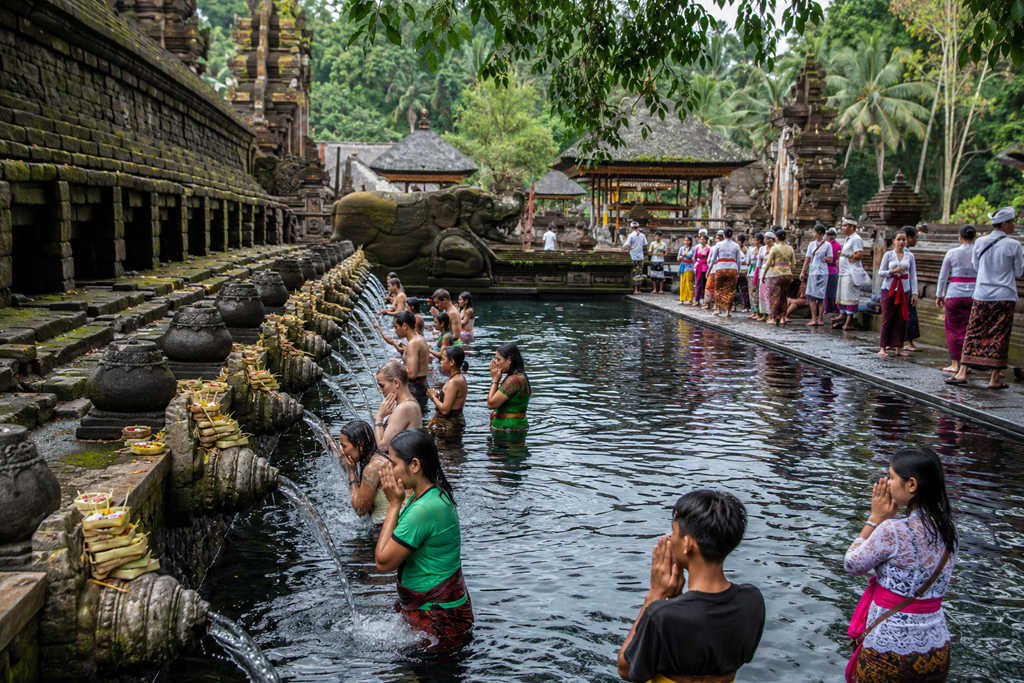
From the rice terraces, continue toward Tirta Empul, a sacred water temple known for its holy spring and purification pools. It is one of Bali’s important cultural sites and should be approached respectfully.
You do not need to participate in a purification ritual to appreciate the temple. Many visitors simply walk through the complex, observe quietly, and learn about the setting. Dress modestly, follow local guidance, and use the sarong or sash system required at many temples.
Have Lunch Near Ubud
After the temple visit, return toward Ubud for lunch. This is a good time to try a simple warung meal or a restaurant overlooking greenery. Keep lunch unhurried so the day does not feel like a tour bus route.
Explore Ubud’s Art And Market Area
Spend the afternoon around central Ubud. Depending on your interests, you might visit local galleries, browse artisan shops, stop near Ubud Palace, or walk through the market area.
This part of the day is less about one must-see attraction and more about getting a feel for Ubud’s creative side. Look for woodwork, textiles, paintings, woven goods, and small craft items, but avoid buying anything you do not genuinely want to carry home.
Optional: See A Traditional Dance Performance
If you still have energy in the evening, consider a traditional Balinese dance performance. Kecak and other Balinese performances are regularly staged in several places around the island, including Ubud and Uluwatu. Check current schedules locally before you go. Indonesia’s tourism site notes that Kecak is performed in multiple Bali locations, with Uluwatu being one of the best-known settings.
Day 2 Planning Notes
This is a culturally rich day, so avoid adding too many extra stops. Rice terraces, a temple, lunch, and Ubud’s town center are enough for a satisfying day.
Day 3: Mount Batur, Waterfalls, Or A Wellness-Focused Ubud Day
Day 3 is your most flexible day in central Bali. Choose one main direction based on your travel style: adventure, nature, or relaxation.
Option A: Mount Batur Sunrise Adventure
For travelers who want a memorable outdoor experience, a Mount Batur sunrise hike is one of Bali’s classic adventures. It usually requires a very early start, and it is best arranged with a reputable local guide.
The hike can be rewarding, but it is not the right choice for everyone. Consider your fitness level, sleep needs, weather conditions, and comfort with hiking in the dark. Bring layers, wear proper footwear, and do not schedule a packed afternoon afterward.
After the hike, many travelers keep the rest of the day light with breakfast, a rest, and perhaps a gentle spa treatment or quiet meal back in Ubud.
Option B: Waterfalls And Village Scenery
If you prefer nature without a pre-dawn hike, choose a waterfall-focused day. Bali has several waterfalls within reach of Ubud, and the best choice depends on where you are staying and how much walking you want to do.
Rather than trying to visit three or four waterfalls, pick one or two and give yourself time. Some waterfall paths involve stairs, slippery rocks, or uneven trails, so wear shoes that can handle wet ground.
Pair the waterfall visit with a scenic drive, a coffee stop, or a village walk instead of rushing across the island.
Option C: A Slower Ubud Wellness Day
If your idea of a perfect Bali trip includes rest, make Day 3 a wellness-focused day. You might book a massage, take a yoga class, walk the Campuhan Ridge area, enjoy a long lunch, and leave space to read, journal, swim, or simply pause.
This is often the day that makes the trip feel balanced. Bali can be busy and stimulating, so a slower day helps you enjoy the rest of the itinerary more.
Day 3 Planning Notes
Choose one version of the day and commit to it. Mount Batur, waterfalls, and wellness can all be worthwhile, but trying to combine them into one day may leave you tired.
Day 4: Transfer To South Bali, Beaches, And Uluwatu
Day 4 shifts the trip toward Bali’s coastline. After a few days inland, the beaches, cliffs, and ocean views of the south give the itinerary a different feel.
Travel From Ubud To South Bali
Leave Ubud after breakfast and transfer to your South Bali hotel. Good areas to consider include:
Uluwatu: Best for cliffs, surf beaches, dramatic sunsets, and a quieter coastal feel in many areas.
Jimbaran: Good for beach dinners, airport access, and a more settled coastal base.
Sanur: Good for a relaxed beachfront path, families, and easier boat access to nearby islands.
Nusa Dua: Good for resort-style comfort and calmer beach days.
Seminyak or Canggu: Better for restaurants, cafés, shopping, nightlife, and a busier social scene.
Pick the area that matches the trip you actually want, not just the place you see most often online.
Spend The Afternoon At The Beach
After checking in, keep the afternoon simple. Go to the beach closest to your hotel or choose one nearby that fits your comfort level.
Some beaches in South Bali are better for swimming, while others are better for surfing, scenery, or sunset. Always pay attention to surf conditions, flags, tides, and local guidance.
Visit Uluwatu Temple For Sunset
In the late afternoon, head toward Uluwatu Temple if it fits your location and energy level. The temple sits dramatically on a cliff above the Indian Ocean and is one of Bali’s most iconic coastal sites. Indonesia’s official tourism content describes Uluwatu Temple as being built on a cliff overlooking the sea, making it one of the island’s memorable cultural and scenic stops.
Arrive with enough time to walk, enjoy the views, and move slowly. Watch your belongings around monkeys, follow temple dress expectations, and check current visiting details before you go.
Optional: Kecak Performance At Uluwatu
If you did not see a dance performance in Ubud, Uluwatu is a classic place to watch Kecak. It can be atmospheric at sunset, but it is also popular, so book or arrive early during busy travel periods.
Day 4 Planning Notes
Do not schedule too much on transfer day. Ubud-to-south travel can take longer than expected, and you will enjoy the coast more if you leave room for delays.
Day 5: Choose Your Bali Beach Day Or Final Adventure
Your final full day should match the mood you want to leave with. Bali offers many possibilities, but on a 5-day itinerary, it is better to choose one focused experience rather than spending the day in traffic.
Option A: Relaxed Beach Day In Sanur, Nusa Dua, Or Jimbaran
If you want the trip to end gently, choose a beach day. Sanur offers a pleasant beachfront path and a more settled pace. Nusa Dua is suited to resort-style relaxation. Jimbaran works well for a slower beach afternoon followed by a seafood dinner near the water.
This option is best for travelers who want rest, swimming, reading, and an easy final evening.
Option B: Uluwatu Beaches And Cliff Views
If you are staying near Uluwatu or enjoy dramatic coastal scenery, spend the day exploring beaches and cliff viewpoints. Some beaches require stairs or steep access, so check conditions before heading down.
This option is ideal for travelers who want a scenic, slightly adventurous coastal day without leaving South Bali.
Option C: Day Trip To Tanah Lot And Nearby Coastal Areas
Tanah Lot is another classic Bali temple, known for its offshore setting and sunset views. Indonesia’s tourism site describes Tanah Lot as an ancient Hindu shrine on a rocky outcrop surrounded by waves, and it remains one of Bali’s most recognizable landmarks.
Because Tanah Lot can be crowded, especially near sunset, treat it as the anchor of the day rather than one of many rushed stops. Pair it with a relaxed lunch, a coastal drive, or time near your hotel.
Option D: Nusa Penida Day Trip
Nusa Penida can be beautiful, but it is a more demanding day trip. It usually involves an early start, boat transfers, winding roads, and longer travel times between sights. It is best for travelers who are comfortable with a full day of movement.
If you choose Nusa Penida, avoid trying to see every famous viewpoint in one day. Pick a focused route and book with a reputable operator.
Day 5 Planning Notes
For most first-time visitors, a relaxed South Bali beach day or Uluwatu-focused day is the easiest way to end the trip well. Save more ambitious island-hopping or far-reaching sightseeing for a longer Bali visit.
Where To Stay For This Bali Itinerary
Choosing the right base matters more than squeezing in extra attractions.
Ubud
Stay in Ubud for rice terraces, temples, cultural experiences, yoga, wellness, galleries, cooking classes, waterfalls, and central Bali day trips. It is not a beach base, but it gives you a deeper look at Bali beyond the coast.
Sanur
Stay in Sanur if you want a relaxed beach atmosphere, easier walking, a gentler pace, and convenient boat connections. It is a good option for families, couples, and travelers who prefer a less intense coastal base.
Uluwatu
Stay in Uluwatu if you want cliffs, surf beaches, sunset views, and a more dramatic coastal setting. It is not always the easiest place for walking from one area to another, so transportation planning matters.
Jimbaran
Stay in Jimbaran for a beach setting that is relatively close to the airport and convenient for Uluwatu. It can work well for the final part of a short trip.
Seminyak Or Canggu
Stay in Seminyak or Canggu if you want restaurants, cafés, boutiques, nightlife, and a more social atmosphere. These areas can be busy, so they are best for travelers who want energy rather than quiet.
Getting Around Bali
Most visitors rely on private drivers, rideshare-style apps where available, hotel transfers, scooters, or arranged tours.
For a short 5-day trip, a private driver can be the simplest option for temple days, waterfall days, and transfers between regions. It reduces decision fatigue and helps you group stops logically.
Scooters are common, but they are not the best choice for every traveler. Roads can be crowded and unfamiliar, and insurance issues can be serious if you are not properly licensed. If you are unsure, use a driver instead.
Practical Bali Travel Tips
Build In Travel Time
Bali traffic can change the feel of a day. Avoid planning attractions that are far apart unless you are comfortable spending several hours in transit.
Dress Respectfully At Temples
Bring or rent a sarong and sash when required. Cover shoulders and knees where appropriate, and follow posted or local guidance.
Choose Fewer Stops
A good Bali day might include one major attraction, one meal, one scenic stop, and time to rest. That is often better than five rushed photo stops.
Check Conditions Before Outdoor Activities
For hikes, waterfalls, beaches, and boat trips, check current weather, tide, sea, and trail conditions. Bali’s landscapes are beautiful, but conditions can change.
Keep Cash Available
Many places accept cards or digital payment, but smaller vendors, parking areas, local markets, and temple donations may still be easier with cash.
Respect Local Life
Bali is a real place with active religious, family, and community life. Be mindful around ceremonies, offerings, temples, and private homes.
Best Time To Visit Bali
Bali is often described in terms of a drier season and a wetter season. The drier months are generally more popular for beaches, hiking, and outdoor sightseeing, while the wetter months can still be enjoyable but may bring heavier showers and more humidity. Bali travel resources commonly describe the dry season as roughly April to October and the wet season as roughly November to March, though weather can vary by area and year.
For an evergreen trip plan, the best approach is to match your expectations to the season. If you care most about beach days and hiking, lean toward drier periods. If you want fewer crowds and do not mind rain interruptions, wetter periods can still work.
A Realistic 5-Day Bali Itinerary At A Glance
Day 1: Arrive, transfer to Ubud, settle in, easy dinner
Day 2: Tegalalang Rice Terraces, Tirta Empul, Ubud art and culture
Day 3: Choose Mount Batur, waterfalls, or a slower wellness day
Day 4: Transfer to South Bali, beach time, Uluwatu Temple
Day 5: Choose a relaxed beach day, Uluwatu coast, Tanah Lot, or Nusa Penida
Final Thoughts On Planning 5 Days In Bali
Five days in Bali is enough for a meaningful first visit if you keep the itinerary focused. You will not see the whole island, and that is okay.
A strong first trip balances Ubud’s cultural and natural landscapes with South Bali’s beaches and cliffs. Give yourself time to absorb each place, avoid unnecessary backtracking, and choose experiences that fit your energy. Bali is easier to enjoy when the plan leaves room for rest, weather, traffic, and the slower moments that often become the most memorable part of the trip.
Download Our Free E-book!