London is one of those cities where the challenge is not finding things to do — it is deciding what to leave out.
For first-time visitors, five days gives you enough time to see the major landmarks, explore a few classic neighborhoods, enjoy museums and markets, and still leave room for slower moments along the Thames or in one of the city’s parks.
This 5-day London itinerary is designed to be realistic, walkable where possible, and organized by geography so you spend less time crossing the city and more time enjoying it. It focuses on long-standing London experiences: historic sites, famous streets, museums, markets, river views, parks, and neighborhoods that remain worth visiting year after year.
Before your trip, check current opening hours and reservation requirements for major attractions, especially Westminster Abbey, the Tower of London, and popular museums. Some attractions may use timed-entry reservations during busy periods.
A Quick Overview Of This 5-Day London Itinerary
This itinerary works well for travelers visiting London for the first time who want a balanced mix of history, culture, neighborhoods, scenic walks, and food experiences.
Here is the general flow:
Day 1: Westminster, Buckingham Palace, St James’s Park, and the South Bank
Day 2: Tower of London, Tower Bridge, Borough Market, and the Thames
Day 3: British Museum, Covent Garden, Soho, and the West End
Day 4: Kensington, Hyde Park, museums, and Notting Hill
Day 5: Camden, Regent’s Canal, Regent’s Park, and a flexible final afternoon
London’s public transportation system makes it possible to cover a lot of ground without needing a car. Visitors can use a Visitor Oyster card, Oyster card, contactless payment card, or mobile device on much of the city’s public transport network, including the Tube, buses, DLR, London Overground, Elizabeth line, and many National Rail services.
Where To Stay For A First Visit To London
For a first trip, it helps to stay somewhere central or well connected by Tube. You do not need to stay next to every attraction, but you do want easy access to public transport.
Good areas for first-time visitors include:
Covent Garden: Convenient, lively, and walkable to the West End, Trafalgar Square, and the Thames.
South Bank or Waterloo: Good for river walks, views, and access to Westminster, the London Eye area, and major transport connections.
Bloomsbury: Practical for the British Museum, bookshops, garden squares, and relatively easy Tube access.
Kensington or South Kensington: A good choice for museums, Hyde Park, and a slightly more residential feel.
Victoria or Westminster: Useful for Buckingham Palace, Westminster Abbey, and transport links, though some parts can feel more businesslike.
For this itinerary, staying near Covent Garden, Bloomsbury, South Bank, Westminster, or South Kensington would keep most days manageable.
Day 1: Westminster, Royal London, And The South Bank
Start your first day with London’s most recognizable landmarks. This day gives you the classic first impression: Parliament, Westminster Abbey, Buckingham Palace, St James’s Park, Trafalgar Square, and the Thames.
Morning: Westminster Abbey, Big Ben, And Parliament
Begin around Westminster Station. When you come out near the River Thames, you will be close to some of London’s most famous views: the Houses of Parliament, Big Ben, Westminster Bridge, and Westminster Abbey.
Westminster Abbey is one of London’s most important historic churches and has been closely tied to royal ceremonies, coronations, and British history for centuries. If you are interested in history, architecture, or royal tradition, it is worth visiting inside. If you prefer a lighter first morning, you can admire it from the outside and save your energy for walking.
Afterward, cross Westminster Bridge for one of the classic views back toward Parliament. This is also a good moment to orient yourself along the Thames.
Midday: St James’s Park And Buckingham Palace
From Westminster, walk through St James’s Park toward Buckingham Palace. This route is one of the most pleasant ways to move between major sights because it gives you greenery, water, and wide views before reaching the palace.
Buckingham Palace is best enjoyed as part of a broader royal London walk rather than as a single rushed stop. If the Changing of the Guard is important to you, check the current schedule before planning your morning around it, since timing can vary.
After seeing the palace, continue along The Mall toward Trafalgar Square. This walk connects several major landmarks and gives you a strong sense of ceremonial London.
Afternoon: Trafalgar Square And The National Gallery
Trafalgar Square is a useful midpoint between Westminster, Covent Garden, and the West End. It is also home to the National Gallery, one of London’s major art museums.
If you enjoy art, spend part of the afternoon inside the National Gallery. If museums are not your priority, use this stop as a shorter break before continuing toward the river or Covent Garden.
Evening: South Bank Walk
For your first evening, walk along the South Bank of the Thames. This area gives you river views, pedestrian paths, bridges, street life, and easy access to restaurants and casual food options.
A simple route is:
Westminster Bridge → London Eye area → South Bank → Millennium Bridge area
You do not need to ride the London Eye to enjoy this part of the city. The walk itself is one of the best first-night experiences in London, especially if you want to see the city lights without committing to a long evening plan. Visit London highlights the London Eye, Tower Bridge, river cruises, and other riverside attractions as classic first-time visitor experiences.
Day 2: Tower Of London, Tower Bridge, Borough Market, And The Thames
Day 2 focuses on the eastern side of central London, combining deep history, river views, a famous market, and one of the city’s best walking routes.
Morning: Tower Of London
Start at the Tower of London. This is one of the most important historic sites in the city, and it rewards an early start because there is a lot to see.
The Tower has served many roles over time, including fortress, royal palace, prison, and home of the Crown Jewels. Give yourself enough time to explore rather than treating it as a quick photo stop. For many first-time visitors, this is one of the most memorable paid attractions in London.
Because entry procedures and crowd levels can change, check current ticket and timed-entry guidance before you go.
Midday: Tower Bridge
After the Tower of London, walk to Tower Bridge. Many first-time visitors confuse Tower Bridge with London Bridge, but Tower Bridge is the dramatic bridge with two towers and raised walkways.
You can enjoy it from the outside, walk across it, or visit the bridge exhibition if you want a closer look at the engineering and views. Either way, this is one of the best places in London for photos and river perspective.
Lunch: Borough Market
From Tower Bridge, walk west along the river or cross toward London Bridge and Borough Market. Borough Market is one of London’s most famous food markets and works well for lunch because you can sample different foods without committing to a formal sit-down meal.
It can get busy, so arrive with patience and a flexible attitude. If the main market area feels crowded, take your food to a nearby quieter spot when possible.
Afternoon: Shakespeare’s Globe, Tate Modern, And Millennium Bridge
After lunch, continue along the Thames Path toward Shakespeare’s Globe and Tate Modern. This stretch is one of the best walks in London for first-time visitors because it combines river views, historic references, bridges, and modern cultural spaces.
You can tour Shakespeare’s Globe if theatre history interests you, visit Tate Modern if you enjoy modern and contemporary art, or simply continue walking.
From Tate Modern, cross the Millennium Bridge toward St Paul’s Cathedral. The view of St Paul’s from the bridge is one of the most satisfying walking moments in the city.
Evening: St Paul’s And The City
End your day near St Paul’s Cathedral or continue into the City of London for dinner. The City is London’s historic financial district, and its mix of old churches, narrow lanes, and modern buildings gives you a different feeling from Westminster or the West End.
If you still have energy, consider an evening view from one of the public viewing areas or riverside spots nearby, but avoid overloading this day. The Tower, bridge, market, and Thames walk already make it full.
Day 3: British Museum, Covent Garden, Soho, And The West End
Day 3 is about museums, theatre, shopping streets, and central London neighborhoods. It is a good day to move a little slower after two landmark-heavy days.
Morning: The British Museum
Begin at the British Museum in Bloomsbury. It is one of London’s major museums and can easily take several hours, so decide ahead of time whether you want a focused visit or a broad overview.
For a first visit, do not try to see everything. Choose a few galleries or highlights, then leave before museum fatigue sets in. This makes the rest of the day more enjoyable.
Before visiting, check current entry guidance, security procedures, and any reservation requirements.
Midday: Bloomsbury And Covent Garden
After the museum, spend a little time in Bloomsbury if you enjoy garden squares, bookshops, and quieter streets. Then walk or take the Tube toward Covent Garden.
Covent Garden is popular, but it remains a useful and enjoyable area for first-time visitors because it connects easily to restaurants, shops, theatres, and nearby neighborhoods. The market buildings, surrounding lanes, and street performers make it a good place to wander without needing a strict plan.
Afternoon: Leicester Square, Piccadilly Circus, And Soho
From Covent Garden, walk toward Leicester Square and Piccadilly Circus. These areas are busy and touristy, but they are part of the central London experience. Treat them as places to pass through rather than places to linger all afternoon.
Then continue into Soho. Soho is better for wandering, dining, cafés, bars, and people-watching. It has a denser neighborhood feel than the large landmark areas from earlier in the trip.
Evening: West End Show Or A Relaxed Dinner
If you want to see a West End show, this is a good night for it. Book ahead for popular productions or stay flexible if you are open to different options.
If theatre is not a priority, enjoy dinner in Soho, Covent Garden, or nearby Chinatown. Keep the evening simple. By Day 3, a slower night can make the rest of the trip better.
Day 4: Kensington, Hyde Park, Museums, And Notting Hill
Day 4 shifts west for museums, parks, elegant streets, and a more residential side of London.
Morning: South Kensington Museums
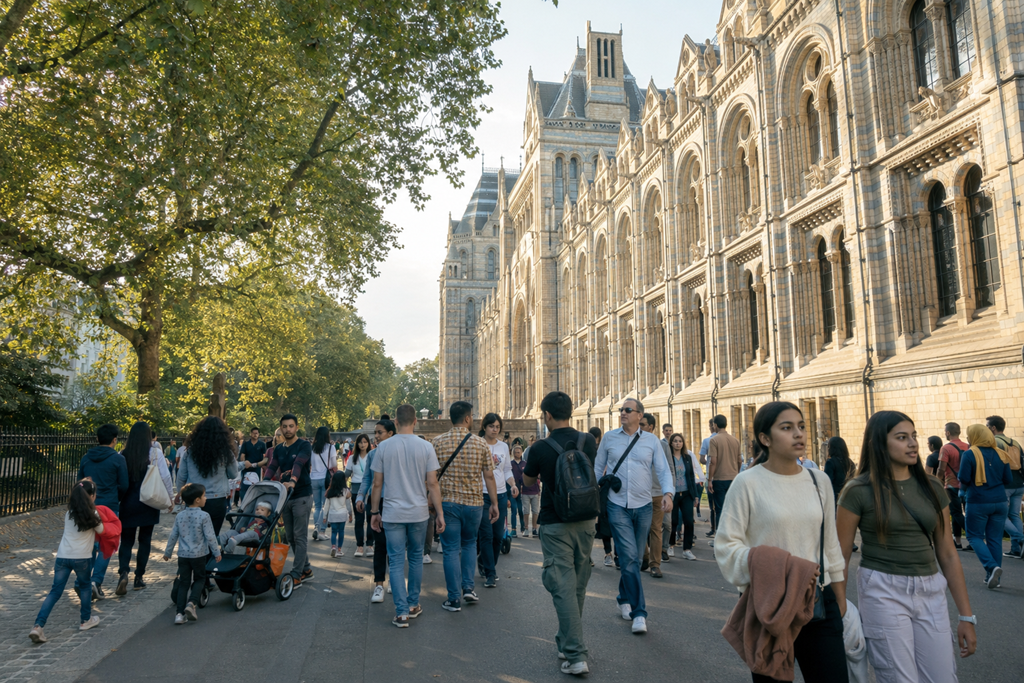
Start in South Kensington, where several major museums sit close together. The Natural History Museum, Victoria and Albert Museum, and Science Museum are all nearby, making this area especially useful for families, design lovers, history-minded travelers, and anyone who wants an indoor option during rainy weather.
Choose one museum as your main focus. Trying to do all three properly in one morning is too much for most visitors.
The Victoria and Albert Museum is especially strong for design, fashion, decorative arts, and global collections. The Natural History Museum is a classic choice for families and architecture lovers. The Science Museum works well for curious travelers and children.
Midday: Kensington Gardens And Hyde Park
After the museum, walk into Kensington Gardens or Hyde Park. London’s parks are part of what makes the city feel manageable, especially after several days of sightseeing.
You might walk toward the Serpentine, Kensington Palace from the outside, or simply find a bench and take a break. This is a good part of the itinerary to keep loose.
Afternoon: Notting Hill
From Kensington Gardens, continue toward Notting Hill. Known for colorful streets, mews, shops, and Portobello Road, Notting Hill is best approached as a neighborhood walk rather than a checklist.
Portobello Road Market is most active on certain days, but the area can still be enjoyable outside peak market times. If visiting the market matters to you, check current trading days before building your schedule around it.
Spend the afternoon browsing, taking photos respectfully, and enjoying a café or casual meal.
Evening: Kensington, Notting Hill, Or Paddington
For dinner, stay west rather than crossing back across the city unless you have a specific plan. Kensington, Notting Hill, Bayswater, and Paddington all have practical options depending on where you are staying.
This is also a good night to return early if your final day includes more walking.
Day 5: Camden, Regent’s Canal, Regent’s Park, And A Flexible Final Afternoon
Your final day gives you a different London experience: markets, canals, parks, and optional viewpoints or shopping depending on your interests.
Morning: Camden Market
Start in Camden. Camden Market is busy, colorful, and different from the more polished areas of central London. It is a good place for casual food, browsing, and seeing one of London’s more alternative neighborhoods.
Like Borough Market, Camden is best enjoyed with flexibility. Wander, snack, browse, and do not worry about seeing every corner.
Midday: Regent’s Canal Walk
From Camden, walk along Regent’s Canal toward Regent’s Park or Little Venice, depending on your energy and interests.
The canal offers a slower view of London, with boats, bridges, residential edges, and quieter paths. It is a nice contrast to Westminster, Soho, and the major museum areas.
If you want a shorter walk, head toward Regent’s Park. If you want a longer and more relaxed route, continue toward Little Venice.
Afternoon Option 1: Regent’s Park And Primrose Hill
For a scenic final afternoon, spend time in Regent’s Park and walk up Primrose Hill for a view over London. This is a good choice if you want fresh air and a less structured end to the trip.
The view from Primrose Hill is especially rewarding because it gives you a sense of London’s size without needing another ticketed attraction.
Afternoon Option 2: Marylebone And Oxford Street
If you prefer shopping or cafés, head toward Marylebone. It is more relaxed than Oxford Street but still central and convenient.
Oxford Street is famous, but it can be crowded and overwhelming. For many first-time visitors, it is enough to pass through briefly or focus on nearby side streets and department stores instead of spending the whole afternoon there.
Afternoon Option 3: Greenwich
If you want one more classic London experience and do not mind travel time, consider Greenwich. It offers maritime history, riverside views, the Royal Observatory area, Greenwich Park, and a village-like center.
Greenwich works best if you start earlier or if you are comfortable giving it a half day. Do not squeeze it in if your flight schedule, packing, or energy level makes the day feel rushed.
Evening: A Simple Final Dinner
For your last evening, choose an area that is easy to reach from your hotel. London is large, and the final night is not the best time to chase a complicated dinner plan across town.
A relaxed meal near Covent Garden, Soho, Marylebone, South Kensington, or your own neighborhood is often the better choice. End with a short walk, a final view of the Thames, or an early night before departure.
Practical Tips For A First Trip To London
Use Public Transport, But Group Your Days By Area
London’s Tube, buses, and rail connections are extensive, but travel time still adds up. This itinerary groups attractions by area so you are not constantly crossing the city.
Use the Tube for longer distances and walk when sights are close together. Buses can be slower, but they are useful for seeing the city above ground.
Tap Carefully On Public Transport
If using contactless payment or Oyster, remember to use the same card or device throughout the day so fares are calculated correctly. On Tube, DLR, London Overground, Elizabeth line, and many National Rail journeys, you generally touch in and touch out; on buses and trams, you usually only touch in. Always follow the current signs and Transport for London guidance.
Book Key Attractions Ahead During Busy Periods
You do not need to schedule every minute, but it is wise to book major paid attractions ahead when traveling during school holidays, summer, weekends, or peak travel periods.
Good candidates for advance planning include:
Westminster Abbey
Tower of London
Popular theatre shows
Special museum exhibitions
Major viewpoints or timed-entry attractions
Leave Space For Weather
London weather can change quickly. Build your days with indoor and outdoor options. Museums, galleries, markets, churches, cafés, and covered shopping areas can help you adjust without losing the day.
Carry a compact umbrella or light rain layer, and wear comfortable shoes that can handle both pavement and wet weather.
Do Not Try To See Everything
London rewards repeat visits. A strong first trip should give you a clear sense of the city without turning every day into a checklist.
If you are tired, skip one stop and enjoy the neighborhood you are already in. Some of the best London moments happen while walking between major sights, sitting in a park, browsing a market, or crossing a bridge at the right time of day.
How To Adjust This Itinerary
If You Have Less Energy
Shorten Day 2 by choosing either the Tower of London or the full Thames walk, not both. On Day 4, visit one museum and then spend the rest of the day in Hyde Park or Notting Hill.
If You Love Museums
Add more time to the British Museum, National Gallery, Tate Modern, or the South Kensington museums. You may want to reduce shopping streets and market time to avoid feeling rushed.
If You Are Traveling With Kids
Prioritize the Natural History Museum, Science Museum, Tower of London, parks, river walks, and markets with casual food. Keep evenings lighter and avoid overloading museum days.
If You Want More Classic Views
Consider adding one ticketed viewpoint, a river cruise, or a walk across several bridges. The South Bank, Tower Bridge, Primrose Hill, Westminster Bridge, and Millennium Bridge already provide excellent views without requiring every viewpoint to be paid.
Final Thoughts For Planning 5 Days In London
A good first London itinerary should feel full but not frantic. With five days, you can see the city’s major landmarks, spend meaningful time in museums, explore classic neighborhoods, enjoy markets, walk along the Thames, and still have room for slower moments.
The best approach is to plan your anchors, group your days by geography, and leave space for weather, meals, and unexpected discoveries. London is too large to “finish” in one trip, but this itinerary gives you a strong, practical first visit — and plenty of reasons to come back.
Download Our Free E-book!