Maui is a destination that rewards a thoughtful pace. With five days, you can experience several sides of the island without turning the trip into a checklist: beach time, scenic drives, small towns, volcanic landscapes, waterfalls, food stops, and quiet moments along the coast.
This 5-day Maui itinerary is designed for first-time visitors who want a clear, practical plan. It keeps the route realistic, groups nearby sights together, and leaves room for weather, road conditions, ocean safety, and the simple pleasure of not rushing.
A rental car is the easiest way to follow this itinerary, especially if you want to explore Upcountry Maui, Haleakalā, the Road to Hāna, and different beach areas. Maui is beautiful, but it is also spread out, so planning by region will make your trip feel much smoother.
Before You Go: A Few Maui Planning Notes
Maui is not a place to overpack with activities. Roads can be winding, parking can take time, and weather can vary between the coast, mountains, and rainforest areas. Build in flexibility and check current conditions before long drives.
For Haleakalā sunrise, reservations are required for vehicles entering the summit area between 3 a.m. and 7 a.m., and reservations are handled through Recreation.gov. If you prefer a less early start, sunset or daytime visits can still be memorable.
For ʻĪao Valley State Monument, out-of-state visitors should plan ahead because advance reservations are required for entry and parking.
Maui also deserves respectful travel. Support local businesses, follow posted signs, stay out of closed or recovery areas, and treat cultural and natural sites as places with meaning, not just photo stops. The Hawaiʻi Tourism Authority emphasizes tourism that protects Hawaiian culture, natural resources, and local communities.
Where To Stay For This Itinerary
For a first visit, most travelers will be happiest staying in one of these areas:
South Maui: Kīhei, Wailea, And Mākena
South Maui works well if you want dependable beach access, a wide range of lodging, and easy access to sunny coastline. Kīhei tends to feel more casual and practical, while Wailea is more polished and resort-oriented. Mākena is quieter and more spread out.
West Maui: Kā‘anapali, Kapalua, And Napili
West Maui is a classic base for beaches, sunsets, snorkeling, and resort stays. Kā‘anapali is convenient and active, while Napili and Kapalua feel more relaxed. Be especially thoughtful when traveling in West Maui and follow current local guidance around Lahaina’s ongoing recovery.
Central Maui: Kahului And Wailuku
Central Maui is not the typical resort choice, but it can be practical for travelers who want easier access to the airport, ʻĪao Valley, Upcountry, and the Road to Hāna. It is more local and less beach-resort focused.
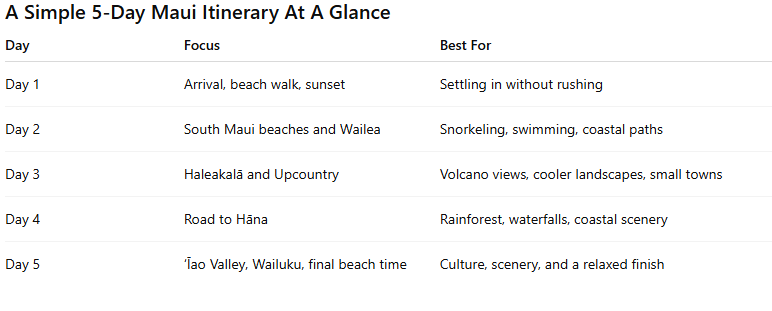
Day 1: Arrive, Settle In, And Enjoy An Easy Beach Evening
Your first day on Maui should be simple. After flying in, picking up a rental car, and checking into your lodging, give yourself time to adjust. Maui is best enjoyed when you do not try to do too much immediately.
Start With A Low-Key Coastal Walk
After you settle in, choose a nearby beach or coastal path instead of driving across the island. If you are staying in South Maui, consider a walk near Kamaʻole Beach Park, Wailea Beach Path, or Keawakapu Beach. If you are staying in West Maui, spend time around Kā‘anapali Beach, Napili Bay, or Kapalua Coastal Trail.
The goal is not to “see everything.” It is to arrive, breathe, and let the island come into focus.
Have A Simple First Dinner
For your first evening, choose a casual dinner near your lodging. Maui has excellent seafood, plate lunches, poke, noodles, shave ice, tropical fruit, and local-style comfort food. Avoid driving far at night on your first day if you are tired from travel.
Watch The Sunset
A Maui sunset is one of the easiest first-night experiences. Find a beach, bring a light layer, and stay a few minutes after the sun drops. The sky often continues changing after the main moment has passed.
Day 1 Suggested Flow
Arrive on Maui
Pick up rental car
Check into lodging
Take a nearby beach walk
Have dinner close to your hotel or rental
Watch sunset
Day 2: South Maui Beaches, Snorkeling, And Wailea
Use your second day to enjoy Maui’s beach culture without rushing. South Maui is a good place to start because the beaches are accessible, scenic, and easy to combine.
Morning: Snorkel Or Swim At A South Maui Beach
Start early, when winds are often lighter and beaches may be less crowded. Popular South Maui beach areas include Kamaʻole I, II, and III in Kīhei, Ulua Beach near Wailea, and Mākena-area beaches farther south.
Only snorkel when conditions are safe for your comfort level. Ocean conditions can change quickly, and a beach that looks peaceful one day may feel rough the next. When in doubt, choose a lifeguarded beach, stay close to shore, and skip snorkeling if visibility or surf conditions are poor.
Late Morning: Explore Wailea Beach Path
The Wailea Beach Path is an easy and scenic walk that connects beaches, landscaped resort areas, lava rock, ocean views, and public shoreline access. It is a good way to enjoy Wailea even if you are not staying at one of the resorts.
Bring water, sun protection, and comfortable sandals or walking shoes. The path is not difficult, but the sun can feel strong.
Lunch: Keep It Casual
For lunch, look for poke, fish tacos, plate lunch, or a casual café. This is a good day to keep meals flexible rather than planning around one specific restaurant. Maui’s casual food stops are often part of the experience.
Afternoon: Mākena Or A Rest Break
If you still have energy, continue south toward Mākena for a quieter, more spacious beach setting. If you prefer a slower pace, return to your lodging for a rest or pool break.
Maui afternoons can feel hot and bright, so do not underestimate the value of downtime.
Evening: Dinner In Kīhei Or Wailea
Stay in South Maui for dinner. Kīhei works well for casual meals, while Wailea offers more refined resort dining. Book ahead during busy travel periods if there is a specific place you care about.
Day 2 Suggested Flow
Early beach or snorkel time
Wailea Beach Path
Casual lunch
Mākena beach or afternoon rest
Dinner in Kīhei or Wailea
Day 3: Haleakalā And Upcountry Maui
Day 3 takes you away from the beach and into one of Maui’s most memorable landscapes. Haleakalā National Park protects the summit area of Maui’s great volcano, and Upcountry Maui offers cooler air, farms, small towns, and wide views.
Option 1: Haleakalā Sunrise
If seeing sunrise from Haleakalā is important to you, plan carefully. Vehicle reservations are required for summit sunrise entry during the early morning reservation window, and reservations can sell out.
This is a very early start, and the summit can be cold and windy. Bring warm layers, even if the coast feels tropical. Also remember that weather can affect visibility, so the experience is never fully guaranteed.
Option 2: Haleakalā During The Day Or At Sunset
If you do not want a pre-dawn drive, visit Haleakalā later in the day. You can still see volcanic landscapes, sweeping views, native plants, and dramatic light without waking up in the middle of the night.
A daytime or sunset visit is often more comfortable for travelers who want a less demanding schedule.
Explore Upcountry Maui
After Haleakalā, spend time in Upcountry towns such as Makawao, Kula, or Pukalani. This part of Maui feels different from the resort coastline. You will find cooler temperatures, ranchland, local shops, gardens, farms, and scenic pullouts.
Makawao is especially nice for a short stroll, coffee, galleries, and a relaxed lunch.
Keep The Afternoon Light
If you did sunrise, do not overplan the rest of the day. Return to your lodging, rest, and have an easy dinner. If you visited Haleakalā later in the day, keep the morning open and enjoy Upcountry before heading to the summit.
Day 3 Suggested Flow
Haleakalā sunrise, daytime visit, or sunset
Breakfast or lunch in Upcountry Maui
Walk around Makawao or Kula
Return for rest
Easy dinner near your lodging
Day 4: Road To Hāna
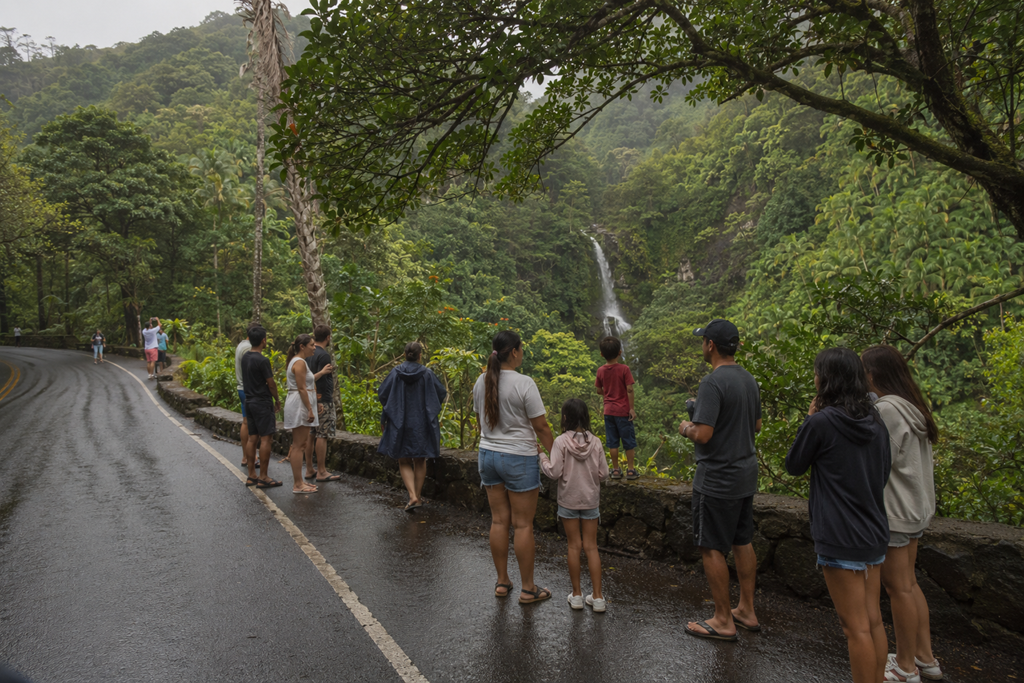
The Road to Hāna is one of Maui’s most famous experiences, but it is also one of the easiest to underestimate. This is not just a drive to a town. It is a winding coastal rainforest route with waterfalls, lookouts, beaches, gardens, and many narrow sections.
The best way to enjoy it is to slow down, choose a few stops, and avoid trying to see every possible viewpoint.
Start Early And Drive With Patience
Begin early, ideally after a simple breakfast and with snacks, water, and a full tank of gas. The road includes many curves and one-lane bridges, so patient driving matters. Pull over only where it is safe and legal.
Avoid blocking local traffic, drive with courtesy, and let faster local drivers pass when safe.
Choose A Few Meaningful Stops
Rather than building the day around too many exact stops, choose a handful based on your interests. Common Road to Hāna experiences include rainforest views, waterfalls, coastal lookouts, black sand scenery, botanical gardens, and quiet roadside fruit stands.
Some parks and popular stops may require reservations or have changing access rules, so check current details before you go.
Consider Waiʻānapanapa State Park If You Plan Ahead
Waiʻānapanapa State Park is known for its black sand beach, lava rock coastline, and striking ocean views. It is one of the most memorable stops near Hāna, but visitors should check current reservation requirements before building the day around it.
Make Hāna The Turnaround Point For Most First-Time Visitors
For many first-time visitors, reaching Hāna and then returning the same way is enough. The full loop beyond Hāna can involve more remote roads and changing conditions. Unless you are comfortable with the route and have checked current guidance, keep the plan simple.
Day 4 Suggested Flow
Early departure
Drive the Road to Hāna slowly
Stop at selected waterfalls, viewpoints, or gardens
Visit Hāna or nearby coastal areas
Return before you are too tired
Simple dinner near your lodging
Day 5: ʻĪao Valley, Wailuku, And A Final Beach Afternoon
Your last full day balances culture, scenery, and relaxation. After the long Road to Hāna day, keep this day easier and closer to Central Maui and your chosen beach base.
Morning: Visit ʻĪao Valley State Monument
ʻĪao Valley is a lush, historic area in Central Maui known for its green valley views and the ʻĪao Needle. It is a good contrast to the beaches, volcano, and dry coastal landscapes you may have already seen.
Out-of-state visitors need advance reservations for entry and parking, so plan this before you go.
The visit does not need to take all morning. Most first-time visitors can enjoy the main viewpoints and short walking areas at a relaxed pace.
Late Morning: Walk Around Wailuku
After ʻĪao Valley, spend a little time in Wailuku. It is one of Maui’s older town centers and offers a different feel from the resort areas. Look for a casual café, bakery, or local lunch stop.
This is a good place to slow down and see a more everyday side of Maui.
Afternoon: Choose Your Final Beach
For your final afternoon, return to the beach area you liked most or choose one you have not visited yet. Keep it simple: swim if conditions are safe, sit in the shade, take a coastal walk, or enjoy one last snorkel if the ocean is calm.
Good final-day choices depend on where you are staying:
South Maui: Keawakapu, Kamaʻole beaches, Wailea, or Mākena
West Maui: Napili Bay, Kapalua Bay, Kā‘anapali, or a coastal trail
Central Maui: consider returning to your favorite side of the island rather than trying to fit in too much
Evening: A Thoughtful Final Dinner
For your last dinner, choose somewhere that reflects the kind of trip you had. That might mean fresh fish, local-style comfort food, a sunset meal, or a casual takeout dinner near the beach.
End the trip with space rather than rushing into one more activity.
Day 5 Suggested Flow
ʻĪao Valley State Monument
Wailuku walk and lunch
Final beach afternoon
Sunset
Last dinner on Maui
Optional Adjustments For Different Travel Styles
If You Want More Beach Time
Skip either Upcountry exploration or some Road to Hāna stops and add more open beach time. Maui’s beaches are not filler; they are one of the main reasons to visit.
If You Prefer Less Driving
Stay focused on one side of the island. Choose South Maui plus one major excursion, or West Maui plus one major excursion. You do not have to see every region on a first trip.
If You Are Traveling With Kids
Keep mornings active and afternoons flexible. Choose beaches with easier access, avoid overloading the Road to Hāna day, and build in snack stops and rest time.
If You Are Visiting During Whale Season
Whale watching is seasonal, generally associated with the winter months. If this matters to you, consider adding a boat tour or coastal viewing time, but check current seasonal guidance and tour availability before planning around it.
If You Do Not Want To Drive The Road To Hāna Yourself
Consider a guided tour. This can reduce stress, especially for travelers who do not enjoy winding roads or want someone else to handle navigation and parking decisions.
Practical Maui Travel Tips For First-Time Visitors
Respect The Ocean
The ocean is beautiful but powerful. Conditions can vary by beach, day, and hour. Pay attention to warning signs, lifeguards, surf, currents, and your own ability.
Do Not Leave Valuables In The Car
As in many visitor destinations, avoid leaving bags, electronics, wallets, or luggage visible in your vehicle.
Use Reef-Safe Habits
Hawaiʻi’s marine environment is fragile. Use sun protection responsibly, avoid stepping on coral, keep distance from marine wildlife, and never chase turtles, dolphins, or other animals.
Plan By Region
Maui looks small on a map, but drives can take longer than expected. Group activities geographically: South Maui on one day, Haleakalā and Upcountry on another, Road to Hāna as its own day, and Central Maui together with ʻĪao Valley.
Leave Space In The Itinerary
Some of the best Maui moments are simple: a quiet beach morning, a scenic overlook, fresh fruit, a slow walk, or watching clouds move over the mountains. A good itinerary should help you enjoy the island, not keep you constantly in motion.
The Best Way To Experience Maui In Five Days
Five days on Maui gives you enough time to see the island’s range without trying to force everything into one trip. You can enjoy beaches, volcanic landscapes, rainforest roads, historic valleys, local food, and slower coastal evenings.
The key is to pace the trip well. Choose a few meaningful experiences, respect the places you visit, and leave enough room for Maui to feel like more than a schedule.
A first trip does not need to be perfect to be memorable. It just needs enough structure to reduce stress and enough flexibility to let the island unfold naturally.
Download Our Free E-book!