New York City can feel like several trips in one. There are world-famous landmarks, quiet neighborhood streets, major museums, classic food stops, waterfront views, parks, observation decks, and enough walking routes to fill weeks.
This 5-day New York City itinerary is designed for first-time visitors who want a clear, realistic plan without trying to do everything. It focuses on classic sights, logical geography, and flexible pacing so you can experience the city without spending your whole trip rushing from one borough to another.
You’ll cover many of the city’s best-known areas, including Midtown Manhattan, Central Park, Lower Manhattan, Brooklyn, the Upper East Side, Greenwich Village, SoHo, and parts of the waterfront. New York City is made up of five boroughs, but most first-time itineraries are easiest when built around Manhattan with a few well-planned visits into Brooklyn and nearby areas.
Before You Go: How to Approach 5 Days in New York City
Five days gives you enough time to see the major highlights while still leaving room for wandering, meals, and slower moments. The key is to group activities by neighborhood.
New York rewards walking, but it also wears visitors out quickly. Expect to use a mix of subway rides, walking, and the occasional taxi or rideshare when needed. The subway is usually one of the most practical ways to get around the city, and MTA notes that riders can use OMNY by tapping a contactless card, phone, wearable device, or OMNY card.
For major attractions, check current opening hours before you go. Some museums, observation decks, theater performances, and ferry-based attractions may require timed-entry reservations or advance booking during busy travel periods.
Day 1: Midtown Manhattan, Times Square, Bryant Park, and Broadway
Your first day is about getting oriented. Midtown Manhattan is busy, vertical, and instantly recognizable. It is also a practical place to begin because many classic New York sights are close together.
Start at Grand Central Terminal
Begin at Grand Central Terminal, one of the most beautiful transportation hubs in the city. Even if you are not catching a train, it is worth stepping inside to see the main concourse, the arched windows, the ceiling, and the steady movement of commuters and travelers.
This is a good first stop because it gives you a sense of New York’s energy without requiring a long museum visit or complicated route.
Walk to the New York Public Library and Bryant Park
From Grand Central, walk toward the New York Public Library’s Stephen A. Schwarzman Building and Bryant Park. The library’s exterior is one of the city’s most recognizable architectural sights, and Bryant Park offers a useful break from the surrounding streets.
This area works especially well on your arrival day because it combines architecture, public space, and easy access to food and coffee nearby.
Visit Rockefeller Center and St. Patrick’s Cathedral
Continue north toward Rockefeller Center. This is a classic Midtown stop, especially for first-time visitors. The plaza, surrounding buildings, public art, and nearby shops make it easy to explore without needing a rigid schedule.
St. Patrick’s Cathedral is nearby and offers a quieter contrast to the commercial energy around Fifth Avenue. Even a short visit can be worthwhile.
Choose an Observation Deck
For your first evening, consider visiting an observation deck in Midtown. Options such as the Empire State Building, Top of the Rock, SUMMIT One Vanderbilt, and others each offer a different perspective on the skyline.
For first-time visitors, Top of the Rock is especially useful because it gives you views that include the Empire State Building and Central Park. That said, choose based on your location, budget, weather, and available reservation times.
End the Night in Times Square or at a Broadway Show
Times Square is crowded, bright, and touristy, but it is still worth seeing once, especially on a first trip. Treat it as a short stop rather than a full evening plan.
If you enjoy theater, seeing a Broadway show can be a memorable way to end your first day. Book ahead for must-see productions, or stay flexible if you are open to multiple shows.
Day 2: Central Park, Museum Mile, and the Upper East Side
Day 2 slows the pace a little while still covering some of New York’s most beloved attractions. Central Park is large enough to fill an entire day, but first-time visitors can enjoy a focused route through its lower and middle sections.
Central Park stretches from 59th Street to 110th Street between Fifth Avenue and Central Park West, so it helps to choose a few areas rather than trying to see every corner.
Begin at the Southeast Corner of Central Park
Enter near the southeast corner around 59th Street and Fifth Avenue. From here, you can walk past the Pond, Wollman Rink area, and nearby pathways before continuing deeper into the park.
This part of the park gives you the classic contrast of trees, paths, rock formations, and city buildings rising beyond the greenery.
Walk Toward Bethesda Terrace and The Mall
Continue toward The Mall and Bethesda Terrace. This is one of the most scenic and recognizable walks in Central Park. You can take your time here, sit for a while, watch musicians or performers, and enjoy the park without feeling like you have to keep moving.
Nearby, Bow Bridge and the Lake offer some of the park’s most photogenic views.
Visit the Metropolitan Museum of Art
After your park walk, head east toward the Metropolitan Museum of Art. The Met is one of the city’s essential museums, but it is far too large to see fully in one visit. Instead, choose two or three areas that interest you most.
You might focus on European paintings, Egyptian art, American decorative arts, arms and armor, or the museum’s rotating exhibitions. Check current hours and ticket details before visiting.
Explore Madison Avenue or Lexington Avenue
After the museum, spend a little time walking through the Upper East Side. Madison Avenue is known for upscale shops and galleries, while Lexington Avenue feels more local and everyday.
This part of the itinerary gives you a neighborhood break after two major first-time visitor experiences: Central Park and the Met.
Optional Evening: Lincoln Center or a Relaxed Dinner
For the evening, consider heading west toward Lincoln Center if you enjoy performing arts, architecture, or simply want to see another classic cultural area. Otherwise, keep dinner simple and stay near your hotel or the Upper East Side.
By the end of Day 2, you will likely appreciate a slower evening.
Day 3: Lower Manhattan, Statue of Liberty Views, 9/11 Memorial, and the Brooklyn Bridge
Day 3 focuses on history, skyline views, and waterfront walking. Lower Manhattan is one of the best areas for first-time visitors because many major sights are close together.
Start at Battery Park
Begin near Battery Park at the southern tip of Manhattan. From here, you can see New York Harbor and, on a clear day, the Statue of Liberty in the distance.
If visiting the Statue of Liberty and Ellis Island is a priority, plan ahead. The National Park Service notes that ferry tickets are required to visit Liberty Island and Ellis Island, even though it does not charge an entrance fee for the museums themselves.
If you prefer a lighter day, you can skip the island visit and simply enjoy the harbor views from Battery Park.
Visit the Financial District
Walk north into the Financial District. You can see Wall Street, the New York Stock Exchange exterior, Federal Hall, and the surrounding narrow streets.
This area is compact, so it works well as a walking route rather than a long stop. It also gives you a sense of the city’s early history and financial identity.
Spend Time at the 9/11 Memorial
Continue to the 9/11 Memorial. The reflecting pools are powerful and worth visiting with time and respect. If you want a deeper experience, visit the museum as well, but be aware that it can be emotionally heavy and may take several hours.
This is not a place to rush through. Leave space in your schedule afterward.
Walk Through the Oculus and Toward City Hall
The Oculus is nearby and can be a useful indoor stop, especially if the weather is poor. From there, walk toward City Hall Park and the entrance to the Brooklyn Bridge pedestrian walkway.
This route connects several Lower Manhattan landmarks without requiring much backtracking.
Walk the Brooklyn Bridge
Walking the Brooklyn Bridge is one of the best classic New York experiences for first-time visitors. Go at a patient pace, stay aware of the bike lanes and pedestrian flow, and allow time for photos.
Once you reach Brooklyn, continue into DUMBO for cobblestone streets, waterfront parks, and skyline views looking back toward Manhattan.
End in DUMBO or Brooklyn Heights
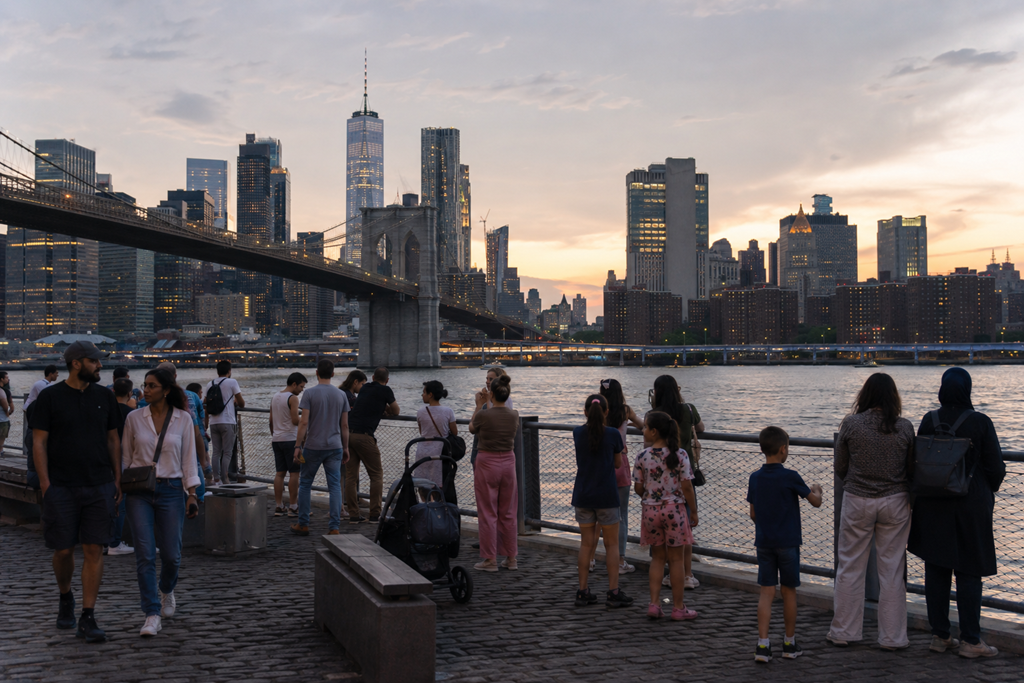
Spend the late afternoon or evening around Brooklyn Bridge Park or Brooklyn Heights Promenade. This is one of the best places to see the Manhattan skyline from across the water.
For dinner, you can stay in Brooklyn or return to Manhattan by subway, ferry, taxi, or rideshare.
Day 4: Greenwich Village, SoHo, Chelsea, the High Line, and Hudson Yards
Day 4 is built around neighborhoods, food, shopping, architecture, and walking. It is less landmark-heavy than the first three days, which helps balance the trip.
Start in Greenwich Village
Begin in Greenwich Village, one of Manhattan’s most enjoyable walking neighborhoods. The streets are less grid-like here, and the area feels different from Midtown and Lower Manhattan.
Walk around Washington Square Park, nearby side streets, independent shops, cafes, and historic townhouses. This is a good morning to move slowly and let the neighborhood unfold naturally.
Continue Into SoHo
From the Village, walk south or southeast into SoHo. This neighborhood is known for cast-iron architecture, shopping, galleries, and busy sidewalks.
Even if you are not planning to shop, SoHo is worth visiting for its streetscape. Look up at the building details rather than focusing only on storefronts.
Add Little Italy or Chinatown If You Want More
Depending on your energy, you can continue into Little Italy or Chinatown. These neighborhoods are close together and offer a different layer of the city’s food and immigrant history.
Rather than trying to “complete” both areas, choose a short walk, a snack, or one meal. New York is more enjoyable when you leave room for small discoveries.
Spend the Afternoon in Chelsea
Take the subway or walk north toward Chelsea. Chelsea Market can be a useful food stop, especially for groups because everyone can choose something different.
From there, head to the High Line, an elevated park built along a former rail line. It is a popular walk, but it remains one of the city’s most distinctive public spaces.
Walk the High Line Toward Hudson Yards
Follow the High Line north toward Hudson Yards. Along the way, you will see a mix of landscaping, public art, architecture, and west-side city views.
Hudson Yards is more modern and polished than many older parts of Manhattan. Even if you only stay briefly, it offers a clear contrast with the Village and SoHo earlier in the day.
Optional Evening: West Village Dinner or Chelsea Gallery Area
For dinner, consider returning to the West Village for a more atmospheric evening, or stay around Chelsea if you prefer convenience. This is also a good night for a lower-key meal after several full days of sightseeing.
Day 5: Choose Your New York — Museums, Brooklyn, Harlem, or a Slower Final Day
Your final day should depend on what you enjoyed most during the trip. Instead of forcing one more packed schedule, choose a focused version of New York that fits your interests.
Option A: Museum Day on the Upper West Side
If you enjoy museums, spend the day on the Upper West Side. Visit the American Museum of Natural History, walk through nearby Central Park sections, and explore Columbus Avenue or Amsterdam Avenue for meals and neighborhood wandering.
This option is especially good for families, museum lovers, or anyone who wants a structured indoor activity.
Option B: Brooklyn Neighborhood Day
If you loved the Brooklyn skyline views on Day 3, return for a deeper Brooklyn day. Consider Williamsburg for waterfront views, shops, and food, or Prospect Park and Park Slope for a greener, more neighborhood-focused experience.
This option helps you see New York beyond Manhattan while still staying within a manageable travel distance.
Option C: Harlem and Northern Central Park
For a different Manhattan experience, spend time in Harlem and the northern part of Central Park. You might visit historic streets, local restaurants, cultural sites, and quieter park areas around Harlem Meer or the Conservatory Garden.
This is a meaningful option for travelers who want more neighborhood depth and less repetition of Midtown-style sightseeing.
Option D: A Flexible Final Day for Favorites
If the trip has been full, use Day 5 to revisit a favorite area, shop for gifts, take a ferry ride, enjoy a long meal, or walk without a checklist.
A flexible final day can be one of the best parts of a New York trip. The city is not just its attractions; it is also the small scenes between them.
Where to Stay for a First Trip to New York City
For a first visit, staying in Manhattan is usually the simplest choice because it reduces travel time and keeps you close to major sights.
Midtown works well if you want convenience and easy subway access. The Upper West Side and Upper East Side are better if you prefer a more residential feel near Central Park. Chelsea, Flatiron, and NoMad can be good middle-ground areas with strong access to several parts of the city.
Brooklyn can also work well, especially neighborhoods with easy subway access to Manhattan, but first-time visitors should be realistic about travel time.
Getting Around New York City
Most visitors will use the subway frequently. It is usually faster than driving across Manhattan, especially during busy traffic periods. MTA recommends checking service status before you go, since delays and route changes can affect plans.
Use the same contactless card or device consistently if you are using OMNY, especially if you want fare-capping benefits. The MTA explains that your first tap starts a new seven-day cap for subway and local bus rides.
Walking is also part of the experience. Comfortable shoes matter more in New York than dressy travel outfits. Distances can look short on a map but feel longer when sidewalks are crowded or the weather is hot, cold, rainy, or windy.
What to Eat on a First Trip to New York City
New York’s food scene is too large to summarize in one itinerary, so focus on a few classic, flexible experiences:
Try a bagel breakfast at least once. Have a slice of New York-style pizza. Leave room for a deli meal, a neighborhood bakery, or a casual food hall. Explore Chinatown, the Lower East Side, Queens, Brooklyn, or Harlem if food is a major reason for your trip.
Avoid building your itinerary around only famous restaurants. They may require reservations, involve long waits, or sit far from your planned route. In New York, a simple neighborhood meal can be just as satisfying as a highly recommended spot.
A Realistic 5-Day New York City Itinerary at a Glance
Day 1: Midtown Manhattan
Grand Central Terminal, New York Public Library, Bryant Park, Rockefeller Center, St. Patrick’s Cathedral, observation deck, Times Square or Broadway.
Day 2: Central Park and the Upper East Side
Central Park walk, Bethesda Terrace, Bow Bridge, the Metropolitan Museum of Art, Upper East Side streets, optional Lincoln Center evening.
Day 3: Lower Manhattan and Brooklyn Bridge
Battery Park, Statue of Liberty views or island visit, Financial District, 9/11 Memorial, Oculus, City Hall, Brooklyn Bridge, DUMBO, Brooklyn Heights.
Day 4: Downtown Neighborhoods and the West Side
Greenwich Village, Washington Square Park, SoHo, optional Little Italy or Chinatown, Chelsea Market, High Line, Hudson Yards.
Day 5: Your Choice
Upper West Side museums, deeper Brooklyn, Harlem and northern Central Park, or a flexible final day built around favorites.
A Thoughtful Way to End Your First NYC Trip
The best first trip to New York City is not the one that checks off the most attractions. It is the one that gives you a clear sense of the city’s scale, neighborhoods, energy, and variety without leaving you exhausted.
Use this itinerary as a framework, not a rulebook. Keep the days grouped by area, book ahead when it matters, leave space for meals and wandering, and let at least one part of the trip be unplanned.
That balance is what makes five days in New York feel full, memorable, and manageable.
Download Our Free E-book!