Paris is one of those cities where it helps to have a plan—but not an overpacked one. There are world-famous landmarks, quiet gardens, historic neighborhoods, museums, markets, cafés, river views, and day trips all competing for your attention.
This 7-day Paris itinerary is designed for first-time visitors who want a clear, realistic route through the city. It balances major sights like the Eiffel Tower, Louvre, Notre-Dame, Montmartre, and Versailles with walkable neighborhoods, scenic breaks, and flexible time to slow down. Paris is best enjoyed when you leave room to notice the details, not just check things off a list.
Before finalizing your trip, check current opening hours, reservation requirements, and transport updates for major attractions, especially the Eiffel Tower, Louvre, Sainte-Chapelle, and Versailles. Paris public transportation is extensive, and the official tourism office highlights the metro, RER, buses, and trams as core ways to move around the city.
How To Use This 7-Day Paris Itinerary
This itinerary assumes you have seven full days in Paris or close to it. If your arrival or departure days are shorter, use Day 1 as your lighter arrival day and adjust the final day as needed.
The plan groups sights by geography so you are not crossing the city unnecessarily. Paris is very walkable in many central areas, but the metro and RER will save your energy when moving between districts or visiting Versailles.
A good first-time Paris rhythm is:
- One major anchor attraction per day
- One or two walkable neighborhoods nearby
- Time for cafés, gardens, and unplanned discoveries
- Flexibility for weather, museum fatigue, and slower meals
Day 1: Eiffel Tower, Seine River, and Classic Paris Views
Start your first full day with the Paris sights many travelers picture before they arrive: the Eiffel Tower, the Seine, and grand views across the city.
Morning: Eiffel Tower and Champ de Mars
Begin near the Eiffel Tower, one of Paris’s most recognizable landmarks. You can admire it from the Champ de Mars, walk around the base, or reserve a visit if going up the tower is a priority for you. If you plan to enter, book ahead during busy travel periods and check current access details before you go.
This is a good place to start because it immediately gives you a sense of arrival. Even if you skip the tower itself, the surrounding area makes a memorable first stop.
Midday: Trocadéro and a Seine Walk
Cross the river toward Trocadéro for one of the most familiar views of the Eiffel Tower. Go early if you want a quieter experience, then continue walking along the Seine.
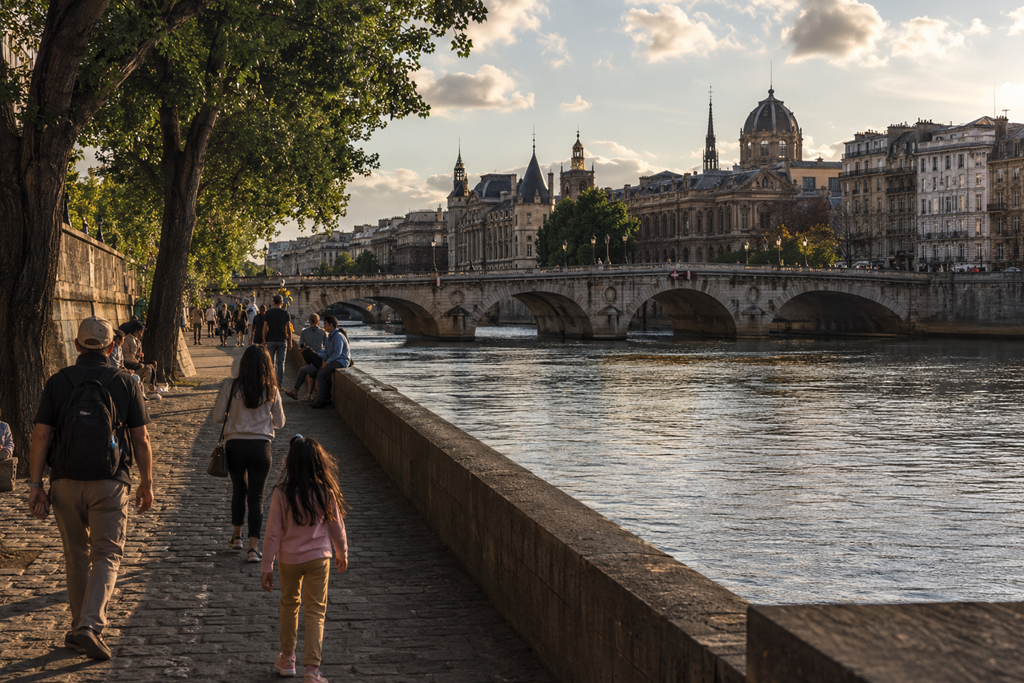
From here, you can follow the river east, enjoying the bridges, stone embankments, and classic architecture. The Seine is not just a scenic backdrop—it helps you understand how central Paris is laid out.
Afternoon: Arc de Triomphe and Champs-Élysées
Head toward the Arc de Triomphe, another major Paris landmark with a strong historical presence and an excellent viewpoint. France’s official tourism site notes the Arc de Triomphe terrace as one of the city’s memorable vantage points.
Afterward, walk part of the Champs-Élysées if it interests you, but do not feel obligated to spend too much time there. For many travelers, the avenue is worth seeing briefly rather than making it the focus of the day.
Evening: Seine River Cruise or Riverside Stroll
For your first evening, consider a Seine river cruise or a relaxed riverside walk. A cruise can be especially useful early in the trip because it lets you see major landmarks from the water and understand how many of them connect.
If you prefer to stay flexible, walk along the river near Pont Alexandre III or Île de la Cité as the city lights begin to come on.
Day 2: Louvre, Palais-Royal, and the Historic Heart of Paris
Your second day centers on the Louvre and the elegant areas around it. Keep the day focused, because the Louvre can easily take more energy than expected.
Morning: Louvre Museum
Start early at the Louvre, one of the world’s most important museums and home to famous works including the Mona Lisa. France’s official tourism site highlights the Louvre as a core Paris experience for visitors.
For a first visit, do not try to see everything. Choose a few sections in advance, take breaks, and give yourself permission to leave before you are exhausted. The Louvre is more enjoyable when approached as a curated experience rather than a test of endurance.
Midday: Tuileries Garden
After the museum, step into the Tuileries Garden. This is one of the easiest ways to reset after a busy museum visit. Walk the central paths, find a chair near a fountain, or pause for a simple lunch nearby.
The garden also connects naturally toward Place de la Concorde, making it easy to continue exploring without needing a complicated route.
Afternoon: Palais-Royal and Covered Passages
Walk to the Palais-Royal, a refined and photogenic area close to the Louvre. Its courtyard, arcades, and garden offer a quieter contrast to the museum crowds.
If you still have energy, continue toward some of Paris’s covered passages. These historic shopping arcades are useful for a gentle walk, especially on rainy days, and they add a different texture to the city beyond the major monuments.
Evening: Dinner Near the 1st or 2nd Arrondissement
Stay nearby for dinner rather than traveling far across town. The area around the Louvre, Palais-Royal, and the 2nd arrondissement gives you plenty of options without making the evening complicated.
Day 3: Notre-Dame, Sainte-Chapelle, Latin Quarter, and Luxembourg Gardens
Day 3 focuses on the islands of the Seine and the Left Bank. This is one of the best days for first-time visitors because it combines Gothic architecture, old streets, bookshops, cafés, and gardens.
Morning: Île de la Cité, Notre-Dame, and Sainte-Chapelle
Begin on Île de la Cité, the historic island at the center of Paris. Visit Notre-Dame de Paris, allowing flexibility depending on current visitor access, services, and reservation guidance. France’s official tourism site lists the restored Notre-Dame Cathedral among Paris’s key visitor experiences.
Nearby, Sainte-Chapelle is known for its stained glass and intimate scale. It is wise to check current entry requirements and book ahead when needed, as this is a popular stop.
Midday: Île Saint-Louis
Walk across to Île Saint-Louis, a smaller and quieter island with narrow streets, elegant buildings, and a village-like feel. This is a good place to slow down, browse, or stop for something simple to eat.
Afternoon: Latin Quarter
Cross into the Latin Quarter, one of Paris’s most atmospheric Left Bank neighborhoods. The official Paris tourism site recommends taking time around Boulevard Saint-Michel, Rue Saint-André des Arts, and Rue de la Huchette, where small streets still evoke older layers of the city.
This area is best experienced on foot. Instead of rushing from sight to sight, wander through side streets, notice the bookshops and cafés, and let the neighborhood unfold gradually.
Late Afternoon: Luxembourg Gardens
End the afternoon at Luxembourg Gardens. This is one of the most pleasant places in Paris to rest, especially after a walking-heavy day. The gardens work well for all kinds of travelers: couples, families, solo visitors, and anyone who needs a quiet pause.
Evening: Saint-Germain-des-Prés
For dinner or an evening walk, continue toward Saint-Germain-des-Prés. This Left Bank area has long been associated with cafés, galleries, literary history, and classic Paris street life.
Day 4: Montmartre, Sacré-Cœur, and Canal Saint-Martin
Day 4 moves north to Montmartre, one of Paris’s most distinctive neighborhoods. It can get crowded, so start early and focus on atmosphere rather than trying to see every corner.
Morning: Sacré-Cœur and Montmartre Streets
Begin at Sacré-Cœur, set high above the city. The area offers broad views across Paris and a strong sense of place, especially in the morning before the busiest part of the day.
Afterward, walk through Montmartre’s side streets. Look for quieter lanes, small staircases, village-like corners, and local bakeries. Montmartre is famous, but it is still most rewarding when you step away from the densest tourist flow.
Midday: Place du Tertre and Local Lunch
Place du Tertre is well known for artists and cafés. It is touristy, but first-time visitors may still enjoy seeing it briefly. Treat it as one stop within Montmartre, not the whole neighborhood.
For lunch, choose a nearby café or casual restaurant, ideally away from the most crowded square if you want a more relaxed meal.
Afternoon: Musée de Montmartre or More Neighborhood Wandering
If you enjoy local history, consider visiting the Musée de Montmartre. Otherwise, spend the afternoon wandering downhill through the neighborhood. Montmartre rewards slow walking and curiosity.
Late Afternoon: Canal Saint-Martin
For a change of scenery, head toward Canal Saint-Martin. This area has a more everyday Paris feel, with waterside paths, bridges, cafés, and a slower pace than the major monument zones.
Evening: Simple Dinner in the 10th or 18th Arrondissement
Stay in the north or northeast for dinner. This keeps the day geographically sensible and gives you a different feel from the central tourist areas.
Day 5: Versailles Day Trip
A full day at Versailles gives you a break from central Paris while adding royal history, gardens, and grand architecture to your trip.
Morning: Travel to Versailles
Take the RER or train from Paris to Versailles, checking the best route from your accommodation before you leave. The RER connects Paris with the wider Île-de-France region, and tickets or passes may vary depending on whether your trip stays within Paris or goes beyond it.
Leave early enough to make the day feel unhurried, especially if you plan to see the palace, gardens, and Trianon estate.
Midday: Palace of Versailles
Tour the Palace of Versailles, including the grand rooms and famous ceremonial spaces. The official Versailles site describes the palace as a former seat of power and a museum of French history.
Book ahead during busy periods and check current visitor guidance before your trip, especially for timed entry or special access rules.
Afternoon: Gardens and Trianon Estate
After the palace, spend time in the gardens. They are a major part of the Versailles experience and help balance the indoor crowds.
If you have the energy, continue to the Trianon estate. The official Versailles visitor information notes that the Palace, gardens, and Trianon estate each have their own practical visiting considerations, so confirm current details before planning your day.
Evening: Return to Paris
Return to Paris for a simple dinner near your hotel or rental. After a full day trip, this is not the night to overcomplicate your plans.
Day 6: Le Marais, Bastille, and Paris Food Experiences
Day 6 is built around Le Marais, one of Paris’s most enjoyable neighborhoods for walking, history, food, boutiques, museums, and everyday street life.
Morning: Le Marais Walk
Start in Le Marais and explore on foot. The official Paris tourism site describes the Marais as an iconic Paris neighborhood with many things to do, making it a strong choice for visitors who want a mix of history, shopping, food, and architecture.
Do not rush this area. Part of the appeal is moving through narrow streets, courtyards, small shops, and historic squares without a strict checklist.
Midday: Place des Vosges
Visit Place des Vosges, one of the most beautiful squares in Paris. Its symmetry, arcades, and shaded park make it a natural pause during a Marais day.
This is also a good area for a relaxed lunch nearby.
Afternoon: Musée Carnavalet or Picasso Museum
Choose one museum depending on your interests. Musée Carnavalet focuses on the history of Paris, while the Picasso Museum offers a focused art experience in a historic setting.
If you are starting to feel museum fatigue, skip the museum and keep walking. A strong Paris itinerary should leave room for your actual energy level.
Late Afternoon: Bastille or Marché d’Aligre Area
Continue toward Bastille or the Marché d’Aligre area if you want a more local-feeling extension. Markets can be especially rewarding, but schedules vary, so check current days and times before making one the centerpiece of your plan.
Evening: Food-Focused Dinner
Use this evening for a classic Paris food experience: a neighborhood bistro, a wine bar, a crêperie, a bakery stop, or a simple multi-course dinner. Avoid building your trip around trendy restaurant lists that may change quickly. Instead, look for places with consistent menus, good recent reviews, and a location that fits your day.
Day 7: Musée d’Orsay, Saint-Germain, and a Flexible Final Evening
Your final day gives you another major museum, a beautiful Left Bank walk, and space to revisit a favorite area or fill in anything you missed.
Morning: Musée d’Orsay
Start at the Musée d’Orsay, especially if you enjoy Impressionist and 19th-century art. The building itself, a former railway station, is part of the experience.
As with the Louvre, choose your priorities before entering. A focused visit is usually more satisfying than trying to see every gallery.
Midday: Seine and Saint-Germain Walk
After the museum, walk along the Seine or move deeper into Saint-Germain-des-Prés. This is a good time to browse, pause at a café, or visit a bookshop.
The Left Bank works well on a final day because it feels classic without requiring a rigid route.
Afternoon: Choose Your Own Paris
Use the afternoon for one of the following, depending on your interests:
- Return to a neighborhood you loved
- Visit a smaller museum
- Shop for simple gifts or food items
- Spend more time in Luxembourg Gardens
- Take a slow café break
- Walk along the Seine
- Visit a viewpoint you missed
This flexible block is important. First-time visitors often underestimate how much they will want to revisit a place, rest, or simply enjoy being in Paris without a schedule.
Evening: Final Paris View
End your trip with one last view. That could mean the Eiffel Tower from across the river, the Seine at sunset, the steps near Sacré-Cœur, a bridge near Île de la Cité, or a rooftop viewpoint.
Choose a place that feels connected to your trip rather than chasing the “best” view. The right final evening is the one that lets the city settle in before you leave.
Practical Planning Notes For First-Time Visitors
Where To Stay For This Itinerary
For a first Paris trip, it helps to stay somewhere central and well-connected by metro. Good areas to consider include:
- Saint-Germain-des-Prés for classic Left Bank atmosphere
- The Marais for walkability, food, and historic streets
- The Latin Quarter for access to the Seine and student energy
- The 1st or 2nd arrondissement for central sightseeing
- The 7th if being near the Eiffel Tower matters most to you
You do not need to stay beside every major attraction. A good metro connection and a neighborhood you enjoy returning to at night are more important.
Getting Around Paris
Paris is best explored through a combination of walking and public transportation. The metro is useful for quick city travel, while the RER helps with longer routes, including some trips beyond central Paris. The official Paris tourism office explains that RER travel within Paris follows the same ticket and fare structure as the metro, while travel beyond Paris requires the right ticket or pass for the wider region.
RATP, the Paris public transport operator, advises travelers to validate tickets or cards for each journey and keep tickets until leaving the station, as inspections may occur.
How Much To Plan Ahead
For major attractions, plan ahead enough to avoid disappointment. Timed-entry reservations may be useful or required for popular sites. For neighborhoods, parks, walks, and cafés, leave more room for flexibility.
A balanced Paris trip usually has a few firm reservations and plenty of open space around them.
Best Time To Visit Paris
Paris can be rewarding year-round. Spring and fall are often popular for milder weather and pleasant walking conditions. Summer brings longer days and more visitors. Winter can be colder and darker, but it may offer a quieter museum-and-café style of trip.
Rather than choosing based only on the “best” season, think about your preferred travel style: outdoor wandering, museum time, gardens, photography, food, or lower crowds.
What To Pack For A Week In Paris
Comfortable walking shoes matter more than almost anything else. Paris days often involve stairs, cobblestones, museum floors, metro platforms, and long walks between stops.
Also consider:
- A light layer for changing weather
- A compact umbrella or rain jacket
- A secure day bag
- A portable phone charger
- A reusable water bottle
- Simple outfits that work for walking, museums, and dinner
How To Keep The Trip Enjoyable
The biggest mistake first-time visitors make is trying to see too much. Paris is dense, and many of its best experiences happen between the famous sights: a quiet street, a bakery window, a garden chair, a bridge view, a long lunch, or a neighborhood you did not expect to love.
Use this itinerary as a structure, not a rulebook. Keep the major anchors, adjust the pace, and let a few moments happen naturally.
Download Our Free E-book!