Tokyo can feel enormous at first. It is a city of quiet shrines, bright crossings, excellent food, peaceful gardens, polished department stores, dense train stations, and neighborhoods that each seem to have their own rhythm.
This 7-day Tokyo itinerary is designed for first-time visitors who want a clear, realistic plan without trying to do everything. It balances classic landmarks, cultural experiences, food neighborhoods, scenic walks, shopping areas, and slower moments so the trip feels full but not exhausting.
Tokyo’s train and subway network is one of the easiest ways to move around the city once you get oriented, and a travel IC card is generally the simplest way to pay for local transit. The official Tokyo travel guide recommends learning the basics of getting around before arrival and using IC cards for smoother travel.
Before You Start: How To Think About 7 Days In Tokyo
Seven days gives you enough time to see Tokyo’s major highlights while also leaving space for neighborhood wandering, meals, shopping, and a possible day trip. The key is to group your days by geography.
Instead of crossing the city multiple times in one day, this itinerary keeps nearby areas together. That saves energy and makes the experience feel more natural.
A helpful first-time visitor mindset:
- Choose one main area for the morning.
- Choose one nearby area for the afternoon.
- Leave evenings flexible for dinner, night views, or a relaxed walk.
- Check current opening hours before visiting museums, gardens, observatories, or temples.
- Book ahead for attractions that use timed-entry reservations.
Tokyo is also very seasonal. Spring flowers, summer heat, autumn foliage, and winter illuminations can all shape your experience, but the main sights in this itinerary work year-round. The official Tokyo guide organizes travel planning around the city’s four seasons, which is useful when choosing clothing, pacing, and outdoor activities.
Day 1: Arrive, Settle In, And Explore Shinjuku
Start With An Easy Arrival Day
After a long flight, the first day in Tokyo should be simple. Check into your hotel, get familiar with the nearest station, pick up any essentials, and take a low-pressure walk around your neighborhood.
Shinjuku, Shibuya, Ginza, Ueno, Tokyo Station, and Asakusa are all practical bases for first-time visitors. Shinjuku and Shibuya are lively and convenient. Ginza and Tokyo Station feel polished and central. Ueno and Asakusa offer easier access to traditional sights and slightly slower surroundings.
Explore Shinjuku Gyoen
If you arrive early enough, begin with Shinjuku Gyoen. It is one of Tokyo’s best green spaces for first-time visitors because it gives you room to slow down after travel. The garden has wide lawns, walking paths, landscaped areas, and seasonal beauty without requiring a complicated plan.
This is a good first stop because it introduces Tokyo’s quieter side before you step into the busier parts of the city.
Walk Around Shinjuku In The Evening
In the evening, explore Shinjuku at an easy pace. You can walk around the station area, see the lights of Kabukicho from the main streets, or visit Omoide Yokocho for a compact dining-lane atmosphere.
Shinjuku works well on the first night because it is energetic without requiring much sightseeing discipline. Keep dinner simple, avoid overplanning, and get rest for the full days ahead.
Day 2: Asakusa, Ueno, And Old Tokyo Atmosphere
Visit Senso-ji Temple In Asakusa
Start your first full day in Asakusa, one of Tokyo’s most rewarding areas for first-time visitors. Senso-ji is Tokyo’s oldest and most famous Buddhist temple, and the walk toward it through Nakamise-dori gives you a memorable introduction to traditional shopping streets, snacks, souvenirs, and temple culture.
Arrive earlier in the day if you want a quieter experience. Later in the day, the area becomes livelier, which can also be enjoyable if you like people-watching.
Wander The Streets Around Asakusa
After visiting the temple, spend time walking the side streets around Asakusa. This is where the area becomes more interesting. You will find small shops, casual restaurants, kitchenware stores nearby in Kappabashi, and views toward Tokyo Skytree across the river.
For first-time visitors, Asakusa is not only about one temple. It is about seeing a more traditional-feeling part of Tokyo before moving into the city’s modern neighborhoods.
Spend The Afternoon In Ueno Park
From Asakusa, continue to Ueno. Ueno Park is a practical afternoon stop because it combines museums, walking paths, shrines, ponds, and open space in one area.
If you enjoy museums, choose one rather than trying to visit several. The Tokyo National Museum is a strong option for understanding Japanese art, history, and culture. If you prefer a lighter afternoon, walk through the park, visit Shinobazu Pond, and leave museum time for another trip.
Browse Ameyoko
End the day with a walk through Ameyoko, a busy market street area near Ueno Station. It is casual, crowded, and full of food stalls, shops, and everyday energy.
This is a good place to experience a different side of Tokyo: less polished than Ginza, less futuristic than Shibuya, and very much alive.
Day 3: Shibuya, Harajuku, And Meiji Shrine
See Shibuya Crossing
Begin in Shibuya, one of Tokyo’s most recognizable districts. Shibuya Crossing is famous because it captures the scale and movement of the city in one place. It is worth seeing even if you only spend a few minutes watching the flow of people.
Afterward, explore the surrounding streets, shops, cafés, and department stores. Shibuya is best experienced by walking without trying to turn every stop into a checklist.
Walk Through Harajuku
From Shibuya, continue toward Harajuku. Takeshita Street is crowded and commercial, but it remains a classic first-time Tokyo stop. It is best approached as a short walk rather than the main event.
For a more relaxed experience, spend more time around Omotesando, Cat Street, or the smaller lanes between Harajuku and Shibuya. This area is good for design shops, casual fashion, cafés, and people-watching.
Visit Meiji Shrine
Meiji Shrine is one of the best places in Tokyo to feel a clear contrast between city energy and quiet green space. The wide forested path leading to the shrine feels removed from the surrounding neighborhoods.
Visit respectfully, keep your pace unhurried, and allow time for the walk in and out. It is one of the most memorable experiences in central Tokyo because the transition from Harajuku’s busy streets to the shrine’s wooded grounds is so immediate.
Evening In Ebisu Or Daikanyama
For dinner, consider Ebisu or Daikanyama. Ebisu has many restaurants and a slightly more grown-up evening feel than Shibuya. Daikanyama is quieter, stylish, and pleasant for an after-dinner walk.
This keeps the day geographically sensible while giving you a different evening atmosphere.
Day 4: Tsukiji, Ginza, Tokyo Station, And The Imperial Palace Area
Start With A Food Walk Around Tsukiji Outer Market
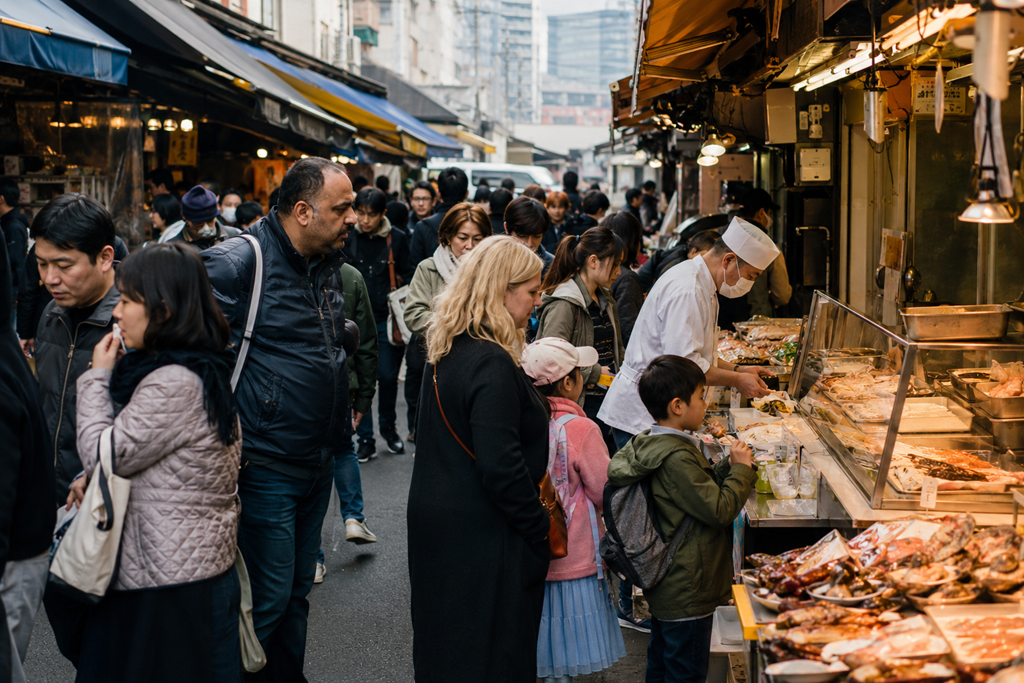
Tsukiji Outer Market remains a useful first-time visitor stop for food culture, even though Tokyo’s wholesale fish market functions moved to Toyosu. Go for a casual morning food walk, not a formal restaurant mission.
Try small bites, browse the stalls, and be mindful of local etiquette. Some places are narrow and busy, so avoid blocking walkways or eating where signs ask visitors not to.
Continue To Ginza
From Tsukiji, walk or take a short ride to Ginza. Ginza is Tokyo’s polished shopping district, known for department stores, architecture, galleries, stationery shops, and refined food halls.
You do not need to shop heavily to enjoy it. Department store basement food halls are especially useful for seeing beautifully presented Japanese sweets, prepared foods, and seasonal gifts.
Walk Around Tokyo Station
Next, continue toward Tokyo Station and Marunouchi. The restored red-brick station building is worth seeing from the outside, and the surrounding area gives you a more formal, businesslike view of Tokyo.
This area is also convenient for lunch, coffee, shopping, and transportation connections.
Visit The Imperial Palace East Gardens
If your timing works, spend part of the afternoon around the Imperial Palace East Gardens. The area offers open space, stone walls, historic remains, and a break from dense city streets.
Check current opening days before planning around it, since garden schedules can vary.
Evening In Yurakucho Or Ginza
For the evening, stay nearby. Yurakucho has atmospheric dining areas tucked near the train tracks, while Ginza offers a more refined dinner setting. Keeping the evening close avoids unnecessary transit after a full walking day.
Day 5: Akihabara, Jimbocho, And Tokyo’s Niche Interests
Explore Akihabara
Akihabara is best known for electronics, anime, manga, games, and pop culture. Even if you are not deeply interested in those worlds, it is a distinctive Tokyo neighborhood and worth seeing.
Treat it as a cultural walk rather than a shopping obligation. Browse a few stores, notice the signs and arcades, and enjoy the intensity of the area without needing to understand every niche.
Add Kanda Myojin Shrine
A short walk from Akihabara, Kanda Myojin offers a helpful contrast. It is a historic shrine near one of Tokyo’s most modern pop-culture districts, which makes the combination especially interesting.
This is one of the pleasures of Tokyo: shrines, office buildings, train tracks, and specialty shops often sit surprisingly close together.
Spend The Afternoon In Jimbocho
Continue to Jimbocho, Tokyo’s book district. This area is excellent for travelers who enjoy bookstores, stationery, old prints, cafés, and quieter urban exploring.
Even if you do not read Japanese, Jimbocho can be rewarding. Some shops carry art books, photography books, maps, vintage materials, and English-language sections.
Optional Stop: Ochanomizu
If you still have energy, walk toward Ochanomizu, known for music shops and a distinctive station-area landscape of bridges, trains, and water. This is not a mandatory sightseeing stop, but it adds texture to the day.
Evening: Keep It Flexible
After a niche-heavy day, leave the evening open. Return to your hotel area, revisit a favorite neighborhood, or choose a simple dinner near a convenient station.
Day 6: A Day Trip Or A Slower Tokyo Day
By Day 6, many first-time visitors appreciate a change of pace. You have two good options: take a day trip outside central Tokyo or stay in the city for a slower day.
Option A: Day Trip To Kamakura
Kamakura is one of the most popular day trips from Tokyo because it offers temples, shrines, coastal scenery, and a smaller-city rhythm. Highlights can include the Great Buddha, Hase-dera, Tsurugaoka Hachimangu, and a walk through local shopping streets.
Kamakura is best for travelers who want history, walking, and a break from Tokyo’s density.
Option B: Day Trip To Nikko
Nikko is another classic option, known for ornate shrines, forested settings, and mountain scenery. It requires more travel time than Kamakura, so it works best if you are comfortable with a longer day.
Choose Nikko if you are especially interested in historic shrine architecture and nature.
Option C: Stay In Tokyo And Visit Yanaka
If you prefer not to leave the city, spend the day in Yanaka, Nezu, and Sendagi. This area has older streets, temples, small shops, local cafés, and a slower pace than Tokyo’s major commercial centers.
Yanaka is ideal if you want a gentler day that still feels culturally rich.
Option D: Add A Museum Or Garden You Skipped
Another good Day 6 option is to revisit anything you skipped earlier. You could add a museum in Roppongi, a garden such as Hama-rikyu, or a shopping area you wanted more time for.
This is why a 7-day itinerary works well: you have enough room to adjust without feeling like the whole plan falls apart.
Day 7: Roppongi, Aoyama, And A Final Tokyo View
Start In Roppongi
Use your final full day for art, architecture, and city views. Roppongi is home to major museums, modern developments, restaurants, and observation areas.
Choose one museum or cultural stop instead of trying to do everything. This keeps the day enjoyable and gives you time to absorb the experience.
Walk Through Aoyama
From Roppongi, continue toward Aoyama or Omotesando. This area is known for design, architecture, boutiques, cafés, and tree-lined streets.
It is a good final-day area because it feels polished and walkable without being as overwhelming as Shinjuku or Shibuya.
Visit Nezu Museum Or A Nearby Cultural Stop
If you enjoy art and gardens, the Nezu Museum area can be a strong addition. As always, check current opening days before building your day around a museum.
A slower museum visit followed by a walk through Aoyama makes for a satisfying final day because it shows Tokyo’s quieter elegance.
End With A View Over The City
For your final evening, choose a viewpoint. This could be Tokyo Tower, Tokyo Skytree, Shibuya Sky, the Tokyo Metropolitan Government Building observation area, or another high-level city view that fits your location and reservation needs.
The point is not only the view itself. It is the chance to understand the scale of the city after you have spent a week walking through its neighborhoods.
Where To Stay For A First Tokyo Trip
For a 7-day first visit, convenience matters more than finding the “perfect” neighborhood. Choose a hotel near a useful train or subway station, ideally with easy access to the areas you care about most.
Shinjuku
Shinjuku is convenient, lively, and well connected. It is a strong choice if you want nightlife, food options, shopping, and easy transportation. It can feel busy, so choose a hotel on a quieter side street if you prefer less noise.
Shibuya
Shibuya works well for travelers who want energy, shopping, dining, and easy access to Harajuku, Omotesando, Ebisu, and Daikanyama. It is especially good for younger travelers or anyone who wants to be near Tokyo’s modern street life.
Ginza And Tokyo Station
Ginza and Tokyo Station are practical for travelers who prefer a more polished, central base. These areas are convenient for transit, shopping, food halls, and a slightly more orderly feel.
Ueno And Asakusa
Ueno and Asakusa are good for visitors who want easier access to traditional sights, museums, and somewhat more relaxed surroundings. They can also work well for travelers who want a different atmosphere from western Tokyo.
How To Get Around Tokyo
Tokyo’s train and subway systems are extensive, efficient, and easier to use than they may look at first. The official Tokyo travel guide describes IC cards as one of the easiest ways to pay for transit in the city.
A few practical habits help:
- Use a maps app for platform and transfer guidance.
- Avoid overloading your day with cross-city travel.
- Give yourself extra time at large stations like Shinjuku, Tokyo, Shibuya, and Ikebukuro.
- Follow signs carefully; many major stations have English signage.
- Keep your IC card or mobile transit card ready before entering gates.
- Avoid peak commuter times when possible if you are carrying luggage.
Taxis can be useful late at night, with luggage, or for short rides when transit would require several transfers. For most sightseeing days, trains and subways are usually more practical.
What To Eat During 7 Days In Tokyo
Tokyo is one of the world’s great food cities, but first-time visitors do not need to chase only famous restaurants. Some of the best meals are simple, local, and easy to fit into your day.
Look for:
- Ramen shops
- Soba and udon restaurants
- Sushi counters
- Tonkatsu restaurants
- Tempura
- Yakitori
- Curry rice
- Onigiri and bento
- Department store food halls
- Kissaten-style cafés
- Convenience store snacks for travel days
For a first trip, prioritize variety over prestige. Try different types of meals in different neighborhoods. A simple lunch near a train station can be just as memorable as a planned dinner.
Practical Tokyo Travel Tips For First-Time Visitors
Keep Your Daily Plan Realistic
Tokyo rewards wandering. If every day is packed from morning to night, you may miss the details that make the city special. Leave space for side streets, snacks, shops, and unplanned discoveries.
Carry Comfortable Shoes
You will likely walk more than expected, even when using trains. Stations can be large, transfers can involve stairs, and neighborhoods are best explored on foot.
Bring A Small Bag For Trash
Public trash bins can be limited. Carrying a small bag for wrappers or bottles is useful until you find a proper place to dispose of them.
Learn Basic Etiquette
Stand to the side on escalators according to local patterns, keep your voice low on trains, avoid eating while walking in crowded areas unless it is clearly accepted, and be mindful when taking photos near shrines, shops, or people.
Check Reservations For Popular Attractions
Some observatories, museums, themed attractions, and special experiences may require advance booking or timed entry. Check current details before you go, especially during busy travel periods.
Do Not Try To See All Of Tokyo
A good first Tokyo trip is not about completion. It is about understanding the city through a thoughtful mix of neighborhoods, food, culture, history, and everyday moments.
A Flexible 7-Day Tokyo Itinerary At A Glance
Day 1
Arrive, settle in, walk around Shinjuku, visit Shinjuku Gyoen if time allows, and keep the evening easy.
Day 2
Visit Asakusa and Senso-ji, explore nearby streets, continue to Ueno Park, and browse Ameyoko.
Day 3
See Shibuya Crossing, walk through Harajuku and Omotesando, visit Meiji Shrine, and spend the evening in Ebisu or Daikanyama.
Day 4
Start with Tsukiji Outer Market, continue to Ginza, explore Tokyo Station and Marunouchi, and visit the Imperial Palace East Gardens if open.
Day 5
Explore Akihabara, visit Kanda Myojin, continue to Jimbocho, and keep the evening flexible.
Day 6
Take a day trip to Kamakura or Nikko, or stay in Tokyo for Yanaka, Nezu, Sendagi, museums, or gardens.
Day 7
Spend time in Roppongi, Aoyama, and Omotesando, then finish with a final city view.
Final Thoughts For Planning Your First Tokyo Trip
Tokyo is easier to enjoy when you stop treating it like a checklist. The city is too large, layered, and varied to fully capture in one week. But with seven days, you can experience a meaningful first look: temples and gardens, food streets and department stores, modern crossings and quiet shrines, day-trip scenery and neighborhood walks.
Use this itinerary as a practical structure, then adjust it around your energy, weather, interests, and hotel location. The best Tokyo trip leaves enough room for the city to surprise you.
Download Our Free E-book!