Auckland is often the first place travelers experience in New Zealand, and it makes a strong introduction. It is a city of harbors, volcanic hills, island day trips, waterfront walks, Māori heritage, creative neighborhoods, and easy access to beaches and green space.
For first-time visitors, Auckland is best understood as both a city and a natural gateway. You can spend the morning at a museum, walk the waterfront in the afternoon, take a ferry across the harbor, and still be close to parks, beaches, and viewpoints by sunset. This guide will help you understand where to stay, what to do, how to get around, when to visit, and how to plan your time without overcomplicating the trip.
Auckland at a Glance
Auckland, also known as Tāmaki Makaurau, is New Zealand’s largest urban area and one of the country’s main international arrival points. It sits between two harbors and is shaped by water, islands, volcanic cones, and a wide spread of neighborhoods.
The city is especially good for travelers who enjoy a mix of urban comfort and outdoor experiences. You do not need to choose between museums and scenery, food and beaches, or city walks and ferry rides. Auckland offers all of those in a relatively accessible way.
New Zealand’s official tourism site describes Auckland as a destination where dining, shopping, harbors, islands, volcanic cones, native bush, and beaches sit close together, which is exactly what makes it useful for first-time visitors.
Best Time to Visit Auckland
Auckland can be visited year-round, but the best season depends on what kind of trip you want.
Summer: December to February
Summer is the warmest and busiest time to visit. It is a good season for beaches, island trips, waterfront dining, sailing, and long outdoor days. Expect more demand for accommodation, tours, ferries, and popular attractions, especially around holiday periods.
This is a good time to visit if your trip is built around outdoor activities and coastal scenery. Book ahead during busy travel periods and keep plans flexible in case weather changes.
Autumn: March to May
Autumn is one of the most comfortable times to visit Auckland. The weather is often pleasant, and the city tends to feel less crowded than peak summer. New Zealand’s official tourism site notes that autumn can bring peaceful, sunny days after summer ends.
This is a strong choice for first-time visitors who want a balanced trip with city walks, viewpoints, museums, food, and day trips.
Winter: June to August
Winter in Auckland is generally mild compared with many destinations, but it can be damp. This is a better season for museums, galleries, food experiences, short walks, and scenic viewpoints between rain showers.
If you visit in winter, pack layers, a rain jacket, and shoes that can handle wet pavement or light trails.
Spring: September to November
Spring brings milder weather, fresh greenery, and a good mix of indoor and outdoor possibilities. It can be a pleasant time for travelers who want fewer crowds than summer while still enjoying parks, waterfront walks, and island trips.
How Many Days Do You Need in Auckland?
For a first visit, two to four days is a practical amount of time.
With two days, you can see the central city, waterfront, a major museum, a viewpoint, and perhaps take a ferry to Devonport.
With three days, you can add Waiheke Island, Rangitoto Island, or a relaxed neighborhood-focused day.
With four or more days, Auckland becomes easier to enjoy at a slower pace. You can include west coast beaches, more food experiences, additional museums, or a day exploring parks and volcanic cones.
If Auckland is your arrival city before traveling elsewhere in New Zealand, avoid treating it only as a stopover. Even one well-planned full day can give you a meaningful sense of the city.
Best Areas to Stay in Auckland
Where you stay will shape how easy your first visit feels. Auckland is spread out, so first-time visitors usually benefit from choosing a base with easy transport, dining, and walking access.
City Centre
The city centre is the most convenient base for a first trip. You will be close to the waterfront, ferry terminal, Britomart transport area, Queen Street, Sky Tower, restaurants, shopping, and major hotels.
This area works especially well if you plan to use ferries, buses, trains, tours, or airport transport rather than renting a car immediately.
Viaduct Harbour and Wynyard Quarter
Viaduct Harbour and Wynyard Quarter are good choices if you want a waterfront setting. These areas offer marina views, restaurants, walking paths, and easy access to the central city.
They are especially appealing for travelers who like evening walks, harbor views, and a more scenic base.
Britomart
Britomart is a useful base for travelers who want transport convenience, restaurants, cafes, and easy access to ferries. It is close to the waterfront and works well if you plan to explore without a car.
Ponsonby
Ponsonby is a good fit if food, cafes, boutiques, and neighborhood character matter more to you than being right beside major attractions. It is close to the city centre but feels more residential and local.
Parnell and Newmarket
Parnell and Newmarket can work well for travelers who want a quieter stay with access to parks, museums, shopping, and restaurants. Parnell is close to Auckland Domain and Auckland War Memorial Museum, while Newmarket offers strong shopping and transport links.
Devonport
Devonport is across the harbor from central Auckland and is reachable by ferry. It has a village feel, historic streets, waterfront views, and easy access to nearby viewpoints. It is less central than staying in the city, but it can be a charming option for travelers who prefer a quieter base.
Top Attractions and Experiences for First-Time Visitors
Auckland is not a city where you need to rush through a long checklist. The best first visit usually combines a few major sights with time for waterfront walking, viewpoints, food, and at least one ferry ride.
Sky Tower
Sky Tower is one of Auckland’s most recognizable landmarks and a straightforward way to understand the city’s geography. From above, you can see the harbor, skyline, surrounding hills, islands, and urban sprawl.
It is especially useful early in your trip because it helps you get oriented. Check current opening hours and weather conditions before you go, since visibility can affect the experience.
Auckland War Memorial Museum
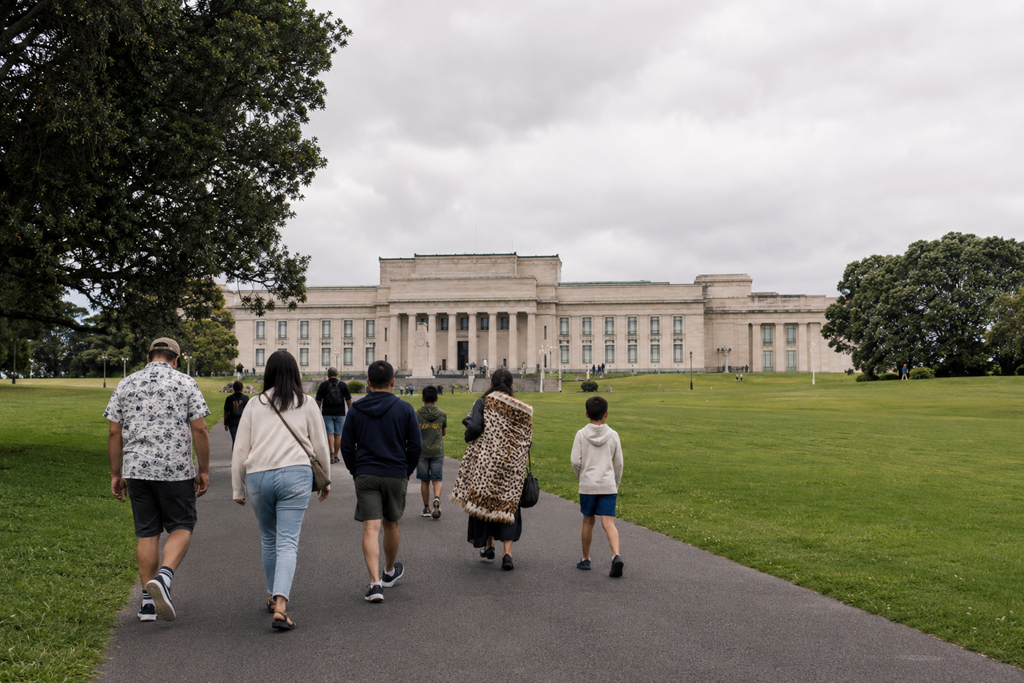
Auckland War Memorial Museum is one of the most important cultural stops for first-time visitors. Located in Auckland Domain, it offers insight into New Zealand history, Māori and Pacific cultures, natural history, and the country’s wartime heritage.
It is a good place to visit early in the trip because it gives helpful context for the rest of your time in New Zealand.
Auckland Domain
Auckland Domain is one of the city’s major green spaces and a natural pairing with the museum. It is a good place for a walk, a rest between sightseeing, or a slower afternoon away from the busiest streets.
The park’s open lawns, mature trees, and walking paths make it useful for visitors who want a break without leaving the central area.
Viaduct Harbour
Viaduct Harbour is one of the easiest places to enjoy Auckland’s waterfront identity. It has marina views, restaurants, walking areas, and access to nearby Wynyard Quarter.
This is a good area for a first evening in Auckland, especially if you want an easy walk, dinner, and a sense of the city’s connection to the water.
Wynyard Quarter
Wynyard Quarter is a redeveloped waterfront area with public spaces, harbor views, restaurants, and walking routes. It is easy to combine with Viaduct Harbour and the central waterfront.
It works well for travelers who prefer relaxed sightseeing rather than heavily scheduled attractions.
Auckland Art Gallery Toi o Tāmaki
Auckland Art Gallery Toi o Tāmaki is a strong stop for travelers interested in art, architecture, and cultural context. It includes New Zealand and international art, and its central location makes it easy to fit into a city day.
Pair it with Albert Park, nearby cafes, or a walk through the city centre.
Mount Eden / Maungawhau
Mount Eden, also known as Maungawhau, is one of Auckland’s most rewarding viewpoints. The volcanic cone gives visitors a broad view over the city, harbor, and surrounding landscape.
It is a good reminder that Auckland is shaped by volcanic landforms, not just waterfront development. Wear comfortable shoes and respect posted guidance around protected areas.
One Tree Hill / Maungakiekie and Cornwall Park
One Tree Hill / Maungakiekie and Cornwall Park offer a mix of history, views, open green space, and walking paths. This area is especially good if you want a slower outdoor experience without going far from the city.
It is a good option for travelers with more than two days in Auckland or anyone who enjoys parks and viewpoints.
Devonport
Devonport is one of the easiest and most satisfying short trips from central Auckland. The ferry ride itself is part of the appeal, giving you views of the harbor and skyline.
Once there, you can walk through the village, visit cafes, explore the waterfront, and climb nearby viewpoints such as Mount Victoria / Takarunga or North Head / Maungauika.
Waiheke Island
Waiheke Island is one of Auckland’s most popular day trips. It is known for beaches, vineyards, coastal scenery, galleries, and relaxed island villages.
This is a good choice if you want a full-day experience that feels different from the central city. Plan ferry timing carefully, and book ahead during busy travel periods if you are arranging meals, tastings, or tours.
Rangitoto Island
Rangitoto Island is a volcanic island in the Hauraki Gulf and one of Auckland’s signature outdoor experiences. Many visitors go for the walk to the summit, where views stretch back toward the city and across the gulf.
This trip is best for travelers who are comfortable with walking, sun exposure, and carrying water and snacks. Check ferry schedules and conditions before going.
West Coast Beaches
Auckland’s west coast beaches offer a different mood from the calmer harbor and gulf islands. Areas such as Piha and Muriwai are known for dramatic scenery, black sand, rugged surf, and strong coastal landscapes.
These beaches are best approached with respect for conditions. Swim only where it is safe and follow local guidance, as surf and currents can be powerful.
Food and Drink in Auckland
Auckland’s food scene reflects its Māori, Pacific, Asian, European, and contemporary New Zealand influences. For first-time visitors, the best approach is not to chase a single “must-eat” list but to explore a few different food settings.
What to Try
Seafood is a natural fit in Auckland because of the city’s coastal setting. You will also find strong cafe culture, Pacific flavors, Asian restaurants, bakeries, casual dining, wine bars, and modern New Zealand cuisine.
Look for opportunities to try local seafood, New Zealand wine, seasonal produce, and casual cafe breakfasts. If you visit Waiheke Island, wine and vineyard dining may become part of the day, but it is not the only reason to go.
Good Food Areas for Visitors
The city centre and Britomart are convenient for restaurants and cafes close to hotels and transport.
Viaduct Harbour and Wynyard Quarter are useful for waterfront meals.
Ponsonby is a good area for restaurants, bars, cafes, and a more neighborhood-based evening.
Karangahape Road, often called K Road, has creative energy, casual food, nightlife, and independent venues.
Parnell and Newmarket offer dining, cafes, and shopping in a slightly quieter setting than the central waterfront.
Getting Around Auckland
Auckland is spread out, so transportation planning matters. You can enjoy the central city on foot, but you will likely use a mix of walking, ferries, buses, trains, rideshares, tours, or a rental car depending on your plans.
Walking
The central waterfront, Britomart, Viaduct Harbour, Wynyard Quarter, Queen Street, and nearby parks are walkable for many visitors. Comfortable shoes are important because some areas involve hills.
Walking works best when you group activities by area instead of crossing the city repeatedly.
Public Transport
Auckland’s public transport network includes buses, trains, and ferries. Auckland Transport advises visitors to use its Journey Planner or AT Mobile app to plan trips, and public transport can be paid for with an AT HOP card or contactless payment methods on many services.
For first-time visitors, public transport is especially useful for the city centre, some inner neighborhoods, ferry trips, and selected airport connections. Always check current routes and payment details before traveling.
Ferries
Ferries are one of the most enjoyable ways to experience Auckland. They connect the city with places such as Devonport, Waiheke Island, and Rangitoto Island.
For visitors, ferries are not just transportation. They are part of the travel experience because they offer harbor views and a better sense of Auckland’s geography.
Airport Transportation
Auckland Airport is south of the city centre. Public transport, shuttles, taxis, rideshares, and rental cars are common ways to reach the city.
Auckland Airport directs travelers to Auckland Transport resources for buses, trains, ferries, route planning, fares, and maps. If you arrive after a long flight, choose the simplest option for your energy level and luggage.
Renting a Car
You do not need a rental car for a basic city-focused Auckland visit. However, a car can be useful if you want to explore west coast beaches, regional parks, or areas that are less convenient by public transport.
If you are continuing on a New Zealand road trip, consider whether you want the car from arrival day or after spending a day or two in the city.
Suggested First-Time Auckland Itinerary
This flexible three-day plan gives you a balanced introduction without overloading each day.
Day One: City Centre, Waterfront, and Sky Tower
Start with the city centre and waterfront. Walk around Britomart, Viaduct Harbour, and Wynyard Quarter. Have lunch or coffee near the harbor, then visit Sky Tower for a broad view of the city.
In the evening, stay near the waterfront or head to Ponsonby for dinner.
Day Two: Museum, Park, and Viewpoint
Spend the morning at Auckland War Memorial Museum and Auckland Domain. In the afternoon, visit Mount Eden / Maungawhau or One Tree Hill / Maungakiekie for city views and a better sense of Auckland’s volcanic landscape.
Keep the evening simple with dinner in Parnell, Newmarket, Britomart, or Ponsonby.
Day Three: Ferry Day Trip
Use your third day for a ferry-based experience. Choose Devonport for an easy half-day trip, Waiheke Island for beaches, vineyards, and island scenery, or Rangitoto Island for a more active outdoor day.
Do not try to do all three in one day. Pick the one that best matches your travel style.
Practical Travel Tips for Auckland
Pack for Changeable Weather
Auckland weather can shift during the day. Bring layers, a light rain jacket, sunglasses, and comfortable shoes. Even in warmer months, wind or rain can change your plans.
Plan Outdoor Activities With Flexibility
If your trip includes Rangitoto Island, Waiheke Island, west coast beaches, or viewpoints, keep some flexibility in your schedule. Outdoor experiences are much better when weather and visibility cooperate.
Respect Māori Place Names and Cultural Sites
Many Auckland landmarks have Māori names and cultural significance. You will often see dual names used, such as Mount Eden / Maungawhau. Treat volcanic cones, historic sites, and protected areas with care.
Do Not Overload Your First Day
Many travelers arrive in Auckland after a long international flight. Use the first day for walking, food, fresh air, and simple sightseeing rather than a packed itinerary.
Check Current Details Before You Go
For museums, ferries, island trips, guided experiences, and major attractions, check current opening hours, booking requirements, transport updates, and weather conditions before setting out.
Choose Experiences by Geography
Auckland is easier when you group nearby activities. For example, combine the museum with Auckland Domain and Parnell, or combine Viaduct Harbour with Wynyard Quarter and Britomart.
Common Mistakes to Avoid
Treating Auckland Only as an Airport Stop
Auckland is often used as a gateway to the rest of New Zealand, but it deserves at least one thoughtful day. Its harbors, volcanic cones, museums, islands, and neighborhoods help introduce the country in a meaningful way.
Underestimating Distances
Auckland can look simple on a map, but traffic, hills, ferry schedules, and spread-out neighborhoods can affect timing. Build in extra time and avoid planning too many cross-city movements in one day.
Skipping the Ferries
Ferries are one of Auckland’s best travel experiences. Even a short ride to Devonport can make the city feel more memorable.
Planning Too Many Day Trips
Waiheke Island, Rangitoto Island, Devonport, and west coast beaches are all worthwhile, but each deserves breathing room. Choose based on your interests rather than trying to collect them all.
Is Auckland Worth Visiting?
Auckland is worth visiting, especially for first-time travelers to New Zealand. It may not have the dramatic alpine scenery many visitors associate with the country, but it offers something different: a layered introduction to urban New Zealand, Māori and Pacific culture, harbor life, island landscapes, volcanic viewpoints, and everyday local neighborhoods.
The best way to enjoy Auckland is to slow down enough to notice its setting. Walk the waterfront. Take a ferry. Visit a museum. Climb a volcanic cone. Eat somewhere that reflects the city’s cultural mix. Give yourself enough time to see Auckland as more than an arrival point, and it becomes a useful and rewarding beginning to a New Zealand trip.
Download Our Free E-book!