Barcelona is one of Europe’s most rewarding cities for travelers who want history, architecture, food, seaside walks, and neighborhood wandering in one trip. It is a city where grand landmarks sit close to everyday local life: a Gaudí basilica, a Gothic quarter, a busy market, a quiet plaza, a hilltop view, and a beach can all fit into the same visit.
This guide is designed to help you understand Barcelona before you arrive. You will find an overview of the best times to visit, where to stay or explore, what attractions are worth prioritizing, what to eat, how to get around, and a few practical tips that can make the trip easier.
Barcelona At A Glance
Barcelona is the capital of Catalonia, set between the Mediterranean Sea and the hills of Collserola. It is a city with a strong Catalan identity, a long Roman and medieval history, and some of the most recognizable modernist architecture in the world.
For first-time visitors, Barcelona works well because the city offers variety without requiring constant long-distance travel. You can spend one day focused on Gaudí landmarks, another on the Gothic Quarter and waterfront, and another exploring Montjuïc, museums, markets, or beachside neighborhoods.
The city is especially known for the Sagrada Família, Park Güell, Casa Batlló, La Pedrera, the Gothic Quarter, La Rambla, La Boqueria, Montjuïc, Barceloneta, and its food culture. Many of these are long-standing attractions that remain central to the Barcelona experience. The official Barcelona tourism site highlights transport, museums, routes, cultural spaces, food experiences, markets, and major landmarks as key parts of visiting the city.
Best Time To Visit Barcelona
Barcelona is a year-round destination, but the experience changes by season.
Spring
Spring is one of the most comfortable times to visit. The weather is generally pleasant for walking, terraces begin to feel lively, and the city is easier to explore than during peak summer. It is a good season for first-time visitors who want to balance sightseeing, food, and time outdoors.
Summer
Summer brings beach weather, longer days, and a busier atmosphere. It can also mean heat, crowds, and higher demand for popular attractions. If you visit in summer, plan major sightseeing early in the day, reserve key attractions ahead when possible, and leave room for slower afternoons.
Fall
Fall is another excellent time for Barcelona. The weather often remains mild, the sea may still be appealing early in the season, and sightseeing can feel more comfortable than in midsummer. It is a strong choice for travelers who want a mix of culture, food, and outdoor exploring.
Winter
Winter is quieter and cooler. It is not the best time for a beach-focused trip, but it can be a practical time to visit museums, architecture, markets, and neighborhoods with fewer crowds. Pack layers and check current opening details before visiting major attractions.
How Many Days Do You Need In Barcelona?
A first visit to Barcelona works best with three to five days.
With three days, you can see the major highlights: the Sagrada Família, Park Güell, the Gothic Quarter, La Rambla, a market, and one or two waterfront or Montjuïc experiences.
With four or five days, the trip feels more balanced. You can add museums, slower neighborhood meals, beach walks, a day trip, or more time in areas like Gràcia, El Born, Poblenou, or Eixample.
If you only have one or two days, focus on fewer places rather than trying to see everything. Barcelona rewards walking and lingering, so an overly packed itinerary can make the city feel more stressful than it needs to be.
Best Areas And Neighborhoods To Know
Barcelona is easier to plan when you understand the city by neighborhood. Each area has a different rhythm, and choosing the right base or route can shape your trip.
Gothic Quarter
The Gothic Quarter is the historic heart of Barcelona. It is known for narrow lanes, old stone buildings, small plazas, Roman remains, churches, shops, and atmospheric walking streets.
This is one of the best areas for first-time visitors to explore on foot. It can also get busy, especially near major routes, so step away from the most crowded streets and look for quieter corners.
El Born
El Born sits near the Gothic Quarter but has its own character. It is known for boutiques, tapas bars, narrow streets, the Basilica of Santa Maria del Mar, and the Picasso Museum area.
It is a good neighborhood for travelers who enjoy history, food, and evening wandering without being too far from central sights.
Eixample
Eixample is known for wide avenues, elegant apartment blocks, modernist architecture, and major Gaudí landmarks. The Sagrada Família, Casa Batlló, and La Pedrera are all in or near this district.
This area is practical for many travelers because it is well-connected, attractive, and less maze-like than the old city.
Gràcia
Gràcia feels more local and village-like, with plazas, independent shops, cafes, and residential streets. It is also near Park Güell, though the park sits uphill from much of the city.
Gràcia is a good area for travelers who want a neighborhood feel and do not need to be directly in the busiest tourist center.
Barceloneta And The Waterfront
Barceloneta is the city’s traditional seaside neighborhood, known for its beach access, seafood restaurants, promenade, and relaxed coastal setting.
It is best for walks, beach time, and a change of scenery from the historic center. During warm months, it can be very busy, so go early or treat it as a place to stroll rather than a quiet escape.
Montjuïc And Poble-sec
Montjuïc is a hill with gardens, viewpoints, museums, historic sites, and broad city views. The official tourism site describes Montjuïc Hill as one of the city’s most iconic landmarks and a strong viewpoint over Barcelona.
Nearby Poble-sec is known for casual dining, tapas streets, and a more local evening feel.
Poblenou
Poblenou offers a different side of Barcelona, with beaches, creative spaces, modern development, and a calmer coastal atmosphere than the busiest central areas. It works well for travelers who have already seen the major sights or prefer a slightly less traditional base.
Top Attractions And Experiences In Barcelona
Barcelona has many famous sights, but the best trip is not just about checking off landmarks. Try to group attractions by geography so your days feel natural and not rushed.
Sagrada Família
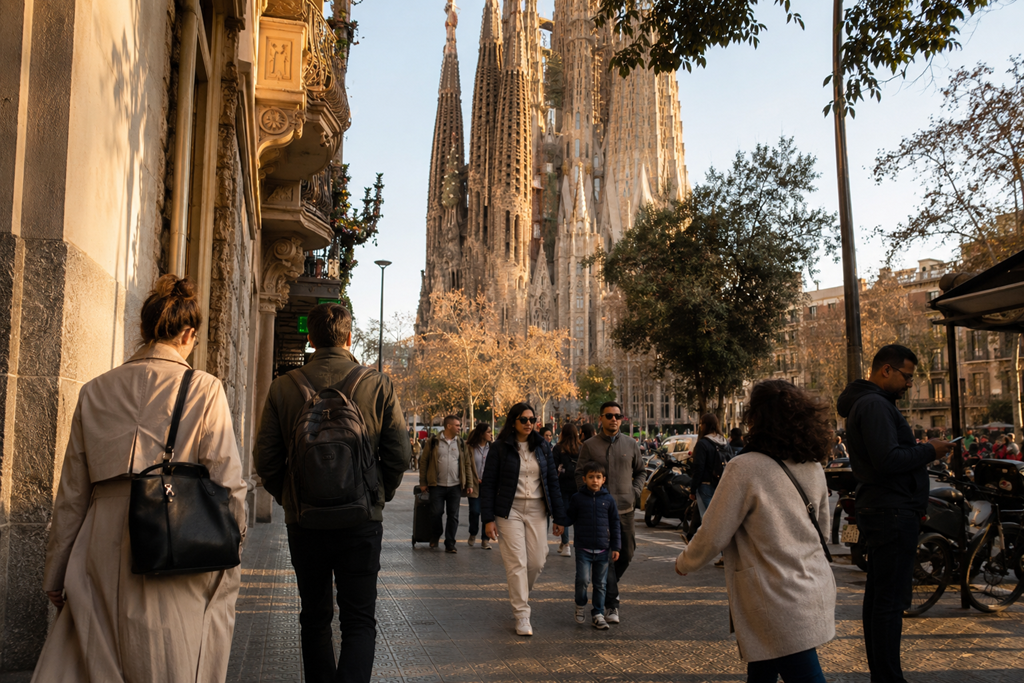
The Sagrada Família is Barcelona’s most famous landmark and one of the most distinctive churches in the world. Designed by Antoni Gaudí, it combines religious symbolism, organic forms, and extraordinary architectural detail.
Even if you only see it from the outside, it is worth visiting. However, the interior gives a very different impression, especially the columns, light, and stained glass. Because it is one of the city’s most visited attractions, book ahead during busy periods and check current entry requirements before you go.
Park Güell
Park Güell is another major Gaudí site, set on a hillside above the city. It combines gardens, curved forms, mosaics, terraces, and views over Barcelona. The official Park Güell site describes it as one of Barcelona’s largest green spaces, covering more than 17 hectares near the Collserola hills.
It is a good choice for travelers who want architecture and outdoor space together. Wear comfortable shoes, because the area around the park includes slopes and stairs.
Casa Batlló
Casa Batlló is one of the most famous modernist buildings on Passeig de Gràcia. Its colorful facade, flowing shapes, and imaginative details make it one of the clearest examples of Gaudí’s residential architecture.
It is easy to pair with La Pedrera because both are in the Eixample area.
La Pedrera / Casa Milà
La Pedrera, also known as Casa Milà, is another major Gaudí building. It is known for its undulating stone facade, inner courtyards, rooftop forms, and architectural innovation.
If you are interested in design, architecture, or Gaudí’s broader vision, this is a strong addition to your itinerary.
Gothic Quarter Walk
A walk through the Gothic Quarter is one of the simplest and most memorable Barcelona experiences. You do not need a complicated plan. Start near the cathedral area, wander through narrow streets, pause in small plazas, and allow time for details: old walls, balconies, shopfronts, and quiet side lanes.
Because the area is popular, keep your belongings secure and avoid rushing through the busiest streets.
Barcelona Cathedral
Barcelona Cathedral is a central landmark in the Gothic Quarter. Its exterior, cloister, surrounding lanes, and nearby plazas make it worth including even if you do not spend a long time inside.
It also gives useful context to the old city and its medieval layout.
La Rambla
La Rambla is one of Barcelona’s best-known pedestrian streets, running between Plaça de Catalunya and the waterfront. It is lively, central, and convenient, but it is also very touristy.
It is worth seeing once, especially if you are connecting the old city, La Boqueria, and the waterfront. Treat it as a walking route rather than the main place to eat or shop.
La Boqueria Market
La Boqueria is Barcelona’s most famous market and a popular stop off La Rambla. It is colorful, busy, and useful for seeing local ingredients, snacks, produce, and market life.
Because it is heavily visited, go with realistic expectations. It is not the quietest food experience in the city, but it remains a memorable place to walk through. For a more local-feeling market visit, consider exploring other neighborhood markets as well.
Picasso Museum
The Picasso Museum is one of Barcelona’s most important art museums, especially for travelers interested in Picasso’s early development and his connection to the city.
It pairs well with El Born, Santa Maria del Mar, and a relaxed lunch or tapas stop nearby.
Montjuïc
Montjuïc is worth setting aside several hours for. You can visit gardens, museums, viewpoints, historic sites, and broad walking areas. It is especially useful when you want a break from dense city streets.
Popular stops include the area around the National Art Museum of Catalonia, Montjuïc Castle, gardens, and viewpoints. Check current opening details for individual sites before planning your day.
Barceloneta Beach
Barceloneta Beach gives Barcelona its easy connection to the Mediterranean. It is a good place for a walk, a casual meal, or a pause between sightseeing days.
In warm weather, expect crowds. For a more relaxed experience, walk farther along the waterfront toward other beaches and go earlier in the day.
Passeig de Gràcia
Passeig de Gràcia is one of Barcelona’s grandest avenues, known for shopping, architecture, and modernist buildings. It is the natural route for seeing Casa Batlló and La Pedrera.
Even if you do not plan to shop, the street is useful for a self-guided architecture walk.
El Born And Santa Maria Del Mar
El Born is a good area for a slower afternoon or evening. Visit Santa Maria del Mar, wander the surrounding streets, stop for small plates, and let the neighborhood unfold naturally.
It is central but feels different from the Gothic Quarter, with a mix of history, shops, food, and nightlife.
Gràcia Plazas
Gràcia’s plazas are ideal when you want to experience Barcelona beyond the major sightseeing circuit. The neighborhood is good for cafes, casual meals, local shops, and evening people-watching.
It is especially nice after visiting Park Güell, though you may want to plan your route carefully because of the hills.
Day Trips From Barcelona
If you have extra time, Barcelona works well as a base for day trips. Common options include Montserrat for mountain scenery and monastery views, Girona for medieval streets, Sitges for a coastal escape, and nearby wine regions for travelers interested in cava and Catalan wine.
Choose one day trip at most on a shorter visit. If it is your first time in Barcelona and you only have three days, staying in the city may be more satisfying.
What To Eat In Barcelona
Barcelona’s food scene is one of the best parts of the trip, but it helps to understand what you are looking for. The city has everything from traditional Catalan restaurants and tapas bars to markets, bakeries, seafood spots, wine bars, and modern dining.
Catalan Food Basics
Catalan food is not exactly the same as what many travelers imagine when they think of Spanish food. You will find seafood, rice dishes, grilled vegetables, cured meats, beans, stews, sauces, and simple seasonal preparations.
Look for dishes and staples such as pa amb tomàquet, escalivada, esqueixada, botifarra, crema catalana, fideuà, suquet de peix, and seasonal vegetables.
Tapas And Small Plates
Tapas are part of the Barcelona dining experience, but not every tapas bar is equal. The best approach is to choose places that feel focused rather than places with huge picture menus near the busiest tourist corridors.
Order a few dishes at a time, share, and move slowly. Tapas work especially well in areas like El Born, Poble-sec, Gràcia, and parts of Eixample.
Markets
Markets are useful for understanding local food culture. La Boqueria is the most famous, but Barcelona has many municipal markets across different neighborhoods. These can be good places to see produce, seafood, cured meats, cheeses, and prepared foods.
If you want a less crowded experience, look beyond the most famous market and visit a neighborhood market earlier in the day.
Seafood
Because Barcelona is on the Mediterranean, seafood is a natural part of the local food experience. Barceloneta and the waterfront are popular areas for seafood, though they vary widely in quality and atmosphere.
Choose carefully, avoid places that feel overly aggressive toward tourists, and look for menus that are focused rather than trying to serve everything.
Bakeries, Coffee, And Casual Stops
Barcelona is also easy for casual eating. Bakeries, cafes, and small bars are useful for breakfast, snacks, or breaks between sightseeing. Keep meals flexible so you are not constantly crossing the city for a specific place.
How To Eat Well Without Overplanning
A good Barcelona food strategy is simple: plan a few meals you care about, but leave room for spontaneous stops. Avoid eating every meal on the most crowded sightseeing streets. Walk a few blocks away from major landmarks, look for places with a steady local rhythm, and do not feel pressured to chase the latest rankings.
Getting Around Barcelona
Barcelona is very walkable in the central areas, but public transportation makes the trip much easier.
Walking
Walking is the best way to experience neighborhoods like the Gothic Quarter, El Born, Gràcia, Eixample, and Barceloneta. Many of Barcelona’s best moments happen between attractions: a shaded street, a small plaza, an old storefront, or a view down a wide avenue.
Bring comfortable shoes. Some areas, especially near Park Güell and Montjuïc, involve hills.
Metro And Bus
Barcelona has a useful metro and bus network for travelers. The official TMB site lists metro and bus fare information and travel card options, including passes designed for unlimited journeys over several consecutive days.
For most visitors, the metro is the easiest way to cover longer distances. Buses can be useful for routes that are not as direct by metro, but they may require more patience if you are new to the city.
Airport Connections
Barcelona’s airport is connected to the city by several transport options, including metro, train, bus, taxi, and private transfer choices. The best option depends on where you are staying, how much luggage you have, and your arrival time.
Before you travel, check current routes and ticket rules so you know which option makes sense for your hotel or apartment.
Taxis And Ride Services
Taxis can be useful late at night, with luggage, or when traveling between areas that are awkward by public transit. For most sightseeing days, however, walking and metro are usually enough.
Bike And Scooter Awareness
Barcelona has bike lanes and micromobility options, but visitors should be cautious. Traffic patterns, pedestrian areas, and local rules can be confusing if you are unfamiliar with the city. If you rent a bike, choose routes carefully and avoid busy pedestrian streets.
Practical Planning Tips
Book Major Attractions Ahead
For high-demand attractions such as the Sagrada Família, Park Güell, Casa Batlló, and La Pedrera, booking ahead is often a good idea. Some attractions may use timed-entry systems, and availability can be limited during busy travel periods.
Always check current opening hours, reservation rules, and entry conditions before your visit.
Group Your Days By Area
Avoid crossing the city repeatedly. Group Eixample and Gaudí sites together. Pair the Gothic Quarter with El Born and the waterfront. Save Montjuïc for a separate half-day or full-day block.
This makes your itinerary smoother and gives you more time to enjoy the city.
Be Careful With Pickpockets
Barcelona is generally easy to visit, but pickpocketing can happen in crowded areas, on public transport, near tourist landmarks, and along busy walking streets.
Use common-sense precautions: keep your phone secure, do not leave bags hanging on chairs, avoid carrying valuables in loose pockets, and stay especially alert in crowded areas.
Respect Local Life
Barcelona is a real city, not just a visitor destination. Be mindful in residential areas, keep noise down late at night, avoid blocking sidewalks for photos, and treat markets, churches, and neighborhoods with respect.
This matters especially in heavily visited areas where residents deal with tourism every day.
Learn A Few Local Words
Spanish is widely understood, but Catalan is an important part of local identity. You do not need to speak Catalan to visit, but recognizing it and learning a few basic greetings can help you better understand the city’s culture.
Do Not Overload Your Schedule
Barcelona looks compact on a map, but the best experiences often require time: walking slowly, sitting in a plaza, taking in architecture, or enjoying a meal without rushing.
Two or three major activities per day is usually enough, especially if you include meals, transit, and neighborhood wandering.
A Simple First-Time Barcelona Plan
If you want a flexible structure, use this as a starting point.
Day One: Old City And Waterfront
Start with the Gothic Quarter, Barcelona Cathedral, and nearby lanes. Continue into El Born for Santa Maria del Mar, shops, and lunch. Later, walk toward La Rambla, La Boqueria, and the waterfront. End with a relaxed evening in El Born, the Gothic Quarter, or Barceloneta.
Day Two: Gaudí And Eixample
Visit the Sagrada Família, then explore Eixample. Add Casa Batlló, La Pedrera, or both depending on your interests and budget. Leave time for Passeig de Gràcia and a slower dinner nearby.
Day Three: Park Güell, Gràcia, And Montjuïc
Visit Park Güell earlier in the day, then spend time in Gràcia. Later, go to Montjuïc for gardens, viewpoints, or a museum. This day involves more hills, so keep the pace realistic.
Day Four Or Five: Choose Your Focus
Use extra time for the Picasso Museum, more beach time, Poblenou, a market visit, a food-focused afternoon, or a day trip. Choose based on what you enjoyed most during the first part of your visit.
Common Mistakes To Avoid
Staying Only Around La Rambla
La Rambla is central, but it is not the whole city. Use it as a reference point, then explore beyond it.
Booking Too Many Paid Attractions
Barcelona has excellent paid sights, but you do not need to book every famous building. Choose the ones that genuinely interest you and balance them with free or low-cost wandering.
Underestimating Hills And Walking Distances
Park Güell and Montjuïc can be tiring if you arrive without planning. Wear comfortable shoes, carry water, and give yourself more time than you think you need.
Eating In The Most Obvious Tourist Spots
Some central restaurants are convenient, but the best meals are often found by walking away from the busiest landmark streets. Look for focused menus, steady local traffic, and a pace that feels natural.
Forgetting To Check Current Details
Opening hours, reservation systems, transit rules, and entry policies can change. Before your trip, verify current details for major attractions and transportation.
Final Thoughts For Planning A Better Barcelona Trip
Barcelona is best approached with a mix of structure and flexibility. Plan the major sights that matter most to you, but leave room for the city’s quieter pleasures: a shaded plaza in Gràcia, a walk through El Born, a market visit, a long lunch, or a view from Montjuïc.
You do not need to see everything to have a strong trip. Choose a few architectural landmarks, explore the old city, spend time near the water, eat thoughtfully, and let the neighborhoods give the trip its shape.
Download Our Free E-book!