Buenos Aires is one of South America’s great city destinations: elegant, expressive, layered, and full of everyday rituals that reward travelers who slow down and look closely. It is a city of wide avenues, historic cafés, leafy parks, late dinners, neighborhood walks, tango, bookstores, grand architecture, and food traditions that are easy to enjoy even on a first visit.
This guide will help you understand how to plan a trip to Buenos Aires, where to spend your time, what to eat, how to get around, and which experiences are most worth prioritizing.
Buenos Aires At A Glance
Buenos Aires is Argentina’s capital and cultural center, often described through its neighborhoods, or barrios. The city has 48 neighborhoods, each with its own personality, from San Telmo’s older streets and antique-market feel to Puerto Madero’s modern waterfront and Palermo’s parks, cafés, restaurants, and design-focused areas.
For travelers, Buenos Aires works best as a city to explore by area rather than by checklist. You can spend one day around the historic center and San Telmo, another in Recoleta and Palermo, and another around La Boca, Puerto Madero, or the city’s museums and parks.
Buenos Aires is also a city of habits. Locals linger over coffee, eat dinner later than many visitors may be used to, gather in parks and plazas, and treat food, conversation, music, and walking as everyday pleasures.
Best Time To Visit Buenos Aires
Buenos Aires can be visited year-round, but spring and fall are often the most comfortable seasons for walking, sightseeing, and outdoor dining.
Spring
Spring brings pleasant temperatures, blooming trees, and a lively outdoor atmosphere. It is a good time for neighborhood walks, parks, open-air cafés, and photography.
Fall
Fall is another strong choice, with comfortable weather and a slightly softer feel around the city. It is especially good for travelers who want to spend long days walking without the stronger summer heat.
Summer
Summer can be hot and humid. It is still a good time to visit if you plan slower days, shaded parks, museums, evening outings, and breaks during the warmest part of the afternoon.
Winter
Winter in Buenos Aires is generally mild compared with many colder destinations. It can be a practical season for museums, cafés, theater, bookstores, food experiences, and lower-key sightseeing.
How Many Days Do You Need?
A first trip to Buenos Aires works well with four to five days. That gives you enough time to see the historic center, explore several neighborhoods, enjoy a tango experience, visit major cultural sites, eat well, and leave space for slower wandering.
A shorter trip of two or three days can still be worthwhile, but you will need to focus on the essentials: Plaza de Mayo, San Telmo, Recoleta, Palermo, La Boca, and at least one food or music experience.
A week or longer lets you experience the city more naturally, with time for museums, parks, cafés, bookstores, markets, and possible day trips.
Key Neighborhoods To Know
Buenos Aires is best understood through its neighborhoods. Instead of trying to cross the whole city in one day, choose one or two areas at a time and explore them well.
Recoleta
Recoleta is one of the most elegant and visitor-friendly areas of Buenos Aires. It is known for grand architecture, embassies, cultural spaces, parks, cafés, and the famous Recoleta Cemetery. Argentina’s official tourism site describes Recoleta as a neighborhood with embassy buildings, galleries, international shops, and a historic cemetery.
This is a good area for first-time visitors who want a polished base, easy walking, and access to museums and classic city sights.
Palermo
Palermo is large, varied, and popular with travelers. It includes leafy parks, restaurants, cafés, boutiques, nightlife areas, and design-forward streets. It is a strong choice for visitors who want food, green space, and a more relaxed neighborhood rhythm.
Palermo works especially well for longer stays because it offers plenty to do without needing to rush across town every day.
San Telmo
San Telmo is one of the city’s most atmospheric neighborhoods, with older buildings, cobblestone streets, antique shops, cafés, plazas, and tango associations. It is a good place for walking, photography, historic texture, and weekend market energy.
Visit during the day, take your time, and wander with awareness of your surroundings, especially in busier market areas.
La Boca
La Boca is famous for Caminito, colorful buildings, tango imagery, street art, and football culture. It is one of the city’s most recognizable areas, but it is best visited with a focused plan.
Stick to the main visitor areas, go during the day, and consider pairing it with a guided tour if you want more context.
Puerto Madero
Puerto Madero is modern, spacious, and set along the waterfront. It has river views, restaurants, walking paths, and a very different feel from the older neighborhoods. Argentina’s tourism site highlights Puerto Madero as one of the city’s youngest neighborhoods, known for dining and river views.
It is a good area for an easy walk, especially when you want a break from denser city streets.
Microcentro And Plaza De Mayo
The historic center is where you will find Plaza de Mayo, Casa Rosada, the Metropolitan Cathedral area, government buildings, and important civic architecture. The official tourism site’s Plaza de Mayo route highlights historic buildings around the square, including the Cabildo and city government buildings.
This area is best explored during the day, ideally with a walking route that connects the plaza, nearby avenues, cafés, and architectural landmarks.
Essential Attractions And Experiences
Buenos Aires has plenty of major sights, but the best trip usually mixes landmarks with slower experiences.
Plaza De Mayo And The Historic Center
Plaza de Mayo is one of the most important civic spaces in Buenos Aires. It is surrounded by major political, religious, and historic buildings and gives visitors a useful starting point for understanding the city’s history and public life.
Plan time to walk around the square, notice the architecture, and continue toward nearby streets and cafés.
Recoleta Cemetery
Recoleta Cemetery is one of Buenos Aires’ most visited landmarks. It is known for elaborate mausoleums, sculptural details, and notable tombs, including that of Eva Perón. The city’s tourism site notes that more than 90 tombs are listed as national historical monuments.
This is not just a quick photo stop. Give yourself time to walk slowly, observe the architecture, and consider taking a guided tour for historical context. Check current entry rules and visiting hours before you go.
Teatro Colón
Teatro Colón is one of the city’s great cultural landmarks and an essential stop for travelers interested in architecture, music, and performing arts. Even if you do not attend a performance, a guided visit can be worthwhile for understanding the scale and detail of the building.
Check current tour availability or performance schedules in advance, especially during busy travel periods.
Caminito And La Boca
Caminito is one of the most photographed places in Buenos Aires, known for colorful façades, street performers, tango imagery, and an open-air museum feel. It is touristy, but still worth visiting if you approach it as a short, focused cultural stop rather than a full-day neighborhood wander.
Go during daylight hours, stay around the main visitor streets, and be mindful with phones and cameras.
Palermo Parks
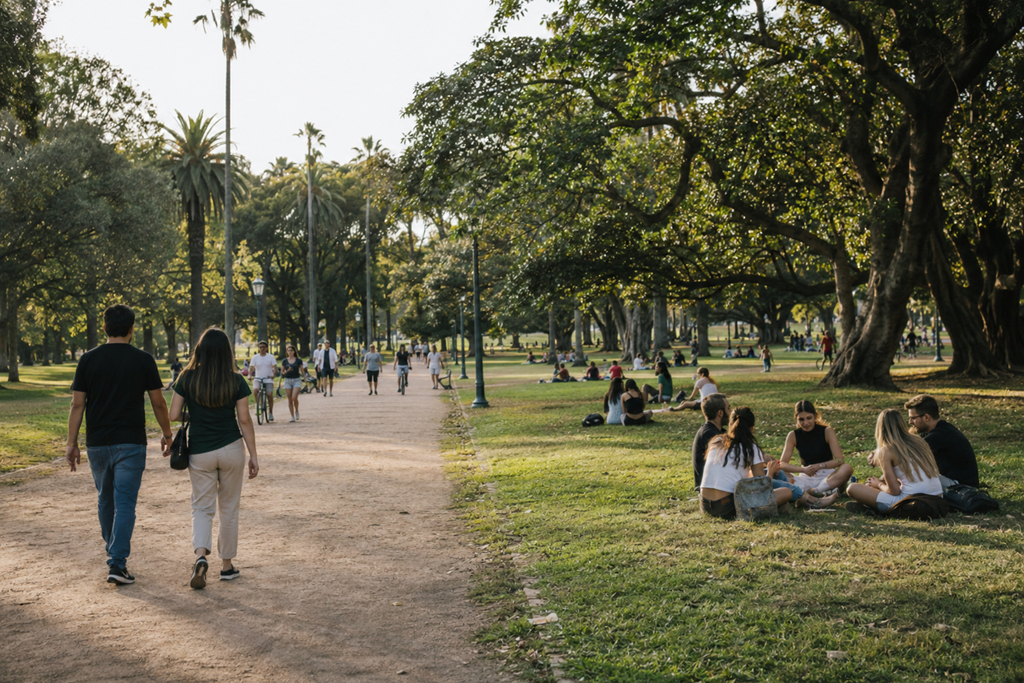
Palermo’s parks and green spaces are useful for balancing a city-heavy itinerary. They are good for walking, resting, people-watching, and seeing a softer side of Buenos Aires.
This is a good area to pair with cafés, museums, or a relaxed dinner in Palermo.
San Telmo Market And Street Life
San Telmo is one of the best areas for travelers who enjoy markets, old buildings, antiques, and a more textured urban atmosphere. The neighborhood is especially appealing for walking and browsing.
Market days can be lively, but they can also be crowded. Keep your plans flexible and give yourself time to explore side streets, cafés, and plazas.
Puerto Madero Waterfront
Puerto Madero offers a modern contrast to the older parts of the city. Its wide paths and riverfront setting make it a good place for an easy walk, especially around sunset or after a busy sightseeing day.
It is also a simple area for travelers who want a more polished dining or strolling environment.
A Tango Experience
Tango is deeply associated with Buenos Aires, and visitors can experience it in different ways. A formal tango show is the easiest option for many first-time travelers, while a milonga gives a more local view of the dance culture.
If you choose a milonga, go respectfully. Watch first, learn the customs, and understand that these are social spaces, not just performances for tourists.
Food And Drink In Buenos Aires
Food is one of the best reasons to visit Buenos Aires. The city’s dining culture includes steakhouses, historic cafés, neighborhood bakeries, pizzerias, empanada shops, ice cream parlors, and contemporary restaurants. The official tourism site notes that Buenos Aires has everything from historic cafés and steakhouses to more modern dining experiences.
What To Eat
Asado And Parrillas
Argentina is famous for beef, and Buenos Aires is a strong place to experience a traditional parrilla. Meals are often generous and social, with grilled meats, salads, potatoes, chimichurri, provoleta, and wine.
You do not need to chase the most famous restaurant. A good neighborhood parrilla can be just as memorable.
Empanadas
Empanadas are easy, affordable, and widely available. They make a good quick meal, snack, or casual lunch. Try a few different fillings so you can compare styles.
Pizza And Fugazzeta
Buenos Aires has a strong pizza culture shaped partly by Italian immigration. Slices are often thicker and cheesier than what many visitors expect. Fugazzeta, a cheese-and-onion style, is especially associated with the city.
Medialunas
Medialunas are small, slightly sweet croissant-like pastries often eaten with coffee. They are a simple Buenos Aires pleasure and a good breakfast or afternoon café order.
Alfajores
Alfajores are sweet sandwich cookies often filled with dulce de leche. They are easy to find and make a good edible souvenir.
Helado
Buenos Aires has excellent ice cream, also influenced by Italian traditions. Dulce de leche flavors are especially popular and worth trying.
Mate
Mate is a traditional herbal infusion shared socially in Argentina. Visitors will see locals drinking it in parks, plazas, and at home. If you try it, understand that it comes with customs and a social rhythm.
Dining Rhythm
Dinner in Buenos Aires often happens later than in many North American cities. If you prefer eating earlier, look for cafés, casual restaurants, or places that serve continuously.
For popular restaurants, book ahead when possible. For simpler meals, leave room for spontaneity.
Getting Around Buenos Aires
Buenos Aires has several practical transportation options, including walking, the Subte subway system, buses, taxis, and ride-hailing apps.
To use buses and the Subte, travelers commonly use a rechargeable SUBE card, according to the city’s official tourism guidance. Payment options can evolve, so check current local guidance when you arrive.
Walking
Walking is one of the best ways to experience Buenos Aires, especially in Recoleta, Palermo, San Telmo, Puerto Madero, and parts of the historic center. Plan walks by neighborhood rather than trying to cover too much ground across the city.
Subte
The Subte is useful for crossing parts of the city efficiently, especially when traffic is heavy. It is helpful for visitors staying near a station and moving between central areas.
Buses
Buses reach many parts of the city, though they can feel less intuitive for first-time visitors. They are useful once you understand routes or use a reliable map app.
Taxis And Ride-Hailing
Taxis and ride-hailing services can be convenient, especially at night, during rain, or when traveling between neighborhoods that are not well connected by subway.
Use common-sense precautions: confirm the vehicle, check the route, and avoid getting into unofficial cars.
Practical Travel Tips
Plan By Area
Buenos Aires is large, and traffic can slow you down. Group your days geographically. For example, pair Recoleta with nearby museums and parks, San Telmo with Plaza de Mayo, and La Boca with a guided or daytime visit.
Keep A Flexible Pace
The city is rewarding when you leave room for cafés, bookstores, parks, and unplanned discoveries. A packed schedule can make Buenos Aires feel more tiring than it needs to be.
Learn A Few Spanish Basics
Many people in tourist-facing businesses may understand some English, but basic Spanish helps. Learn greetings, ordering phrases, directions, and polite expressions.
Carry Small Essentials
Have a charged phone, a backup payment method, and some local cash for smaller purchases. Keep valuables secure in busy areas and avoid displaying expensive items unnecessarily.
Check Current Details Before Visiting
Opening hours, reservation rules, entry policies, and transportation payment methods can change. Before visiting major attractions, check current details directly with the venue or official tourism resources.
Be Thoughtful About Safety
Buenos Aires is a major city, so use the same awareness you would in other large urban destinations. Be especially attentive in crowded markets, transit areas, nightlife zones, and heavily touristed streets.
A Simple First-Time Buenos Aires Plan
For a balanced first visit, structure your trip around neighborhoods and experiences instead of trying to see everything.
Day One: Historic Center And San Telmo
Start with Plaza de Mayo and the surrounding civic buildings, then walk toward San Telmo for older streets, cafés, market browsing, and dinner.
Day Two: Recoleta And Palermo
Visit Recoleta Cemetery, explore nearby cultural spaces or parks, then continue to Palermo for green space, cafés, shopping, or dinner.
Day Three: La Boca And Puerto Madero
Visit Caminito during the day, then shift to Puerto Madero for a relaxed waterfront walk and an easier evening.
Day Four: Culture, Food, And Tango
Use this day for Teatro Colón, a museum, a food-focused walk, a parrilla meal, or a tango show or milonga.
Extra Time
Add more museums, bookstores, cafés, parks, a football-related experience, or a day trip depending on your interests.
Who Buenos Aires Is Best For
Buenos Aires is especially good for travelers who enjoy cities with personality. It suits people who like architecture, food, walking, cafés, music, history, bookstores, parks, nightlife, and neighborhoods with distinct identities.
It may feel less ideal for travelers who want a beach-focused vacation or a simple resort-style trip. Buenos Aires asks for curiosity, but it rewards that curiosity with depth.
Final Thoughts On Visiting Buenos Aires
Buenos Aires is not a city to rush through. Its best moments often happen between the major sights: a long café stop, a quiet cemetery walkway, a shaded park bench, a late dinner, a neighborhood bakery, a tango song drifting from a doorway, or an architectural detail you notice while walking.
For a first visit, focus on a few strong areas, eat well, move at a realistic pace, and leave room for the city’s everyday rhythm. That is often where Buenos Aires becomes most memorable.
Download Our Free E-book!