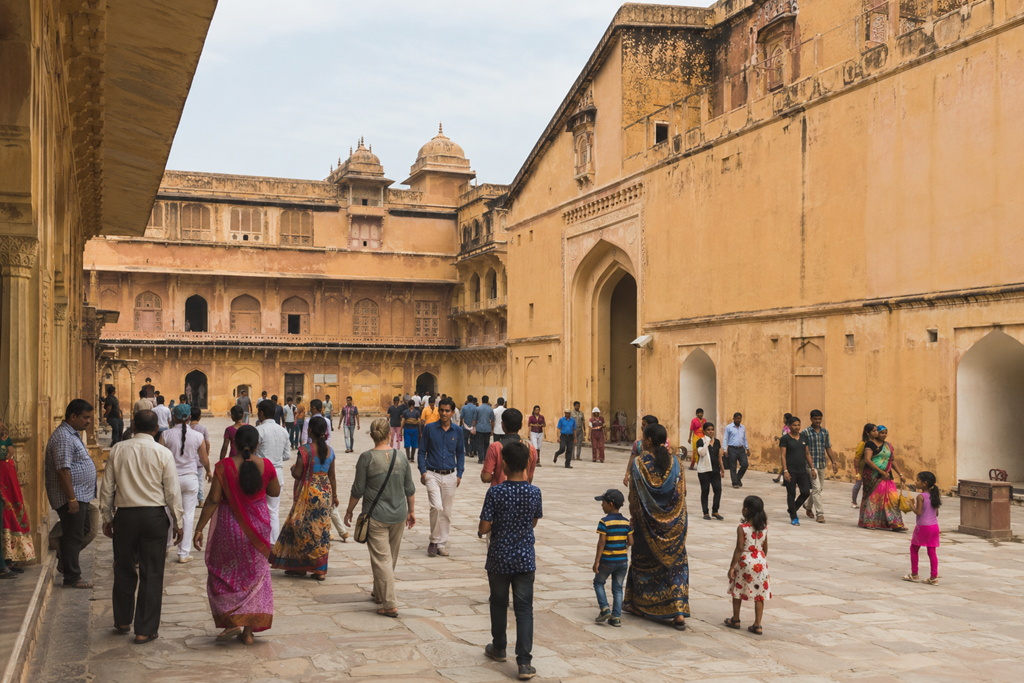
Jaipur is one of India’s most visually memorable cities, known for grand palaces, hilltop forts, busy bazaars, and the warm pink tones of its historic architecture. As the capital of Rajasthan, it offers a strong sense of place: royal history, craft traditions, colorful markets, ornate temples, and everyday street life all layered into one destination.
This guide will help you understand Jaipur before you go, including when to visit, where to stay, what to see, how to get around, what to eat, and how to plan your time without feeling rushed.
Jaipur At A Glance
Jaipur is often called the “Pink City” because of the distinctive rose-toned buildings in its historic core. The walled city was founded in 1727 by Sawai Jai Singh II and is recognized by UNESCO for its planned urban layout, broad streets, historic markets, and architectural character.
For travelers, Jaipur is especially rewarding because many of its major sights are connected by a clear theme: the legacy of Rajasthan’s royal courts, craftsmanship, astronomy, defensive architecture, and trade. You can spend one day seeing the essentials, but two to three days gives you a better pace.
Jaipur is best for travelers who enjoy:
- Historic forts and palaces
- Markets, textiles, jewelry, and handicrafts
- Photography and architecture
- Indian food and street snacks
- Cultural sightseeing with plenty of atmosphere
Best Time To Visit Jaipur
The most comfortable time to visit Jaipur is generally during the cooler months, from autumn through early spring. Days are more pleasant for walking around forts, markets, and outdoor courtyards.
Summer can be very hot, which makes midday sightseeing tiring. If you visit during warmer months, start early, take breaks indoors, and save exposed sites like forts and viewpoints for the morning or late afternoon.
The monsoon season can bring relief from the heat, but rain may affect road conditions, visibility, and outdoor plans. It can still be a worthwhile time to visit if you are flexible.
No matter when you go, Jaipur rewards slower pacing. Many of its best experiences involve walking, browsing, climbing steps, or spending time in courtyards, so avoid packing every hour with back-to-back sightseeing.
How Many Days Do You Need In Jaipur?
A good first visit to Jaipur usually works well with 2 to 3 days.
One Day In Jaipur
With one full day, focus on the essentials:
- Amber Fort
- City Palace
- Jantar Mantar
- Hawa Mahal exterior
- A short market walk in the old city
This is doable, but it will feel full.
Two Days In Jaipur
Two days gives you a more balanced visit. You can spend one day around the old city and another around Amber Fort, Jaigarh Fort, Nahargarh Fort, and a sunset viewpoint.
Three Days In Jaipur
Three days allows time for museums, temples, slower meals, shopping, and less rushed exploration. This is the better choice if you want to enjoy Jaipur rather than simply check off attractions.
Key Areas To Know
Jaipur is large, but most first-time visitors will spend their time in a few main areas.
The Walled City
The walled city is Jaipur’s historic center and one of its most atmospheric areas. This is where you will find Hawa Mahal, City Palace, Jantar Mantar, traditional bazaars, old gates, and busy market streets.
It is lively, colorful, and sometimes overwhelming, especially during the day. Go with patience, comfortable shoes, and enough time to wander without needing every turn to be efficient.
Amber And The Fort Area
Amber Fort sits outside the central city on a hillside and is one of Jaipur’s most important sights. The surrounding area also gives access to Jaigarh Fort, views of Maota Lake, and scenic stretches of the Aravalli hills.
This area is best visited earlier in the day, especially in warmer weather.
C-Scheme And Civil Lines
These areas are more modern and polished, with hotels, cafes, restaurants, shops, and easier road access. They can be a practical base if you want a quieter stay while still being able to reach the main attractions by taxi or auto-rickshaw.
Bani Park
Bani Park is a popular hotel area with guesthouses, mid-range stays, and relatively convenient access to the railway station and main roads. It is not as atmospheric as the old city, but it can be comfortable and practical.
MI Road
MI Road is a central commercial stretch with shops, restaurants, hotels, and transport connections. It works well for visitors who want a straightforward base near both the old city and newer parts of Jaipur.
Top Attractions And Experiences In Jaipur
Jaipur’s main sights are popular for good reason. The key is to group them sensibly so you spend more time experiencing the city and less time crossing traffic.
Amber Fort
Amber Fort, also called Amer Fort, is one of Jaipur’s signature landmarks. Set on a rugged hill, it combines defensive architecture with palace courtyards, gates, mirrored interiors, and broad views of the surrounding landscape. India’s official tourism portal describes Amber Fort as a hilltop fortress built with pale yellow and pink sandstone.
Plan enough time here. Amber Fort is not just a quick photo stop; it is a large complex with ramps, courtyards, halls, and viewpoints. Arriving earlier helps you avoid the strongest heat and the busiest part of the day.
City Palace
City Palace sits in the heart of Jaipur’s old city and offers a closer look at royal architecture, courtyards, gateways, textiles, weapons, and ceremonial spaces. It is one of the best places to understand Jaipur’s courtly history and design traditions.
It pairs naturally with Jantar Mantar and Hawa Mahal because all three are close to one another.
Jantar Mantar
Jantar Mantar is one of Jaipur’s most distinctive historic sites. It is an early 18th-century astronomical observation site with large fixed instruments used to observe celestial positions. UNESCO describes it as a collection of about twenty main instruments and a major expression of astronomical knowledge from that period.
This site is much more interesting with context. Consider hiring a licensed guide or using a reputable audio guide so the instruments feel meaningful rather than simply sculptural.
Hawa Mahal
Hawa Mahal is one of Jaipur’s most photographed buildings, with its honeycomb-like facade and rows of small windows. Many travelers view it from across the street, where the full facade is easiest to appreciate.
You can also visit inside, but the exterior is the main visual highlight. Go early if you want a quieter view and softer light.
Nahargarh Fort
Nahargarh Fort sits above Jaipur and is especially known for views over the city. It is a good choice if you want to understand Jaipur’s layout from above.
Many visitors time this area for late afternoon, but visibility and crowds can vary. Check current access details before you go, and leave enough time for the drive.
Jaigarh Fort
Jaigarh Fort is near Amber Fort and is often visited on the same outing. It has a more rugged, military character than the palaces in the city center. If you enjoy fort walls, defensive structures, and broad views, it is worth considering.
For travelers with limited time, Amber Fort usually comes first. Jaigarh is a strong addition if you have extra hours.
Albert Hall Museum
Albert Hall Museum is housed in a striking Indo-Saracenic building in Ram Niwas Garden. Rajasthan Tourism notes that the building was designed by Sir Swinton Jacob and inspired in part by the Victoria and Albert Museum in London.
It is a good indoor stop when you want a break from outdoor sightseeing. The museum also helps broaden a Jaipur trip beyond forts and palaces.
Jal Mahal
Jal Mahal, or the Water Palace, sits in Man Sagar Lake and is usually viewed from the lakeside rather than entered. It is a simple but memorable stop, especially when combined with the drive toward Amber Fort.
It does not require a long visit, but it is worth pausing for the view.
Galtaji Temple
Galtaji, sometimes called the Monkey Temple, is a temple complex set among hills outside the main city. It offers a different side of Jaipur, with sacred pools, shrines, and a more rugged landscape.
As with any religious site, dress respectfully and move through the space with awareness. Watch your belongings around monkeys and avoid carrying visible food.
Birla Mandir
Birla Mandir is a white marble Hindu temple that offers a quieter contrast to Jaipur’s busy markets and forts. It is often visited in the evening, but it can also be a peaceful stop during the day.
It is a useful addition if you want a balanced itinerary with both royal and religious architecture.
Markets And Shopping In Jaipur
Jaipur is one of India’s great shopping cities, especially for textiles, jewelry, block prints, blue pottery, leather goods, and traditional crafts. Shopping here is best approached slowly. Browse first, compare quality, and avoid buying from the first shop you enter unless you feel confident.
Johari Bazaar
Johari Bazaar is known for jewelry, gemstones, and traditional ornaments. Even if you are not planning a major purchase, it is worth visiting for the atmosphere and historic market setting.
For higher-value purchases, use reputable shops, ask questions, and avoid pressure-driven decisions.
Bapu Bazaar
Bapu Bazaar is popular for textiles, juttis, souvenirs, bags, and casual shopping. It is a good place for first-time visitors who want variety in one area.
Expect bargaining in many smaller shops, but keep it respectful. A friendly tone usually works better than aggressive haggling.
Tripolia Bazaar
Tripolia Bazaar is associated with lac bangles, metalwork, and traditional goods. It can feel more local than some tourist-focused shopping areas.
Go during the day and give yourself time to look around without needing to buy immediately.
Kishanpole Bazaar
Kishanpole Bazaar is a useful area for textiles and wooden items. If you are interested in Jaipur’s craft culture, this is a good market to include.
When shopping for handmade goods, remember that quality varies widely. Look closely at stitching, fabric weight, finishing, and whether the seller can explain the craft process.
What To Eat In Jaipur
Jaipur’s food scene reflects Rajasthan’s climate, royal history, vegetarian traditions, and street-snack culture. You can eat very simply or make food a major part of the trip.
Classic foods to look for include:
- Dal baati churma: A traditional Rajasthani meal with baked wheat balls, lentils, and a sweet crushed wheat preparation.
- Gatte ki sabzi: Gram flour dumplings cooked in a spiced yogurt-based gravy.
- Laal maas: A rich, spicy mutton curry associated with Rajasthan.
- Kachori: A flaky fried snack often filled with spiced lentils or onions.
- Mirchi vada: A chili fritter snack, often eaten with chutney.
- Lassi: A yogurt-based drink, especially refreshing during warm weather.
- Ghewar: A traditional sweet often associated with Rajasthan.
If you are sensitive to spice, ask before ordering. “Medium” can still be quite spicy depending on the kitchen.
For street food, choose busy stalls where food is cooked fresh and turnover is high. Carry hand sanitizer, drink bottled or filtered water, and be careful with raw foods if your stomach is not used to local conditions.
Transportation Basics
Getting around Jaipur is fairly straightforward, but traffic can slow you down. Build extra time into your plans, especially when moving between the old city and outer attractions.
Auto-Rickshaws
Auto-rickshaws are common and useful for short rides. Agree on the fare before starting unless using an app-based option. They are convenient but may be less comfortable in heat or traffic.
Taxis And Ride-Hailing
Taxis and ride-hailing services are often the easiest option for visitors, especially for longer distances or multi-stop sightseeing. For a full sightseeing day, hiring a car with a driver can reduce stress.
Walking
Walking is best in specific areas, especially inside the old city markets or around attraction clusters. Sidewalks can be uneven or crowded, so wear comfortable shoes and stay alert.
Metro
Jaipur has a metro system, but most tourists still rely on taxis, auto-rickshaws, and walking for sightseeing. Check current routes and station locations if you plan to use it.
Trains And Buses
Jaipur is well connected to other Indian cities by train and road. Many travelers include it as part of a broader Rajasthan or Golden Triangle route with Delhi and Agra.
Book trains ahead during busy travel periods, and give yourself buffer time when arriving or departing.
Suggested Jaipur Itinerary
This simple 3-day structure keeps the trip practical without overloading each day.
Day 1: Old City Highlights
Start with Hawa Mahal early in the day, then visit City Palace and Jantar Mantar. After lunch, explore the surrounding bazaars at a relaxed pace.
This day works best on foot and by short rickshaw rides. Keep your expectations flexible because the old city is busy and full of distractions.
Day 2: Forts And Views
Visit Amber Fort in the morning, then consider Jaigarh Fort or Jal Mahal depending on your energy. Later, head toward Nahargarh Fort for views over Jaipur.
This is a good day to hire a car and driver because the sights are more spread out.
Day 3: Museums, Temples, And Slower Exploring
Use your final day for Albert Hall Museum, Birla Mandir, Galtaji Temple, or extra market time. This is also a good day to revisit an area you liked rather than forcing in too many new stops.
If you are shopping for textiles, jewelry, or crafts, leave space in the schedule so you can compare shops without rushing.
Practical Travel Tips For Jaipur
Start Early
Many of Jaipur’s best sights are exposed to sun and crowds. Starting early makes forts, viewpoints, and old-city walks more comfortable.
Dress For Heat, Dust, And Temples
Lightweight, breathable clothing is helpful. For temples and religious sites, dress modestly and be prepared to remove shoes where required.
Check Current Details Before Visiting
Opening hours, ticket rules, restoration work, and access policies can change. Before visiting major attractions, check current information from official sources or your hotel.
Use A Guide Selectively
A good guide can add real value at Amber Fort, City Palace, and Jantar Mantar. You do not need a guide everywhere, but context helps in places where the history and architecture are layered.
Be Thoughtful With Photography
Always ask before photographing people closely, especially vendors, craftspeople, worshippers, and families. Some monuments may also restrict photography in certain areas.
Plan Around Traffic
Distances on a map can be misleading. Jaipur traffic can make short routes take longer than expected. Group sights by area and avoid unnecessary backtracking.
Stay Hydrated
Carry water, especially when visiting forts or markets. Heat and walking can tire you out quickly, even outside the hottest months.
Shop With Patience
Jaipur is a wonderful shopping city, but it is easy to feel rushed or pressured. Take your time, compare prices, and buy from places where you feel comfortable with the quality and communication.
Common Mistakes To Avoid
Trying To See Everything In One Day
Jaipur has too much depth for a rushed checklist. If you only have one day, choose the major sights and accept that you will not see everything.
Visiting Amber Fort Too Late In The Day
Amber Fort is large and can be hot. A morning visit is usually more comfortable and gives you more time to explore.
Underestimating The Old City
The old city is rewarding but intense. Noise, traffic, crowds, and market activity are part of the experience. Go slowly and take breaks.
Treating Hawa Mahal As A Long Stop
Hawa Mahal is iconic, but many travelers only need a short visit unless they want to go inside. Pair it with nearby sights rather than building a whole day around it.
Forgetting To Leave Time For Markets
Jaipur’s markets are part of the city’s identity. Even if you are not a serious shopper, browsing the bazaars helps you understand local craft, color, and daily life.
Is Jaipur Worth Visiting?
Jaipur is absolutely worth visiting if you are interested in history, architecture, markets, and cultural atmosphere. It is one of the most accessible introductions to Rajasthan and fits naturally into many North India itineraries.
The best way to enjoy Jaipur is to balance its famous landmarks with slower experiences: walking through bazaars, watching the light change on sandstone walls, trying local food, and giving yourself enough time to absorb the city’s details.
Jaipur can be busy, hot, and visually intense, but it is also deeply rewarding. With a thoughtful plan, it becomes much more than a stop between Delhi and Agra. It becomes a destination with its own rhythm, identity, and lasting sense of place.
Download Our Free E-book!