Las Vegas is one of the easiest destinations to over-plan and one of the easiest to enjoy once you understand how the city works. The Strip is compact in theory but spread out in practice. Downtown has a different personality than the resort corridor. Hotels can shape your entire trip. Shows, restaurants, casinos, pools, museums, shopping, and nightlife all compete for your time.
This guide is designed to help you plan a better Las Vegas trip without feeling pulled in every direction. You’ll find practical guidance on where to stay, what areas to understand, how to think about shows and nightlife, what to do beyond casinos, how to get around, and how to make the trip feel manageable from the start. This follows the travel guide brief you provided for LifeStylenaire.com.
Las Vegas At A Glance
Las Vegas is best understood as several travel experiences layered into one destination. The Las Vegas Strip is the main resort corridor, known for large hotels, casinos, restaurants, entertainment venues, shopping, fountains, themed architecture, rooftop views, pools, lounges, and production shows. Downtown Las Vegas, especially around Fremont Street, has a more historic, neon-heavy feel with older casinos, live entertainment, walkable nightlife, and a different pace from the Strip. The official Las Vegas tourism site highlights hotels, shows, restaurants, nightlife, museums, outdoor activities, and transportation planning as major parts of the visitor experience.
For first-time visitors, the simplest approach is to choose one main home base, build your plans around nearby attractions, and avoid cramming too many hotel-hopping stops into one day. Distances on the Strip can be misleading. A resort that looks “next door” may involve long walkways, pedestrian bridges, casino floors, escalators, and outdoor heat depending on the season.
Best Time To Visit Las Vegas
Las Vegas can be visited year-round, but the experience changes depending on weather, crowds, and what you want from the trip.
Spring And Fall
Spring and fall are often the most comfortable times for walking, sightseeing, patio dining, and desert day trips. These seasons are especially appealing if you want to explore beyond casino floors and hotel interiors. Demand can be high during conventions, major sports weekends, holidays, and popular travel periods, so it is still smart to book lodging and shows ahead.
Summer
Summer in Las Vegas can be extremely hot, which makes hotel choice even more important. A resort with a good pool, plenty of indoor dining, and easy access to nearby attractions can make the trip smoother. During hotter months, plan outdoor walks early or late, use rideshare or taxis when needed, and build breaks into your day.
Winter
Winter is cooler and often more comfortable for walking than summer, though pools may be less central to the trip. This can be a good season for shows, restaurants, museums, casinos, spas, shopping, and shorter outdoor visits. Holiday and New Year travel periods can still be busy, so check availability early if your dates are fixed.
Where To Stay In Las Vegas
Your hotel is not just a place to sleep in Las Vegas. It often shapes your walking routes, dining choices, nightlife access, show options, pool time, transportation needs, and overall pace. Before booking, think about the kind of trip you want.
The Strip
The Strip is the best choice for most first-time visitors because it puts you close to the classic Las Vegas experience. You’ll find major resorts, casino floors, large restaurants, shopping areas, bars, lounges, theaters, observation experiences, and several well-known attractions in one corridor. Visit Las Vegas describes the Strip as home to world-famous restaurants, production shows, luxury shopping, major resorts, casino entertainment, headliner performances, and attractions like the High Roller at The LINQ Promenade.
Stay on the Strip if you want convenience, big-resort energy, easy access to shows, and the widest range of dining and nightlife choices. It is especially practical for a first trip, a short weekend, a celebration, or a trip where you do not plan to rent a car.
Center Strip
Center Strip is useful if you want to walk to multiple resorts without relying on transportation for every outing. It is a practical base for visitors who want to see fountains, casino interiors, restaurants, bars, shopping areas, and shows across several nearby properties.
This area is often a strong choice for first-timers because it reduces decision fatigue. You can build a full trip around nearby resorts, then add one or two farther outings.
South Strip
South Strip can work well if you want easier airport access, larger resort properties, sports and event venues, or a slightly different balance of resort space and Strip access. It may be a good fit for travelers attending events, families who want more resort amenities, or visitors who prefer staying a bit away from the densest walking areas.
North Strip
North Strip has a more spread-out feel in places, with large resorts, entertainment venues, and some quieter pockets compared with Center Strip. It can be a good fit if a specific resort, venue, restaurant, or event is your anchor.
Before booking North Strip, check the walking distance to the places you care about most. You may use taxis, rideshare, the Monorail, or longer walks more often depending on your plans.
Downtown Las Vegas
Downtown Las Vegas is a strong choice if you want vintage neon, Fremont Street, historic casino atmosphere, bar-hopping, lower-key entertainment, and a more concentrated nightlife area. Visit Las Vegas lists Fremont Street Experience and Downtown Container Park among Downtown attractions and free activities worth visiting.
Downtown is not the same experience as the Strip, and that is part of its appeal. It works well for repeat visitors, nightlife-focused trips, budget-conscious travelers, or people who want a shorter, more walkable entertainment district.
Off-Strip Resorts
Off-Strip hotels can offer more space, quieter surroundings, easier parking, or better value depending on the property and season. They are often better for travelers with a rental car, repeat visitors, families seeking specific amenities, or people who do not need to be in the center of the action every night.
The tradeoff is transportation. Before choosing an off-Strip hotel, calculate how often you will go to the Strip or Downtown and whether taxi, rideshare, parking, or shuttle logistics will be worth the savings.
How To Choose The Right Las Vegas Hotel
Las Vegas hotel decisions can feel overwhelming because there are so many well-known names. Instead of starting with the “best” hotel, start with your trip style.
For A First Visit
Choose a well-located Strip hotel with easy access to nearby dining, entertainment, and walking routes. A central location can matter more than a long list of amenities because it saves time and reduces transportation friction.
For Shows And Nightlife
Stay near the venues you expect to visit most. Late-night transportation is available, but a shorter ride or walk back to your hotel can make the night easier. If you plan to visit nightclubs, lounges, or major showrooms, check whether your hotel is close to your priority venues.
For Pools And Resort Time
Look closely at the pool scene before booking. Some hotels are known for larger pool complexes, while others are better for quieter lounging, family-friendly swimming, or dayclub energy. Pool access policies, seasonal schedules, and cabana rules can change, so verify details before you book.
For Families
Choose a hotel with convenient food options, easy transportation, and activities that do not require crossing too many casino floors. Las Vegas can work for families, but the right hotel location makes a big difference. Many family-friendly attractions are spread across different resorts, so plan by geography rather than trying to see everything.
For Budget-Conscious Travelers
Compare the full stay cost, not just the nightly rate. Resort fees, parking, transportation, food prices, and location all affect the real cost of a Las Vegas trip. A slightly higher room rate in a better location may save money and time if it reduces rideshare use.
Key Areas And Neighborhoods To Know
The Las Vegas Strip
The Strip is the symbolic heart of modern Las Vegas. It is where many visitors spend most of their time, especially on a first trip. You can explore resort lobbies, casino floors, fountains, shopping promenades, restaurants, showrooms, rooftop bars, observation wheels, and themed public spaces without needing a rigid itinerary.
The best way to enjoy the Strip is to group activities by area. Choose one section for the morning or afternoon, another for dinner and a show, and avoid constantly moving from one end to the other.
Fremont Street And Downtown
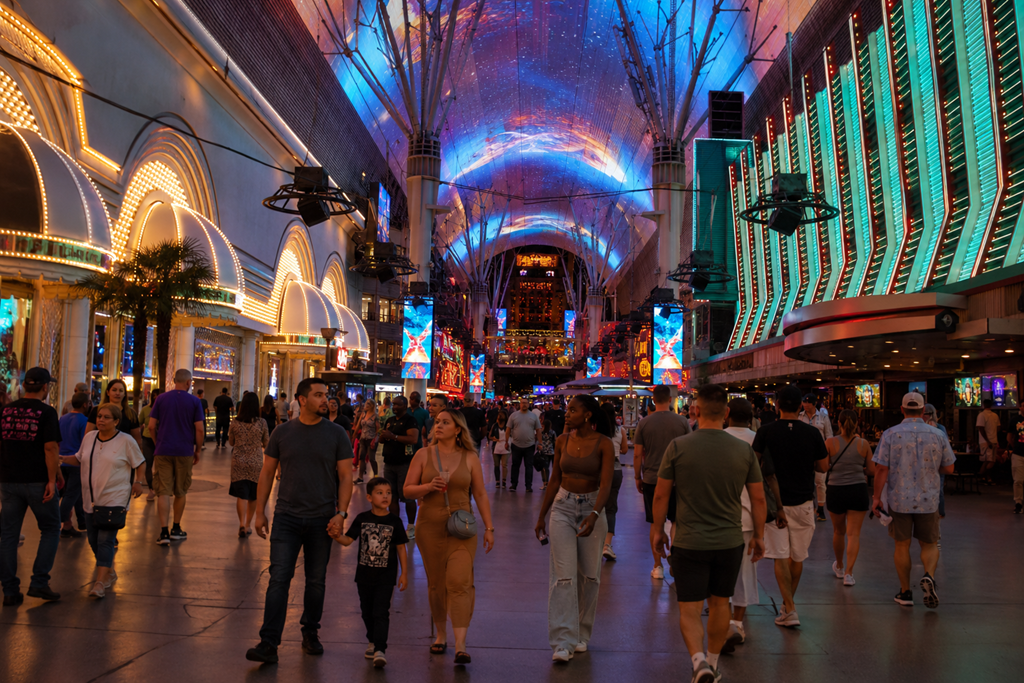
Fremont Street is the center of Downtown’s visitor experience. It offers neon signs, casinos, live entertainment, casual bars, street performers, and a covered pedestrian area. The official tourism site identifies Fremont Street as one of the must-see Las Vegas attractions, along with the Welcome to Las Vegas Sign and Bellagio Fountains.
Downtown is especially useful for travelers who want a contrast to the polished resort scale of the Strip. It feels more compact, more casual, and more rooted in older Las Vegas.
The Arts District
The Las Vegas Arts District offers a different kind of visit: murals, galleries, vintage shops, local bars, coffee spots, breweries, and independent restaurants. It is a good area for travelers who want to see a more local side of the city. Go during daytime or early evening if you want a more relaxed visit, and use rideshare or a car if you are not already nearby.
Chinatown And Spring Mountain Road
Las Vegas has a strong dining scene beyond the Strip, and the Spring Mountain Road area is one of the best examples. Visitors can find a wide range of Asian restaurants, dessert shops, bakeries, noodle houses, hot pot, Korean barbecue, sushi, and casual late-night dining. This area is best reached by car or rideshare.
Summerlin And Red Rock Area
West of the Strip, the Summerlin and Red Rock area offers access to desert scenery, hiking, local restaurants, and a quieter residential side of Las Vegas. It is especially useful if you want to balance casino and show time with a scenic outdoor outing.
Classic Attractions And Experiences
Bellagio Fountains
The Bellagio Fountains are one of the most recognizable Las Vegas experiences and a strong first-night stop. They are easy to pair with dinner, a Strip walk, or a visit to nearby resorts. Because showtimes and maintenance can change, check current details before planning your evening around them.
Welcome To Fabulous Las Vegas Sign
The Welcome to Las Vegas Sign is a classic photo stop, especially for first-time visitors. Go early if you want a shorter wait and softer light. It is south of the main hotel corridor, so plan it with other South Strip stops or use rideshare.
Fremont Street Experience
Fremont Street Experience is one of the easiest ways to see Downtown Las Vegas. Expect neon, music, crowds, casinos, casual bars, and a very different feel from the Strip. It is best for evening visits, though travelers who prefer smaller crowds may want to arrive earlier.
The High Roller And LINQ Promenade
The High Roller observation wheel gives visitors a broad view of the Strip and surrounding valley. The LINQ Promenade around it adds casual food, drinks, and strolling space. This is a good stop for first-timers, groups, and visitors who want a view without a complicated plan.
The Neon Museum
The Neon Museum is one of the best cultural stops in Las Vegas because it connects the city’s design, entertainment, and casino history through restored signs. It is especially worthwhile for travelers interested in photography, local history, architecture, or vintage Vegas. Timed reservations may be required, so check current availability before you go.
The Mob Museum
The Mob Museum in Downtown Las Vegas focuses on organized crime, law enforcement, and the broader history connected to Las Vegas and the United States. It pairs well with Fremont Street, especially if you want a daytime activity before an evening Downtown.
Red Rock Canyon
Red Rock Canyon is one of the best ways to add desert scenery to a Las Vegas trip. It offers scenic drives, hiking, photography, and a break from casino interiors. It is most enjoyable in mild weather, and some visits may require reservations or advance planning depending on season and rules. Check current entry requirements before going.
Hoover Dam And Lake Mead
Hoover Dam and Lake Mead are classic day-trip options from Las Vegas. They are good choices for travelers who want history, engineering, desert landscapes, and a change of pace. A half-day plan is often enough for many visitors, though travelers who want to explore more deeply can allow additional time.
Las Vegas Shows: How To Plan Without Overthinking It
Shows are a core part of Las Vegas, but the best choice depends on your group, budget, schedule, and energy level. The city offers headliners, magicians, comedians, residencies, circus-style productions, concerts, adult-oriented shows, family-friendly entertainment, and immersive experiences.
Choose The Show Before The Dinner Reservation
If a show is important to your trip, plan around it first. Showtimes determine where dinner should be, how early you need to arrive, and whether you should stay in the same resort area that evening. A dinner across the Strip may look close on a map but become stressful once walking time, crowds, and casino navigation are involved.
Match The Show To Your Trip Style
For a first visit, a large production show can feel like the classic Las Vegas choice. For a couples trip, a concert, lounge-style performance, or magic show may fit better. For families, check age guidance before booking. For groups, choose something with broad appeal rather than the most niche option.
Book Ahead For Priority Shows
Popular shows, weekend performances, and holiday periods can sell out or leave limited seat choices. Book ahead when the show is a major reason for your trip. For flexible visitors, same-week options may still be available, but it is better not to rely on last-minute tickets for your top choice.
Leave Space After The Show
Avoid stacking too many plans after a show. Theaters can take time to exit, rideshare pickup zones may be busy, and your group may want to walk, get dessert, visit a lounge, or simply head back to the room. A lighter plan often makes the night more enjoyable.
Nightlife In Las Vegas
Las Vegas nightlife ranges from high-energy nightclubs to cocktail lounges, casino bars, live music spots, rooftop views, piano bars, Downtown bar-hopping, and relaxed late-night restaurants. You do not need to love clubs to enjoy the city after dark.
Nightclubs And Dayclubs
Nightclubs and dayclubs are best for travelers who want DJs, bottle service, dancing, pool-party energy, and a dressier environment. Entry rules, guest lists, cover charges, and event calendars can change, so always check directly with the venue before you go.
If this is a priority, stay near the club or dayclub you plan to visit. It makes the night easier and gives you more flexibility if plans change.
Lounges And Cocktail Bars
Lounges are a better fit if you want a stylish evening without committing to a full nightclub experience. Many resorts have casino bars, hidden lounges, rooftop venues, or live-music spaces. These are ideal for couples, small groups, solo travelers, or anyone who wants atmosphere without the intensity of a club.
Downtown Nightlife
Downtown nightlife is generally more casual and walkable than the Strip. Fremont Street, nearby bars, live music, and neon-lit casino entrances create a concentrated night out. It can be a good choice if you want to move between places without long indoor walks through large resorts.
Casino Bars And Late-Night Wandering
Some of the easiest Las Vegas nights are the simplest: dinner, a show, a fountain stop, a casino bar, and a slow walk back through a resort. You do not need a tightly scheduled night to have a memorable one.
Food And Dining In Las Vegas
Las Vegas is a major dining city, but it helps to think in categories rather than chasing every famous name.
Resort Restaurants
The Strip has a deep range of resort restaurants, from casual food halls to fine dining, celebrity chef restaurants, steakhouses, sushi, Italian, French, Mexican, tasting menus, and large group-friendly options. Visit Las Vegas highlights restaurants, buffets, fine dining, celebrity restaurants, and Downtown dining as major planning categories.
For dinner, reserve ahead if the restaurant is important to your trip. For casual meals, keep a short list of nearby backup options.
Buffets And Food Halls
Buffets are part of the Las Vegas image, though availability and quality vary by property. Food halls can be easier for groups because everyone can choose something different without committing to a formal restaurant. Check current hours before making a special trip.
Off-Strip Dining
Some of the best meals in Las Vegas are away from the main resort corridor. Chinatown, the Arts District, Summerlin, and local neighborhood dining areas can offer excellent meals with a different feel from hotel restaurants. These are best reached by car or rideshare.
Late-Night Food
Late-night dining is one of Las Vegas’s strengths, but do not assume every restaurant is open late every night. Check current hours, especially midweek, and save a few flexible options near your hotel.
Transportation Basics
Las Vegas transportation is straightforward once you understand the main choices: walking, taxis, rideshare, Monorail, buses, rental cars, and hotel parking.
Walking
Walking is useful within the same Strip area, but distances can feel longer than expected. Resorts are huge, pedestrian bridges can add time, and summer heat can make short walks uncomfortable. Wear comfortable shoes and avoid planning the day as one long continuous walk.
Taxis And Rideshare
Taxis and rideshare are common ways to move between the airport, hotels, Downtown, off-Strip restaurants, and attractions. Harry Reid International Airport notes that taxis are available outside baggage claim in both terminals, while rideshare services such as Uber and Lyft use designated pickup areas inside parking garages.
At major resorts, pickups often happen at specific rideshare or taxi zones rather than directly at the front door. Follow hotel signs and allow extra time during busy nights.
Las Vegas Monorail
The Las Vegas Monorail can be useful for certain Strip routes, especially if your stops are near its stations. The official Monorail route runs 3.9 miles on elevated tracks roughly parallel to the Strip, Koval Lane, and Paradise Road. Its stations include MGM Grand, Horseshoe/Paris Las Vegas, Flamingo/Caesars Palace, Harrah’s/The LINQ, Las Vegas Convention Center, Westgate, and SAHARA.
The Monorail is not always the most direct option because stations are generally behind or beside resort properties, so compare walking time to taxi or rideshare before deciding.
Rental Cars
A rental car is helpful if you plan to visit Red Rock Canyon, Hoover Dam, Lake Mead, off-Strip restaurants, local neighborhoods, or multiple areas outside the resort corridor. It is less necessary if your trip is mostly Strip shows, restaurants, casinos, lounges, and pools.
Before renting, check hotel parking policies, valet availability, and whether you will actually use the car enough to justify it.
Practical Planning Tips For A Better Trip
Build Your Days Around Geography
Las Vegas becomes easier when you group plans by location. For example, spend one evening around Center Strip, another Downtown, and another near your show venue. This keeps transportation simple and leaves more room to enjoy each stop.
Do Not Overschedule Every Night
Las Vegas is stimulating even without a packed itinerary. Leave room for slow mornings, pool time, wandering, people-watching, spontaneous food stops, or simply resting before dinner.
Check Policies Before Booking
Hotel fees, parking rules, pool access, nightclub dress codes, show age limits, restaurant hours, and attraction reservations can change. Check current details directly before making nonrefundable plans.
Make Dinner Reservations When It Matters
For a special dinner, book ahead. For casual meals, stay flexible. The best approach is to reserve your priority meals and keep everything else loose.
Bring Comfortable Shoes
Even a luxury-focused Las Vegas trip involves a surprising amount of walking. Casino floors, resort corridors, bridges, theaters, parking areas, and promenades add up quickly.
Drink Water And Pace Yourself
The desert climate, alcohol, late nights, walking, and indoor air conditioning can be tiring. Keep water nearby, plan breaks, and do not underestimate how much rest can improve the trip.
Use Daytime For Culture And Scenery
Shows and nightlife naturally pull visitors into the evening. Use daytime for museums, pools, shopping, scenic drives, spa appointments, or relaxed meals.
A Simple First-Time Las Vegas Trip Plan
For a first visit, three or four days is enough to experience the city without feeling rushed.
Day One: Arrive And Explore Nearby
Check into your hotel, get oriented, walk the area around your resort, and keep dinner nearby. End the night with Bellagio Fountains, a lounge, a casual casino walk, or an early night if you traveled far.
Day Two: Classic Strip Day
Spend the day exploring major Strip resorts, shopping areas, observation spots, and public attractions. Plan a show in the evening and choose dinner close to the theater.
Day Three: Downtown Or Desert
Use this day for either Downtown Las Vegas or a desert outing. If you choose Downtown, visit the Mob Museum or Neon Museum before Fremont Street. If you choose nature, consider Red Rock Canyon or Hoover Dam, then return for a relaxed dinner.
Day Four: Pool, Brunch, And Departure
Keep the final day simple. Enjoy brunch, pool time, a spa visit, a final walk, or a low-stress attraction before heading to the airport.
Who Las Vegas Is Best For
Las Vegas works well for couples, friends, solo travelers, families, food lovers, entertainment fans, conference attendees, nightlife groups, and travelers who like having many choices in one place. It is especially good for short trips because so much is concentrated around hotels and entertainment districts.
It may be less ideal if you want quiet streets, low-cost dining everywhere, or a fully nature-centered vacation. That said, the surrounding desert, nearby scenic areas, museums, and off-Strip neighborhoods can make the trip more balanced than many people expect.
A More Thoughtful Way To Visit Las Vegas
The best Las Vegas trip is not necessarily the busiest one. Choose a hotel that matches your priorities, plan around geography, book the few things that truly matter, and leave space for the city to surprise you. A good trip might include a major show, a memorable dinner, a walk through neon Downtown, a desert morning, a slow pool day, and one night that unfolds without much planning at all.
Las Vegas rewards clarity. Once you know where you are staying, what kind of evenings you want, and how much movement feels realistic, the city becomes much easier to enjoy.
Download Our Free E-book!