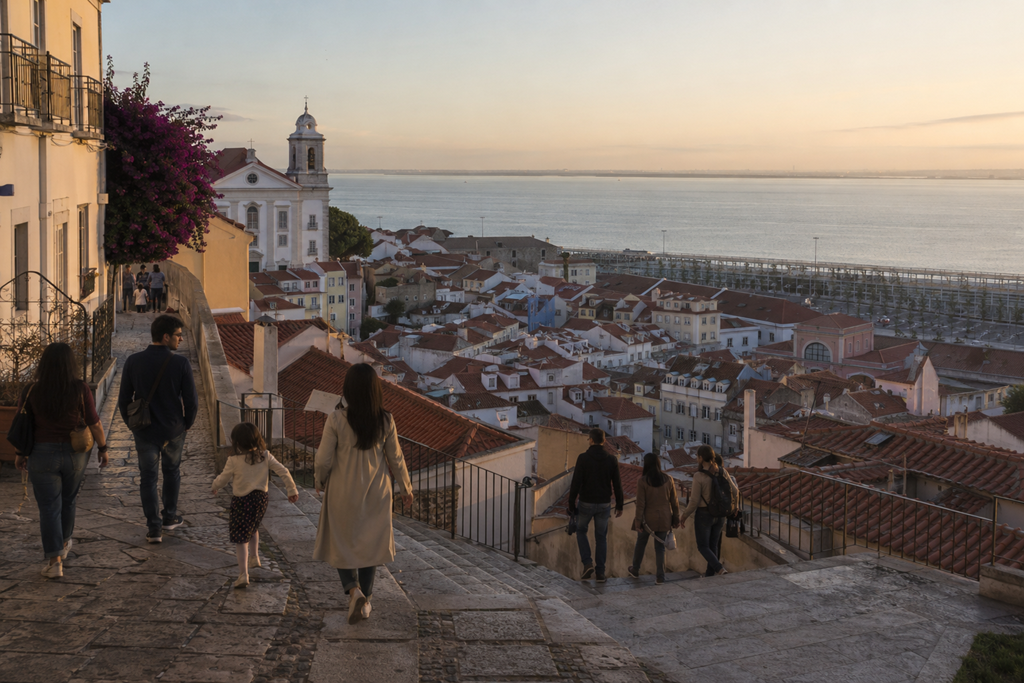
Lisbon is one of Europe’s most rewarding cities for first-time visitors: historic without feeling frozen in time, scenic without requiring complicated planning, and full of neighborhoods that are best experienced slowly on foot.
This guide will help you understand where to stay, when to visit, how to get around, what to prioritize, and how to enjoy Lisbon in a way that feels realistic rather than rushed. It focuses on lasting travel guidance: classic landmarks, walkable neighborhoods, food traditions, public transportation basics, and practical planning choices that will stay useful beyond one travel season.
Lisbon at a Glance
Lisbon is Portugal’s capital, set along the Tagus River and built across a series of hills. That geography shapes much of the visitor experience. You will find viewpoints, steep lanes, tiled buildings, riverfront promenades, historic trams, and neighborhoods that feel distinct from one another.
For a first trip, Lisbon works especially well for travelers who enjoy:
- Walking through historic neighborhoods
- Scenic viewpoints and riverside areas
- Museums, churches, castles, and monuments
- Café culture, seafood, pastries, and casual dining
- Day trips to nearby places like Sintra or Cascais
- A city trip that mixes culture with relaxed exploration
Three to four days is a comfortable amount of time for a first visit. With two days, you can see the highlights. With five or more, you can move more slowly and add day trips.
Best Time to Visit Lisbon
Lisbon can be visited year-round, but the best time depends on what kind of trip you want.
Spring and Fall
Spring and fall are often the easiest seasons for first-time visitors. The weather is usually comfortable for walking, the city feels lively, and major attractions are generally less crowded than in the peak summer months.
These seasons are especially good if you want to spend a lot of time outdoors, explore hilly neighborhoods, visit viewpoints, and take day trips.
Summer
Summer brings long days, warm weather, and a busy travel atmosphere. It can be a good time to visit if you enjoy sunshine and don’t mind crowds, but it is wise to plan your days with breaks.
Because Lisbon is hilly and many popular areas involve walking on stone streets, summer sightseeing can feel more tiring than it looks on a map. Start earlier in the day, build in shaded café stops, and save some indoor museums or riverside time for hotter afternoons.
Winter
Winter is quieter and can be appealing for travelers who prefer fewer crowds. Weather can be mild compared with many other European cities, though rain is possible. It is a good time for museums, food-focused travel, tiled interiors, churches, and neighborhood wandering when the weather cooperates.
Where to Stay in Lisbon for a First Visit
For a first trip, it usually helps to stay somewhere central and well-connected. Lisbon has many appealing neighborhoods, but not every beautiful area is equally convenient for a first-time visitor with limited days.
Baixa
Baixa is one of the most practical areas for first-time visitors. It is central, relatively flat by Lisbon standards, close to major squares, and well-positioned for walking to Chiado, Alfama, the riverfront, and transport connections.
Stay here if you want convenience, easy orientation, and a straightforward base for sightseeing.
Chiado
Chiado is elegant, central, and slightly more polished. It has shops, cafés, theaters, bookstores, and easy access to both Baixa and Bairro Alto. It is a good choice if you want a central stay with character and strong walkability.
Stay here if you want a classic Lisbon feel without being too far from key attractions.
Alfama
Alfama is one of Lisbon’s most atmospheric neighborhoods, known for narrow lanes, viewpoints, tiled buildings, and traditional character. It is wonderful to explore, but it can be steep and maze-like.
Stay here if you value atmosphere over convenience and don’t mind hills, stairs, and slower navigation.
Bairro Alto and Príncipe Real
Bairro Alto is known for nightlife and a more social evening scene, while nearby Príncipe Real has leafy squares, boutiques, restaurants, and a calmer residential feel. These areas can be good for returning visitors or travelers who want restaurants and evening activity close by.
Stay here if you want nightlife nearby, but check the exact location carefully if you prefer quieter evenings.
Belém
Belém is important for sightseeing but less central for a first-time base. It is home to major landmarks like Belém Tower and Jerónimos Monastery, both classic Lisbon attractions. The official Lisbon tourism site also highlights transport and museum access through visitor resources such as the Lisboa Card.
Stay here only if you prefer a quieter riverside area and don’t mind traveling into the historic center.
Top Attractions and Experiences for First-Time Visitors
Lisbon is not a city where you need to see everything. A better approach is to combine a few landmark sights with unhurried neighborhood exploration.
Explore Alfama on Foot
Alfama is one of the best places to experience old Lisbon. Its narrow lanes, stairways, tiled façades, small squares, and viewpoints reward slow wandering.
Rather than trying to follow a rigid route, give yourself time to drift between the Lisbon Cathedral area, Miradouro de Santa Luzia, and the lanes leading toward São Jorge Castle. Alfama is also closely associated with fado, Portugal’s deeply expressive music tradition.
Visit São Jorge Castle
São Jorge Castle sits above the city and offers one of Lisbon’s most memorable viewpoints. The experience is as much about the setting as the structure: castle walls, open courtyards, city rooftops, the river, and the feeling of Lisbon’s layered history.
It is a good first-day or early-trip attraction because it helps you understand the city’s layout from above.
Walk Through Baixa and Praça do Comércio
Baixa is Lisbon’s grand downtown area, rebuilt after the 1755 earthquake with a more orderly street grid. It is one of the easiest places to get oriented.
Praça do Comércio, the large riverfront square, is a natural starting point. From there, you can walk through Rua Augusta, see the arch, continue toward Rossio Square, and connect easily to Chiado or Alfama. Lisbon.net lists Praça do Comércio, Rossio, Lisbon Cathedral, Jerónimos Monastery, Belém Tower, and São Jorge Castle among the city’s notable attractions.
Spend Time in Belém
Belém is essential for first-time visitors because it connects Lisbon’s riverfront setting with Portugal’s maritime history. Plan several hours here rather than treating it as a quick stop.
Key sights include:
- Jerónimos Monastery
- Belém Tower
- Monument to the Discoveries
- The riverside promenade
- Pastel de nata bakeries and cafés
Belém is slightly outside the central historic core, so group its sights together on the same half-day.
Ride a Historic Tram Thoughtfully
Lisbon’s trams are part of the city’s identity, especially on hilly routes through older neighborhoods. Tram 28 is the most famous, but it can be crowded and is still part of the local transit network.
For a better experience, ride early, avoid peak times, and treat the tram as transportation rather than a must-do photo opportunity. Be mindful of pickpockets in crowded vehicles and keep bags secure.
Enjoy Lisbon’s Viewpoints
Because Lisbon is built on hills, viewpoints are part of the city experience. Some of the most popular include Miradouro de Santa Luzia, Miradouro da Senhora do Monte, and Miradouro de São Pedro de Alcântara.
You do not need to visit every viewpoint. Choose one or two that fit naturally into your walking route.
Visit the National Tile Museum
Azulejos, Portugal’s decorative tiles, are one of Lisbon’s signature visual details. The National Tile Museum is a strong choice if you want a deeper understanding of what you see on building façades throughout the city.
It is especially useful on a rainy day or when you want a museum that feels distinctly connected to Portuguese culture.
Walk the Riverfront
The Tagus River gives Lisbon breathing room. A simple riverfront walk can be one of the easiest ways to enjoy the city without overplanning.
Good areas include the stretch around Praça do Comércio, Cais do Sodré, and Belém. The riverfront is especially pleasant around morning or late afternoon when the light is softer.
What to Eat in Lisbon
Lisbon is a rewarding food city, but first-time visitors do not need to chase trendy restaurant lists to eat well. Focus on classic foods, simple meals, and neighborhood cafés.
Pastel de Nata
The pastel de nata is Lisbon’s most famous pastry: a small custard tart with a crisp, flaky shell and caramelized top. It is often served with cinnamon or powdered sugar, though it is also good plain.
Try one in Belém if you are already visiting the area, but do not feel that you need to find only one “best” version. Part of the pleasure is trying them casually during the trip.
Seafood and Grilled Fish
Lisbon’s food culture is strongly connected to the sea. Look for grilled fish, octopus, clams, prawns, and simple seafood rice dishes. In traditional restaurants, the best meals are often straightforward rather than elaborate.
Bacalhau
Bacalhau, or salted cod, is a Portuguese staple prepared in many different ways. It may appear baked, shredded with potatoes and eggs, served in fritters, or prepared in richer casseroles.
Bifana and Casual Lunches
A bifana is a Portuguese pork sandwich that works well as a quick, casual meal. Lisbon also has many simple lunch spots where you can order soup, fish, meat dishes, or daily specials without making dining complicated.
Markets and Food Halls
Markets can be useful for sampling different foods in one place, especially if you are traveling with people who have different preferences. They are also practical for a low-pressure meal when you do not want a formal restaurant.
Transportation Basics
Lisbon is walkable in the sense that many major areas are close together, but it is not always easy walking. Hills, stairs, cobblestones, and slippery pavement can make short distances feel longer.
Getting From the Airport
Lisbon Airport is close to the city center and has a metro station. The airport’s official transportation page notes that the Aeroporto–Saldanha metro line connects the airport to downtown Lisbon in about 20 minutes, making metro a practical option for many travelers.
Taxis and app-based rides are also common choices, especially if you have heavy luggage, arrive late, or are staying somewhere on a steep or narrow street.
Getting Around the City
For most visitors, the best mix is:
- Walking for central neighborhoods
- Metro for longer cross-city trips
- Trams and buses for specific routes
- Taxis or app-based rides when hills, luggage, or timing make transit inconvenient
- Trains for day trips such as Sintra or Cascais
The official Lisbon tourism site describes the metro as one of the easiest ways to get around the city.
Should You Rent a Car?
Most first-time visitors do not need a car in Lisbon. Parking, traffic, narrow streets, and one-way roads can add stress. Public transportation and walking are usually better inside the city.
Consider a car only if you are leaving Lisbon for a broader Portugal road trip.
Suggested First-Time Lisbon Trip Length
Two Days
With two days, focus on the historic center and Belém. Spend one day around Baixa, Chiado, Alfama, and São Jorge Castle. Spend the other in Belém and along the riverfront.
Three Days
Three days gives you a more balanced first visit. You can see the major sights, enjoy neighborhoods at a better pace, and include a museum or longer food-focused afternoon.
Four to Five Days
With four or five days, Lisbon feels much easier. You can add a day trip to Sintra or Cascais, revisit favorite neighborhoods, and avoid packing every day with sightseeing.
Practical Tips for First-Time Visitors
Wear Comfortable Shoes
Lisbon’s stone sidewalks and hills are beautiful but demanding. Bring shoes with good support and traction. This matters more than dressing perfectly.
Plan by Neighborhood
Avoid crossing the city repeatedly in one day. Group activities by area: Alfama and the castle together, Baixa and Chiado together, Belém as its own half-day, and Parque das Nações or museums as separate outings.
Check Current Details Before Visiting Major Attractions
Opening hours, timed-entry rules, restoration work, and ticket procedures can change. For major sites such as Jerónimos Monastery, Belém Tower, and São Jorge Castle, check current details before you go.
Leave Room for Wandering
Some of Lisbon’s best moments are not formal attractions: a tiled corner, a bakery stop, a quiet viewpoint, laundry hanging over a lane, or a late-afternoon walk by the river.
Be Aware on Crowded Transit
As in many popular European cities, keep an eye on your belongings in crowded trams, stations, elevators, and busy tourist areas. A crossbody bag or front pocket is usually easier to manage than a loose backpack.
Respect the City as a Place People Live
Lisbon is popular with visitors, but its historic neighborhoods are also residential. Keep noise down on narrow streets, avoid blocking doorways for photos, and support local businesses thoughtfully.
A Simple First-Time Lisbon Plan
For a first visit, this structure works well:
Day One: Baixa, Praça do Comércio, Chiado, Rossio, and a viewpoint
Day Two: Alfama, Lisbon Cathedral, São Jorge Castle, and a fado evening if interested
Day Three: Belém, the riverfront, Jerónimos Monastery, Belém Tower, and pastel de nata
Day Four: Tile Museum, Príncipe Real, or a day trip to Sintra or Cascais
This gives you a strong mix of history, scenery, food, and neighborhoods without making every day feel overloaded.
Final Thoughts for Planning Your Lisbon Trip
Lisbon is best approached with a flexible plan. Choose a few anchor experiences, group your days by neighborhood, and leave space for the slower pleasures that make the city memorable: viewpoints, tiles, cafés, river light, and long walks through streets that do not always go in a straight line.
For a first-time visitor, the goal is not to see every attraction. It is to understand Lisbon well enough to enjoy it while you are there—and to leave with a clear sense of why people return.
Download Our Free E-book!