Melbourne is a city that rewards curiosity. It has major museums, elegant arcades, leafy gardens, a serious coffee culture, lively neighborhoods, and a network of laneways where some of the best discoveries happen by accident. For first-time visitors, it can feel less like a checklist destination and more like a city to settle into for a few days.
This guide will help you understand Melbourne before you arrive: when to go, where to stay, which neighborhoods to explore, what to eat, how to get around, and which classic experiences are worth building into your trip. The focus is on lasting, practical travel guidance rather than short-lived trends.
Melbourne At A Glance
Melbourne is the capital of Victoria and one of Australia’s best cities for culture, food, design, sport, and walkable urban exploring. Tourism Australia also recognizes Melbourne by its Aboriginal name, Narrm, a helpful reminder that the city sits on the traditional lands of the Kulin Nation.
The city’s personality is layered. In the central city, you’ll find historic arcades, street art laneways, galleries, theatres, rooftop bars, and the Yarra River. Just beyond the center, neighborhoods like Fitzroy, Carlton, Richmond, South Yarra, St Kilda, Brunswick, and Footscray each offer a different version of local life. Visit Victoria highlights areas such as Brunswick, Carlton, Collingwood, Fitzroy, St Kilda, Footscray, and Richmond as key neighborhoods for food, culture, and local flavor.
Melbourne is especially good for travelers who enjoy slower discovery: long walks, independent shops, markets, galleries, coffee stops, gardens, and meals that feel connected to the city’s multicultural identity.
Best Time To Visit Melbourne
Melbourne can be visited year-round, but spring and autumn are often the most comfortable seasons for walking, sightseeing, and neighborhood exploring.
Spring: September To November
Spring is a strong choice if you want mild weather, gardens in bloom, and good conditions for walking. It is a pleasant time for outdoor areas such as the Royal Botanic Gardens, Carlton Gardens, St Kilda, and riverside paths.
Pack layers, because Melbourne’s weather can shift throughout the day. A light jacket and comfortable walking shoes will serve you well.
Summer: December To February
Summer brings warmer weather, longer daylight, and a livelier outdoor atmosphere. It is a good time for St Kilda, beachside walks, rooftop views, outdoor dining, and day trips along the coast.
Tourism Australia notes that Melbourne’s summer mean temperatures are generally warm, with occasional hot spells, especially around January and February.
Autumn: March To May
Autumn is one of the easiest seasons for a balanced trip. The weather is often comfortable, the parks are attractive, and the city feels well-suited to walking, galleries, food experiences, and markets.
This is a particularly good season if you want to avoid the hottest days while still enjoying outdoor time.
Winter: June To August
Winter is cooler and more indoor-focused, but that works well in Melbourne. Museums, galleries, cafés, bookshops, restaurants, theatre, and covered arcades make the city enjoyable even when the weather is less predictable.
Bring a warm coat, especially for evenings.
Where To Stay In Melbourne
Choosing where to stay depends on how you like to travel. Melbourne’s central areas are well connected, but each neighborhood offers a different pace.
Melbourne CBD
The CBD is the most convenient base for first-time visitors. It puts you close to Flinders Street Station, Federation Square, laneways, shopping arcades, restaurants, trams, and many major attractions.
Stay here if you want the easiest access to sightseeing and public transport.
Southbank And The Yarra River
Southbank works well for river views, evening walks, restaurants, arts venues, and easy access to the central city. It is close enough to the CBD without feeling exactly the same.
This area is a good fit for travelers who want convenience with a more scenic feel.
Fitzroy And Collingwood
Fitzroy and Collingwood are good choices for independent shops, cafés, street art, bars, galleries, and a more local neighborhood feel. They are popular with travelers who want character and walkable side streets rather than a purely central hotel zone.
Carlton
Carlton is known for its Italian heritage, leafy streets, restaurants, and proximity to Melbourne Museum and Carlton Gardens. It is close to the CBD but has a softer residential feel.
Stay here if you like food, gardens, and easy access to cultural attractions.
St Kilda
St Kilda offers a seaside base with a different mood from the inner city. It is best for travelers who want beach walks, sunset views, casual dining, and a relaxed coastal atmosphere.
It is less central than the CBD, so consider how often you plan to go back and forth.
Essential Melbourne Attractions And Experiences
Melbourne is not only about big-ticket attractions. Some of its best experiences come from walking, wandering, eating, and noticing details. Still, a few places give first-time visitors a strong foundation.
Federation Square And Flinders Street Station
Federation Square is a useful starting point because it sits near many central landmarks. Across the street, Flinders Street Station is one of Melbourne’s most recognizable buildings and a natural meeting point.
From here, you can walk to the Yarra River, laneways, St Paul’s Cathedral, the Ian Potter Centre, and nearby shopping streets.
Melbourne’s Laneways And Arcades
The laneways are central to Melbourne’s identity. Some are known for street art, others for coffee, small restaurants, boutiques, or historic architecture. The official What’s On Melbourne guide describes the city as packed with attractions including laneways, street art, parks, galleries, and museums.
Popular areas include Hosier Lane, Degraves Street, Centre Place, Block Arcade, Royal Arcade, and Hardware Lane. Do not treat them only as photo stops. They are better experienced slowly, with time for coffee, browsing, and turning down side streets.
National Gallery Of Victoria
The National Gallery of Victoria is one of the city’s most important cultural institutions. It is a strong choice in any weather and works well for both serious art lovers and casual visitors.
Check current exhibitions before you go, especially if you want to see a specific show. Permanent collections and the building itself are also worth the visit.
Queen Victoria Market
Queen Victoria Market is one of Melbourne’s classic food and shopping experiences. It is a good place to browse fresh produce, deli goods, specialty foods, souvenirs, and casual eats.
Go with enough time to wander rather than rushing through. Since market days and hours can change, check current details before planning your visit.
Royal Botanic Gardens Victoria
The Royal Botanic Gardens offer a quiet contrast to the laneways and busy central streets. They are ideal for walking, resting, photography, and getting a sense of Melbourne’s greener side.
Pair the gardens with a walk along the Yarra River or a visit to the nearby arts precinct.
Melbourne Museum And Carlton Gardens
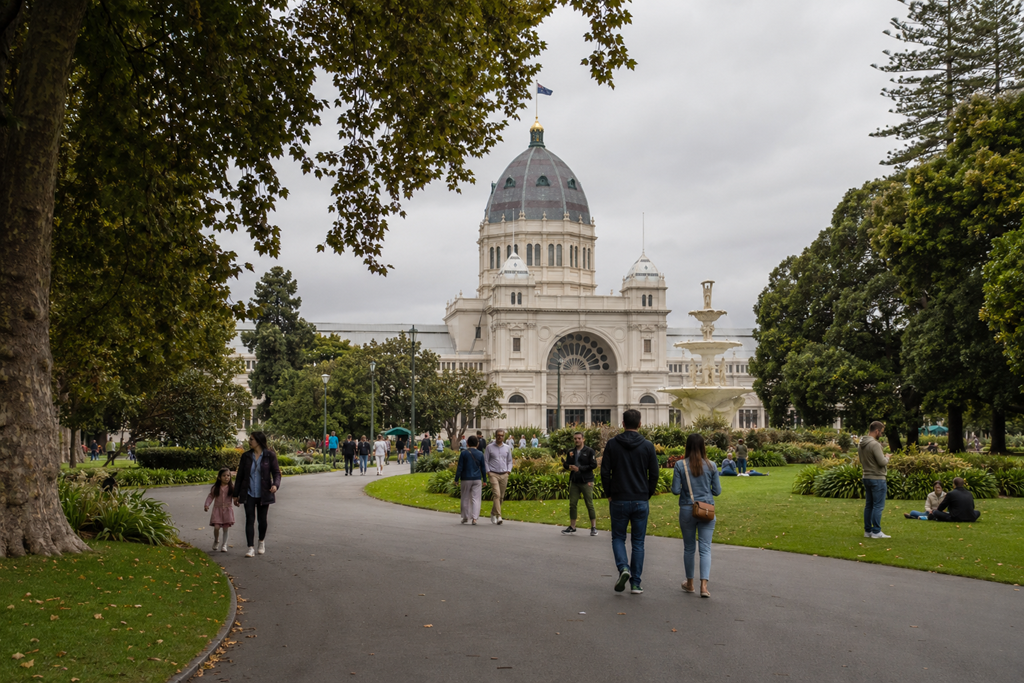
Melbourne Museum and the surrounding Carlton Gardens make a good half-day cultural stop. The gardens are also home to the Royal Exhibition Building, one of the city’s most significant heritage landmarks.
This area pairs naturally with lunch or dinner in Carlton.
St Kilda And The Waterfront
St Kilda is Melbourne’s classic beachside escape. Walk the foreshore, visit the pier area, explore Acland Street, and stay for sunset if the weather is clear.
It is a good reminder that Melbourne is not only laneways and galleries; it also has a relaxed coastal side.
The Yarra River And Southbank
The Yarra River gives visitors an easy walking route through the city. Southbank is especially useful in the evening, when restaurants, bridges, and city lights make the area feel lively without requiring a complicated plan.
It is also a practical route between central Melbourne, the arts precinct, and riverside dining.
Melbourne Food And Coffee Culture
Food is one of the best reasons to visit Melbourne. The city’s dining culture reflects Italian, Greek, Vietnamese, Chinese, Indian, Middle Eastern, Korean, Japanese, and many other influences, along with a strong local café scene.
Coffee Is Part Of The Daily Rhythm
Melbourne takes coffee seriously. You do not need to chase a specific “best” café to enjoy it. Instead, make coffee part of your daily routine: start the morning in the CBD, pause in Fitzroy, stop near a market, or find a small café tucked into a laneway.
For visitors, the best approach is simple: avoid overplanning and leave room for spontaneous stops.
Try The City’s Multicultural Food Neighborhoods
Melbourne’s food culture is spread across the city. Carlton is a natural choice for Italian food. Richmond is known for Vietnamese dining. Footscray is excellent for diverse, global food experiences. Fitzroy, Collingwood, and Brunswick are good for cafés, casual dining, bars, and creative restaurants.
Visit Victoria specifically points travelers toward neighborhoods such as Carlton, Brunswick, Fitzroy, Collingwood, St Kilda, Footscray, and Richmond for food and local character.
Visit A Market
Markets are useful because they combine food, local life, and practical browsing. Queen Victoria Market is the major central option, but smaller neighborhood markets can also be rewarding depending on where you are staying.
Check market days before you go, especially outside peak travel periods.
Leave Space For Casual Meals
Melbourne can support a serious restaurant itinerary, but some of the best travel meals are casual: dumplings, bánh mì, pastries, gelato, a good brunch, or a simple dinner after a long walk.
Instead of building your trip around hard-to-book places, choose neighborhoods first, then look for food nearby.
Hidden Gems And Quieter Experiences
Melbourne’s hidden gems are not always secret places. Often, they are smaller, quieter, or less obvious experiences that help you understand the city better.
Explore The Historic Arcades
Block Arcade and Royal Arcade are well known, but they still feel special if you slow down and notice the details. Look up at the ceilings, window displays, tilework, and old shopfronts.
These arcades are especially useful on rainy days.
Walk Beyond The Most Famous Laneways
Hosier Lane gets much of the attention, but Melbourne’s central grid has many smaller lanes worth exploring. Give yourself time to wander around Flinders Lane, Little Collins Street, Centre Place, and nearby passages.
The point is not to “complete” them all. It is to let the city reveal itself at walking speed.
Spend Time In Carlton Gardens
Many visitors pass through Carlton Gardens quickly on the way to Melbourne Museum. It is worth treating the gardens as a destination in their own right.
Bring a coffee, take a slow walk, and use the space as a break between busier parts of the day.
Visit A Neighborhood Bookshop Or Independent Store
Melbourne is good for browsing. Independent bookshops, design shops, record stores, galleries, and small boutiques are part of the city’s texture.
Fitzroy, Collingwood, Carlton, and Brunswick are especially good for this style of exploring.
Take A Low-Key Tram Ride
A tram ride can be both transportation and a simple city experience. Use it to connect neighborhoods, watch the streets change, and rest your feet between walks.
Melbourne’s tram network is part of everyday life, and using it makes the city easier to understand.
Getting Around Melbourne
Melbourne is a good city for walking and public transport, especially if you stay in or near the central city.
Walking
The CBD is compact and walkable, with a grid layout that makes orientation easier. Many central attractions are within a reasonable walk of each other, though you will still want comfortable shoes.
Neighborhoods like Fitzroy, Carlton, Southbank, and parts of Richmond are also enjoyable on foot.
Trams, Trains, And Buses
Melbourne uses the myki system for trains, trams, and buses. Transport Victoria explains that myki is used to pay fares on Melbourne trains, trams, and buses, as well as some regional Victorian services.
For visitors, the most important habit is to check current transport guidance before arrival, especially for airport transfers, fare rules, and any network changes. Transport Victoria also provides visitor resources for planning public transport around the state.
Free Tram Zone
Melbourne has a Free Tram Zone in the central city, which can be helpful for short trips between major CBD stops. Check the current zone map and rules before relying on it, especially if your route crosses outside the free area.
Airport Transfers
Melbourne Airport is outside the central city. Travelers commonly use airport bus services, taxis, rideshare, or private transfers. Choose based on your arrival time, luggage, budget, and where you are staying.
For late arrivals or early departures, simplicity may matter more than saving a small amount.
Practical Travel Tips For Melbourne
Pack For Changeable Weather
Melbourne weather can shift quickly. Even in warmer months, bring layers. In cooler months, a warm jacket and umbrella are useful.
Think in terms of flexibility rather than perfect forecasts.
Book Ahead For Popular Experiences
For major exhibitions, theatre, special dining, and busy travel periods, book ahead when possible. For everyday wandering, leave space in your schedule.
Melbourne is best when you balance planned anchors with open time.
Do Not Overload Your Itinerary
Melbourne is not a city that needs to be rushed. A better day might include one major attraction, one neighborhood walk, one good meal, and time for coffee or a garden.
Trying to fit in too much can make the city feel less enjoyable.
Use Neighborhoods To Organize Your Days
Instead of crossing the city repeatedly, group nearby experiences together. For example:
CBD laneways, arcades, Federation Square, and Flinders Street Station work well together.
Carlton Gardens, Melbourne Museum, and Carlton dining make a natural pairing.
Southbank, the Yarra River, the arts precinct, and the Royal Botanic Gardens can fit into one relaxed day.
St Kilda works best when you give it enough time for the waterfront rather than treating it as a quick stop.
Check Current Details Before You Go
Opening hours, booking rules, transport arrangements, and market days can change. Before visiting any attraction, restaurant, market, or museum, confirm current details directly with the official source.
A Simple First-Time Melbourne Plan
For a first visit, three to four days is a comfortable amount of time to understand the city without rushing.
Day One: Central Melbourne
Start around Flinders Street Station and Federation Square. Explore nearby laneways, arcades, and coffee spots. Walk along the Yarra River and spend the evening around Southbank or the CBD.
Day Two: Art, Gardens, And Carlton
Visit the National Gallery of Victoria or Melbourne Museum, depending on your interests. Spend time in Carlton Gardens or the Royal Botanic Gardens. End the day with dinner in Carlton, Fitzroy, or Collingwood.
Day Three: Markets And Neighborhoods
Visit Queen Victoria Market if it fits the day’s schedule. Then explore Fitzroy, Collingwood, Richmond, Brunswick, or Footscray depending on your food and shopping interests.
Day Four: St Kilda Or A Slower City Day
Use your final day for St Kilda, a relaxed waterfront walk, and a slower meal. If you prefer staying central, revisit favorite laneways, browse shops, and leave space for one last café stop.
Final Thoughts For Planning A Better Melbourne Trip
Melbourne is best approached with a mix of structure and openness. Plan a few anchors, such as a museum, market, garden, or neighborhood meal, then leave room for the city’s smaller pleasures: a good coffee, a quiet arcade, a side street, a bookstore, a tram ride, or an unplanned dinner.
The more you give yourself time to wander, the more Melbourne starts to make sense.
Download Our Free E-book!