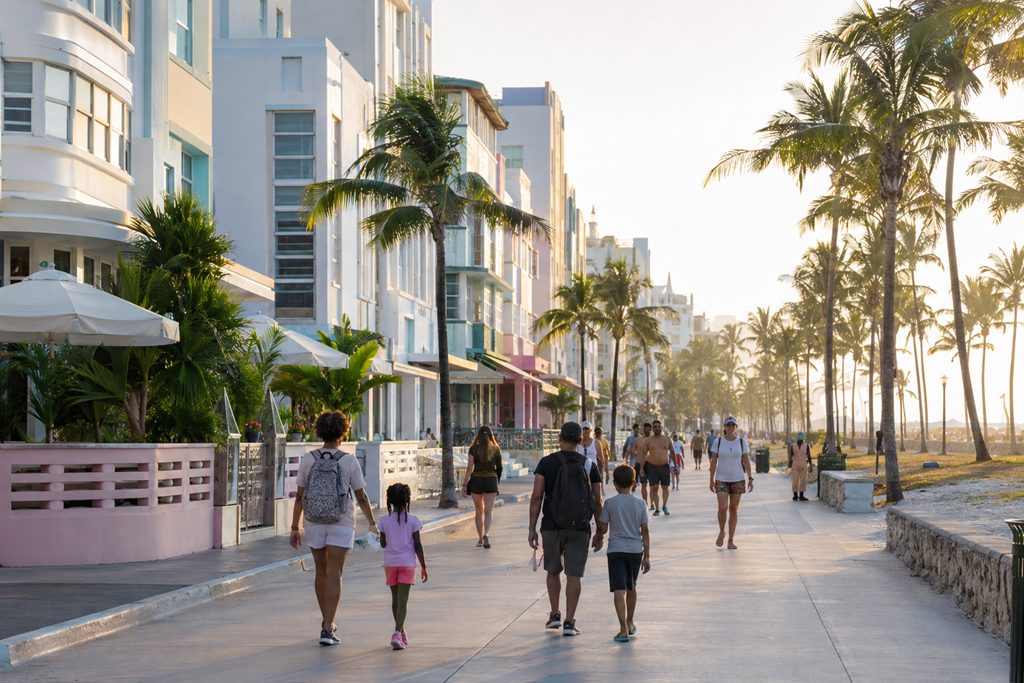
Miami is one of the most layered destinations in the United States. Many visitors come for the beaches, but the city is also shaped by Caribbean and Latin American culture, distinctive architecture, art districts, waterfront parks, food traditions, and nightlife that ranges from laid-back rooftop drinks to late-night dance floors.
This guide will help you understand Miami before you go: when to visit, where to stay, which neighborhoods to explore, how to get around, what to eat, and how to plan a trip that feels balanced instead of rushed.
Miami At A Glance
Miami is not just one experience. It is a beach destination, a cultural crossroads, a major cruise and air-travel hub, and a city of very different neighborhoods.
A first-time trip usually works best when you think of Miami in three broad zones:
South Beach and Miami Beach for beaches, Art Deco architecture, walkability, nightlife, and classic Miami scenery.
Downtown Miami and Brickell for skyline views, waterfront parks, museums, restaurants, business hotels, and access to public transit.
Mainland neighborhoods like Little Havana, Wynwood, Coconut Grove, Coral Gables, and the Design District for culture, food, art, shopping, and a more local sense of place.
Miami rewards variety. A good trip might include a beach morning, an afternoon in a museum or historic neighborhood, a Cuban meal, a walk along the water, and an evening in South Beach, Brickell, or Wynwood.
Best Time To Visit Miami
Miami is warm for much of the year, but your experience can change depending on weather, crowds, and travel season.
Winter And Early Spring
Winter into early spring is one of the most popular times to visit. Temperatures are generally more comfortable, humidity is lower, and the weather is often better suited for walking, beach time, outdoor dining, and sightseeing.
This is also a busy period, so book lodging ahead and expect higher demand around holidays, school breaks, major events, and cruise travel periods.
Late Spring
Late spring can be a good shoulder-season option. Weather is warmer, but it may still be manageable for travelers who plan outdoor activities earlier in the day and save museums, restaurants, and shaded neighborhoods for the afternoon.
Summer And Early Fall
Summer and early fall are hot, humid, and more prone to rain. This does not mean you should avoid Miami, but you should plan with more flexibility.
Build your days around morning beach time, indoor breaks, hydration, and backup options. If you visit during hurricane season, keep an eye on weather updates and choose flexible travel arrangements when possible.
A Simple Planning Rule
For the easiest first visit, aim for the cooler, drier months when possible. For better value or fewer crowds, consider shoulder periods, but plan around heat, rain, and changing weather.
Where To Stay In Miami
Choosing where to stay matters because Miami is spread out, traffic can be slow, and neighborhoods have very different personalities.
South Beach
South Beach is the classic choice for first-time visitors who want beach access, nightlife, walkability, restaurants, and Art Deco surroundings. It is especially convenient if you want to spend much of your trip near the ocean without relying on a car.
The tradeoff is that it can be busy, loud in certain areas, and more expensive during peak periods. If you want quieter nights, look slightly away from the busiest nightlife blocks.
Mid-Beach And North Beach
Mid-Beach and North Beach can be better choices for travelers who want the beach but prefer a more relaxed base. These areas often feel less intense than South Beach while still keeping you close to the ocean.
They work well for couples, families, and travelers who want beach time without being in the middle of the late-night scene.
Downtown Miami
Downtown Miami is useful for museums, waterfront parks, events, public transportation, and access to Biscayne Bay. It is not a beach neighborhood, but it can be convenient if you want to explore both the mainland and Miami Beach.
The Metromover is a free elevated people mover serving downtown, Omni, and Brickell, which can make short trips in this area easier.
Brickell
Brickell is modern, polished, and dense, with high-rise hotels, restaurants, bars, shopping, and skyline views. It is a good fit for travelers who like an urban base and plan to use rideshare, transit, or short taxi trips to reach other neighborhoods.
It is less beach-focused, but strong for dining, nightlife, and city energy.
Coconut Grove
Coconut Grove has a greener, more residential feel, with bayfront parks, restaurants, and a slower pace. It can be a good choice for repeat visitors or travelers who want something outside the typical beach-and-nightlife route.
Coral Gables
Coral Gables is known for Mediterranean Revival architecture, leafy streets, shopping areas, and a refined feel. It is not the most convenient base for beach-focused trips, but it works well for travelers interested in a quieter stay, dining, and nearby cultural sights.
Key Areas And Neighborhoods To Explore
Miami’s neighborhoods are one of the best reasons to visit. Instead of trying to see everything, choose a few areas that match the kind of trip you want.
South Beach And The Art Deco Historic District
South Beach is one of Miami’s most recognizable areas. Ocean Drive, Collins Avenue, and Washington Avenue are lined with pastel buildings, hotels, restaurants, and nightlife.
The Art Deco Historic District is especially important. Greater Miami & Miami Beach notes that the district has more than 800 historic buildings and is centered roughly between 5th Street and 23rd Street, including Ocean Drive, Collins Avenue, and Washington Avenue.
For the best experience, walk the area during the day to appreciate the architecture, then return in the evening to see the neon and street atmosphere. Check current tour options if you want more historical context.
Little Havana
Little Havana is one of Miami’s most meaningful cultural neighborhoods. Calle Ocho is the main visitor corridor, with Cuban coffee windows, cigar shops, music, murals, domino tables, bakeries, and restaurants.
It is a good place to slow down and experience Miami beyond the beach. Try a Cuban coffee, walk through the main blocks, stop for a casual meal, and look for small cultural details instead of treating the neighborhood like a quick photo stop.
Wynwood
Wynwood is known for large-scale murals, galleries, restaurants, breweries, and creative spaces. It is one of the easiest neighborhoods to explore on foot, especially if you enjoy street art and casual dining.
Because individual businesses and installations can change, think of Wynwood as a neighborhood experience rather than a checklist of specific venues. Walk, observe, eat, and give yourself time to wander.
Downtown Miami And Biscayne Bay
Downtown Miami gives you access to waterfront views, museums, public spaces, and the city skyline. It is a practical area for travelers who want to connect museums, bayfront walks, restaurants, and transit.
This area pairs well with Brickell, Pérez Art Museum Miami, Frost Science, Bayside Marketplace, or a boat tour on Biscayne Bay. Confirm current hours and ticketing before visiting museums or paid attractions.
Brickell
Brickell is Miami’s financial district, but it also has a strong restaurant and nightlife scene. It is best for travelers who like modern city environments, rooftop views, cocktail bars, and walkable dining clusters.
It is not the place to go for old Miami charm, but it is a convenient evening area if you want a polished urban night out.
Coconut Grove
Coconut Grove is one of Miami’s oldest neighborhoods and feels more relaxed than many parts of the city. It is a strong choice for bayfront parks, shaded streets, outdoor dining, and a slower afternoon.
It works especially well if you want a break from South Beach crowds.
Coral Gables
Coral Gables offers a more elegant side of the Miami area, with historic architecture, shopping streets, restaurants, and landmarks such as the Biltmore Hotel and Venetian Pool. Some attractions may require reservations or seasonal planning, so check current details before you go.
Beaches Worth Planning Around
Miami’s beaches are a major draw, but each area has a slightly different feel.
South Beach
South Beach is the iconic Miami beach experience: wide sand, colorful lifeguard stands, Art Deco hotels nearby, and easy access to restaurants and nightlife. It is best for first-time visitors who want the classic scene.
It can be busy, so arrive earlier in the day if you want a more relaxed experience.
Mid-Beach
Mid-Beach is a good middle ground. It still has beautiful sand and ocean access, but it often feels less intense than South Beach. It is a strong choice for travelers staying in resort-style hotels or looking for a quieter beach day.
North Beach
North Beach tends to feel more residential and less crowded. It is a good option for travelers who want a simpler beach experience without being surrounded by constant nightlife.
Bill Baggs Cape Florida State Park
Located on Key Biscayne, Bill Baggs Cape Florida State Park offers beach access, natural scenery, walking and biking areas, and views around the historic Cape Florida Lighthouse. It is a good choice if you want a beach day that feels more scenic and less urban.
Because it is outside the main tourist core, plan transportation ahead and check current park details before visiting.
Crandon Park
Also on Key Biscayne, Crandon Park offers a broad beach, park space, and a more family-friendly feel. It is useful for travelers who want a beach experience away from South Beach.
Top Attractions And Experiences
A good Miami trip should mix beach time with culture, food, architecture, and outdoor scenery.
Walk The Art Deco Historic District
This is one of the most essential Miami experiences. Even if you are not an architecture expert, the pastel facades, curved corners, neon signs, and tropical details make the area memorable.
A self-guided walk works well, but a guided tour can help you understand the design history and preservation story behind the buildings.
Spend Time On Ocean Drive
Ocean Drive is touristy, but it is still worth seeing. Treat it as a scenic walk rather than the center of your whole trip. Go for the architecture, the palms, the beach proximity, and the people-watching.
For food, you may find better value and quieter meals a few blocks away, but Ocean Drive is still part of the classic Miami Beach experience.
Explore Little Havana
Little Havana gives your trip cultural depth. Walk Calle Ocho, try Cuban coffee, look for live music, visit local shops, and take your time. The best experience comes from noticing small details: the scent of coffee, domino games, murals, storefronts, and conversations drifting out of cafés.
Visit Wynwood For Street Art
Wynwood is one of Miami’s most accessible art neighborhoods. Murals, galleries, restaurants, and creative businesses make it easy to spend a few hours here.
Go during daylight if your priority is murals and photography. Stay into the evening if you want food, drinks, and a more social atmosphere.
See The City From The Water
Miami makes more sense from the water. Biscayne Bay boat tours, water taxis, kayaking, paddleboarding, and bayfront walks all offer a different perspective on the skyline, islands, and coastline.
If you choose a boat tour, compare routes and check current schedules before booking.
Visit Pérez Art Museum Miami
Pérez Art Museum Miami is a strong option for travelers interested in modern and contemporary art, especially with its bayfront setting. It pairs well with a downtown day that includes Frost Science, Museum Park, or a waterfront walk.
Explore Vizcaya Museum And Gardens
Vizcaya Museum and Gardens is one of the Miami area’s most distinctive historic sites. The estate combines architecture, gardens, waterfront views, and a sense of old-world design that contrasts with the modern skyline and beach scene.
It is a good choice for travelers who enjoy photography, history, gardens, and slower sightseeing. Check current ticketing and reservation details before visiting.
Walk Through Coconut Grove
Coconut Grove is worth visiting when you want a gentler afternoon. Walk near the bay, enjoy a meal, browse shops, or combine the neighborhood with nearby attractions.
This is a good reset after busier areas like South Beach or Wynwood.
Visit Coral Gables
Coral Gables is a good addition for travelers who like architecture, tree-lined streets, and a more polished pace. The neighborhood works well for a half-day of dining, shopping, and sightseeing.
Plan One Night Out
Miami nightlife is broad. South Beach is best known for clubs and late-night energy. Wynwood is more casual and creative. Brickell is polished and urban. Little Havana may offer music and cultural nightlife depending on the evening.
Choose the neighborhood that matches your style instead of assuming every Miami night has to be a big club night.
Food And Drink In Miami
Miami’s food culture is one of the best parts of visiting. The city’s culinary identity is shaped by Cuban, Caribbean, Latin American, seafood, and coastal influences.
Cuban Food And Coffee
Cuban food is essential to the Miami experience. Look for dishes such as ropa vieja, lechón, picadillo, empanadas, croquetas, Cuban sandwiches, and maduros. A Cuban coffee window is also worth experiencing, even if you only stop for a quick cafecito.
Little Havana is the obvious place to start, but Cuban food can be found throughout the city.
Seafood And Waterfront Dining
Miami’s location makes seafood a natural part of the trip. Stone crab is closely associated with South Florida, though availability is seasonal. Fish, ceviche, shrimp, and waterfront meals are common across many neighborhoods.
Rather than chasing only famous restaurants, look for places that fit your route, budget, and preferred atmosphere.
Latin American And Caribbean Flavors
Miami is one of the best U.S. cities for Latin American and Caribbean food. Depending on where you go, you can find Peruvian, Colombian, Venezuelan, Haitian, Jamaican, Argentine, Nicaraguan, Dominican, Brazilian, and other regional cuisines.
This is where Miami becomes especially rewarding: the food can help you experience the city’s cultural range in a practical, everyday way.
Casual Meals Matter
Do not build your whole trip around reservations. Some of the best Miami food experiences are simple: a bakery breakfast, a coffee window, a casual lunch, a beach picnic, a neighborhood café, or a late-night snack after walking around.
Getting Around Miami
Miami is spread out, so transportation planning can make or break the trip.
Renting A Car
A car can be useful if you plan to explore beyond Miami Beach and the main tourist areas, especially places like Key Biscayne, Coral Gables, Coconut Grove, or the Everglades.
The downside is traffic, parking costs, and the stress of driving in dense areas. If your trip is mostly South Beach, Wynwood, Downtown, and Brickell, you may not need a car every day.
Rideshare And Taxis
Rideshare is often the easiest option for visitors moving between neighborhoods. It is especially useful at night or when traveling between Miami Beach and mainland areas.
Build extra time into your plans during busy periods, rain, commuting hours, and major events.
Public Transportation
Miami has several public transportation options, though they are more useful in some areas than others. The Metromover is especially helpful in Downtown Miami and Brickell because it is free and connects key urban areas.
The City of Miami also operates a free trolley system, though it does not go to Miami Beach. Miami Beach has its own citywide trolley system and visitor transportation resources.
Walking And Biking
South Beach, parts of Downtown, Brickell, Wynwood, Coconut Grove, and Coral Gables can be enjoyable on foot, but Miami is not uniformly walkable. Heat, distance, traffic, and sudden rain can make short-looking routes feel longer.
Use walking for compact neighborhood exploration, not necessarily for crossing the city.
Practical Planning Notes
Build Your Trip By Area
Avoid bouncing across the city all day. Group nearby experiences together. For example, pair South Beach with the Art Deco District, Downtown with museums and Biscayne Bay, or Little Havana with Coral Gables or Coconut Grove.
Plan Around Heat And Sun
Miami’s sun can be strong. For beach days and walking-heavy plans, start earlier, bring water, wear sun protection, and schedule indoor breaks.
Leave Room For Weather Changes
Rain can pass quickly, but it can still disrupt beach plans or outdoor walks. Keep a few flexible indoor options in mind, such as museums, shopping areas, cafés, or long meals.
Choose Nightlife Carefully
Miami nightlife can be expensive and intense in certain areas. Decide what kind of night you actually want: dancing, cocktails, live music, a waterfront dinner, a casual bar, or simply an evening walk.
Verify Details Before You Go
For museums, guided tours, parks, and specific attractions, check current hours, reservation requirements, weather conditions, and transportation details before visiting.
A Simple First-Time Miami Trip Plan
For a balanced first visit, consider this general flow:
Spend one day focused on South Beach, the beach itself, Ocean Drive, and the Art Deco Historic District.
Use another day for Little Havana, Wynwood, and a casual food-focused afternoon.
Set aside time for Downtown Miami, Biscayne Bay, and a museum or boat experience.
Add Coconut Grove, Coral Gables, Key Biscayne, or a relaxed beach day depending on your pace.
Plan at least one evening intentionally, whether that means South Beach nightlife, Brickell dining, Wynwood drinks, or live music in a cultural neighborhood.
How To Think About Miami
Miami is easiest to enjoy when you do not treat it as only a beach trip or only a nightlife trip. The city is more interesting when you give yourself time to move between its different sides.
Let the beach be part of the plan, but not the whole plan. Walk the Art Deco streets. Drink Cuban coffee. See the murals. Eat something casual and local. Get on the water if you can. Choose one or two memorable nights out instead of overpacking every evening.
The best Miami trip feels sunny, flavorful, varied, and flexible — with enough structure to avoid confusion, but enough open space to let the city surprise you.
Download Our Free E-book!