Reykjavik is often the first place travelers experience in Iceland, but it should not be treated only as a stopover. The city is compact, walkable, creative, and closely connected to the natural landscapes that make Iceland so memorable. Within a single trip, you can explore colorful streets, geothermal pools, museums, harbor views, lava fields, waterfalls, whale-watching routes, and day tours into some of Iceland’s most dramatic scenery.
This guide is designed to help you understand Reykjavik before you arrive: when to go, where to stay, what to see, how to get around, what to eat, and how to plan day trips without overloading your schedule.
Reykjavik At A Glance
Reykjavik is Iceland’s capital and its cultural center. It has the feel of a small city rather than a large European capital, which makes it approachable for first-time visitors. Many of the main sights are concentrated around the city center, the Old Harbour, and nearby neighborhoods, while Iceland’s nature experiences are often reachable by guided tour or rental car.
The city is especially useful as a base for travelers who want a mix of urban comfort and outdoor exploration. You can spend the morning visiting Hallgrímskirkja or Harpa, the afternoon soaking in a geothermal pool, and the next day heading out toward the Golden Circle, the South Coast, or the Reykjanes Peninsula.
Visit Reykjavik highlights the city’s blend of culture, northern lights experiences, local cuisine, history, and outdoor access, which is the best way to think about planning a trip here: Reykjavik is not separate from Icelandic nature; it is one of the easiest places to begin experiencing it.
Best Time To Visit Reykjavik
There is no single best time to visit Reykjavik. The right season depends on what kind of trip you want.
Summer: Long Days And Easier Exploring
Summer is the easiest season for first-time visitors who want more daylight, milder weather, and simpler road conditions. This is a good time for walking around Reykjavik, taking day tours, visiting coastal areas, joining whale-watching trips, and exploring more of Iceland beyond the city.
Summer also gives you more flexibility. Longer daylight hours make it easier to fit in a city walk, a museum visit, and a scenic drive without feeling rushed. It is also one of the better seasons for travelers who are nervous about winter driving or unpredictable conditions.
Winter: Northern Lights And A Slower City Experience
Winter brings shorter days, colder weather, and more challenging travel conditions, but it also brings the possibility of seeing the northern lights. For travelers who want a winter atmosphere, geothermal pools, cozy cafes, museums, and guided aurora tours, Reykjavik works well as a base.
Northern lights viewing depends on darkness, clear skies, and solar activity. Iceland’s northern lights season is generally associated with the darker months, often from autumn through early spring, but sightings are never guaranteed. Guide to Iceland notes that September to March is commonly considered the best period for northern lights, while June to August is better for summer activities.
Spring And Fall: A Practical Middle Ground
Spring and fall can be useful shoulder seasons. You may find fewer crowds than in peak summer, and the city can feel easier to navigate. Weather can still change quickly, so pack layers and avoid planning too tightly.
Fall is especially appealing if you want a mix of city exploring, changing light, and possible northern lights later in the season. Spring can be good for travelers who want a quieter trip before the busiest summer period.
Where To Stay In Reykjavik
Choosing where to stay in Reykjavik is mostly about how much you want to walk, how close you want to be to restaurants and tour pickups, and whether you prefer a lively central area or a quieter neighborhood.
City Center
The city center is the most convenient choice for first-time visitors. It puts you close to Hallgrímskirkja, Laugavegur, cafes, shops, museums, restaurants, and many tour pickup points. If you are visiting without a rental car, this is usually the easiest area to choose.
The tradeoff is that central hotels and apartments may cost more, and some streets can be busier in the evenings. Still, for a short stay, the convenience is hard to beat.
Old Harbour And Grandi
The Old Harbour and Grandi area are good for travelers who like waterfront walks, museums, food halls, whale-watching departures, and a slightly more spacious feel. You are still close to the center, but the area has its own personality.
This part of Reykjavik works well if you want easy access to harbor views, maritime history, and a more relaxed walking route along the water.
Hlíðar And Nearby Residential Areas
If you prefer a quieter stay, neighborhoods just outside the core can be a good fit. You may have a longer walk or more reliance on buses, but you can often get a better sense of everyday Reykjavik.
This can be especially useful for longer stays, families, or travelers who want apartment-style lodging.
Essential Reykjavik Attractions And Experiences
Reykjavik is not a city where you need to rush through a long checklist. Its best experiences are often simple: walking between landmarks, stopping for coffee, visiting a museum, soaking in warm water, and watching the light shift over the harbor.
Hallgrímskirkja
Hallgrímskirkja is Reykjavik’s most recognizable landmark. Its design is often associated with Iceland’s basalt lava formations, and its tower is one of the best places to get your bearings when you arrive. From above, you can see colorful rooftops, the harbor, mountains, and the city’s compact layout.
It is worth visiting early in your trip because it helps you understand the geography of Reykjavik. Check current access details before you go, especially if you want to visit the tower.
Visit Reykjavik describes Hallgrímskirkja as one of the city’s iconic landmarks and a popular place for panoramic views.
Harpa Concert Hall
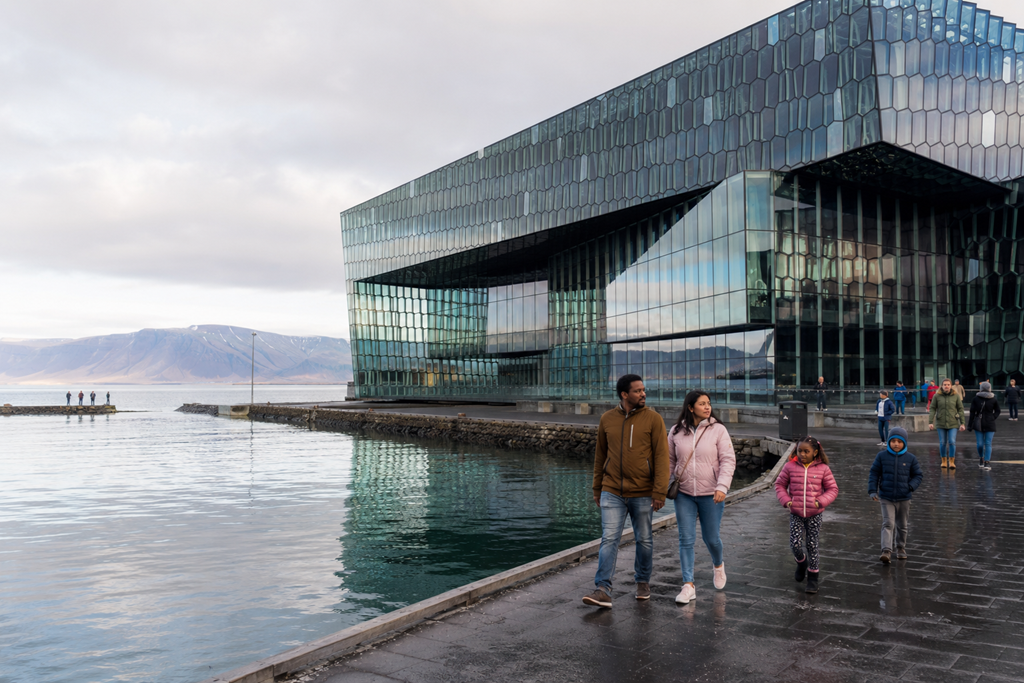
Harpa sits by the harbor and is one of Reykjavik’s most distinctive modern buildings. Its glass facade reflects the sky, water, and changing light, making it worth seeing even if you do not attend a performance.
It is a good stop during a waterfront walk, especially when paired with the Old Harbour, the Sun Voyager sculpture, or a meal nearby. Visit Reykjavik notes that Harpa’s glass facade was designed to reflect Iceland’s light and landscape.
The Sun Voyager And Waterfront Walk
The Sun Voyager is a steel sculpture along the waterfront, often photographed with the sea and Mount Esja behind it. It is not a long visit, but it is a meaningful stop if you enjoy simple scenic moments.
The walk along the water is especially pleasant when the weather is clear. It gives you a sense of Reykjavik’s relationship with the ocean, mountains, and open sky.
Perlan
Perlan is useful for travelers who want context before exploring Iceland’s landscapes. It combines exhibits, views, and a strong sense of Iceland’s natural forces. It is especially helpful for families, first-time visitors, or anyone who wants to understand glaciers, volcanoes, and geothermal energy in a more accessible way.
Visit Reykjavik describes Perlan as one of Reykjavik’s striking buildings, with a science museum and 360-degree views over the city and ocean.
Old Harbour
The Old Harbour is one of the best areas for a slower walk. It has boat tours, restaurants, museums, and views that feel different from the main shopping streets. Many whale-watching tours depart from this area, making it a natural place to include in your itinerary.
Even if you do not join a tour, the harbor is worth visiting for the atmosphere and the sense of Reykjavik as a working coastal city.
Reykjavik’s Geothermal Pools
Swimming pools are part of everyday life in Iceland. Visiting a local geothermal pool can be one of the most memorable and practical cultural experiences in Reykjavik. These are not just tourist attractions; they are places where residents relax, socialize, exercise, and unwind.
If you are visiting a local pool, learn basic etiquette before you go. Showering before entering the water is standard, and posted rules should be followed respectfully.
Museums And Cultural Stops
Reykjavik has several museums that help explain Icelandic history, settlement, art, maritime life, and natural forces. Rather than trying to visit every museum, choose based on your interests.
Good museum themes to consider include:
- Icelandic settlement and early history
- Maritime culture
- Contemporary and national art
- Natural history and geology
- Volcanoes, glaciers, and northern lights
Museums are especially useful on windy, rainy, or snowy days when outdoor plans become less appealing.
Nature And Day Tours From Reykjavik
One of Reykjavik’s biggest advantages is that it works well as a base for day trips. You can see a lot without changing hotels every night, especially if you use guided tours.
The Golden Circle
The Golden Circle is one of the classic first-time routes from Reykjavik. It usually includes Þingvellir National Park, the Geysir geothermal area, and Gullfoss waterfall. The appeal is variety: history, geology, geothermal activity, and a major waterfall in one manageable route.
This is a good choice if you have limited time and want a broad introduction to Icelandic landscapes.
The South Coast
The South Coast is a longer day, but it offers some of Iceland’s most dramatic scenery. Depending on the route, tours may include waterfalls, black sand beaches, glaciers, and coastal views.
Because conditions can change, especially near beaches and in winter, guided tours are often a practical choice for first-time visitors. SafeTravel Iceland warns that weather and road conditions can change quickly, and travelers should stay informed about current conditions.
Blue Lagoon And Other Geothermal Lagoons
The Blue Lagoon is outside Reykjavik, near the Reykjanes Peninsula, and is often visited on arrival, departure, or as a half-day trip. It is one of Iceland’s most famous geothermal bathing experiences.
There are also other geothermal lagoons and pools in and around the capital region. Choose based on your schedule, budget, atmosphere preference, and whether you want a polished spa-style visit or a more local pool experience.
Because geothermal sites and nearby areas can occasionally be affected by natural conditions, check current access and booking details before visiting.
Whale Watching
Whale-watching tours commonly depart from Reykjavik’s harbor. Sightings vary by season, weather, and wildlife movement, so it is best to think of this as a nature experience rather than a guaranteed checklist item.
Dress warmly, even in warmer months. Conditions on the water can feel colder than in the city.
Northern Lights Tours
If you visit during darker months, Reykjavik can be a base for northern lights tours. These tours usually leave the city to seek darker skies and better viewing conditions.
Keep expectations realistic. The northern lights are natural, not scheduled. Book with flexibility if possible, and avoid planning your entire winter trip around one night of aurora viewing.
Food And Drink In Reykjavik
Reykjavik’s food scene reflects Iceland’s geography: seafood, lamb, dairy, rye bread, baked goods, and warming soups are all part of the experience. You do not need to chase trendy restaurants to eat well here. Focus on food traditions, simple local dishes, and places that fit your budget.
What To Try
Common Icelandic food experiences include:
- Fresh fish and seafood
- Lamb dishes
- Icelandic hot dogs
- Rye bread
- Skyr
- Fish stew
- Lamb soup
- Local pastries and coffee
Food can be expensive compared with many destinations, so plan accordingly. A useful approach is to mix casual meals, bakeries, grocery stops, and one or two more memorable sit-down meals.
Coffee, Bakeries, And Casual Meals
Reykjavik is a good city for coffee breaks. Bakeries and cafes are helpful for slower mornings, weather breaks, and simple lunches. Casual dining can also help keep the trip comfortable if you are balancing tours, early departures, and changing weather.
Food Halls And Harbor Dining
Food halls and harbor-area restaurants can be practical for groups because they offer variety without requiring everyone to choose the same kind of meal. The Old Harbour and Grandi areas are especially useful if you want to combine a walk, a museum, and a meal.
Getting Around Reykjavik
Reykjavik is one of the easier capitals to navigate, especially if you stay near the center. Still, transportation planning matters because Iceland’s main international airport is outside the city, and many nature experiences require tours, buses, or a car.
Walking
Walking is the best way to experience central Reykjavik. The distances between Hallgrímskirkja, Laugavegur, Harpa, the waterfront, and the Old Harbour are manageable for many travelers.
Bring shoes with good grip, especially outside summer. Pavement can be wet, icy, or uneven depending on the season.
Buses
Reykjavik’s public bus system is operated by Strætó. For capital-area buses, Strætó uses the Klapp ticketing system, with options that include contactless payments, the Klappið app, Klapp card or keychain, and Klapp ten.
Buses are useful if you stay outside the city center, want to reach Perlan, or prefer not to walk long distances in poor weather. Check current routes and schedules before relying on buses for time-sensitive plans.
Airport Transfers
Most international travelers arrive through Keflavík Airport, which is outside Reykjavik. Common options include airport coaches, private transfers, rental cars, and taxis. For most visitors staying in the city, an airport coach or prearranged transfer is usually simpler than taking a taxi.
If you plan to rent a car, consider whether you need it for your whole stay. Many travelers do not need a car while exploring central Reykjavik, but a car can be useful for independent day trips if you are comfortable with Icelandic driving conditions.
Rental Cars
A rental car gives flexibility, but it also adds responsibility. Weather, wind, icy roads, gravel roads, and changing conditions can make driving more demanding than expected.
SafeTravel Iceland advises drivers to follow current conditions and notes that winter conditions can occur in spring, autumn, and winter.
If you are tired after an overnight flight, avoid driving long distances right away. SafeTravel also notes that jet lag, sleepiness, and fatigue can affect travelers arriving in Iceland, especially after overnight flights.
Practical Travel Tips For Reykjavik
Pack For Changing Weather
Reykjavik weather can shift quickly. Even if the forecast looks manageable, bring layers, a waterproof outer layer, warm accessories, and comfortable shoes.
For day tours, dress for the coldest part of the day, not the warmest. Wind and rain can make temperatures feel colder than expected.
Do Not Overpack Your Itinerary
Iceland rewards flexibility. A trip that looks easy on paper can feel tiring once weather, early tour departures, daylight changes, and long drives are involved.
Instead of planning every hour, choose one main experience per day and leave space for meals, walking, rest, and weather adjustments.
Use Reykjavik As More Than A Base
Many travelers use Reykjavik only as a place to sleep before tours. That works, but it misses part of the experience. Give the city at least one unhurried day if your schedule allows.
A good Reykjavik day might include Hallgrímskirkja, a city walk, a museum, lunch near the harbor, Harpa, the waterfront, and a geothermal pool.
Book Ahead During Busy Travel Periods
For popular tours, geothermal lagoons, and well-known restaurants, booking ahead is wise during busy travel periods. Keep the advice general: availability can change, and the best approach is to verify current details before your trip.
Respect Nature And Local Safety Guidance
Iceland’s landscapes are beautiful, but they are not controlled environments. Stay on marked paths, respect closures, follow signs, and avoid risky behavior near cliffs, beaches, glaciers, lava fields, and hot springs.
Before driving or joining outdoor activities, check current conditions from official safety sources. SafeTravel Iceland is the official source for safe travel information in Iceland and provides travel condition updates and guidance.
A Simple First-Time Reykjavik Plan
If you are visiting Reykjavik for the first time, a balanced trip might look like this:
Day One: Arrive And Explore The City Center
Keep your first day simple. Walk around the city center, visit Hallgrímskirkja, browse Laugavegur, stop for coffee, and have an early dinner. If you have energy, add the waterfront and Harpa.
Day Two: Take A Classic Day Tour
Use your second day for the Golden Circle or another easy introductory tour. This gives you a strong sense of Icelandic landscapes without requiring complicated planning.
Day Three: Harbor, Museums, And A Geothermal Pool
Spend a slower day around the Old Harbour, Grandi, a museum, and a local pool or lagoon. If you are visiting in winter, this can also be a good evening for a northern lights tour.
Day Four Or More: Add A Bigger Nature Experience
With more time, consider the South Coast, Reykjanes Peninsula, whale watching, horseback riding, lava fields, or a longer guided excursion. Build in rest time between long tour days.
Who Reykjavik Is Best For
Reykjavik is a strong destination for travelers who want nature without giving up city comfort. It works well for first-time Iceland visitors, solo travelers, couples, families, photographers, outdoor-minded travelers, and people who enjoy museums, walking, food, and scenic day trips.
It may feel expensive if you are not prepared, and it can feel weather-dependent if you overplan. But with realistic expectations, Reykjavik is one of the easiest places to begin understanding Iceland: practical, creative, walkable, and close to landscapes that feel unlike anywhere else.
Download Our Free E-book!