Seoul is one of Asia’s most rewarding cities for travelers who want history, food, design, shopping, and everyday city life in one trip. It can feel fast-moving at first, but it becomes much easier to understand once you break it into a few key areas: royal palaces and traditional neighborhoods in the north, shopping and food districts in the center, creative neighborhoods around Hongdae and Seongsu, and modern city views along the Han River and south of the river.
This guide will help you plan a thoughtful Seoul trip without trying to do everything. You’ll find the best times to visit, neighborhoods to know, classic attractions, food experiences, transportation basics, and practical travel tips that stay useful beyond one season or trend.
Seoul At A Glance
Seoul is the capital of South Korea and sits along the Han River in the northwestern part of the country. It is the country’s political, cultural, and economic center, while also being home to royal palaces, historic gates, mountain trails, markets, modern shopping streets, and dense residential neighborhoods.
For first-time visitors, Seoul is best approached as a city of contrasts. You can spend the morning walking through a Joseon-era palace, have lunch in a traditional market, browse contemporary shops in the afternoon, and watch the skyline light up from a riverside park or hillside viewpoint in the evening.
A good first Seoul trip usually needs at least four to five full days. That gives you enough time to see the major cultural sites, explore several neighborhoods, enjoy the food scene, and leave room for slower wandering.
Best Time To Visit Seoul
Seoul has four distinct seasons, so the best time to visit depends on the kind of trip you want.
Spring
Spring is one of the most popular times to visit because the weather is generally comfortable and the city’s parks, palace grounds, and walking areas feel especially pleasant. It is a good season for travelers who want to spend a lot of time outdoors.
Because spring can be busy, especially around major public holidays and peak bloom periods, book accommodations early and check current conditions before building your plans around specific flowers or seasonal scenery.
Autumn
Autumn is another excellent season for Seoul. Temperatures are usually comfortable, the air often feels crisp, and the city’s palace gardens, mountains, and riverside paths are especially attractive.
This is a strong choice for travelers who want walking-friendly weather without the heat of summer or the cold of winter.
Summer
Summer in Seoul can be hot, humid, and rainy. It is still a very possible time to visit, but you’ll want to pace your days carefully.
Plan indoor breaks at museums, cafés, department stores, or shopping complexes. Morning and evening sightseeing can feel better than long outdoor walks in the middle of the day.
Winter
Winter is cold, but it can be a rewarding time to visit if you dress well. Palaces, cafés, museums, restaurants, and shopping areas remain appealing, and the city can feel less crowded than peak travel periods.
Winter is a good fit for travelers who enjoy food-focused trips, indoor cultural stops, and atmospheric city walks.
Where To Stay In Seoul
Choosing the right area can make your trip much easier. Seoul is large, so the best neighborhood depends on your travel style and what you want nearby.
Myeongdong
Myeongdong is one of the most convenient areas for first-time visitors. It offers easy access to shopping, street food, public transportation, and central attractions.
Stay here if you want a practical base and do not mind a busy atmosphere.
Insadong And Jongno
Insadong and Jongno are excellent for travelers who want to be close to palaces, temples, traditional tea houses, galleries, and historic walking areas.
This area works especially well if your priority is Seoul’s cultural side. It also puts you near Gyeongbokgung Palace, Bukchon Hanok Village, Changdeokgung Palace, and other classic sights.
Hongdae
Hongdae is known for its youthful energy, music, casual dining, cafés, shops, and nightlife. It is a good fit for travelers who want a lively area with plenty to do in the evening.
It can be less ideal for travelers who want a quieter, more traditional atmosphere.
Gangnam
Gangnam is modern, polished, and spread out. It has shopping, restaurants, clinics, business districts, and access to areas south of the Han River.
Stay here if you want a more contemporary side of Seoul or if your plans are focused south of the river.
Itaewon And Hannam
Itaewon and Hannam offer international restaurants, bars, galleries, boutiques, and hillside streets. These areas can be useful for travelers who want a mix of global dining and local neighborhoods.
They are not as central for palace sightseeing, but they offer a different view of the city.
Seongsu
Seongsu is known for cafés, design shops, converted industrial spaces, and a creative local feel. It is best for repeat visitors or travelers who enjoy slower neighborhood exploring.
For a first trip, it may work better as a day or half-day destination than as your main base.
Essential Seoul Attractions And Experiences
Seoul rewards travelers who mix major landmarks with ordinary neighborhood wandering. These are some of the most worthwhile places to include in a first or second visit.
Gyeongbokgung Palace
Gyeongbokgung Palace is one of Seoul’s most important historical sites. Built in 1395 as the official palace of the Joseon dynasty, it is often considered the largest and most prominent of Seoul’s five grand palaces.
Give yourself enough time to walk the grounds slowly rather than treating it as a quick photo stop. The palace is especially meaningful when paired with nearby cultural sites such as the National Folk Museum area, Gwanghwamun Square, or Bukchon Hanok Village.
Check current opening hours before you go, as palace schedules can vary by day, season, and restoration needs.
Bukchon Hanok Village
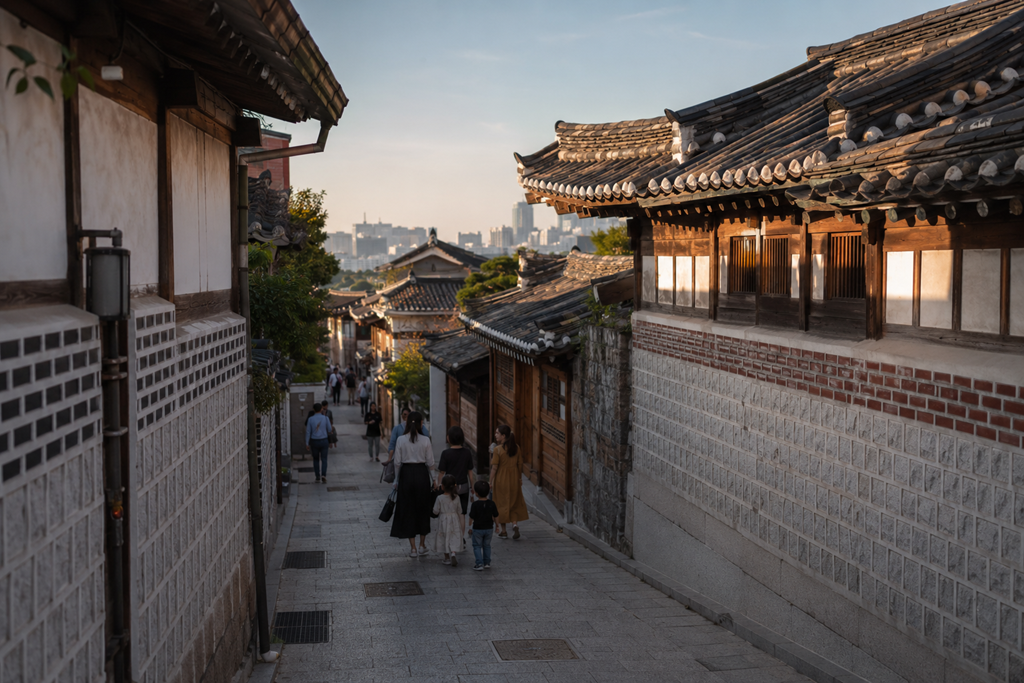
Bukchon Hanok Village is a historic residential area known for traditional Korean houses called hanok. Its lanes offer one of Seoul’s most recognizable views, with tiled roofs, narrow streets, and modern city buildings in the distance.
This is still a real neighborhood, so visit respectfully. Keep noise low, avoid blocking homes or doorways, and pay attention to any local visitor rules. Tourism management rules in residential areas can change, so check current guidance before visiting.
Changdeokgung Palace And Its Garden
Changdeokgung Palace is another major royal palace and is especially admired for the way its buildings sit naturally within the surrounding landscape. Many visitors come for the palace grounds and the Secret Garden area.
If you are interested in Korean architecture, garden design, or quieter cultural experiences, this is one of Seoul’s most rewarding stops. Some areas may require separate reservations or guided access, so verify current entry details before planning your day.
Insadong
Insadong is a good neighborhood for traditional crafts, tea houses, galleries, souvenirs, and relaxed walking. It is one of the easiest places to browse for items that feel connected to Korean culture without needing a strict itinerary.
Pair Insadong with Jogyesa Temple, Ikseon-dong, or one of the nearby palaces for a full cultural day.
Jogyesa Temple
Jogyesa Temple is an important Buddhist temple in central Seoul. It offers a peaceful contrast to the busy streets around it and can be visited without taking much time.
As with any active religious site, be respectful. Keep your voice low, avoid interrupting worshippers, and follow posted guidance about photography.
N Seoul Tower And Namsan
N Seoul Tower sits on Namsan and is one of the city’s classic viewpoints. It is a strong choice if you want to understand Seoul’s scale, especially at sunset or after dark.
You can reach the area in different ways depending on your energy level and schedule. Some travelers walk part of the way through Namsan Park, while others choose easier transport options. Check current operating details before you go.
The Han River
The Han River is central to Seoul’s geography and everyday life. Its parks are popular for walking, cycling, picnics, skyline views, and slower breaks between busier sightseeing days.
A riverside evening is one of the simplest ways to enjoy Seoul without spending the whole day moving between attractions. Choose a park that fits your route rather than trying to visit them all.
Gwangjang Market
Gwangjang Market is one of Seoul’s classic food markets and a good place to try traditional market dishes in a lively setting. It is especially useful for travelers who want a casual, food-focused experience without needing a formal restaurant plan.
Go with a flexible mindset. Walk first, observe what looks appealing, and choose a stall that feels comfortable. Bringing cash can still be helpful in traditional market settings, though payment options continue to evolve.
Myeongdong
Myeongdong is a busy shopping and food area known for cosmetics shops, fashion, snacks, and evening street food. It is tourist-friendly, central, and easy to combine with nearby sights.
It is not the quietest or most traditional part of Seoul, but it is useful for first-time visitors who want convenience and energy in one place.
Hongdae
Hongdae is one of Seoul’s best areas for younger culture, casual shopping, street performances, cafés, nightlife, and music. It is especially enjoyable in the late afternoon and evening.
Travelers who prefer quieter experiences may want to visit earlier in the day, while those who enjoy lively streets should consider spending an evening here.
Dongdaemun Design Plaza
Dongdaemun Design Plaza, often called DDP, is known for its futuristic architecture, exhibitions, design shops, and nighttime city atmosphere. It pairs well with Dongdaemun shopping areas and nearby urban walks.
Because exhibitions and events change, think of DDP as both an architectural stop and a flexible cultural venue. Check current programming only if a specific exhibit matters to you.
Seongsu-dong
Seongsu-dong has become known for cafés, design stores, lifestyle shops, and creative reuse of older industrial spaces. It is a good neighborhood for travelers who enjoy slow browsing and contemporary local style.
Because individual shops and cafés change over time, focus on the neighborhood rather than one specific venue.
Gangnam And COEX Area
Gangnam offers a more modern, polished side of Seoul. The COEX area is useful for shopping, dining, indoor breaks, and seeing a different rhythm of the city south of the Han River.
This area is especially helpful on rainy, hot, or very cold days when indoor attractions become more appealing.
Food In Seoul: What To Know Before You Eat
Food is one of the best reasons to visit Seoul. The city offers everything from traditional markets and barbecue restaurants to noodle shops, bakeries, cafés, temple food, casual street snacks, and modern Korean dining.
Korean Barbecue
Korean barbecue is one of the most popular food experiences for visitors. The appeal is not just the meat, but the full table: side dishes, sauces, wraps, stews, rice, and shared cooking.
Some restaurants specialize in beef, others in pork. If you are unsure what to order, choose a simple set or ask for a recommendation.
Bibimbap
Bibimbap is a rice dish topped with vegetables, sauce, and often egg or meat. It is approachable, filling, and widely available.
It is a good option for travelers who want a classic Korean meal that is easier to understand on a first visit.
Kimchi And Banchan
Kimchi and banchan, the small side dishes served with many Korean meals, are central to Korean dining. They vary by restaurant and season, and they are part of what makes even a simple meal feel complete.
Try them gradually rather than assuming every side dish will taste the same. Some are spicy, some are mild, some are fermented, and some are refreshing.
Street Food
Seoul street food is easiest to enjoy in areas like markets, shopping streets, and busy nightlife districts. Common options include rice cakes, savory pancakes, skewers, fried snacks, sweet pancakes, and fish-shaped pastries.
Street food works best as part of an evening walk rather than a rigid meal plan. Eat what looks fresh, busy, and appealing.
Cafés And Bakeries
Café culture is a major part of Seoul. You’ll find everything from quiet neighborhood cafés to design-focused spaces and large bakeries.
Cafés are especially useful for building rest into your day. In a city with a lot of walking and subway transfers, a well-timed coffee break can make your itinerary feel much easier.
Traditional Tea
For a slower experience, consider a traditional tea house in or near Insadong. It gives you a different rhythm from Seoul’s fast cafés and shopping districts.
This is a good choice after palace visits or museum stops.
Getting Around Seoul
Seoul is much easier to navigate once you understand the basics.
Subway
The subway is usually the most practical way for visitors to get around. It connects major neighborhoods, attractions, shopping areas, and transport hubs across the city.
Stations can be large, so allow extra time for transfers. Follow exit numbers carefully, because choosing the right exit can save a long walk above ground.
Buses
Buses are useful once you are more comfortable with the city or when a destination is not near a subway station. They can be efficient, but they may feel more challenging for first-time visitors who are still learning the layout.
Airport Connections
Seoul is served by major airport rail and bus connections. Your best option depends on where you are staying, how much luggage you have, and whether you prefer speed, simplicity, or door-to-door convenience.
Check current airport transport schedules before arrival, especially if landing late at night or early in the morning.
Taxis And Ride Apps
Taxis can be useful late at night, in bad weather, or when carrying luggage. However, traffic can slow things down, and some destinations are still faster by subway.
Have your destination written in Korean when possible, especially for smaller hotels, guesthouses, or restaurants.
Walking
Walking is one of the best ways to enjoy Seoul, but the city is larger and hillier than many visitors expect. Build your days around clusters of sights rather than crisscrossing the city repeatedly.
A good rule: choose one main area for the morning, one nearby area for the afternoon, and one evening neighborhood.
Simple Seoul Itinerary Ideas
You do not need to follow a strict schedule, but grouping sights by geography helps.
Classic Cultural Day
Start at Gyeongbokgung Palace, continue to Bukchon Hanok Village, walk through Insadong, and end with tea or dinner nearby.
This day is best for first-time visitors who want Seoul’s historical and cultural core.
Market And Shopping Day
Visit Gwangjang Market, continue to Dongdaemun Design Plaza, and spend the evening in Myeongdong.
This works well when you want food, shopping, design, and city energy without long transfers.
Creative Neighborhood Day
Explore Seongsu during the day, then head to Hongdae for dinner, shopping, music, or nightlife.
This is a good day for travelers interested in cafés, small shops, local trends, and casual evening energy.
Viewpoint And River Day
Spend part of the day around Namsan and N Seoul Tower, then enjoy a slower evening near the Han River.
This is useful after a busy sightseeing day because it gives you more space and fewer indoor stops.
South Of The River Day
Explore Gangnam, COEX, and nearby shopping or dining areas. This day is especially good in difficult weather because many stops can be indoors.
Practical Travel Tips For Seoul
Learn A Few Basic Korean Phrases
You can visit Seoul without speaking Korean, especially in major tourist areas. Still, a few basic phrases make interactions smoother and more respectful.
Simple greetings, thank you, excuse me, and basic ordering phrases are worth learning.
Use Navigation Apps That Work Well In Korea
Some global map apps may not work in Korea the same way they do elsewhere. Before your trip, download local-friendly navigation and translation tools so you are not figuring everything out after arrival.
Carry A Small Amount Of Cash
Cards are widely used in Seoul, but cash can still be useful for some markets, small vendors, lockers, or backup situations.
You do not need to carry large amounts. A modest amount for small purchases is usually enough.
Respect Residential Areas
Places like Bukchon are beautiful because people still live there. Keep your voice low, avoid photographing into homes, and follow posted visitor rules.
This matters more than getting the perfect photo.
Check Current Details Before Visiting Major Attractions
Even evergreen attractions can have changing schedules, restoration work, timed-entry rules, or holiday closures. Before visiting palaces, museums, viewpoints, or special gardens, confirm current hours and reservation requirements.
Avoid Overloading Your Days
Seoul has a lot to do, but the city is more enjoyable when you leave space between activities. Subway transfers, walking, meals, and café breaks all take time.
A realistic day in Seoul might include one major attraction, one neighborhood walk, one food experience, and one evening area.
Plan Around Weather
In summer, build in indoor breaks. In winter, dress in warm layers. In spring and autumn, take advantage of parks, palace grounds, and walking neighborhoods.
Weather can change the feel of your trip, but Seoul has enough indoor and outdoor options to adjust.
Who Seoul Is Best For
Seoul is a strong destination for travelers who enjoy layered cities. It works well for food lovers, design-minded travelers, history fans, shoppers, café explorers, pop culture fans, and people who like public transportation.
It may feel overwhelming for travelers who prefer small, slow destinations, but even then, Seoul can be made manageable by staying in a convenient area and planning one neighborhood at a time.
A Thoughtful Way To Experience Seoul
The best Seoul trip is not just about checking off palaces, markets, towers, and shopping streets. It is about noticing how the city moves between old and new, formal and casual, quiet and crowded.
Give yourself permission to slow down in a tea house, sit by the Han River, wander a side street, or spend extra time over a meal. Seoul has major attractions worth seeing, but its everyday rhythm is just as memorable.
Download Our Free E-book!