Venice is one of the world’s most unusual cities: a historic lagoon city built around canals, footbridges, stone alleys, grand palaces, churches, and quiet corners that can feel surprisingly peaceful once you step away from the busiest routes.
This guide is designed to help you understand Venice before you arrive: when to go, where to stay, how to get around, what to prioritize, what to eat, and how to plan a trip that feels thoughtful rather than rushed. It focuses on durable, practical guidance rather than temporary events, trendy restaurants, or details that change often.
Venice At A Glance
Venice is not a city you “do” only by checking off attractions. The main experience is the setting itself: walking across bridges, following narrow lanes, riding a vaporetto along the Grand Canal, noticing old stone façades, and letting the city reveal itself slowly.
The historic center is divided into six traditional districts, called sestieri: San Marco, San Polo, Santa Croce, Dorsoduro, Cannaregio, and Castello. These areas are compact enough to explore on foot, but each has a different feel. San Marco is the most famous and crowded, while areas like Cannaregio, Dorsoduro, and Castello often feel more lived-in and spacious by Venice standards.
Venice rewards travelers who stay overnight, start early, walk beyond the main landmarks, and give themselves enough time to enjoy the city between major sights.
Best Time To Visit Venice
Venice is beautiful year-round, but the experience changes noticeably by season.
Spring And Fall
Spring and fall are often the most comfortable times to visit. The weather is generally milder, and the light can be beautiful for walking, photography, and canal views. These seasons are also popular, especially around major holiday periods, so it is still wise to book lodging and major attractions ahead.
April, May, June, September, and October are widely considered strong travel months for Venice, though they can also be among the busiest.
Summer
Summer brings long days and warm weather, but it can also bring heavier crowds, higher lodging demand, and a more tiring pace in the narrow streets. If visiting in summer, plan your most popular sights early in the day, take breaks during the busiest hours, and leave room for quieter neighborhoods, shaded churches, and evening walks.
Winter
Winter can be atmospheric and quieter, especially outside holiday periods. Some days may be damp or chilly, and daylight is shorter, but the city’s architecture, museums, and cafés still make it rewarding. Winter is a good choice for travelers who prefer fewer crowds and do not mind cooler weather.
Acqua Alta And Weather Considerations
Venice can experience acqua alta, or high water, especially in the cooler months. This does not mean every winter trip will be disrupted, but it is worth packing shoes that can handle wet conditions and checking local updates during your visit.
How Many Days Do You Need In Venice?
For a first visit, two to three full days is a comfortable minimum. This gives you enough time to see St. Mark’s Square, the Doge’s Palace, the Grand Canal, Rialto, a few quieter neighborhoods, and possibly one lagoon island.
With only one day, Venice can feel crowded and rushed. With four or more days, you can slow down, explore Cannaregio, Castello, Dorsoduro, Murano, Burano, and smaller museums without treating the city like a checklist.
A good pacing rule: plan one or two major sights per day, then leave time for wandering.
Where To Stay In Venice
Choosing where to stay affects your whole Venice experience. The city is walkable, but bridges, narrow lanes, and luggage can make location more important than it looks on a map.
San Marco
San Marco is best for first-time visitors who want to be close to Venice’s most famous landmarks: St. Mark’s Basilica, the Doge’s Palace, the Campanile, and the waterfront. It is convenient, beautiful, and atmospheric, but also the busiest and often most expensive area.
Stay here if you want classic Venice outside your door and do not mind crowds.
San Polo
San Polo is central and practical, with easy access to the Rialto Bridge, Rialto Market area, and the Grand Canal. It can be a good balance for first-time visitors because it places you near major sights without being quite as concentrated as San Marco.
Stay here if you want a central location with strong walking access.
Dorsoduro
Dorsoduro has a more relaxed, artsy feel. It is home to important cultural stops, canal walks, and areas that feel slightly removed from the heaviest tourist flow. It works well for travelers who want atmosphere, good walking, and a little breathing room.
Stay here if you want charm, art, and a slightly slower base.
Cannaregio
Cannaregio is one of the best areas for travelers who want a more local-feeling stay. It has canals, neighborhood restaurants, the historic Jewish Ghetto area, and easy access to the train station side of Venice.
Stay here if you want a practical base with character and fewer crowds than San Marco.
Castello
Castello stretches east from San Marco and becomes quieter the farther you walk. It offers a mix of landmark access, residential streets, churches, waterfront views, and a more spacious feel in some areas.
Stay here if you want to be near the center but not always in the center.
Santa Croce
Santa Croce is practical for arrivals and departures because it is near Piazzale Roma and transportation connections. It may feel less postcard-perfect in places than San Marco or Dorsoduro, but it can be convenient and less overwhelming.
Stay here if logistics matter and you want easier arrival with luggage.
Top Attractions And Experiences In Venice
Venice has many museums, churches, bridges, palaces, and islands, but a first trip should focus on a balanced mix: major landmarks, scenic walks, cultural stops, and simple moments on the water.
St. Mark’s Basilica
St. Mark’s Basilica is one of Venice’s defining sights, known for its Byzantine influence, mosaics, domes, marble, and layered history. It sits at the edge of Piazza San Marco and represents Venice’s long connection with trade, faith, and the eastern Mediterranean.
Because visitor rules, entry systems, and access to special areas can change, check current official visitor information before you go. The basilica maintains official visitor resources for planning.
Best for: first-time visitors, architecture lovers, history travelers, and anyone wanting to understand Venice’s symbolic center.
Doge’s Palace
The Doge’s Palace is one of the most important historic buildings in Venice. It was both a political center and a residence tied to the former Venetian Republic. Inside, visitors can see grand rooms, institutional spaces, artwork, courtyards, and routes connected with the Bridge of Sighs and historic prisons.
The official Doge’s Palace visitor site provides current information on tickets, itineraries, services, and visitor regulations, so it is worth checking before booking.
Best for: history, art, architecture, and understanding Venice as a former maritime power.
Piazza San Marco
Piazza San Marco is Venice’s most famous square and one of the city’s most recognizable spaces. It brings together St. Mark’s Basilica, the Doge’s Palace, arcades, cafés, the Campanile, and views toward the lagoon.
It is usually busiest during the middle of the day. For a better experience, visit early in the morning or later in the evening, then return during the day if you plan to tour nearby landmarks.
Best for: classic Venice views, first-time orientation, photography, and people-watching.
The Grand Canal
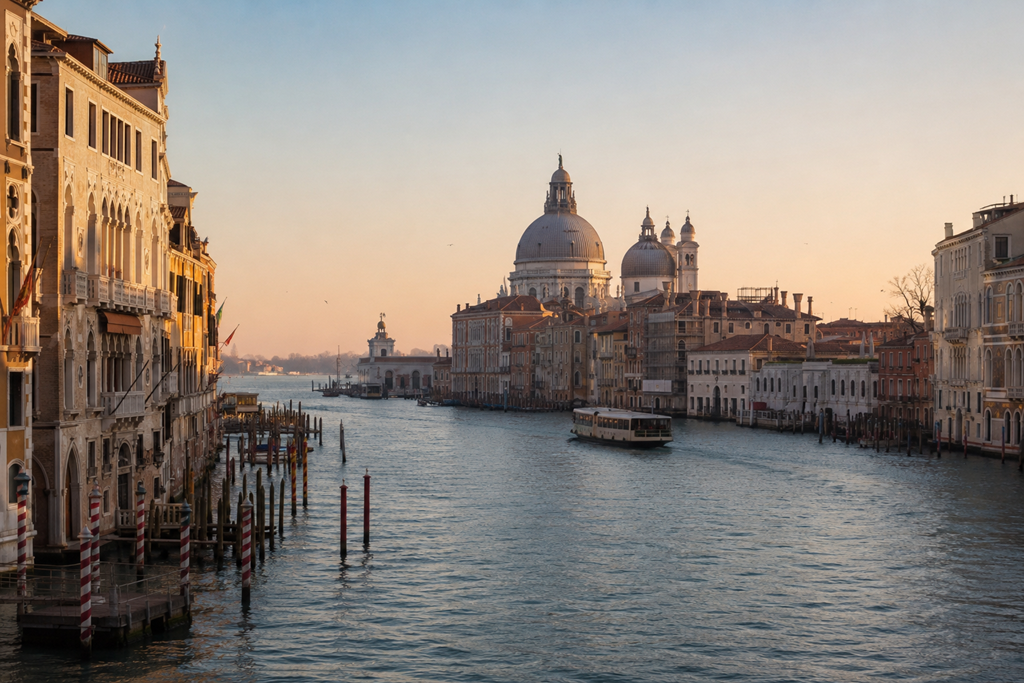
The Grand Canal is Venice’s main waterway, lined with palaces, churches, docks, and busy boat traffic. Seeing it from the water helps the city make sense in a way walking alone cannot.
A vaporetto ride along the Grand Canal is one of the simplest and most worthwhile Venice experiences. It gives you palace views, bridge views, and a practical introduction to how the city moves.
Best for: first-time visitors, photography, architecture, and anyone who wants a memorable experience without needing a formal tour.
Rialto Bridge And Rialto Area
The Rialto Bridge is one of Venice’s essential landmarks, crossing the Grand Canal in a busy, historic part of the city. The surrounding area has long been associated with commerce, markets, and movement.
The bridge itself can be crowded, but the nearby lanes and canal views are worth exploring. Go early for a quieter view, or visit later in the evening when the atmosphere changes.
Best for: classic views, walking routes, photography, and connecting San Marco with San Polo.
Dorsoduro And The Accademia Area
Dorsoduro is one of Venice’s most rewarding areas for slower exploration. It has art institutions, churches, canal paths, and a slightly more open feeling than the tight lanes around San Marco.
The area near the Accademia Bridge offers one of the most beautiful Grand Canal views in the city. It is also a good district for travelers who want a cultural day without spending all their time in the most crowded zone.
Best for: art lovers, walkers, couples, repeat visitors, and travelers who like atmospheric neighborhoods.
Cannaregio And The Jewish Ghetto Area
Cannaregio offers a more grounded side of Venice, with residential streets, canals, shops, and places to eat away from the most intense crowds. The historic Jewish Ghetto area is one of the most meaningful parts of the district and adds important cultural depth to a Venice visit.
This is a good area for wandering without a strict plan. Walk along canals, cross side bridges, and allow extra time for small discoveries.
Best for: travelers who want a more local-feeling walk and a break from the busiest sightseeing routes.
Castello
Castello begins close to San Marco but gradually becomes quieter and more residential. It includes churches, waterfront walks, gardens, and lanes that feel less compressed than the city’s busiest corridors.
This district is especially useful if you want to stay near the main sights but still experience a less crowded side of Venice.
Best for: longer stays, repeat visitors, quiet walks, and travelers who enjoy exploring beyond the obvious route.
Murano
Murano is famous for glassmaking and is one of the easiest lagoon islands to visit from central Venice. It has canals, glass shops, workshops, and a slower rhythm than the historic center.
The best Murano visit is not only about shopping. Give yourself time to walk the canals, visit a glass-related museum or workshop if it fits your interests, and avoid rushing back immediately.
Best for: craft traditions, families, shoppers, and travelers who want a half-day island trip.
Burano
Burano is known for its brightly colored houses, lace tradition, and photogenic canals. It is farther from central Venice than Murano, so it works best when you have enough time to enjoy the journey and not treat it as a quick stop.
Because Burano is popular, arriving earlier in the day can make the experience more pleasant.
Best for: photography, colorful scenery, slower island walks, and a break from central Venice.
Torcello
Torcello is quieter and more reflective than Murano or Burano. It has historic religious sites and a more open, sparse lagoon atmosphere. It is best for travelers who enjoy history and do not need every stop to be busy or polished.
Best for: history, quiet exploration, and travelers combining multiple lagoon islands.
Venice Food And Drink: What To Expect
Venice has its own food culture, shaped by the lagoon, trade history, seafood, and northern Italian traditions. Eating well in Venice is partly about knowing what to look for and avoiding the most obvious tourist traps.
Cicchetti
Cicchetti are small Venetian bites often served with a drink in a bacaro, a casual wine bar. They might include seafood, vegetables, spreads, cured ingredients, or simple toppings on bread.
A cicchetti stop is one of the easiest ways to experience Venice without committing to a formal meal. It works well before dinner, during a neighborhood walk, or as part of an informal food crawl.
Seafood
Seafood is central to Venetian cooking. You may see dishes featuring cuttlefish, clams, shrimp, sardines, or lagoon fish. Menus vary, and availability can depend on season and sourcing.
Look for places where the menu feels focused rather than overly broad. Restaurants displaying large photo menus in the most crowded corridors are often less rewarding.
Risotto And Pasta
Venice is a good place to try seafood risotto, pasta with clams, or traditional regional dishes. Portions and styles vary, but the best meals usually feel simple and ingredient-driven rather than overly elaborate.
Spritz And Coffee
A spritz is common in Venice and across the Veneto region. Coffee culture is also part of daily life, though sitting in famous historic cafés around major squares can cost significantly more than standing at a neighborhood bar.
For a more everyday experience, step away from the main square and try a small bar in Cannaregio, Dorsoduro, San Polo, or Castello.
Getting Around Venice
Venice is different from most cities because there are no cars in the historic center. You will move mainly by walking, water bus, water taxi, gondola, or traghetto.
Walking
Walking is the best way to experience Venice. Distances may look short, but bridges, crowds, dead ends, and winding lanes can make routes take longer than expected.
Use maps, but do not rely on them completely. Venice is a city where getting slightly lost is part of the experience. Leave extra time when you have a reservation or train to catch.
Vaporetto
The vaporetto is Venice’s public water bus system. It is practical for longer distances, Grand Canal rides, reaching the islands, or saving energy after a long day of walking.
ACTV provides public transport services by land and water, including waterborne routes in Venice. Multi-day tickets are available for visitors and can be useful if you plan to ride several times or visit islands, though ticket details and validity rules should always be checked before purchase.
Water Taxis
Water taxis are private, direct, and expensive compared with public transportation. They can be useful for airport transfers, special occasions, mobility needs, or travelers with significant luggage, but they are not necessary for most daily sightseeing.
Gondolas
A gondola ride is a classic Venice experience, but it is more scenic than practical. Think of it as a short, atmospheric ride rather than transportation. For the best experience, choose a quieter canal route rather than only the busiest areas.
Traghetti
A traghetto is a simple gondola ferry used to cross the Grand Canal at certain points. It is brief and practical rather than romantic, but it can be a fun local-style experience when available.
Practical Planning Tips
Book Key Sights Ahead During Busy Periods
For major sights like the Doge’s Palace and St. Mark’s Basilica, check current visitor rules before your trip. Some attractions may use timed-entry systems, security rules, special ticket categories, or changing access procedures.
Booking ahead is especially helpful in spring, summer, fall weekends, and holiday periods.
Stay Overnight If You Can
Venice is most rewarding early in the morning and in the evening, when many day visitors are gone. Staying overnight lets you see the city in softer light and gives you more flexibility.
Even one night can make the trip feel less rushed.
Pack Light
Venice is hard on luggage. You may need to cross bridges, walk over uneven stone, and navigate narrow lanes. A smaller suitcase or backpack is much easier than large rolling luggage.
Before booking lodging, check how far it is from the nearest vaporetto stop and whether you will need to cross multiple bridges.
Wear Comfortable Shoes
Venice is a walking city. Expect stone pavement, bridges, steps, and long days on your feet. Comfortable shoes matter more than stylish shoes.
Respect The City’s Fragility
Venice is beautiful, but it is also a living city facing pressure from crowds, water, and heavy tourism. Walk on the right when paths are narrow, do not block bridges for long photo sessions, avoid sitting where signs prohibit it, and treat residential areas as neighborhoods rather than scenery.
Check Access Fee Rules If Visiting As A Day Tripper
Venice has introduced an access fee system for some day visitors on selected dates and times. The official access fee website explains who needs to pay, who may be exempt, and which dates apply. Because this policy can change, day-trippers should check the official site before visiting.
Common Mistakes To Avoid
Trying To See Everything In One Day
Venice is compact, but it is not simple. The city is slow by nature: bridges, crowds, water transport, and winding streets all affect timing. A rushed day can easily become frustrating.
Prioritize a few essentials, then allow space for wandering.
Only Staying Around San Marco
San Marco is important, but Venice becomes more interesting when you explore beyond it. Cannaregio, Dorsoduro, Castello, and San Polo can give you a fuller sense of the city.
Eating Only On The Busiest Routes
Restaurants next to the most crowded landmarks are convenient, but they are not always the best representation of Venetian food. Walk a few streets away, look for focused menus, and consider cicchetti bars for a more casual experience.
Underestimating Walking Time
A route that looks short on a map may include bridges, bottlenecks, or confusing turns. Build in extra time, especially when heading to a tour, train, or dinner reservation.
Treating The Islands As A Quick Checklist
Murano, Burano, and Torcello are more enjoyable when you give them breathing room. If you only have two days in Venice, choose one island experience rather than trying to rush through all of them.
A Simple First-Time Venice Plan
For a first visit, this structure works well:
Day One: Focus on San Marco, the Doge’s Palace, St. Mark’s Basilica, the waterfront, and an evening walk after the day crowds thin.
Day Two: Explore Rialto, San Polo, Dorsoduro, the Accademia area, and take a vaporetto ride along the Grand Canal.
Day Three: Visit Cannaregio, Castello, or take a half-day trip to Murano and Burano, depending on your interests.
This plan keeps the trip balanced: major landmarks, neighborhoods, water views, food, and unplanned time.
What To Expect From Venice
Venice can be crowded, expensive, and occasionally confusing. It can also be unforgettable.
Expect to get lost. Expect bridges. Expect your sense of direction to fail at least once. Expect some areas to feel packed and others to feel almost hidden. Expect the best moments to happen between planned stops: a quiet canal at dusk, the sound of footsteps on stone, laundry above a narrow lane, a small church interior, or a vaporetto ride when the city suddenly opens up from the water.
The best way to visit Venice is to respect its pace. See the major landmarks, but do not make the whole trip about them. Give yourself time to walk, pause, look, and let the city feel like more than a postcard.
Download Our Free E-book!