Zurich is one of the easiest European cities to enjoy as a first-time visitor. It is walkable, orderly, scenic, and well connected, with a compact historic center, a beautiful lakefront, strong museum culture, and quick access to mountain views. This guide is designed to help you understand the city before you arrive, choose the areas and experiences that fit your trip, and plan with less guesswork.
Zurich can feel polished at first glance, but the best visit is not only about seeing its landmarks. It is about walking along the Limmat River, pausing in the Old Town, riding efficient public transportation, spending time by Lake Zurich, and leaving room for simple pleasures like chocolate, coffee, and a view from above the city.
Zurich at a Glance
Zurich is Switzerland’s largest city and one of the country’s most important cultural and financial centers. For travelers, its biggest advantage is balance: it offers historic streets, major museums, lake scenery, excellent public transport, and day-trip potential without feeling difficult to navigate.
The city works especially well for first-time visitors who want a clean, practical base in Switzerland. You can spend a weekend seeing the core highlights or use Zurich as the starting point for a longer Swiss itinerary. Zurich Airport is closely connected to the city by train, and trains from the airport to Zurich’s main station run frequently, with the trip taking about 15 minutes.
Best Time to Visit Zurich
Zurich is a year-round destination, but the feel of the trip changes with the season.
Spring
Spring is a good time for walking, museums, café stops, and lakefront views without the heaviest summer crowds. Weather can vary, so pack layers and be ready for both mild afternoons and cooler evenings.
Summer
Summer is ideal for lake walks, boat rides, outdoor dining, swimming areas, and longer days. It is also one of the more popular times to visit, so book hotels ahead and check reservation requirements for major attractions.
Autumn
Autumn is one of the most pleasant seasons for a first Zurich trip. The weather is often comfortable for walking, the light is beautiful around the lake and Old Town, and the city feels settled after the peak summer period.
Winter
Winter brings a quieter, more atmospheric version of Zurich, especially in the Old Town. It is a strong season for museums, cozy restaurants, chocolate shops, and using the city as a gateway to winter scenery elsewhere in Switzerland. Some outdoor plans may be weather-dependent, so keep your itinerary flexible.
How Many Days Do You Need in Zurich?
For most first-time visitors, two to three days is a comfortable amount of time.
With one day, focus on the Old Town, Grossmünster, Bahnhofstrasse, Lake Zurich, and a simple riverside walk.
With two days, add a museum, more neighborhood exploring, and a lake or river experience.
With three days, include Uetliberg, additional museums, a slower food-focused afternoon, or a nearby day trip.
Zurich is not a city that requires a rushed checklist. It is better enjoyed with a mix of structured sightseeing and open walking time.
Best Areas and Neighborhoods for First-Time Visitors
Old Town, Altstadt
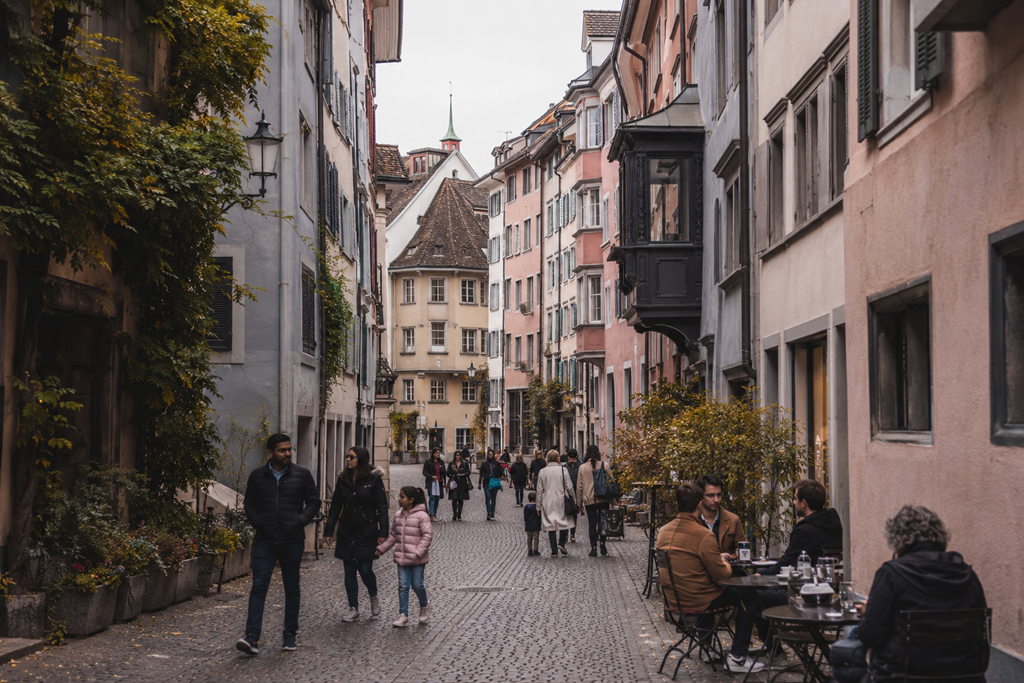
Altstadt is the historic heart of Zurich and the best place to begin. This is where you will find narrow lanes, old guild houses, churches, riverside views, cafés, and many of the city’s classic sights within walking distance.
The Old Town sits on both sides of the Limmat River. It is not large, but it rewards slow wandering. Give yourself time to cross bridges, look down side streets, and pause at small squares rather than treating it as one quick stop.
Niederdorf
Niederdorf is part of the Old Town on the east side of the Limmat. It has a lively pedestrian feel, with restaurants, shops, cafés, and evening activity. It is a practical area for travelers who want to stay central and walk easily to many sights.
Bahnhofstrasse and the City Center
Bahnhofstrasse is Zurich’s famous shopping street, running between the main train station and the lake. Even if luxury shopping is not your focus, the area is useful for orientation. It connects major transit, the commercial center, and the waterfront in one easy route.
Lake Zurich Area
The lakefront is one of Zurich’s greatest strengths. It gives the city breathing room and makes even a short visit feel scenic. The promenades are good for walking, relaxing, people-watching, and taking in views toward the water and distant hills.
Zurich West
Zurich West offers a more modern side of the city, with converted industrial spaces, restaurants, design shops, and cultural venues. It is not the classic postcard version of Zurich, but it can be worthwhile if you enjoy urban renewal, contemporary food, and a less traditional atmosphere.
Enge
Enge sits near the lake and offers a convenient, slightly quieter base with good transport links. It can work well for travelers who want access to the waterfront while staying outside the densest parts of the Old Town.
Top Attractions and Experiences in Zurich
Grossmünster
Grossmünster is one of Zurich’s most recognizable landmarks, known for its twin towers and central role in the city’s religious history. It is located near the river, making it easy to combine with an Old Town walk.
Even if you only view it from the outside, it helps anchor your understanding of Zurich’s historic core. For a deeper visit, check current access details before you go.
Fraumünster
Fraumünster is another major church in the Old Town, known especially for its stained-glass windows. It is close to Münsterhof square and the river, so it fits naturally into a walking route between the main historic sights.
St. Peter’s Church
St. Peter’s Church is often noted for its large clock face and peaceful setting. It is a good stop while wandering through the Old Town, especially if you enjoy historic churches and quiet corners of a city.
Lake Zurich
Lake Zurich is essential to the city’s character. Walk the promenade, sit by the water, take a boat ride, or simply use the lake as a scenic endpoint after exploring Bahnhofstrasse.
A lake experience does not need to be complicated. For many travelers, a relaxed walk along the shore is enough to understand why the city feels so livable.
Limmat River
The Limmat River runs through central Zurich and creates some of the city’s best views. Walking along the river gives you easy access to bridges, church views, historic buildings, cafés, and photo stops.
This is one of the simplest and most rewarding things to do in Zurich, especially early in the morning or near sunset.
Kunsthaus Zurich
Kunsthaus Zurich is one of the city’s major art museums and a strong choice for visitors who want a cultural anchor beyond sightseeing. It is especially useful on rainy days or during colder months.
Check current opening hours and exhibition details before you go, as museum schedules and special displays can change.
Swiss National Museum
Located near Zurich’s main train station, the Swiss National Museum is a practical first-time visitor stop if you want context on Swiss history and culture. Its location makes it easy to visit on arrival day, departure day, or before taking a train elsewhere.
Uetliberg
Uetliberg is Zurich’s local mountain and one of the best places for a broad view of the city, lake, and surrounding landscape. It is accessible by public transport, and the Zürich Card includes travel up to Uetliberg as part of its public transportation coverage.
Go when visibility is good. If the weather is cloudy or rainy, consider saving this outing for another day.
Bahnhofstrasse
Bahnhofstrasse is one of Zurich’s best-known streets. It is polished and commercial, but it is also useful for first-time visitors because it connects Zurich HB, the city center, and the lake in a straightforward line.
You do not need to shop to enjoy it. Treat it as an orientation walk and a way to connect different parts of the city.
Lindenhof
Lindenhof is a peaceful elevated square in the Old Town with views over the Limmat and historic center. It is a small but memorable stop, especially if you want a quiet break from the busier streets below.
Zurich West and the Viadukt Area
Zurich West gives you a look at the city’s more contemporary side. The Viadukt area, with shops and food spaces built into railway arches, is a useful place to explore if you want something beyond classic Old Town scenery.
Food and Drink in Zurich
Zurich’s food scene combines Swiss traditions, European influences, international dining, bakeries, chocolate shops, and café culture. For a first visit, focus less on chasing trendy restaurants and more on trying a few durable local experiences.
Look for traditional Swiss dishes such as rösti, cheese-based dishes, veal specialties, seasonal soups, pastries, and high-quality chocolate. Zurich also has strong bread, coffee, and casual lunch options, which can help balance the cost of dining out.
Because restaurant popularity and rankings change, avoid planning your trip around one “must-visit” place unless it matters to you personally. A better approach is to choose neighborhoods where you expect to be around mealtime, then look for a well-reviewed, convenient option nearby.
Getting Around Zurich
Zurich is one of the easiest cities in Europe to navigate without a car. The public transportation network includes trams, buses, trains, boats, funiculars, and other local options. The Zürich Card covers unlimited second-class travel on public transportation in the city and surrounding region for either 24 or 72 hours, including airport transfer, Uetliberg, and selected lake and river cruises.
From Zurich Airport to the City
The airport is well connected to the city center. Zurich Airport notes that SBB trains depart for Zurich’s main station frequently, with the journey taking about 15 minutes.
For most travelers, the train is the simplest option unless you have a specific reason to take a taxi or private transfer.
Zurich HB
Zurich HB, the main train station, is a major hub for local, regional, and international rail travel. It is also a convenient starting point for exploring the city center on foot.
Walking
Walking is one of the best ways to experience central Zurich. The Old Town, riverfront, Bahnhofstrasse, and lakefront can all be linked into a realistic walking route.
Wear comfortable shoes, especially in the Old Town where streets may be uneven or gently sloped.
Should You Rent a Car?
Most first-time visitors do not need a car in Zurich. Public transport is reliable, the city center is walkable, and parking can be inconvenient. A car only makes sense if you are building a wider Swiss road trip and have a clear plan for leaving the city.
Where to Stay in Zurich
Best Overall Area: Old Town or Nearby City Center
Stay in or near the Old Town if you want the easiest first visit. You will be close to restaurants, the river, churches, shopping streets, museums, and Zurich HB.
Best for Train Convenience: Near Zurich HB
If you are arriving late, leaving early, or using Zurich as a rail base, staying near the main station can be very practical. The area is not as atmospheric as the Old Town, but it is extremely convenient.
Best for Lake Access: Enge or Seefeld
These areas are good for travelers who want to be closer to the lake and enjoy a slightly more residential feel while still having access to central Zurich.
Best for a Modern Feel: Zurich West
Zurich West works well for repeat visitors or travelers who prefer contemporary hotels, restaurants, and design-focused areas over historic streets.
Practical Tips for First-Time Visitors
Plan Around Geography
Zurich is easy to explore when you group sights by area. Pair Old Town churches with the Limmat River, connect Bahnhofstrasse with the lake, and save Uetliberg for a clear-weather half day.
Check Current Details Before Visiting Major Attractions
Opening hours, timed-entry requirements, renovation schedules, and transport details can change. Before visiting museums, churches, lake cruises, or paid attractions, check the current information.
Carry Layers
Weather can shift throughout the day, especially outside summer. Layers make it easier to move between lake walks, museums, shaded Old Town streets, and higher viewpoints.
Use Public Transportation Confidently
Zurich’s transport system is designed to be practical. For many visitors, a day pass or Zürich Card may be easier than buying separate tickets, depending on how much you plan to move around. Switzerland Tourism also notes that the Zürich Card provides public transport access and discounts at museums, restaurants, and shops.
Take Advantage of Drinking Fountains
Zurich has many public fountains, and Switzerland Tourism notes that the city has 1,200 fountains providing fresh drinking water. Bring a refillable bottle if you like to walk.
Keep Sundays in Mind
Like much of Switzerland, Zurich can be quieter on Sundays, and some shops may close. Museums, restaurants, transport, and tourist areas may still operate, but it is smart to check details and plan accordingly.
Budget Thoughtfully
Zurich is known for being expensive. You can still visit well by focusing on free walks, lakefront time, public transportation, casual meals, grocery stops, and a few carefully chosen paid attractions.
A Simple First-Time Zurich Plan
For a balanced first visit, start with the Old Town and Limmat River. See Grossmünster, Fraumünster, St. Peter’s Church, Lindenhof, and the surrounding lanes. Walk Bahnhofstrasse toward Lake Zurich, then spend time along the waterfront.
On your second day, choose one major museum, explore more of the lake or river, and add Uetliberg if the weather is clear. If you have a third day, slow down: visit Zurich West, take a boat ride, enjoy a longer café stop, or use Zurich as a base for a nearby excursion.
The best Zurich itinerary leaves room for movement. The city is polished, but it is not meant to be experienced only through appointments and reservations. Give yourself time to walk, look, sit by the water, and notice the details.
Final Thoughts for Planning Your Zurich Trip
Zurich is a strong first-time destination because it is beautiful without being difficult. The city gives you historic streets, lake views, efficient transportation, excellent museums, and easy connections to the rest of Switzerland.
For a first visit, focus on the essentials: the Old Town, the Limmat River, Lake Zurich, a museum or two, a viewpoint, and enough unplanned time to enjoy the city at your own pace. With a simple structure and flexible expectations, Zurich becomes less of a checklist and more of a graceful introduction to Switzerland.
Download Our Free E-book!