A Formula 1 Grand Prix trip is easiest to enjoy when you treat it as both a sporting event and a travel experience. The race is the reason you are going, but the full weekend usually includes transportation planning, walking, crowds, weather, ticket decisions, long wait times, and moments where you may not fully understand what is happening on track yet.
That does not mean F1 travel is only for serious fans. It simply means your first Grand Prix will feel better if you give yourself permission to be new, plan around the realities of the event, and focus on the parts of the weekend that make the experience memorable.
You do not need to know every driver, team strategy, tire compound, or rule before you go. You only need enough context to follow the flow of the weekend, choose a viewing experience that suits you, and avoid common mistakes that can make a major race feel more stressful than it needs to be.
Your First Grand Prix Is More Than Just Race Day
Many new F1 travelers imagine the trip as one main event: arrive, watch the race, leave. In reality, a Grand Prix weekend often unfolds over several days. Practice sessions, qualifying, fan zones, support races, concerts, food areas, merchandise stands, and city events can all be part of the experience.
This matters because race day alone can feel intense. Crowds are larger, transport is busier, lines are longer, and the atmosphere is more charged. If your schedule allows, attending Friday or Saturday can help you settle in before the main event.
Friday practice is often a good low-pressure introduction. You can learn the layout, understand where entrances and facilities are, test your transportation plan, and get used to the sound and pace of the cars without the full race-day pressure.
You Don’t Have to Understand Everything to Enjoy It
One of the easiest things to misunderstand about F1 travel is the idea that you must be a deeply knowledgeable fan before attending. You do not.
Formula 1 has layers. A casual spectator can enjoy the speed, sound, crowd energy, engineering, national flags, team colors, driver personalities, and travel atmosphere. A more experienced fan may focus on tire strategy, pit windows, qualifying gaps, and championship implications. Both can have a good time.
For a first Grand Prix, it helps to know the basics: practice is for setup and learning, qualifying decides the starting order, and the race is where points and finishing positions matter. That is enough to follow the weekend without feeling lost.
The more detailed understanding can come naturally. You may find yourself asking why one car pitted earlier, why a teammate is defending, or why the crowd reacts to a timing screen. Those questions are part of becoming more engaged, not signs that you are behind.
Choose Your Seat Based on the Experience You Want
Not every Grand Prix seat offers the same kind of day. Some seats are better for seeing overtakes. Others are better for watching pit stops, starts, podium moments, or technical sections of the circuit. General admission may offer flexibility but usually requires more walking, earlier arrival, and more patience.
For a first-time F1 traveler, the best seat is not always the most expensive one. It is the one that matches how you want to experience the race.
If you want a more settled day, a reserved grandstand seat may reduce stress because you know where you are going and where you will watch from. If you enjoy moving around and exploring, general admission can be rewarding, but it usually works better when you are comfortable arriving early and standing for long stretches.
It is also worth thinking about shade, screen visibility, restroom access, food access, and distance from entrances. These details may sound less exciting than the view of the track, but they can shape how enjoyable the day feels after several hours on site.
The Best Moments Are Not Always the Loudest Ones
A Grand Prix can be overwhelming in a good way. The cars are loud, the crowds are international, and the event often feels bigger than a normal sporting event. But some of the most memorable moments may be quieter: walking toward the circuit with other fans, hearing the first car of the day pass by, watching crews prepare garages, noticing how the city changes during race week, or seeing families and travelers from different countries gather around the same sport.
New fans sometimes put pressure on themselves to make every moment spectacular. That can make the weekend feel rushed. A better approach is to leave room to observe.
Formula 1 travel is partly about being there. The race result matters, but so does the setting, the crowd, the circuit, the travel rhythm, and the feeling of joining a global event in a specific place.
Give Yourself More Time Than You Think You Need
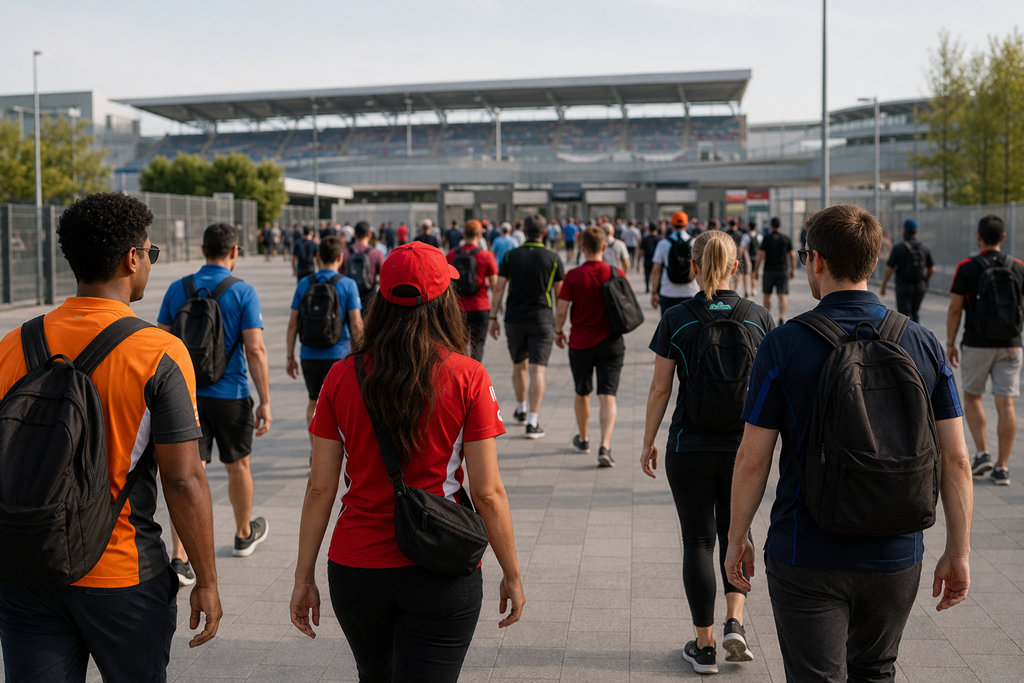
Major F1 events are not quick in-and-out experiences. Getting to the circuit can take longer than expected, especially on Saturday and Sunday. Shuttle buses, trains, rideshares, walking routes, security checks, and entrance lines can all add time.
This is where many first-time visitors get frustrated. They plan as if they are attending a regular sporting event, then discover that a Grand Prix can feel closer to a festival combined with a major citywide travel movement.
Build extra time into the day. Arriving earlier gives you room to find your seat, buy food, locate restrooms, explore fan areas, and handle small surprises without feeling like the weekend is slipping away.
Leaving can also take patience. After the race, thousands of people may be heading toward the same exits, stations, shuttles, and roads. Planning a slower exit can make the experience feel calmer. Sometimes staying a little longer, getting food, taking photos, or letting the crowd thin out is better than rushing into the busiest moment.
Dress for a Long Outdoor Day, Not Just a Stylish Event
F1 has a stylish image, and many race weekends do include fashion, hospitality, sponsor events, and city nightlife. But the actual track day is often practical.
You may walk far, stand in lines, sit in sun, deal with rain, climb temporary stairs, cross grass or gravel areas, and carry your essentials all day. Comfortable shoes matter. Weather-appropriate clothing matters. Sun protection, a small portable charger, ear protection, and a refillable water bottle where allowed can make the day feel much smoother.
This does not mean you cannot dress well. It simply means your outfit should respect the reality of the event. A Grand Prix is not only a photo opportunity. It is a long spectator travel day with changing conditions.
Don’t Overpack the Weekend
Because F1 travel feels special, it is tempting to fill every hour with plans: fan events, restaurants, sightseeing, parties, merchandise shopping, track sessions, and local attractions. That can work for some travelers, but it can also make the trip feel exhausting.
A Grand Prix weekend already takes energy. The crowds, walking, noise, sun, transport, and excitement add up. If you are new to F1 travel, it is wise to choose a few priorities instead of trying to experience everything.
Maybe your priorities are qualifying, the race, one good local meal, and time to explore the host city. Maybe you care most about the fan zone, team merchandise, and getting good photos. Maybe you want a calmer trip where the race is the highlight, not one item in an overstuffed itinerary.
There is no single correct version of an F1 weekend. The better question is: what pace will let you actually enjoy being there?
Learn the Circuit Before You Arrive
You do not need to study every corner, but it helps to understand the basic layout before race weekend. Look at where your entrance is, where your seat or viewing zone is, where the nearest restrooms and food areas are likely to be, and how you will get back to your transportation point.
Many first-time attendees underestimate how large some circuits feel in person. A short-looking walk on a map may take longer because of crowds, barriers, hills, bridges, or one-way pedestrian routes.
Knowing the layout also helps you feel more confident. Instead of spending the first hour trying to orient yourself, you can settle in and enjoy the event.
Expect Some Confusion, Even With Good Planning
Even well-planned Grand Prix weekends can include confusing moments. Signs may not be perfect. Staff directions may vary. Mobile service may be weak. Weather may change. Food lines may be longer than expected. A session may be delayed. Your preferred route may close.
This is normal for large spectator events. It does not mean you planned badly. It means you are attending a complex international sporting event with thousands of moving parts.
The best mindset is flexible preparation. Know your essentials, give yourself extra time, and accept that part of the experience may require adjusting in the moment.
Watch the Crowd as Much as the Cars
One of the most enjoyable parts of F1 travel is seeing how international the fan base is. You may see team shirts from different eras, flags from many countries, families supporting different drivers, and longtime fans explaining details to newer ones.
For a new fan, this can make the weekend feel more welcoming. You are not expected to know everything. Many people around you are learning too. Others are happy to explain what they know. The shared atmosphere is part of the appeal.
A Grand Prix is not only about watching cars pass by. It is about being inside a temporary world built around speed, travel, identity, loyalty, and place.
Keep the Trip Grounded in What You Came For
A first F1 trip can easily become complicated: Which ticket is best? Which day should you attend? What should you wear? How early should you arrive? Where should you stay? How much should you know first?
Those questions matter, but they should support the experience rather than take it over.
At its best, your first Grand Prix should leave you with a clearer sense of the sport, a strong memory of the place, and a feeling that you handled the weekend well enough to enjoy it. You do not need a perfect itinerary. You need a realistic one.
Give yourself time, choose comfort where it matters, learn just enough to follow the event, and let the rest of the weekend unfold. Formula 1 travel becomes much easier when you stop trying to experience it perfectly and start experiencing it attentively.
Download Our Free E-book!