You do not need to turn an Australian Open trip into a packed Melbourne itinerary to have a good time. In fact, one of the best ways to enjoy the city around the tournament is to plan lightly: secure the tennis experience that matters most, choose a few flexible nearby things to do, and leave enough open space for heat, crowds, long matches, food breaks, and unexpected discoveries.
The Australian Open is held at Melbourne Park, close to the city center, which makes it easier to blend tennis with relaxed city time than many major sporting events. That convenient location is part of what makes the trip appealing, but it can also tempt visitors into overplanning every spare hour.
The goal is not to “see all of Melbourne” while attending the Australian Open. The better goal is to enjoy the tennis, feel present in the city, and avoid creating a schedule that makes the trip feel rushed before it even begins.
The Australian Open Already Takes Up More Energy Than People Expect
On paper, it may seem simple: watch tennis during the day, explore Melbourne before or after, then repeat. In real life, major spectator events are more absorbing than they look.
A day at the Australian Open can include walking between entrances, courts, food areas, shaded spaces, merchandise points, transport stops, and your seat. Matches can run longer than expected. Weather can affect your pace. Evening sessions can stretch late. Crowds can make simple movements take more time.
That does not mean the event is hard to enjoy. It just means the tennis itself should be treated as the anchor of the trip, not as one item squeezed between a museum booking, a restaurant reservation, a laneway tour, a beach visit, and a late-night bar plan.
A calmer approach is to build your Melbourne time around “soft choices” rather than fixed commitments. Choose areas you might like to wander. Keep meal ideas flexible. Have a few backup activities nearby. Let the tennis day breathe.
Stay Close Enough That Melbourne Feels Easy, Not Like Another Project
Because Melbourne Park sits near central Melbourne, visitors can often enjoy the city without complicated logistics. Public transport, walking routes, rideshare options, and nearby accommodation areas can all help make the event feel easier to manage.
This matters because your accommodation choice can either simplify the trip or turn every day into a planning exercise.
You do not necessarily need to stay beside Melbourne Park. But staying in an area with straightforward access to the venue can make the whole trip feel more relaxed. Central Melbourne, Southbank, East Melbourne, Richmond, and nearby inner areas can work well depending on your budget, walking tolerance, and preferred pace.
The key question is not “What is the trendiest neighborhood?” It is: “Can I get to and from the tennis without draining myself?”
That one question prevents a lot of avoidable frustration.
Let the Tennis Decide the Shape of the Day
Overplanning often happens when travelers treat event days like normal sightseeing days. They are not.
If you have a day session, the morning should stay simple. Get breakfast, travel to the precinct, allow time for entry, and settle in. If you have a night session, the afternoon is a better time for a low-pressure Melbourne activity, but not necessarily a major cross-city outing.
If you have a ground pass or plan to move around the precinct, leave even more flexibility. Part of the Australian Open experience is not always knowing exactly which match, practice session, food stop, or shaded rest break will become the best part of the day.
That kind of enjoyment disappears when every hour is already assigned.
A useful rule is to plan one main tennis commitment and one light Melbourne idea per day. Not three attractions. Not a full dining crawl. Not a tightly timed checklist. One anchor and one optional add-on is often enough.
Choose Nearby Melbourne Moments Instead of Big Detours
The easiest Melbourne experiences around the Australian Open are often the ones that do not require a major transfer.
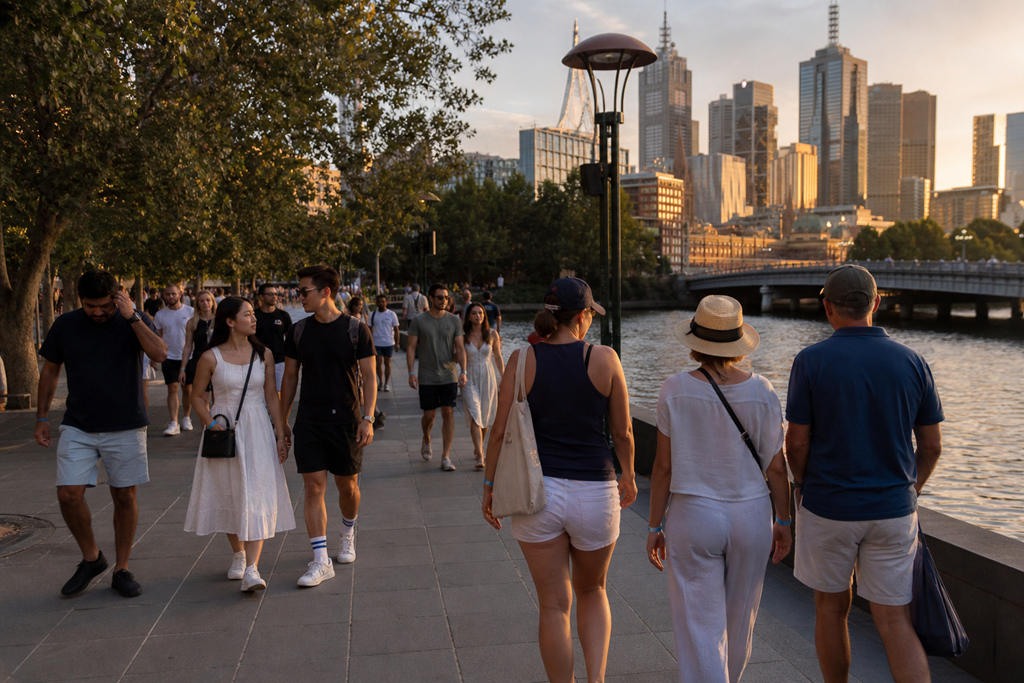
That might mean coffee before heading to the venue, a slow walk along the Yarra, dinner in the city after a day session, a casual laneway wander, a relaxed evening in Southbank, or a low-key morning near the Royal Botanic Gardens before tennis begins. These are not “lesser” travel moments. They are the kind of moments that make a sports trip feel like a real visit rather than a commute between tickets and obligations.
The mistake is assuming every open gap needs to be maximized. It does not. Around a major event, the smaller nearby experiences often fit better than the famous activities that require extra planning, transport, timing, and recovery.
Melbourne rewards wandering. That is useful during the Australian Open because wandering gives you room to adjust.
Build in Recovery Time Without Calling It Wasted Time
Many sports travelers underestimate how much sensory input comes with a major event. You are dealing with crowd movement, announcements, sun exposure, queues, transport timing, food decisions, match suspense, and constant small choices.
A quiet morning or unplanned afternoon is not wasted time. It is often what makes the next session more enjoyable.
This is especially true if you are attending multiple days. A single packed day can be exciting. Several packed days in a row can start to feel like work. You may still be in Melbourne, but you are no longer really taking it in.
A lighter schedule helps you notice more: the walk to the venue, the rhythm of the city during tournament season, the way fans gather before and after matches, and the simple pleasure of not rushing to the next booking.
The Most Common Overplanning Trap Is Treating Melbourne Like a Separate Trip
The Australian Open is not just something you attend while visiting Melbourne. During tournament time, it becomes part of the way you experience the city.
That means your Melbourne plans do not have to compete with the tennis. They can sit around it.
A visitor who books too many separate attractions may technically “do more,” but they may enjoy less. They may spend more time managing transport, checking reservation times, and worrying about being late than actually settling into the trip.
A visitor who plans lightly may see fewer headline attractions, but feel more connected to the event and the city. They have time to eat when hungry, rest when tired, follow an unexpected match, or stay longer in a neighborhood that feels good.
That is not poor planning. It is planning for the real version of the trip.
Keep Food Plans Flexible, Especially Around Match Timing
Restaurants can be part of a great Australian Open trip, but too many fixed meal reservations can become stressful. Tennis does not always finish neatly. A match can run long. Transport can take longer after a busy session. You may be hotter, more tired, or less hungry than expected.
A better approach is to have a short list of meal options rather than a rigid dining schedule. Choose a few places near your accommodation, near the venue, or along your route back. Make reservations only for meals that genuinely matter to you, and keep the rest casual.
This gives you structure without pressure.
It also helps avoid one of the stranger frustrations of spectator travel: leaving something enjoyable early because you planned something else too tightly.
Leave Room for the Event Atmosphere Outside the Match Itself
The Australian Open is not only about sitting in a seat watching tennis. The surrounding movement is part of the experience: arriving with other fans, hearing crowd reactions from nearby courts, seeing people in tennis gear around the city, and feeling Melbourne shift into major-event mode.
If your schedule is too full, you may miss that atmosphere because you are constantly moving toward the next planned thing.
Give yourself time to arrive early without stress. Allow time to walk around the precinct. Let yourself pause before leaving. These are small choices, but they often make the trip feel more complete.
For many spectators, the most memorable parts of a sports tourism trip are not only the headline moments. They are the transitions: the walk in, the meal afterward, the unexpected match, the conversation with another fan, the feeling of being in the host city while the event is alive.
A Better Melbourne Trip May Be the One With Fewer Obligations
Enjoying Melbourne around the Australian Open without overplanning comes down to respecting the event as the center of the trip. Choose your tennis days carefully. Stay somewhere that makes movement simple. Keep nearby Melbourne experiences in mind, but do not force the city into a packed checklist.
The best version of this trip gives you enough structure to feel prepared and enough space to enjoy what is actually happening.
You came for the Australian Open. Let Melbourne support that experience instead of competing with it.
That is usually where the calmer, more memorable trip begins.
Download Our Free E-book!