The best way to enjoy the Boston Marathon as a new running traveler is to treat it less like a normal sightseeing day and more like a shared citywide event with crowds, road closures, emotional moments, and limited flexibility. You do not need to be a serious runner to appreciate it, but you do need a simple plan for where you will watch, how you will get there, and what kind of experience you actually want.
The Boston Marathon is not just a race you glance at from the sidewalk. It stretches from Hopkinton to Boston, draws thousands of runners, and reshapes movement across the city on race day. The Boston Athletic Association notes that streets and roadways along and near the course close to vehicle traffic on race day, with times subject to change, so spectators should plan around the route rather than assuming they can move around normally.
For someone new to running travel, that is the main shift: you are not simply visiting Boston while a marathon happens nearby. You are entering a city that is temporarily organized around the marathon.
The Boston Marathon Feels Different From a Regular Sports Event
Most spectator sports have a clear venue. You buy a ticket, enter the stadium, find your seat, and stay mostly in one place.
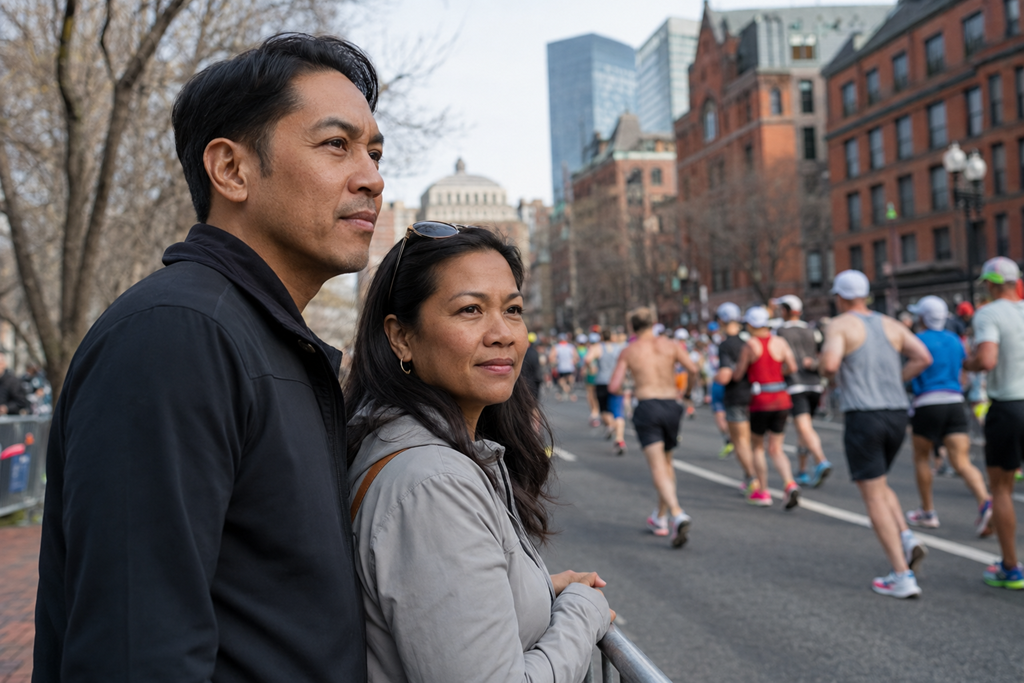
The Boston Marathon is different. The “venue” is the city and the towns along the course. Spectators line streets, gather near landmarks, move through public transit, meet friends at viewing spots, and often spend the day around runners they may or may not know.
That can feel exciting, but it can also feel disorienting if you are new to it. You may wonder where to stand, how early to arrive, whether you should try to see multiple parts of the race, or whether the finish line is the only place that matters.
It helps to know this early: you do not have to do everything. A good Boston Marathon spectator experience can be as simple as choosing one thoughtful viewing area, arriving with patience, cheering well, and giving yourself enough time to get back to your hotel or next stop.
Pick the Kind of Marathon Day You Actually Want
The easiest mistake is assuming that the “best” Boston Marathon experience is the most famous one. For many first-time spectators, that means trying to get near the finish on Boylston Street.
The finish area is meaningful, historic, and energetic. It is also crowded, controlled, and less flexible than quieter spots along the course. If you want the iconic finish-line atmosphere, plan for density, security, walking, and limited movement.
But if you want a more relaxed first experience, another part of the course may serve you better. Some spectators prefer a neighborhood feel, a slightly less crowded stretch, or a spot where they can see runners with more space around them. Others enjoy being near a transit-accessible point where they can cheer, take a break, and avoid spending the entire day pressed into the busiest areas.
This is one of the most helpful reframes for new running travelers: the best place to watch is not always the most famous place. It is the place that matches your energy, comfort level, travel group, and reason for attending.
Use Public Transportation as Part of the Plan, Not a Backup
Because road closures affect the course and nearby streets, driving around the marathon route is rarely the smoothest choice. The B.A.A. specifically points spectators toward public transportation access and notes that there are no spectator shuttles along the course.
That matters because new visitors sometimes build a plan around “we’ll just Uber” or “we’ll drive closer and park.” On Marathon Monday, that can quickly turn into frustration. Drop-off points may be farther away than expected, parking may be restricted, and roads that look simple on a map may not function normally.
A calmer approach is to choose a viewing area partly based on how you will reach it by the MBTA or on foot. Then leave extra time. The goal is not to make transportation perfect; it is to avoid depending on a plan that race-day conditions make unrealistic.
Give Yourself Permission To Stay in One Area
Trying to follow the race from town to town sounds appealing, especially if you are new and want to “see it all.” In practice, this can make the day harder than it needs to be.
The Boston Marathon covers a long point-to-point route. Moving around while roads are closed and crowds are gathered takes time and energy. You may spend more of the day navigating than actually experiencing the race.
For a first spectator trip, it is often better to choose one main area and settle into it. That gives you time to notice the rhythm of the event: the early anticipation, the wheelchair and elite athletes, the steady flow of runners, the family members scanning the course, the volunteers, the signs, the cheers, and the emotional fatigue that builds as the day goes on.
Running travel is not only about checking off famous places. Sometimes the value is in staying present long enough to understand the event.
The Emotional Side Is Part of the Experience
If you are new to running travel, you may be surprised by how personal the Boston Marathon feels. Even as a spectator, you are watching people carry months or years of training into one public moment.
Some runners are chasing fast times. Some are raising money. Some are returning after injury. Some are running for someone else. Some are simply trying to finish one of the most recognized marathons in the world.
That emotional layer is part of why the event draws people who are not runners themselves. You may come for the tradition, the city, or the spectacle, but you may remember the individual faces: someone hearing their name from the crowd, someone struggling up a hill, someone smiling because a stranger cheered for them.
This is also why good spectating matters. Staying out of the course, respecting barriers, and not interfering with runners is not just event etiquette. It helps protect the experience that everyone came to share. The B.A.A. states that spectators are not allowed to enter the course, run alongside athletes, or impede athletes in any way.
Do Not Build the Whole Trip Around Race Day Alone
The marathon may be the reason for the trip, but it should not be the only part of the trip that carries meaning.
Boston Marathon weekend often includes related events, athlete activity, visitors, and a different city atmosphere than a normal spring weekend. The B.A.A. promotes official resources such as the spectator guide and race app, and the official marathon page points visitors toward participant and spectator information.
For a new running traveler, this means you can make the trip feel fuller without overloading it. You might visit the expo, walk near parts of the course before race day, spend time in neighborhoods connected to your viewing plan, or simply enjoy Boston while being aware that the city is hosting something unusually large.
The key is balance. Do enough to feel connected to the marathon, but do not schedule every hour so tightly that race-day delays or crowds ruin the trip.
Common First-Time Spectator Mistakes
One common mistake is waiting too long to decide where to watch. If you arrive with only a vague idea of “somewhere near the finish,” you may spend too much time walking, adjusting, and trying to understand barriers while the event is already underway.
Another mistake is underestimating the weather. April in Boston can feel pleasant, cold, damp, windy, or changeable. A marathon spectator may stand outside for hours, so comfort matters more than looking perfectly dressed for vacation photos.
A third mistake is assuming the race will feel exciting every second. Marathon spectating has waves. There are thrilling moments, quiet stretches, crowded periods, and times when you may need food, a restroom, or a break. That does not mean you are doing it wrong. It means you are attending a long endurance event, not a two-hour game.
The final mistake is treating the runners as background scenery. The Boston Marathon is a visitor experience, but it is also someone else’s hard-earned race day. Cheer generously, stay aware, and remember that the best spectators add to the atmosphere without making themselves the center of it.
A Better Way To Think About Your First Boston Marathon Trip
Your first Boston Marathon spectator trip does not need to be perfect. It needs to be understandable.
Choose one main viewing area. Know how you will get there. Expect crowds and road closures. Give yourself more time than you think you need. Bring patience, layers, snacks, and a realistic sense of how much movement the day will allow.
Most of all, let the event be what it is: a major sporting tradition spread across a real city, shaped by runners, volunteers, residents, visitors, families, and spectators sharing the same long day.
When you approach it that way, the Boston Marathon becomes easier to enjoy. You are not trying to master running travel all at once. You are simply learning how to be present for one of its most memorable spectator experiences.
Download Our Free E-book!