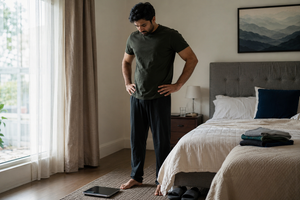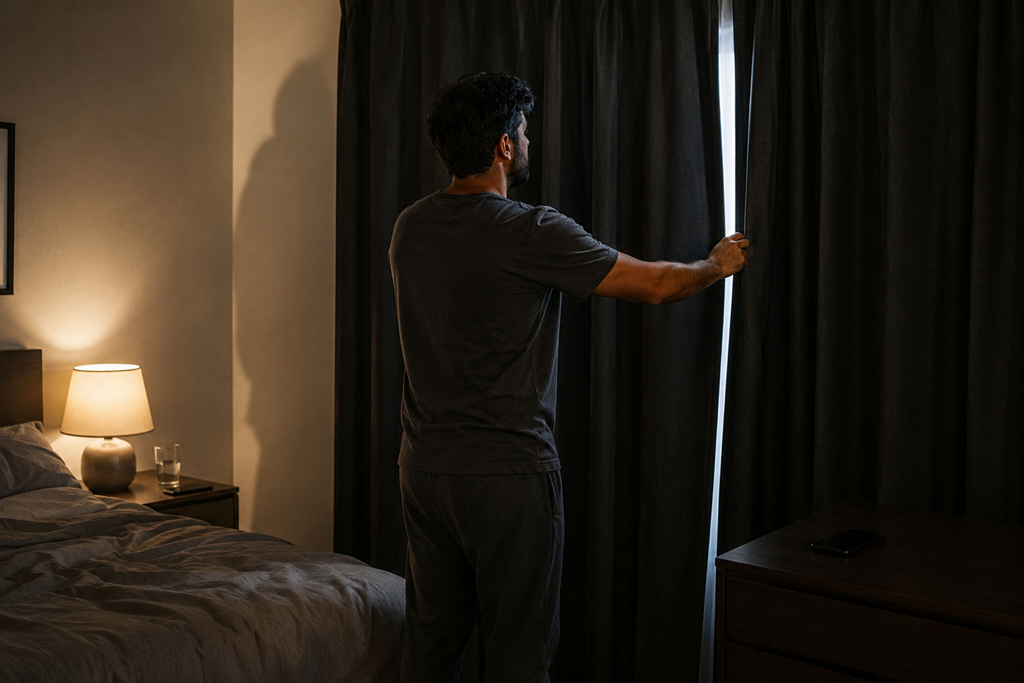
Daytime sleep feels hard after overnight work because your body is trying to rest while the world around you is sending wake-up signals.
You may be exhausted from working all night, but your bedroom, your household, your phone, the morning light, and your internal body clock may all be pushing in the opposite direction. That is why sleeping during the day often feels different from sleeping at night.
It is not just “sleep at a different time.” It is sleep under different conditions.
Your Body Clock Does Not Switch Instantly
Your body has natural rhythms that help regulate alertness and rest. For many people, the body expects to be more awake during daylight and more ready for sleep when it is dark.
Night shift work disrupts that pattern.
Even if you are tired after work, your body may still respond to morning as a wake-up cue. You might feel heavy, drained, and mentally worn out, but not fully sleepy.
That mismatch can feel confusing.
You may think:
“I should be asleep by now. I worked all night.”
But your body may be reacting to a different message:
“It is morning. Stay awake.”
This is one reason daytime sleep often feels lighter, shorter, or more fragile than nighttime sleep.
Morning Light Can Wake Your System Back Up
Light is one of the strongest signals your body receives.
After an overnight shift, you may leave work just as the sun is rising. You may drive home in bright morning light, walk into a lit house, or open curtains without thinking much about it.
That light can make your body feel more alert.
It does not always feel like a sudden burst of energy. Sometimes it feels like you are too tired to do anything, but still unable to settle.
Bright light can also make the transition home feel like the beginning of a day instead of the end of one.
This is why many night shift workers struggle even when they are physically exhausted. Their body is tired, but the environment is saying, “Wake up.”
Daytime Noise Is Harder to Control
At night, the world usually quiets down.
During the day, the opposite happens.
People leave for work. Children wake up. Neighbors mow lawns. Delivery trucks arrive. Dogs bark. Traffic increases. Phones buzz. Appliances run. Household conversations begin.
Even small sounds can feel disruptive when you are trying to sleep during the day.
The problem is not only the noise itself. It is the unpredictability.
A steady sound may fade into the background, but sudden sounds can jolt your body into alertness. Once that happens, it may be harder to return to sleep.
That is one reason daytime sleep can feel more easily interrupted than nighttime sleep.
Your Home May Not Respect Your Sleep Window Yet
Another challenge is that daytime sleep is often invisible to other people.
If you sleep at night, most people understand that you are unavailable. If you sleep during the day, others may forget, underestimate it, or treat it like flexible free time.
You might hear:
“Can you just help with this real quick?”
“I didn’t think you were really asleep.”
“I only needed one thing.”
“You can nap later, right?”
These interruptions can make your sleep feel unprotected.
Even if people mean well, repeated interruptions teach your body that your sleep window is not safe from disruption.
A better daytime sleep routine often requires the household to understand that your sleep is not a nap. It is your version of night.
Your Bedroom May Still Feel Like a Daytime Room
A bedroom that works well at night may not work as well during the day.
At night, darkness happens naturally. During the day, you may need to create it.
Daytime sleep can be harder if your room has:
- thin curtains
- light leaking around the window
- bright hallway light
- noise from outside
- phone alerts
- warm temperature
- household movement nearby
The room does not need to be perfect. But it should reduce the strongest wake-up signals.
If the room feels bright, active, warm, noisy, or connected to the rest of the day, your body may struggle to treat it like a sleep space.
Your Mind May Stay Connected to the Day
After overnight work, your mind may not just be reacting to the shift. It may also be reacting to the daytime world starting around you.
You may think about errands, family needs, appointments, messages, meals, chores, bills, or what you need to do before your next shift.
Because the world is awake, it can feel like you should be awake too.
That pressure can make sleep feel harder.
You may lie in bed thinking:
“I should take care of that now.”
“I need to answer them.”
“I forgot to do something.”
“I’m losing the day.”
This is one of the emotional challenges of night shift work. You are trying to recover while everything around you suggests you should be available.
Daytime Sleep Can Feel Lighter Than Nighttime Sleep
Many night shift workers notice that daytime sleep feels less deep or less satisfying.
That can happen for several reasons:
- more light exposure
- more noise
- more interruptions
- body-clock mismatch
- stress from the shift
- caffeine timing
- pressure to wake by a certain time
This does not mean daytime sleep is useless. It means it may need more protection.
Even if your sleep is not perfect, a protected daytime sleep window can still support recovery better than random rest, scattered naps, or staying awake until you crash.
The Mistake of Treating Daytime Sleep Like a Nap
One common misunderstanding is treating post-shift sleep like an optional nap.
But if you work overnight, your daytime sleep is not a bonus rest period. It is your main recovery window.
That means it deserves more structure than a casual nap.
If you treat it like something you will “try to fit in,” it will often get crowded out by chores, messages, family needs, sunlight, and noise.
A better mindset is:
This is my sleep window, not leftover time.
That shift matters because it changes how you protect the hours after work.
What Helps at a High Level
Daytime sleep usually improves when you reduce the strongest wake-up signals.
That may mean:
- making the room darker
- reducing sudden noise
- setting clearer household expectations
- keeping your phone from interrupting you
- lowering stimulation after work
- treating your sleep window as protected time
You do not have to fix everything at once.
Start with the biggest problem.
If light is the issue, address light first.
If noise is the issue, address noise first.
If interruptions are the issue, address boundaries first.
If your phone is the issue, address notifications first.
A small change that protects your sleep window can be more useful than a complicated plan you cannot repeat.
When You Need a More Complete System
Understanding why daytime sleep is difficult can help you stop blaming yourself. But if you regularly come home from overnight work exhausted and still struggle to sleep, you may need a more structured way to protect the transition from shift to rest.
If you want a practical system for applying this after work, How to Fall Asleep After a Night Shift When You Feel Wired but Tired gives you a guided way to lower stimulation, protect your sleep window, and make post-shift rest feel less random.
The Main Takeaway
Daytime sleep after overnight work feels hard because your body is trying to rest in an environment built for wakefulness.
Light, noise, household activity, phone alerts, and body-clock mismatch can all make sleep feel harder than it should.
That does not mean you are doing something wrong.
It means daytime sleep needs more protection. When you understand the signals working against you, it becomes easier to create a calmer space for recovery.
Download Our Free E-book!