Travel days are often a mix of excitement and low-level stress. You’re heading somewhere new, breaking out of your routine, and juggling multiple moving parts all at once. Somewhere in the middle of that, a quiet but persistent thought tends to show up:
“I feel like I’m forgetting something.”
That feeling alone can take some of the ease out of travel before it even begins. A simple packing list might seem like a small thing, but it plays a much bigger role than most people expect. It doesn’t just help you remember items—it helps create a sense of clarity, control, and calm in a moment that can otherwise feel scattered.
The Hidden Stress Behind “Did I Pack Everything?”
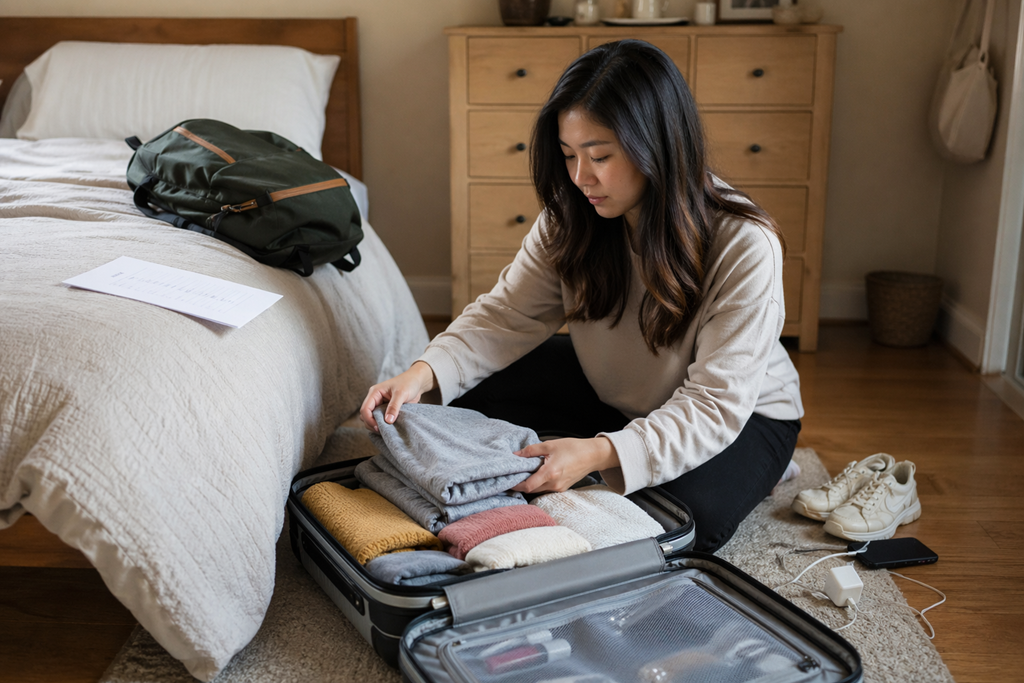
Packing is rarely just about putting items into a suitcase. It usually happens alongside everything else that comes with travel:
- Finalizing bookings
- Managing schedules
- Handling work or family responsibilities before leaving
- Double-checking logistics like transportation and timing
Because of that, packing often gets squeezed into the edges of your attention. You might start a mental checklist, but it’s easy to lose track or second-guess yourself.
This is where anxiety tends to build—not from any one item, but from uncertainty.
You might pack extra “just in case,” leading to overpacking. Or you might rush and hope you didn’t forget anything important. Either way, the underlying issue is the same: there’s no clear system guiding the process.
What a Packing List Actually Does (Beyond the Obvious)
At first glance, a packing list is just a list of items. But in practice, it does something more valuable: it moves your planning out of your head and into something you can see and trust.
When everything stays in your head, you’re constantly trying to remember, review, and reassess. That takes mental energy, especially when you’re already managing other details.
A written list changes that dynamic.
Instead of asking yourself, “Did I remember everything?”
You can look down and know, “This is what I planned, and I’ve checked it.”
That shift—from guessing to confirming—is what reduces anxiety.
Why Travel Amplifies Small Oversights
In everyday life, forgetting something usually isn’t a big deal. You can go back home, pick it up later, or work around it.
Travel removes that flexibility.
If you forget something while traveling, you may need to:
- Spend time finding a replacement
- Pay more than usual for it
- Adjust your plans around the missing item
Even small things—like a phone charger or comfortable shoes—can create unnecessary friction.
Because of this, your brain tries to anticipate every possible need. Without structure, that turns into mental overload rather than helpful preparation.
A packing list gives that anticipation a place to land. Instead of cycling through “what if” scenarios, you organize your thinking once and then follow through on it.
Where Packing Usually Breaks Down
Most people don’t struggle with starting to pack. The friction tends to show up in the middle.
You might:
- Pack some items early, then lose track of what’s already included
- Add things last-minute without reviewing the full picture
- Rely on memory for certain categories (like toiletries or documents)
- Second-guess yourself and repack or overpack
This creates a stop-and-start process that feels inefficient and mentally tiring.
A simple list creates continuity. You’re not starting from scratch every time you come back to your suitcase—you’re continuing a process that already has structure.
A Simple Reframe: Packing Isn’t About Memory
It’s easy to think of packing as a memory task:
“I just need to remember what to bring.”
But that framing makes it harder than it needs to be.
Packing works better as a planning task.
Instead of relying on recall in the moment, you decide in advance what matters for your trip. Then, when it’s time to pack, you’re simply following through on those decisions.
This reframe alone can make packing feel more manageable. You’re not trying to think and act at the same time—you’ve already done the thinking.
Why Categories Make Everything Easier
One of the most helpful aspects of a packing list is how it groups items into categories.
For example:
- Clothing
- Toiletries
- Electronics
- Travel documents
- Daily essentials
When everything is categorized, you don’t have to jump randomly between items in your mind. You can focus on one section at a time and move through it calmly.
This reduces decision fatigue and makes it much easier to notice what’s missing.
It also helps you avoid common blind spots—like remembering clothes but forgetting chargers, or packing toiletries but overlooking important documents.
The Role of Repetition in Lowering Stress
One of the reasons travel can feel stressful is that it’s not always a routine process. Even if you travel often, each trip can be slightly different.
A packing list introduces consistency.
Instead of reinventing your packing process each time, you use the same structure as a starting point. Over time, this builds familiarity.
You begin to recognize patterns:
- What you actually use
- What you tend to overpack
- What you’ve forgotten in the past
That awareness naturally leads to smoother, more confident preparation.
When a Simple Tool Makes Follow-Through Easier
Understanding the value of a packing list is one thing. Actually using one consistently is another.
This is where having a ready-made structure can help.
A simple, well-organized Travel Packing List removes the need to create your own system each time. It gives you a clear starting point, organized categories, and a way to check things off as you go.
Instead of thinking, “I should probably make a list,”
You can move straight into using one.
If staying organized during travel prep tends to feel scattered or rushed, having that structure already in place can make the process feel more steady and manageable.
Travel Feels Different When Preparation Feels Clear
Packing may seem like a small part of travel, but it shapes the beginning of your entire experience.
When packing feels rushed or uncertain, that stress tends to carry into the first part of your trip. You might feel distracted, double-check things repeatedly, or worry about what you forgot.
When packing feels clear and complete, the opposite happens.
You leave with a sense of:
- Confidence that you’re prepared
- Calm about what’s ahead
- Freedom to focus on the experience itself
That shift doesn’t come from packing perfectly. It comes from having a simple, reliable way to organize the process.
If having that kind of structure would make your travel days feel more settled, the Travel Packing List can give you a straightforward way to plan, organize, and check everything before you leave.
Download Our Free E-book!