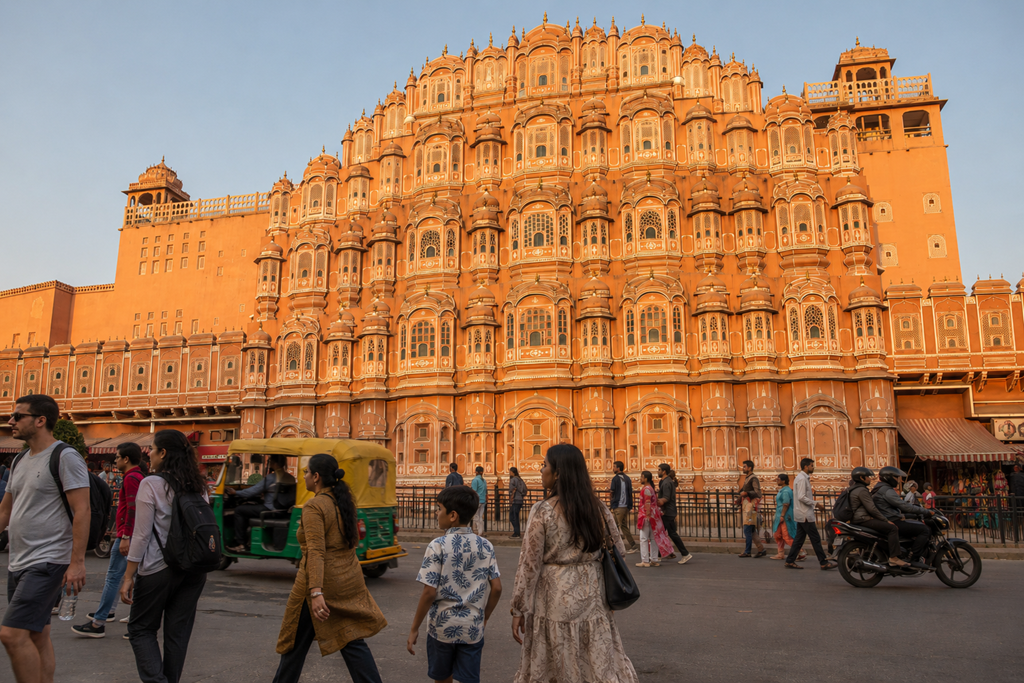
Jaipur is one of India’s most rewarding cities for travelers who enjoy architecture, layered history, craft traditions, and lively street life. Known as the Pink City, it is the capital of Rajasthan and part of India’s classic Golden Triangle route with Delhi and Agra. Jaipur is especially well suited for first-time visitors because many of its most memorable experiences are rooted in long-standing landmarks, markets, forts, temples, and neighborhoods rather than short-lived trends.
This guide highlights 12 of the best things to do in Jaipur, with practical notes to help you choose what belongs on your itinerary, how to pace your visit, and what each experience is best for.
Historic Palaces, Forts, And City Views
1) Visit Amber Fort For Jaipur’s Grandest Hilltop Experience
Amber Fort, also called Amer Fort or Amber Palace, is one of Jaipur’s essential sights. Set outside the main city area, the fort-palace complex combines courtyards, gateways, halls, terraces, and views of the surrounding hills. Rajasthan Tourism notes that underground tunnels connect Amer with Jaigarh Fort, adding to the site’s defensive and royal history.
This is one of the best places to begin understanding Jaipur because it shows the scale of Rajasthan’s royal architecture. It is especially worthwhile for travelers interested in history, photography, palace design, and scenic viewpoints.
Give yourself enough time to explore without rushing. The site is large, and the experience is better when you can move slowly through the courtyards, look closely at the details, and pause for the views. Check current opening hours before you go, and consider arriving earlier in the day if you prefer cooler weather and lighter crowds.
2)) See Hawa Mahal From The Street And Nearby Viewpoints
Hawa Mahal, the Palace of Winds, is one of Jaipur’s most recognizable landmarks. Built in 1799 by Sawai Pratap Singh, the five-storey façade is known for its small latticed windows, or jharokhas, which allowed royal women to observe everyday life while remaining unseen.
For many visitors, the most memorable view is from the street or from an elevated viewpoint across the road. The façade is narrow and dramatic, so it is easy to appreciate even if you do not spend a long time inside.
This stop is best for first-time visitors, architecture lovers, and anyone who wants a classic Jaipur photo. Pair it with a walk through the old city markets nearby so the visit feels connected to the surrounding neighborhood rather than treated as a quick photo stop.
3)) Explore City Palace For Royal Architecture And Museum Spaces
City Palace sits at the heart of Jaipur’s old city and gives travelers another perspective on the city’s royal past. It is a useful stop if you want to see courtyards, gateways, textiles, decorative objects, and palace architecture in a more central setting.
This is a good choice for visitors who want a polished museum-style experience without leaving the city center. It also pairs naturally with Jantar Mantar and Hawa Mahal because all three are close enough to plan as part of the same sightseeing route.
Because parts of palace complexes and museum areas can change over time, check current visitor access before you go. A guided visit can also help if you want deeper context rather than simply walking through the grounds.
4)) Visit Jantar Mantar To See Jaipur’s Scientific Heritage
Jantar Mantar is one of Jaipur’s most distinctive historic sites. It is a collection of large astronomical instruments built in the 18th century, and it is recognized as a UNESCO World Heritage Site. Incredible India describes it as a group of 19 astronomy instruments constructed between 1728 and 1734, including the world’s largest stone sundial.
This is one of the best things to do in Jaipur if you enjoy science, design, geometry, or unusual historical places. It is also a useful reminder that Jaipur’s heritage is not only about palaces and forts; the city was shaped by planning, astronomy, and intellectual ambition as well.
To get the most from the visit, consider hiring a guide or using a reliable audio guide. Without context, the instruments can be impressive but difficult to fully understand.
5)) Go To Nahargarh Fort For A Wide View Over Jaipur
Nahargarh Fort sits on the edge of the Aravalli hills and is known for its broad views over Jaipur. Rajasthan Tourism describes it as a popular destination overlooking the city, while Incredible India notes that it also offers views toward Jal Mahal.
This is a strong choice if you want a sense of Jaipur’s geography. From above, the city’s density, hills, historic core, and modern growth become easier to understand.
Nahargarh is especially good for photographers, couples, and travelers who like scenic pauses between busier sightseeing stops. Plan transportation in advance, especially for the return trip, and avoid cutting your timing too close if you are visiting near sunset.
6)) Add Jaigarh Fort If You Want More Military History
Jaigarh Fort is often paired with Amber Fort or Nahargarh Fort, but it has a more defensive character. Positioned in the Aravalli range, it helps visitors understand how Jaipur’s hill forts worked together to protect the region. Incredible India notes Jaigarh’s elevated position and connection to Jaipur’s fort landscape.
This stop is best for travelers who enjoy fortifications, viewpoints, and military history. If you only have one day in Jaipur, Amber Fort is usually the more essential choice. If you have two or three days, Jaigarh can add useful context without feeling repetitive.
Markets, Craft, And Everyday Jaipur
7)) Walk Through The Old City Bazaars
Jaipur’s bazaars are not just places to shop; they are part of the city’s identity. The old market streets are known for textiles, jewelry, bangles, leather goods, block prints, spices, and everyday local commerce. Rajasthan Tourism highlights Jaipur’s global reputation for colored gems, while Incredible India also notes the city’s association with gemstones and block printing.
Johari Bazaar, Bapu Bazaar, Tripolia Bazaar, and nearby market lanes are good areas to experience the city’s color and movement. Even if you are not planning to buy much, walking through the markets helps connect the major landmarks to daily life.
Go with patience rather than a checklist. The lanes can be busy, and browsing is part of the experience. If you plan to shop, compare quality, ask questions, and avoid feeling pressured into quick purchases.
8)) Learn About Block Printing And Textile Traditions
Jaipur and the surrounding region are closely tied to textile craft, including hand block printing. For travelers who enjoy design, home goods, fashion, or traditional craft, this can be one of the most meaningful experiences in the area. Incredible India specifically highlights block printing as part of Jaipur’s cultural identity.
You can look for workshops, artisan visits, or guided craft experiences that explain how patterns, dyes, fabrics, and wooden blocks come together. These experiences are especially worthwhile if you want something more hands-on than palace sightseeing.
Choose a reputable workshop or guide that treats artisans respectfully and explains the process clearly. If you buy textiles, ask about materials, washing care, and whether the item is hand-printed or machine-made.
9)) Try Jaipur’s Street Food And Rajasthani Flavors Thoughtfully
Food is one of the easiest ways to experience Jaipur beyond sightseeing. The city is known for snacks, sweets, thalis, kachori, lassi, and rich Rajasthani dishes. Instead of chasing a current “best restaurant” list, focus on durable food experiences: busy local snack shops, traditional sweets, market-area food walks, and well-reviewed family-run or long-standing places.
A guided food walk can be helpful if you are new to Indian street food or want local context. It can also make it easier to try several items without over-ordering.
Use common-sense food precautions. Choose places with steady turnover, drink safe water, and be realistic about spice levels. If you have dietary restrictions, write them down clearly or travel with a translated note.
Museums, Temples, And Cultural Stops
10)) Visit Albert Hall Museum For Art, History, And Architecture
Albert Hall Museum is one of Jaipur’s major museum stops and a good option when you want a slower indoor experience. It is often appreciated for both its collections and its building, which sits within the Ram Niwas Garden area.
This is a useful addition for travelers who want to balance outdoor forts and markets with a museum visit. It can also work well during hotter parts of the day when you may want a break from walking in the sun.
Museum displays and access can change, so check current details before visiting. If your Jaipur itinerary is short, prioritize it after Amber Fort, Hawa Mahal, City Palace, and Jantar Mantar. If you have more time, it adds depth.
11)) Pause At Jal Mahal For A Classic Lake View
Jal Mahal, or the Water Palace, sits in Man Sagar Lake and is one of Jaipur’s most photogenic sights. Rajasthan Tourism describes the palace as appearing to float in the center of the lake, with light stone walls contrasting against the water.
For most travelers, Jal Mahal is best treated as a scenic stop rather than a long visit. The palace itself is generally admired from outside, so it works well between other destinations, especially when traveling between the old city and Amber-area sights.
It is a good choice for photographers and anyone who wants a quiet visual break from Jaipur’s busy streets. Visit when the light is softer if photography matters to you.
12)) Visit Birla Mandir Or Govind Dev Ji Temple For A Spiritual Stop
Jaipur’s temples add another layer to the city’s travel experience. Birla Mandir is known for its white marble architecture, while Govind Dev Ji Temple is deeply woven into local devotional life. Rajasthan Tourism describes Govind Dev Ji Temple as a Krishna temple connected with Sawai Jai Singh and revered by locals.
These are worthwhile stops if you want your Jaipur trip to include living culture, not only royal history. Visit respectfully, dress modestly, and be mindful of worshippers. Photography rules can vary, so check signs or ask before taking pictures.
If you prefer architecture and a straightforward visit, Birla Mandir may be easier to include. If you want a more local devotional atmosphere, Govind Dev Ji can be especially meaningful.
How To Prioritize Your Jaipur Itinerary
If you have one full day in Jaipur, focus on Amber Fort, Hawa Mahal, City Palace, Jantar Mantar, a short bazaar walk, and one viewpoint or scenic stop if time allows. This gives you the best mix of palace architecture, old city life, and historic context.
With two days, add Nahargarh Fort, Jal Mahal, Albert Hall Museum, and a more relaxed market or food experience. This pace makes the city feel less rushed and gives you more room to enjoy the details.
With three days, consider adding Jaigarh Fort, a textile or block-printing experience, and more time for temples, cafés, or neighborhood walks. Jaipur rewards travelers who leave space between major sights rather than trying to turn every hour into another stop.
Practical Travel Notes For Jaipur
Jaipur can feel busy, especially in the old city, so plan your days by geography. Group Hawa Mahal, City Palace, Jantar Mantar, and the old bazaars together. Group Amber Fort, Jaigarh Fort, Jal Mahal, and possibly Nahargarh Fort separately, depending on your timing and transportation.
The weather can strongly shape your experience. Outdoor forts and markets are more comfortable earlier or later in the day, while museums and indoor palace areas can help break up hotter hours. During busy travel periods, book ahead where appropriate and confirm current opening hours before setting out.
For transportation, many travelers use a combination of app-based rides, private drivers, auto-rickshaws, and guided tours. A driver can be useful for fort-heavy days because the distances and hills make point-to-point planning easier.
Above all, do not treat Jaipur as only a checklist of famous buildings. The city is at its best when you allow time for courtyards, market lanes, craft details, lake views, and small pauses between the major sights.
Download Our Free E-book!