Melbourne is one of Australia’s best cities for travelers who enjoy neighborhoods, food, art, architecture, gardens, and slow exploration. It is less about rushing between famous landmarks and more about noticing the details: a quiet arcade, a painted laneway, a strong coffee, a riverside walk, or a neighborhood street filled with local character.
This 4-day Melbourne itinerary is designed for a first-time visit with a realistic pace. It balances classic Melbourne highlights with local-feeling areas, easy walks, cultural stops, food experiences, and a few hidden gems that help the city feel more personal.
Melbourne’s central laneways, Queen Victoria Market, Royal Botanic Gardens, State Library Victoria, ACMI, and the City Circle Tram are all durable visitor favorites highlighted by official Melbourne travel guidance. Tourism Australia also emphasizes Melbourne’s laneways, neighborhoods, and food scene as core parts of the city experience.
Before You Start: How To Think About Melbourne
Melbourne is a city that rewards walking, trams, and flexible planning. Many of its best experiences are clustered around the central business district, the Yarra River, Carlton, Fitzroy, Southbank, St Kilda, and the inner suburbs.
For a short trip, it helps to plan each day around one main area instead of crossing the city repeatedly. This itinerary keeps the flow practical:
Day 1: Central Melbourne, laneways, arcades, and the Yarra
Day 2: Markets, Carlton, Fitzroy, and local neighborhoods
Day 3: Gardens, museums, Southbank, and skyline views
Day 4: St Kilda, beaches, coastal atmosphere, and final city favorites
Check current opening hours before you visit major attractions, especially museums, markets, and galleries. Some places may require timed-entry reservations during busy travel periods.
Day 1: Central Melbourne, Laneways, Arcades, And The Yarra
Morning: Start With Melbourne’s Laneways And Coffee Culture
Begin your first morning in central Melbourne with a walk through the city’s famous laneways. This is one of the best ways to understand the city quickly because the laneways reveal so much of Melbourne’s personality: street art, small cafés, independent shops, hidden entrances, and tucked-away dining spots.
Start around Flinders Street Station and Federation Square, then wander toward Hosier Lane, Degraves Street, Centre Place, and nearby arcades. Hosier Lane is especially known for its street art and sits close to Federation Square.
This is not a part of the city to rush. Give yourself time to look up, step into side passages, and stop for coffee. Melbourne’s café culture is a major part of the travel experience, and your first morning is a good time to enjoy it without overplanning.
Late Morning: Visit Federation Square And ACMI
After exploring the laneways, spend time around Federation Square. It is a central meeting point and a useful anchor for getting your bearings in the city.
If you enjoy film, television, games, digital culture, or interactive exhibitions, visit ACMI. Official Melbourne visitor guidance highlights ACMI as a central cultural stop at Federation Square, with many exhibits often free to visit.
Even if you do not spend long inside, this area helps connect Melbourne’s older city fabric with its more modern cultural side.
Lunch: Eat Around Flinders Lane Or Chinatown
For lunch, stay central. Flinders Lane, Chinatown, and the nearby laneways give you plenty of options without needing to travel far. Melbourne’s food scene is broad, multicultural, and well suited to travelers who like variety.
Avoid building your day around one specific “must-visit” restaurant unless you already have a reservation. For an evergreen trip plan, it is better to choose a food area and keep your options open.
Afternoon: Explore Historic Arcades And Shopping Streets
Spend the afternoon exploring Melbourne’s historic arcades and central shopping streets. The Block Arcade, Royal Arcade, and surrounding lanes are good places to appreciate the city’s architecture, window displays, small shops, and indoor passages.
This part of the city is especially enjoyable when the weather changes, which can happen quickly in Melbourne. If it rains, you can still enjoy the arcades, cafés, galleries, and covered shopping areas.
Evening: Walk Along The Yarra River
End your first day with a walk along the Yarra River. Start near Federation Square or Princes Bridge, then continue toward Southbank. The riverside path gives you a different view of the city, with bridges, skyline views, restaurants, and public spaces.
Keep dinner flexible. Southbank is convenient, but you may also prefer to return to the CBD, Flinders Lane, or Chinatown depending on your energy level.
Day 2: Queen Victoria Market, Carlton, Fitzroy, And Local Neighborhoods
Morning: Visit Queen Victoria Market
Start Day 2 at Queen Victoria Market, one of Melbourne’s classic food and shopping experiences. Official Melbourne visitor guidance describes it as a long-running open-air market with fresh produce, food aromas, stalls, and a lively atmosphere.
Go in the morning when the market feels active and you can browse at an easy pace. This is a good place for breakfast, snacks, fresh produce, casual food, or small gifts.
Because market schedules can vary, check current trading days before planning your visit.
Late Morning: Walk To The State Library Victoria
From the market, continue toward State Library Victoria. The library is one of Melbourne’s most beautiful public interiors, especially the domed La Trobe Reading Room. Official Melbourne guidance highlights it for its architecture, historic collections, exhibitions, and quiet corners.
This is a good slower stop between the energy of the market and the neighborhoods you will explore later in the day.
Lunch: Head Toward Carlton
For lunch, walk or take a tram toward Carlton. This neighborhood is strongly associated with Italian food, leafy streets, bookshops, cafés, and a more residential rhythm than the central city.
Lygon Street is the best-known food street in the area. Rather than chasing a specific restaurant, walk the area and choose a place that fits your mood. Carlton is especially pleasant for travelers who like neighborhood wandering and a meal that feels less rushed.
Afternoon: Explore Carlton Gardens And The Royal Exhibition Building Area
After lunch, spend time around Carlton Gardens and the Royal Exhibition Building area. This is a graceful part of Melbourne, with open lawns, tree-lined paths, and historic architecture.
If you enjoy museums, you can consider visiting Melbourne Museum nearby. If not, the gardens themselves make a worthwhile pause before continuing to Fitzroy.
Late Afternoon: Wander Fitzroy
Continue into Fitzroy, one of Melbourne’s most characterful inner neighborhoods. Fitzroy is a good area for independent shops, street art, casual bars, vintage stores, galleries, and local food.
Brunswick Street and Gertrude Street are useful anchors, but the best approach is to wander. This is the kind of neighborhood where the small discoveries are the point.
Evening: Dinner In Fitzroy Or Back In The CBD
Stay in Fitzroy for dinner if you like a more neighborhood-based evening. Otherwise, return to the CBD for a wider range of central options.
Day 2 is intentionally less landmark-heavy than Day 1. It gives you a better feel for Melbourne’s everyday culture, especially through markets, libraries, cafés, and inner-suburb streets.
Day 3: Gardens, Culture, Southbank, And Scenic City Views
Morning: Royal Botanic Gardens Victoria
Begin Day 3 at the Royal Botanic Gardens Victoria, Melbourne Gardens. Official Melbourne guidance describes the gardens as one of the city’s finest urban green spaces, with lakes, palms, native plants, and relaxed walking paths. The Royal Botanic Gardens’ own site identifies Melbourne Gardens at Birdwood Avenue and notes that it is open every day of the year.
Give yourself time for a gentle walk rather than treating the gardens as a quick stop. This is one of the best places in Melbourne to slow the pace of the trip.
Late Morning: Shrine Of Remembrance
Near the gardens, visit the Shrine of Remembrance. Even if you only spend a short time here, the site offers history, architecture, and views back toward the city.
Pairing the gardens and the Shrine works well geographically, and the combination gives the morning a quieter, more reflective feel.
Lunch: South Melbourne Or Southbank
For lunch, choose either South Melbourne or Southbank depending on your interests. South Melbourne gives you a more local neighborhood feel, while Southbank keeps you close to the river, museums, and galleries.
If your trip overlaps with South Melbourne Market trading hours, it can be a worthwhile food stop. As always, verify current days and hours before building your plan around it.
Afternoon: National Gallery Of Victoria
Spend the afternoon at the National Gallery of Victoria, one of Melbourne’s major cultural institutions. This is a strong choice whether you are deeply interested in art or simply want a high-quality indoor experience during your trip.
Because exhibitions can change, think of the gallery as a durable cultural stop rather than planning around one specific show. Check current exhibitions and entry requirements before you go.
Late Afternoon: Arts Precinct And Southbank Walk
After the gallery, walk through the Arts Precinct and continue along Southbank. This area works well late in the day because the river, bridges, skyline, and public spaces all become more atmospheric as the light softens.
You can keep the evening simple with dinner near Southbank, Flinders Lane, or another central dining area.
Optional Evening: A Performance Or Low-Key Night Out
Melbourne has a strong performing arts and live entertainment scene. If you enjoy theater, music, comedy, or live performance, consider adding an evening show.
For an evergreen itinerary, avoid planning around a specific event far in advance unless it is important to you. Instead, check what is on during your travel dates and choose something that fits your schedule.
Day 4: St Kilda, Coastal Melbourne, And Final Hidden Gems
Morning: Take The Tram To St Kilda
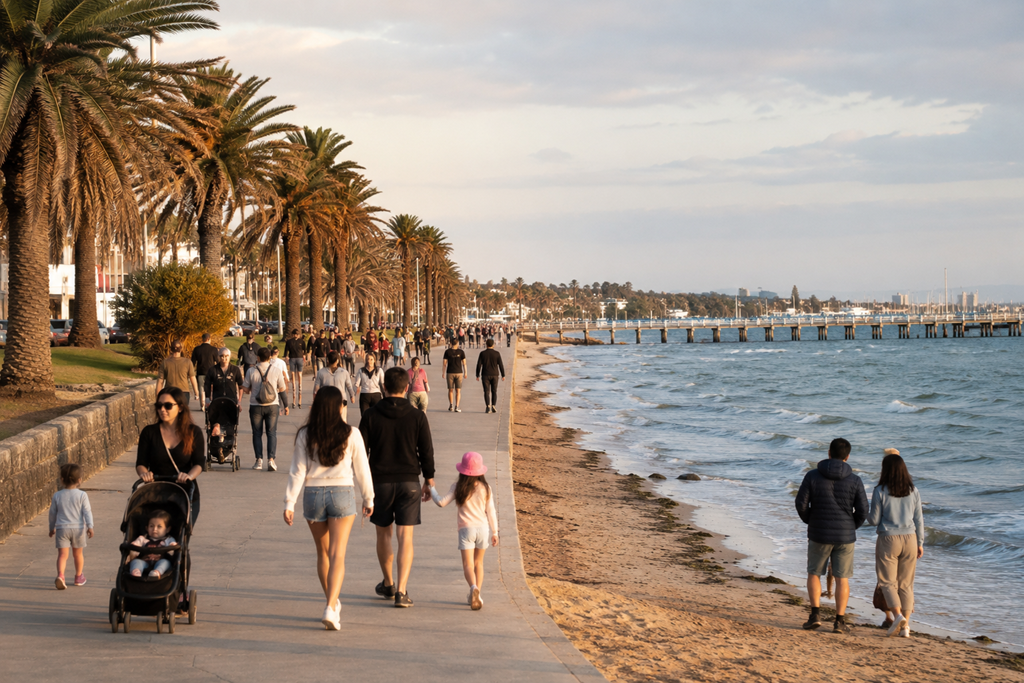
On your final day, shift from the city center to Melbourne’s coastal side. St Kilda is one of the easiest beach areas to reach from central Melbourne and gives the trip a different mood.
Walk along the foreshore, visit the pier area, and enjoy the sea air. This is a good morning for a slower start, especially after three full city days.
Late Morning: Acland Street And Local Cafés
After the beach walk, head toward Acland Street. The area is known for cafés, bakeries, casual food, and a long-standing neighborhood feel. It is a pleasant place to stop for coffee, breakfast, or something sweet.
Keep expectations grounded: St Kilda is not a remote beach escape. It is an urban seaside neighborhood, which is exactly what makes it useful in a short Melbourne itinerary.
Lunch: St Kilda Or South Yarra
You can stay in St Kilda for lunch or travel back toward South Yarra, Prahran, or Windsor for more neighborhood dining options.
This is also a good point in the itinerary to adapt. If you want more beach time, stay by the water. If you want shopping and cafés, move inland.
Afternoon: Choose One Final Melbourne Experience
For your final afternoon, choose one experience based on your travel style.
If you want more culture, return to the CBD for another museum, gallery, or architectural stop.
If you want shopping and local streets, explore Chapel Street, Prahran, Windsor, or South Yarra.
If you want a quiet finish, return to the Royal Botanic Gardens, walk along the Yarra, or sit in one of Melbourne’s central parks.
If you want one more hidden-gem-style stop, look for a small gallery, independent bookstore, neighborhood café, or lesser-known laneway rather than adding another major attraction.
Evening: Return To The City For A Final Dinner
End your trip back in central Melbourne or in one of the inner neighborhoods you enjoyed most. A final dinner near Flinders Lane, Carlton, Fitzroy, Southbank, or St Kilda will all work depending on where your day ends.
Rather than trying to make the final night too ambitious, choose a comfortable area and leave time to walk afterward. Melbourne is often most memorable in these in-between moments: the tram ride, the side street, the evening lights, the last coffee, or the quiet walk back to your hotel.
Where To Stay For This 4-Day Melbourne Itinerary
For a first visit, the CBD is the easiest base. It keeps you close to laneways, Federation Square, Flinders Street Station, trams, restaurants, museums, and the Yarra River.
Southbank is also convenient, especially if you want river views and easy access to the Arts Precinct.
Carlton and Fitzroy are good choices if you prefer neighborhood atmosphere, cafés, and a more local feel, though you may spend slightly more time on trams.
St Kilda can work if you want to stay near the beach, but it is less efficient for a first-time itinerary focused on central Melbourne.
Getting Around Melbourne
Melbourne is best explored through a mix of walking and public transport. The central city is walkable, and trams are especially useful for reaching neighborhoods like Carlton, Fitzroy, South Yarra, and St Kilda.
The City Circle Tram is highlighted by official Melbourne guidance as a free, historic tram loop around the CBD with stops near major landmarks. It can be helpful on your first day for orientation, though walking is still the best way to experience the laneways and arcades.
For a 4-day visit, avoid renting a car unless you are planning day trips outside the city. Parking and city traffic can make a car more trouble than it is worth for this itinerary.
Best Time To Visit Melbourne
Melbourne can be enjoyable year-round, but spring and autumn are especially comfortable for walking, gardens, markets, and neighborhood exploring. Summer can be lively and bright, while winter is cooler and better suited to galleries, cafés, museums, and indoor cultural stops.
Because Melbourne weather can shift quickly, pack layers and keep your daily plans flexible. A good Melbourne itinerary should always have a few indoor options ready.
Practical Tips For A Better Melbourne Trip
Do not overpack each day. Melbourne is a city where wandering matters.
Group your plans by area so you are not crossing the city repeatedly.
Check current opening hours for markets, museums, galleries, and major attractions.
Make restaurant reservations for special meals, but leave room for casual discoveries.
Bring comfortable walking shoes for laneways, gardens, river paths, and neighborhoods.
Use trams for longer inner-city distances, especially between the CBD and St Kilda.
Keep a flexible indoor option available in case the weather changes.
A Simple 4-Day Melbourne Itinerary At A Glance
Day 1: CBD laneways, Federation Square, ACMI, historic arcades, Yarra River
Day 2: Queen Victoria Market, State Library Victoria, Carlton, Carlton Gardens, Fitzroy
Day 3: Royal Botanic Gardens, Shrine of Remembrance, NGV, Arts Precinct, Southbank
Day 4: St Kilda, Acland Street, beach walk, neighborhood exploring, final dinner
Final Thoughts On Planning 4 Days In Melbourne
Four days in Melbourne gives you enough time to experience the city’s essential layers without rushing. You can see the laneways, enjoy the food culture, visit major cultural sites, spend time in gardens, explore neighborhoods, and still have space for unplanned discoveries.
The best version of this itinerary is not the one where every hour is filled. It is the one that gives you a clear structure while leaving enough room to follow your curiosity.
Melbourne is at its best when you let the city unfold slowly: one laneway, tram ride, market stall, gallery room, garden path, and neighborhood table at a time.
Download Our Free E-book!