Seoul is one of the easiest major cities in Asia to fill with meaningful travel days. Historic palaces sit close to modern shopping streets, quiet hanok lanes lead into café neighborhoods, and food markets can turn a simple afternoon into one of the best memories of the trip.
This 4-day Seoul itinerary is designed for first-time visitors who want a balanced mix of culture, food, neighborhoods, viewpoints, and practical pacing. It keeps each day focused by area, so you spend less time crossing the city and more time actually enjoying it.
Before You Go: How To Use This Seoul Itinerary
Four days gives you enough time to see Seoul’s essential sights without turning the trip into a checklist. This plan works well if you enjoy walking, public transportation, casual food stops, and a mix of historic and modern experiences.
Seoul’s subway system is usually the easiest way to get around, especially between major neighborhoods. Use taxis when you are tired, traveling late, or connecting places that are awkward by train. Many key areas are best explored on foot once you arrive.
A few details can change over time, especially opening hours, reservation rules, and neighborhood access policies. Check current hours before visiting palaces, museums, and major attractions. Bukchon Hanok Village is also a residential area with visitor management concerns, so go respectfully, keep noise low, and follow posted local guidance.
Day 1: Royal Seoul, Traditional Streets, And Classic Views
Start your first day with Seoul’s historic core. This area gives you a strong sense of the city’s older identity before you move into its modern neighborhoods later in the trip.
Morning: Gyeongbokgung Palace And Gwanghwamun Area
Begin at Gyeongbokgung Palace, one of Seoul’s most important royal landmarks and the largest of the city’s Five Grand Palaces. It is a strong first stop because it introduces Joseon-era architecture, palace courtyards, mountain views, and the scale of Korea’s royal history in one place.
Take your time here rather than rushing through. Walk through the main gates, pause in the central courtyards, and notice how the palace is framed by the city around it. If a guard-changing ceremony is taking place during your visit, treat it as a bonus rather than building your whole morning around it.
Nearby, the Gwanghwamun Square area is worth a short walk. It connects the palace to one of Seoul’s major civic corridors and helps you understand how history and modern city life overlap here.
Midday: Bukchon Hanok Village
From the palace area, continue toward Bukchon Hanok Village, known for its traditional hanok houses and hillside lanes. The area sits between important historic landmarks, including Gyeongbokgung Palace and Changdeokgung Palace, and remains one of the most recognizable traditional neighborhoods in Seoul.
Bukchon is beautiful, but it is not a theme park. People live there. Walk quietly, avoid blocking doorways, and do not treat private homes like photo sets. The best experience is simple: slow walking, side streets, tiled roofs, and views where old Seoul meets the modern skyline.
Afternoon: Insadong
Spend the afternoon in Insadong, a good neighborhood for traditional crafts, tea houses, galleries, small shops, and easy wandering. It is a practical follow-up to Bukchon because the areas are close enough to combine without losing energy in transit.
This is a good place to look for calligraphy items, ceramics, paper goods, small souvenirs, or a quiet tea break. Keep lunch flexible. Choose a simple Korean meal nearby, or stop at a casual restaurant when the day naturally slows down.
Evening: N Seoul Tower Or Myeongdong
For your first evening, choose between a viewpoint and a lively food-and-shopping district.
If you still have energy, head toward N Seoul Tower on Namsan for city views. It is one of Seoul’s classic skyline experiences and works especially well around sunset or after dark.
If you prefer an easier evening, go to Myeongdong instead. The area is busy, bright, and convenient for casual food, skincare shopping, and a first taste of Seoul’s nighttime street energy.
Day 2: Markets, Stream Walks, Design, And Modern Seoul
Your second day focuses on everyday Seoul: food markets, urban walks, design, and the city’s constantly moving commercial districts.
Morning: Gwangjang Market
Start at Gwangjang Market, one of Seoul’s best-known traditional markets for food. This is a great place to try Korean market staples in a casual setting, such as savory pancakes, noodles, dumplings, rice rolls, and other simple dishes.
Go with a flexible mindset. Rather than trying to find the “best” stall, walk through slowly, see what looks appealing, and choose a place where the food is being made fresh and the seating feels manageable.
Late Morning: Cheonggyecheon Stream
After the market, walk toward Cheonggyecheon Stream, an urban waterway that cuts through central Seoul. It offers an easy reset after the energy of the market and gives you a different side of the city: modern, walkable, and surprisingly peaceful in stretches.
This does not need to be a long walk. Even 30 to 45 minutes along the stream can be enough before moving on.
Afternoon: Dongdaemun Design Plaza And Dongdaemun Area
Continue to Dongdaemun Design Plaza, often called DDP, a major modern design and architecture landmark in Seoul. Even if you are not deeply interested in design, the building itself and the surrounding plaza are worth seeing. The Dongdaemun area also connects naturally to shopping streets, fashion markets, and busy city life.
Keep this part of the day flexible. Some travelers will want to explore exhibitions or design shops, while others may simply enjoy walking around the exterior and nearby streets.
Evening: Korean Barbecue Or A Simple Neighborhood Dinner
For dinner, choose Korean barbecue, a casual stew restaurant, fried chicken, noodles, or another comfort-food option. Seoul is a city where memorable meals do not need to be formal.
If you are tired, eat near your hotel. If you still want to explore, consider Myeongdong, Jongno, Euljiro, or another central neighborhood depending on where you are staying.
Day 3: Changdeokgung, Cafés, Shopping, And Hongdae
Day 3 gives you a slower cultural morning and a more youthful, creative evening. It is a good midpoint because it balances sightseeing with neighborhoods that are enjoyable without a strict agenda.
Morning: Changdeokgung Palace
Begin with Changdeokgung Palace, another major royal palace in Seoul. Many visitors appreciate it for its atmosphere and relationship with the natural landscape. If the Secret Garden area is available during your visit, consider booking or checking entry details ahead of time, since access rules can vary.
Even without the garden, the palace is worth visiting for its courtyards, halls, and quieter feel compared with the busiest parts of Gyeongbokgung.
Late Morning: Ikseon-dong Or Samcheong-dong
After the palace, choose a nearby neighborhood for a lighter, slower stretch.
Ikseon-dong has narrow lanes, small cafés, restaurants, and renovated hanok-style spaces. It can get busy, but it is enjoyable if you visit with patience and do not try to rush.
Samcheong-dong is another good option, especially if you like galleries, cafés, boutiques, and gently sloping streets near Bukchon and the palace district.
Either choice works well for lunch or a coffee break.
Afternoon: Gangnam, COEX, Or A Museum Stop
For the afternoon, choose the experience that best fits your travel style.
If you want a modern Seoul contrast, head to Gangnam or the COEX area for shopping, large-scale urban spaces, and a different side of the city.
If you prefer culture, choose a museum instead. Seoul has strong museum options, and a museum afternoon can be especially helpful if the weather is rainy, very hot, or very cold.
The key is not to overfill this day. One major afternoon area is enough.
Evening: Hongdae
Spend the evening in Hongdae, a youthful neighborhood known for music, casual restaurants, cafés, shops, and nightlife. It is one of the easiest places to feel Seoul’s creative energy without needing a formal plan.
Walk the main streets, explore side lanes, get dinner, and leave room for dessert or coffee. If you enjoy nightlife, stay later. If not, Hongdae still works well as an early evening neighborhood with plenty to see.
Day 4: Han River, Local Neighborhoods, And A Flexible Final Evening
Your final day should feel satisfying but not exhausting. Use it to enjoy Seoul’s open spaces, revisit a favorite area, and leave room for last meals or shopping.
Morning: Han River Park
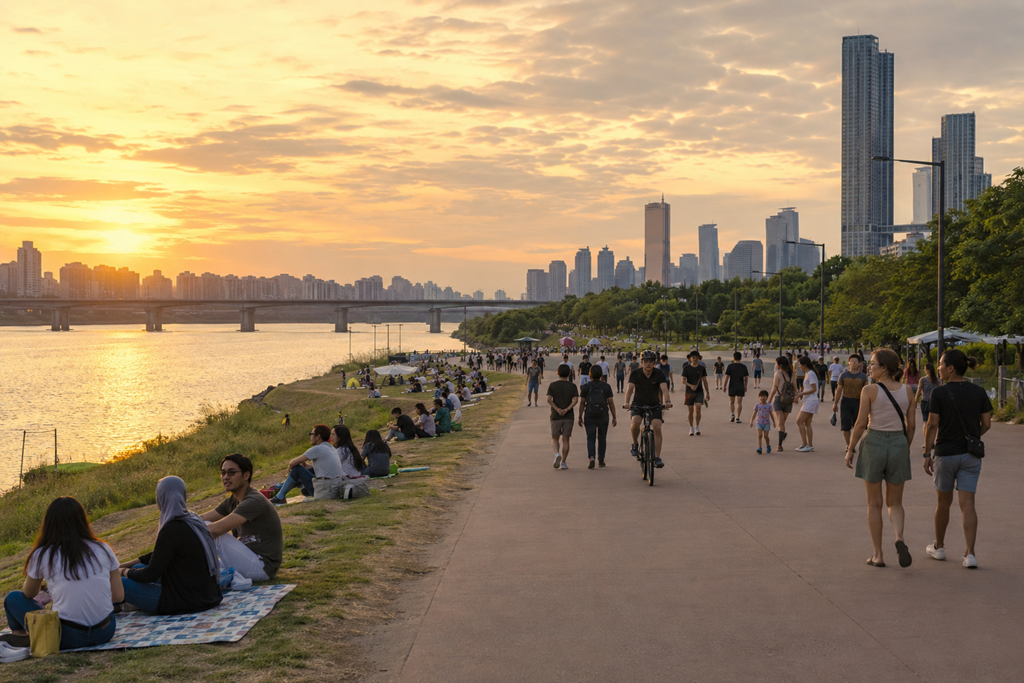
Start with a walk or relaxed break at a Han River park. The Han River is one of Seoul’s defining geographic features, and the riverside parks give you space to breathe after several busy sightseeing days.
Yeouido Hangang Park is a popular option, but the best choice may depend on where you are staying. Bring coffee, walk along the water, sit for a while, and enjoy the city from a wider perspective.
Late Morning: National Museum, War Memorial, Or Leeum Area
Choose one cultural stop for the late morning or early afternoon.
The National Museum of Korea is a strong choice if you want a broad, accessible introduction to Korean history and art. The War Memorial of Korea can be meaningful for travelers interested in modern Korean history. The Leeum Museum of Art area works well if you prefer a more contemporary museum experience and want to pair it with Itaewon or Hannam-dong.
Do not try to do all of them. Pick one and give it proper time.
Afternoon: Itaewon, Hannam-dong, Or Seongsu
Use your last afternoon for a neighborhood that feels different from the palace-and-market areas.
Itaewon is international, hilly, and full of restaurants and cafés. Hannam-dong has a quieter, design-forward feel with boutiques, galleries, and polished cafés. Seongsu is known for converted industrial spaces, coffee shops, pop-ups, and a younger creative atmosphere, though individual venues can change over time.
For evergreen planning, think of this as a neighborhood-wandering block rather than a fixed list of specific shops.
Evening: Final Dinner And Night Walk
For your final evening, return to the kind of Seoul experience you enjoyed most.
If you loved traditional areas, go back toward Insadong or Jongno. If you preferred food and shopping, return to Myeongdong or Hongdae. If you want one last city view, consider Namsan again or another elevated viewpoint.
End with a meal that feels easy rather than ambitious. A final bowl of noodles, barbecue dinner, Korean fried chicken, or market-style meal can be just as memorable as a reservation-heavy restaurant.
Where To Stay In Seoul For This Itinerary
For a first trip, location matters more than finding the most unusual hotel. Choose a base that keeps transit simple.
Myeongdong works well for first-time visitors who want convenience, shopping, food, and easy subway access.
Jongno or Insadong is a strong choice if you want to stay near palaces, traditional streets, and central sightseeing.
Hongdae is better for travelers who want nightlife, casual food, cafés, and a younger atmosphere.
Gangnam can work if you prefer a polished modern district, but it may be less convenient for some historic sights north of the river.
What To Eat During 4 Days In Seoul
Seoul is a great city for eating casually and often. You do not need every meal planned before arrival.
Good food experiences to consider include:
Korean barbecue for a classic group meal
Gwangjang Market snacks and simple dishes
Bibimbap, dumplings, noodles, soups, and stews
Korean fried chicken
Street food in busy shopping areas
Traditional tea or dessert in Insadong or a hanok-style café
Casual bakery and coffee stops, which are part of everyday Seoul life
If you have dietary restrictions, research a few suitable restaurants in advance and save them on your map. Seoul has many options, but communication can still be easier when you prepare ahead.
Practical Seoul Travel Tips
Use the subway for most major sightseeing. It is efficient, extensive, and usually easier than navigating traffic.
Group your days by neighborhood. Seoul is large, and backtracking can make the trip feel more tiring than it needs to be.
Wear comfortable shoes. Even with good public transportation, this itinerary involves plenty of walking, stairs, palace grounds, markets, and neighborhood hills.
Check attraction details before you go. Palaces, museums, and special areas may have changing hours, closures, or timed-entry rules.
Be respectful in residential neighborhoods. Bukchon and other hanok areas are beautiful, but they are also lived-in communities.
Leave space for weather. Seoul can feel very different depending on season, heat, rain, cold, or air quality. Museums, cafés, markets, and shopping streets make useful flexible swaps.
A Balanced Way To Spend 4 Days In Seoul
A good Seoul trip does not need to cover everything. In four days, the goal is to understand the city through a few strong layers: royal history, traditional streets, food markets, modern design, creative neighborhoods, riverside space, and everyday meals.
This itinerary gives you a clear structure without removing flexibility. Follow it closely if you want an easy plan, or use it as a framework and swap neighborhoods based on your interests. Either way, Seoul rewards travelers who leave enough room to walk, eat, pause, and notice the city between the landmarks.
Download Our Free E-book!