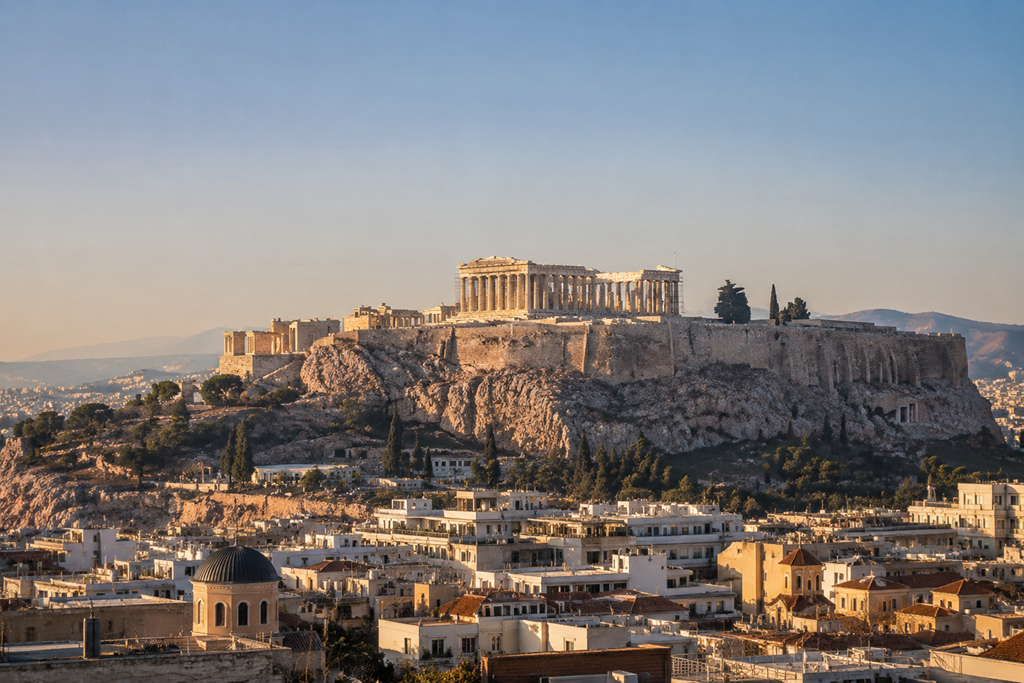
Athens is one of those cities where the past is not tucked away in museums alone. It rises above the skyline, appears beside busy streets, and shapes the rhythm of everyday life. A trip here can include ancient temples, neighborhood walks, open-air cafés, seaside escapes, traditional food, and some of the most important cultural sites in Europe.
This guide is designed to help you understand Athens before you arrive. You’ll find practical guidance on when to visit, where to stay, what to see, how to get around, what to eat, and how to plan your time without making the trip feel rushed.
Athens at a Glance
Athens is the capital of Greece and the country’s largest city. For many travelers, it is both a destination in its own right and a starting point for visiting the Greek islands or other parts of the mainland.
The city is best known for the Acropolis, the Parthenon, ancient ruins, and world-class museums, but Athens is not only an archaeological destination. It is also a living city with lively neighborhoods, markets, coffee culture, rooftop views, street art, and a strong local food scene.
The most rewarding way to experience Athens is to balance the major historic sites with slower neighborhood time. Spend part of your trip visiting the essential landmarks, then leave room for wandering through Plaka, Monastiraki, Psiri, Koukaki, and other central areas.
Best Time to Visit Athens
Athens can be visited year-round, but the experience changes with the seasons.
Spring
Spring is one of the most pleasant times to visit Athens. Temperatures are generally comfortable for walking, outdoor archaeological sites are easier to enjoy, and the city feels active without the heaviest summer crowds.
This is a strong choice if you want to explore the Acropolis, Ancient Agora, and neighborhoods on foot.
Summer
Summer is the busiest and hottest season. Athens can be rewarding in summer, especially if you enjoy long evenings, outdoor dining, and combining the city with island travel. However, sightseeing during the middle of the day can feel tiring, especially at exposed archaeological sites.
If you visit in summer, plan major outdoor sights early in the morning or later in the day, wear sun protection, and check current visitor guidance before going to popular landmarks.
Fall
Fall is another excellent season for Athens. The weather often remains warm, but the pace becomes more manageable after peak summer travel. It is a good time for museum visits, neighborhood exploring, and day trips.
Winter
Winter is quieter and can be a good choice for travelers who prefer fewer crowds. Some days may be rainy or cool, but Athens remains a cultural city with museums, cafés, restaurants, and historic areas that can still be enjoyed.
Winter is especially appealing if your main focus is history and local life rather than beach or island travel.
Where to Stay in Athens
For a first visit, staying near the historic center usually makes the trip easier. Many major sights are walkable from central neighborhoods, and public transportation is more convenient.
Plaka
Plaka is one of the most popular areas for visitors. It sits near the Acropolis and is known for narrow streets, traditional architecture, shops, restaurants, and historic atmosphere. The official Athens guide describes Plaka as one of the city’s best-known visitor neighborhoods, with picturesque streets and historic landmarks.
Plaka is a good fit if you want a scenic, central base and do not mind crowds in the busiest areas.
Monastiraki
Monastiraki is lively, central, and convenient. It is known for its square, flea market atmosphere, rooftop views, and easy access to both ancient sites and metro connections.
This area works well for travelers who want energy, food options, and quick access to the historic core.
Syntagma
Syntagma is practical and well-connected. It is home to the Greek Parliament area and is close to major streets, shops, hotels, and transit links.
This is a good choice if you value transportation convenience and want a central base that feels more urban than village-like.
Koukaki
Koukaki is close to the Acropolis Museum and the southern side of the Acropolis area. It has a more residential feel than Plaka or Monastiraki, while still being convenient for sightseeing.
It is a strong option if you want to stay near major attractions but prefer a slightly less tourist-heavy atmosphere.
Psiri
Psiri is known for nightlife, street art, casual restaurants, and a creative atmosphere. It can be fun and convenient, especially for travelers who enjoy evenings out.
Because the mood can vary by street, check the exact location of your accommodation before booking.
Essential Attractions and Cultural Experiences
Athens has more to see than most travelers can fit into a short visit. The best approach is to prioritize a few major sites, then add museums, neighborhoods, and food experiences based on your interests.
The Acropolis and Parthenon
The Acropolis is the defining landmark of Athens. Set on a rocky hill above the city, it includes several ancient structures, with the Parthenon as the most famous.
Visit early or later in the day when possible, especially in warmer months. The site is exposed, so comfortable shoes, water, and sun protection matter. Before visiting, check current ticketing rules, entry procedures, and any timed-entry requirements.
Acropolis Museum
The Acropolis Museum is one of the most important museums in Athens and is designed around the findings of the Acropolis archaeological site. Its galleries help visitors understand the history, art, and meaning of the monuments above the city. The museum’s official site notes that it houses findings from the Athenian Acropolis and includes the Parthenon Gallery as one of its central exhibition spaces.
A good plan is to visit the Acropolis and the museum on the same day or on consecutive days. Seeing both gives you a fuller understanding of ancient Athens.
Ancient Agora
The Ancient Agora was once a central gathering place for public life in ancient Athens. It is a rewarding site for travelers interested in philosophy, politics, and daily life in the ancient city.
Unlike the Acropolis, the Agora feels more spacious and reflective. Give yourself time to walk slowly and take in the setting.
National Archaeological Museum
The National Archaeological Museum is one of the most important museums in Greece. Its official site describes it as the largest archaeological museum in Greece and one of the world’s major museums devoted to ancient Greek art.
This museum is especially worthwhile if you are interested in sculpture, ancient artifacts, Mycenaean culture, classical art, and the broader story of Greek history beyond Athens.
Temple of Olympian Zeus
The Temple of Olympian Zeus is a striking ancient site near the historic center. Even in its partially preserved state, it gives a sense of scale and ambition.
It is often easy to combine with a walk near Hadrian’s Arch, Syntagma, Plaka, or the Acropolis area.
Panathenaic Stadium
The Panathenaic Stadium is closely connected to Greece’s athletic heritage and the modern Olympic story. Its marble structure makes it visually memorable, and it is easy to include in a central Athens itinerary.
This is a good stop for travelers interested in sports history, architecture, or photography.
Mount Lycabettus
For one of the best views over Athens, consider visiting Mount Lycabettus. From the top, you can see the city, the Acropolis, and, on clear days, toward the sea.
It is especially popular around sunset, but daytime visits can also be worthwhile. Wear comfortable shoes if you plan to walk up.
Anafiotika
Anafiotika is a small, picturesque area on the slopes below the Acropolis, known for whitewashed houses and narrow lanes that feel different from the surrounding city.
It is best experienced quietly and respectfully, since it is a residential area. Go for a short wander, take in the atmosphere, and avoid treating it like a photo set.
Athens Central Market
The central market area gives visitors a look at the everyday food culture of the city. It is a useful stop if you enjoy markets, ingredients, local food traditions, and seeing how a city shops and eats.
Go with an open mind, expect a busy environment, and keep belongings secure as you would in any crowded urban market.
Food and Drink in Athens
Greek food is one of the pleasures of visiting Athens. The best meals are often simple: grilled meats, fresh vegetables, olive oil, seafood, legumes, pies, yogurt, honey, and seasonal produce.
What to Try
Some classic foods and dishes to look for include:
- Souvlaki or gyros
- Greek salad
- Spanakopita
- Moussaka
- Dolmades
- Grilled fish or seafood
- Fava
- Tzatziki
- Loukoumades
- Greek yogurt with honey
Athens is also a strong city for coffee culture. Sitting with a coffee is part of the pace of daily life, not just a quick caffeine stop.
How to Choose Restaurants
Avoid planning your trip around “must-visit” restaurant lists that may quickly become outdated. Instead, use a few practical signs:
Look for places with a focused menu, steady local traffic, and a setting that fits the kind of meal you want. In very tourist-heavy streets, compare menus and atmosphere before sitting down. A simple taverna meal can be just as memorable as a more polished restaurant experience.
Rooftop Dining and Drinks
Athens is known for rooftop views, especially around Monastiraki, Psiri, and the historic center. A rooftop drink or meal can be a memorable way to see the Acropolis lit up at night.
Because popular rooftops can get busy, consider booking ahead during high-demand travel periods.
Getting Around Athens
Athens is easier to navigate than many first-time visitors expect, especially if you stay near the center.
Walking
Walking is one of the best ways to experience central Athens. Many major sites and neighborhoods are close enough to combine on foot, though the city has hills, uneven sidewalks, and stone streets in older areas.
Bring comfortable shoes and avoid overloading your schedule with too many cross-city stops in one day.
Metro, Tram, Buses, and Trolleys
Athens has a public transportation network that includes metro, tram, buses, and trolleys. The official Athens guide notes that the metro is often the fastest way to get around and connects with tram, bus routes, and the suburban railway.
For most visitors, the metro is the easiest system to use. It is especially helpful for airport transfers, reaching central neighborhoods, and avoiding traffic.
Airport Transportation
Athens International Airport is connected to the city by public transportation and taxis. The official Athens guide states that Metro Line 3 connects the airport with Syntagma Square in the city center.
Before your trip, check current schedules, ticket rules, and service updates, especially if you are arriving late at night or departing early in the morning.
Taxis and Ride Services
Taxis can be useful for luggage, late arrivals, or routes that are awkward by public transportation. Use official taxis or reputable apps when available, and confirm the destination before starting your ride.
Driving
Most visitors do not need a car in central Athens. Traffic, parking, narrow streets, and one-way roads can make driving more stressful than helpful.
If you plan to explore mainland Greece beyond Athens, renting a car may make sense after your city stay.
Suggested First-Time Athens Plan
A first visit to Athens does not need to be complicated. A balanced trip might look like this:
Two Days in Athens
Use the first day for the Acropolis, Acropolis Museum, Plaka, and a rooftop or neighborhood dinner.
Use the second day for the Ancient Agora, Monastiraki, Syntagma, the National Archaeological Museum, or Mount Lycabettus depending on your interests.
Three to Four Days in Athens
With three or four days, you can slow down and add more variety. Include major ancient sites, one or two museums, food-focused wandering, a market visit, and time in neighborhoods like Koukaki, Psiri, or Thissio.
You may also consider a day trip, depending on your travel style.
Five or More Days in Athens
With five or more days, Athens can become more than a stopover. You can explore the historic center at a gentler pace, visit additional museums, spend time near the coast, and take day trips without feeling rushed.
Day Trip Ideas from Athens
Athens is well-positioned for several classic day trips. These are best chosen based on your interests and available time.
Cape Sounion
Cape Sounion is known for the Temple of Poseidon and its coastal setting. It is especially popular for sunset views, though it can also be visited earlier in the day.
This is a good option if you want a scenic experience without committing to a long day.
Delphi
Delphi is one of Greece’s most important ancient sites and can be visited from Athens on a long day trip. It is best for travelers with a strong interest in ancient history, mythology, and mountain landscapes.
Because the day can be lengthy, avoid scheduling it immediately after a late arrival or before an early departure.
Aegina
Aegina is one of the more accessible islands from Athens and can offer a taste of island life without requiring a full island-hopping itinerary.
Schedules vary by season, so check ferry times before planning your day.
Practical Travel Tips for Athens
Plan Outdoor Sightseeing Around the Weather
Athens has many exposed archaeological sites. In warm weather, visit outdoor landmarks early or later in the day, take breaks, and carry water.
In cooler or rainy weather, balance outdoor sites with museums and cafés.
Book Ahead When It Matters
Some major attractions, tours, and popular restaurants may require advance planning during busy travel periods. Rather than overbooking every hour, reserve the experiences that matter most and leave flexible time around them.
Keep Your Itinerary Geographically Simple
Athens rewards logical planning. Group nearby sights together instead of crossing the city repeatedly.
For example, the Acropolis, Acropolis Museum, Plaka, and Anafiotika can fit naturally into the same general area. Monastiraki, Ancient Agora, and Psiri also combine well.
Be Mindful in Crowded Areas
As in many major cities, use common sense in crowded squares, metro stations, markets, and tourist-heavy streets. Keep valuables secure, avoid leaving bags unattended, and be aware of your surroundings.
Respect Historic and Residential Areas
Many Athens neighborhoods are both visitor attractions and places where people live. Stay on marked paths at archaeological sites, follow posted rules, and be considerate in residential lanes such as Anafiotika.
Leave Room for Unplanned Wandering
Some of the best Athens moments come between the major sights: a quiet side street, a view of the Acropolis between buildings, a slow coffee, a small bakery, or an evening walk after dinner.
A good Athens itinerary gives you structure without filling every minute.
A Thoughtful Way to Experience Athens
Athens is best approached with both curiosity and patience. The city can feel layered, busy, beautiful, worn, historic, and modern all at once. That is part of what makes it memorable.
Prioritize the Acropolis and key museums if it is your first visit, but do not treat Athens as only a checklist of ruins. Walk its neighborhoods, eat simply and well, pause for views, and give yourself enough time to notice how ancient history and everyday life sit side by side.
A well-planned trip to Athens does not need to be rushed. With a central base, comfortable shoes, a few priorities, and flexible time, the city becomes much easier to enjoy.
Download Our Free E-book!