Carmel, California is one of the most distinctive coastal towns on the Central Coast: part beach escape, part storybook village, part nature getaway. It is small enough to explore slowly on foot, yet close enough to dramatic coastal scenery, historic sites, and protected natural areas to fill a thoughtful long weekend.
This guide will help you understand how to plan a Carmel trip: when to visit, where to spend your time, what to see, how to get around, what to expect from the beach, and how to enjoy the village without feeling rushed.
Carmel At A Glance
Carmel-by-the-Sea sits on the Monterey Peninsula, just south of Monterey and near the northern edge of Big Sur. The destination is best known for its white-sand beach, cypress-framed coastline, walkable village center, art galleries, courtyards, cottages, and easy access to scenic outdoor areas.
The village itself is compact, which is part of the appeal. You can walk from Ocean Avenue down to Carmel Beach, wander through side streets and passageways, browse galleries, stop for coffee or lunch, and still have time for a coastal walk before sunset.
Carmel is also a useful base for nearby experiences. Point Lobos State Natural Reserve is about three miles south of Carmel on Highway 1, while Carmel River State Beach, the Carmel Mission, and the Mission Trail Nature Preserve are all close enough to include without turning the day into a long drive.
Best Time To Visit Carmel
Carmel is a year-round destination, but the experience changes with the season.
Spring
Spring is a good time for coastal walks, gardens, wildflowers, and lighter crowds compared with peak summer periods. Weather can vary, so pack layers and expect cool mornings or evenings near the water.
Summer
Summer brings more visitors, especially families, road-trippers, and travelers combining Carmel with Monterey or Big Sur. Coastal fog is common along this part of California, so a summer day can begin gray and cool before clearing later.
Book lodging ahead during busy periods, especially weekends and holidays.
Fall
Fall is often one of the most appealing times to visit Carmel. The weather can be mild, the ocean views are beautiful, and crowds may feel easier to manage outside of major event weekends.
Winter
Winter can be quiet, atmospheric, and scenic, with fewer visitors and a cozier village feel. Rain is more likely, but clear winter days can be excellent for photography, beach walks, and relaxed dining.
Key Areas To Know
Carmel Village
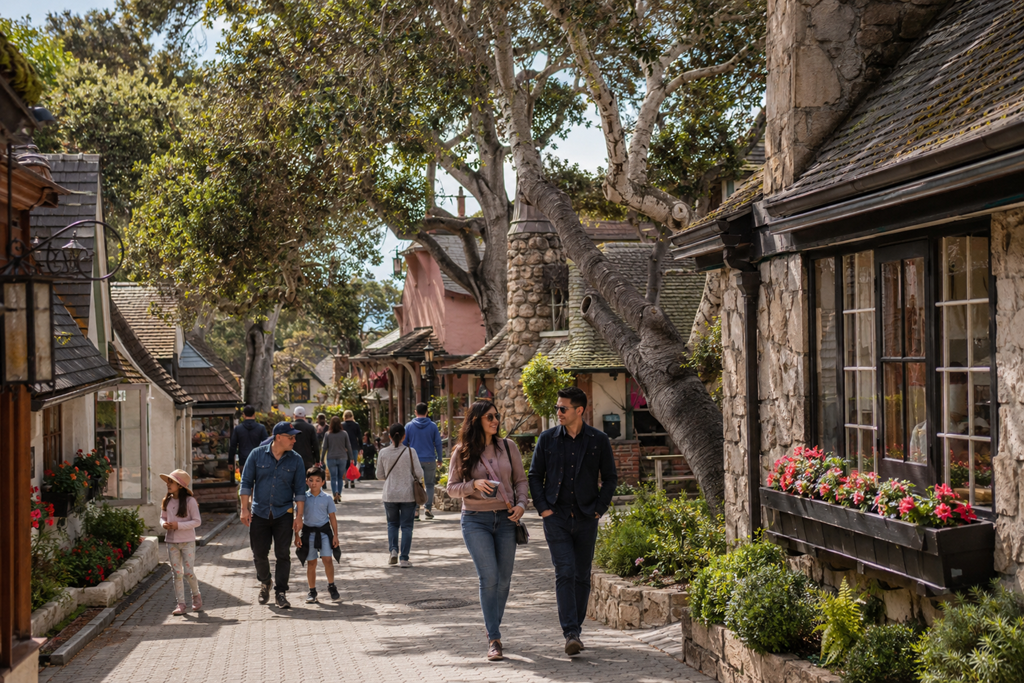
This is the heart of Carmel-by-the-Sea. Ocean Avenue is the main route through town, leading from Highway 1 toward Carmel Beach. Around it, you will find art galleries, boutiques, tasting rooms, cafés, restaurants, inns, courtyards, and small passageways.
The village is best experienced slowly. Rather than trying to “cover” every street, give yourself time to wander. Carmel’s charm is in the details: cottage-style architecture, tucked-away patios, window boxes, garden paths, and glimpses of the ocean as you walk downhill.
Carmel Beach And Scenic Road
Carmel Beach sits at the foot of Ocean Avenue and is one of the town’s signature places. It is known for its wide white-sand shoreline, cypress trees, coastal views, dog-friendly atmosphere, and sunset walks.
Scenic Road runs along the coast above the beach and offers one of the easiest ways to enjoy the shoreline without walking directly on sand. The nearby coastal path gives you views of the beach, cypress trees, oceanfront homes, and the Pacific.
Carmel River State Beach
Carmel River State Beach is south of the village and has a different feel from Carmel Beach. The state park describes it as a mile-long beach with a lagoon bird sanctuary near where the Carmel River meets the sea, along with views toward the Monterey Bay National Marine Sanctuary.
This is a good choice for birdwatching, photography, and a quieter coastal stop. Ocean conditions can be dangerous along parts of the coast, so treat it as a scenic walking and viewing area rather than a casual swimming beach unless conditions are clearly safe.
Carmel Mission Area
The Carmel Mission, officially Mission San Carlos Borromeo de Río Carmelo, is one of the most important historic sites in the area. It was founded in the early Spanish mission period and remains an active religious and cultural site, so visitors should check current access and service-related closures before going.
The nearby Mission Trail Nature Preserve adds a quieter outdoor option close to town, with walking trails through varied habitats including Monterey pine forest, coast live oak woodland, wetland, riparian corridor, and coastal prairie.
Point Lobos And The Highway 1 Coast
Point Lobos State Natural Reserve is one of the area’s essential nature experiences. Located about three miles south of Carmel on Highway 1, it is known for coastal trails, rocky coves, wildlife viewing, tidepool scenery, and ocean overlooks.
Parking can be limited during popular periods, so arrive early, be flexible, and check current state park information before you go.
Best Things To Do In Carmel
Walk Carmel Beach
Start with the beach. Carmel Beach is beautiful at different times of day: soft light in the morning, wide views in the afternoon, and classic sunset scenery in the evening.
Bring layers, even if the forecast looks mild. Coastal wind can make the beach feel cooler than the village. If you are traveling with a dog, check current city rules before visiting. Carmel is known as a dog-friendly town, but leash and voice-control rules vary by location.
Follow Scenic Road
Scenic Road is one of the simplest, most rewarding walks in Carmel. It gives you ocean views without needing a strenuous hike, and it connects well with a beach visit.
This is a good option for travelers who want the feel of the coastline but prefer a paved or easier walking route. It is also one of the best ways to appreciate Carmel’s cypress trees, coastal homes, and changing light.
Explore The Village Courtyards
Carmel’s village center is full of courtyards, passageways, and small side streets. Some are easy to miss if you only walk Ocean Avenue.
Give yourself time to turn down smaller lanes, browse windows, look for garden patios, and step into galleries. Carmel rewards unhurried exploring more than checklist-style sightseeing.
Visit Carmel Mission
The Carmel Mission is worth visiting for history, architecture, and a deeper sense of place. It gives context to the Monterey Peninsula’s Spanish colonial history and the development of early California mission settlements.
Because it remains an active religious site, check visitor information before arriving. Access may be affected by services, weddings, restoration work, or special events.
Spend Time At Point Lobos
Point Lobos can easily be the highlight of a Carmel trip. The reserve is close to town but feels wilder and more dramatic, with trails leading to coves, cliffs, viewpoints, and wildlife areas.
A few planning notes make the visit smoother:
- Go earlier in the day when possible.
- Bring water and comfortable walking shoes.
- Expect limited parking during busy periods.
- Stay on marked trails to protect the landscape.
- Check current park details before visiting.
You do not need to hike every trail to enjoy Point Lobos. Even a shorter visit can be memorable if you choose one or two scenic areas and give yourself time to stop and look.
Walk Mission Trail Nature Preserve
For a less crowded, in-town nature break, Mission Trail Nature Preserve is a practical choice. The City of Carmel describes it as a 34-acre preserve with about three miles of hiking trails and a native plant garden.
It is especially useful if you want a walk that is not centered on the beach or if coastal wind makes the shoreline less appealing.
Visit Carmel River State Beach
Carmel River State Beach works well as a quieter stop, especially for travelers who enjoy birdwatching, photography, and broad coastal views. The lagoon and river-meets-ocean setting give it a different mood from Carmel Beach.
It is also a good reminder that Carmel is not just one beach. The shoreline changes quickly as you move south, from village beach to river mouth to rugged reserve.
Browse Art Galleries
Carmel has long been associated with artists, writers, and creative communities. Today, galleries remain part of the village experience.
You do not need to be an art collector to enjoy them. Treat gallery browsing as a way to slow down, step inside, and see how artists interpret the coastline, village, cypress trees, and Central Coast light.
Enjoy A Slow Meal
Carmel’s food scene fits the style of the town: small restaurants, patios, wine, bakeries, seafood, California cuisine, and cozy dining rooms.
Rather than chasing the newest or most talked-about restaurant, choose based on the kind of experience you want. For a first trip, consider one relaxed lunch in the village, one dinner you reserve ahead, and one casual bakery or coffee stop.
During busy periods, book dinner ahead when possible.
Take A Short Drive Along Highway 1
You do not need to commit to a full Big Sur day to enjoy the coast south of Carmel. Even a short drive along Highway 1 can give you dramatic views, pullouts, and a stronger sense of the region’s landscape.
Before driving farther south, check current road conditions, especially after storms. Highway 1 is beautiful but can be affected by closures, repairs, fog, and changing coastal conditions.
Food And Drink In Carmel
Carmel is a good destination for travelers who like meals to be part of the trip rather than an afterthought. You will find a mix of casual cafés, bakeries, wine tasting rooms, seafood spots, bistros, and special-occasion dining.
For an easy food plan:
- Choose lodging within walking distance of the village if you want dinner without driving.
- Make reservations for popular dinner times.
- Keep breakfast simple with coffee, pastries, or a casual café.
- Leave room for spontaneous stops in courtyards or side streets.
- Consider nearby Monterey or Pacific Grove if you want more dining variety during a longer stay.
The village is compact, but evenings can still feel busy. A reservation can make the trip feel smoother, especially on weekends.
How To Get Around Carmel
Walking
Walking is the best way to experience Carmel-by-the-Sea. The village is compact, and many of its best moments are small details you would miss from a car.
One important note: the village slopes downhill toward the beach. The walk to the beach is easier than the walk back up, so wear comfortable shoes.
Driving
You will likely want a car if you plan to visit Point Lobos, Carmel River State Beach, Big Sur, Monterey, Pacific Grove, or the wider peninsula.
Parking in the village can take patience during busy times. Build in extra time and avoid planning your day too tightly.
Flying In
The closest major arrival point for many travelers is the Monterey area, with larger airport options farther away in the Bay Area or San Jose. From there, driving is usually the most flexible way to reach Carmel and explore nearby places.
Combining Carmel With Nearby Destinations
Carmel pairs well with:
- Monterey for the aquarium, Cannery Row, and waterfront walks
- Pacific Grove for a quieter coastal town feel
- Pebble Beach for scenic driving and golf history
- Big Sur for dramatic coastal landscapes
- Salinas Valley for literary history and inland scenery
For a shorter trip, avoid trying to combine all of these. Carmel is best when you leave space in the schedule.
Practical Carmel Travel Tips
Pack Layers
Carmel weather can change throughout the day. A sunny afternoon may turn chilly near the beach, and fog can make summer feel cooler than expected.
Bring a light jacket, comfortable walking shoes, and layers you can add or remove easily.
Do Not Overload The Schedule
Carmel is small, but the surrounding area is rich with things to do. A common mistake is trying to fit the village, beach, Point Lobos, Big Sur, Monterey, and multiple restaurants into too little time.
For a first visit, choose one main outdoor experience per day and leave room for wandering.
Check Rules Before Beach Fires
Carmel Beach has specific fire rules, and the City notes that wood-burning fires are prohibited while certain user-supplied propane devices are allowed under rules and location limits. Always check current city guidance before planning any beach fire.
Respect The Coast
The Central Coast is beautiful but powerful. Watch for slippery rocks, unstable edges, cold water, surf warnings, and changing tides. Stay on marked trails in protected areas and keep a safe distance from wildlife.
Book Ahead During Busy Periods
Carmel is popular for weekends, holidays, summer trips, romantic getaways, and regional events. Lodging and dinner reservations can fill early. If your dates are fixed, plan the essentials ahead and leave the rest flexible.
Keep Pets In Mind
Carmel is famously dog-friendly, but rules are not the same everywhere. Dogs may be allowed off-leash in some areas under voice-control rules, while other beaches or trails may require leashes. Check current local rules before you go.
Suggested Carmel Trip Length
One Day
Focus on Carmel Village, Carmel Beach, Scenic Road, and one good meal. This is enough for a first impression but not enough to fully settle in.
Two Days
Spend one day in the village and beach area, then use the second day for Point Lobos, Carmel Mission, or Carmel River State Beach.
Three Days
Three days gives you the best balance. You can enjoy the village slowly, visit Point Lobos without rushing, take coastal walks, include a historic stop, and still have time for a relaxed dinner or short Highway 1 drive.
Four Or More Days
With extra time, add Monterey, Pacific Grove, Pebble Beach, or a longer Big Sur outing. This works well if you want Carmel to be your comfortable base rather than just a quick stop.
A Simple First-Time Carmel Plan
For a first visit, keep the plan easy:
Day One: Arrive, walk the village, explore courtyards and galleries, head down to Carmel Beach, and watch the evening light along Scenic Road.
Day Two: Visit Point Lobos in the morning, return for lunch or a rest, then spend the afternoon at Carmel Mission or Mission Trail Nature Preserve. Have dinner in the village.
Day Three: Walk Carmel River State Beach, revisit your favorite village streets, stop for coffee or a bakery treat, and leave time for a final beach walk before departure.
This kind of itinerary gives you variety without turning the trip into a race.
What Makes Carmel Worth Visiting
Carmel is not a destination that needs to be rushed. Its appeal comes from the combination of beach, village, art, architecture, food, and nearby nature. You can make the trip simple and still feel like you experienced something complete.
Go for the beach, stay for the village details, and give yourself enough time to let the place unfold.
Download Our Free E-book!